Wind Wood
Marcelo Pacheco
curatorial text Ana Avelar
May 27, 2023 - July 22, 2023
São Paulo
Things do things to us
Objects live and die. In the name of the obsolescence of their functionality, they are condemned to become useless. Their remains fill dumpsters, garbage dumps; when they’re lucky, they end up in recycling – a more dignified end to an existence of service. But objects are more than their material presence. They carry our memories, they inhabit our imagination.
Anthropologist Daniel Miller’s view is interesting when he argues that we are just as rubbish as the rubbish that surrounds us – we are deluded, he says, about our power over things. “That is, we think that we human subjects are free agents who can do this or that with the material culture we possess. But we can’t. (…) Things do things to us, and not just things we would like them to do”¹.
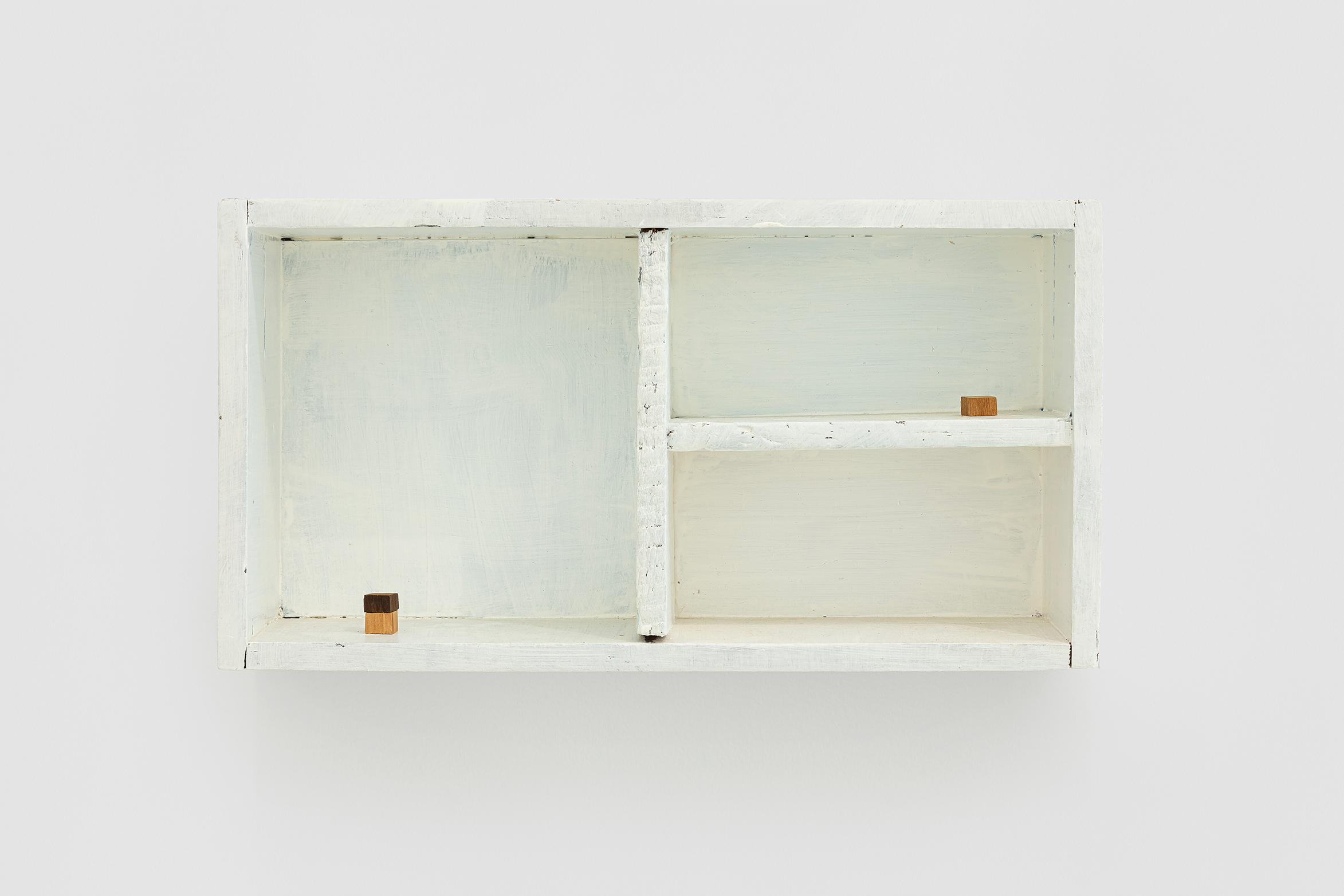
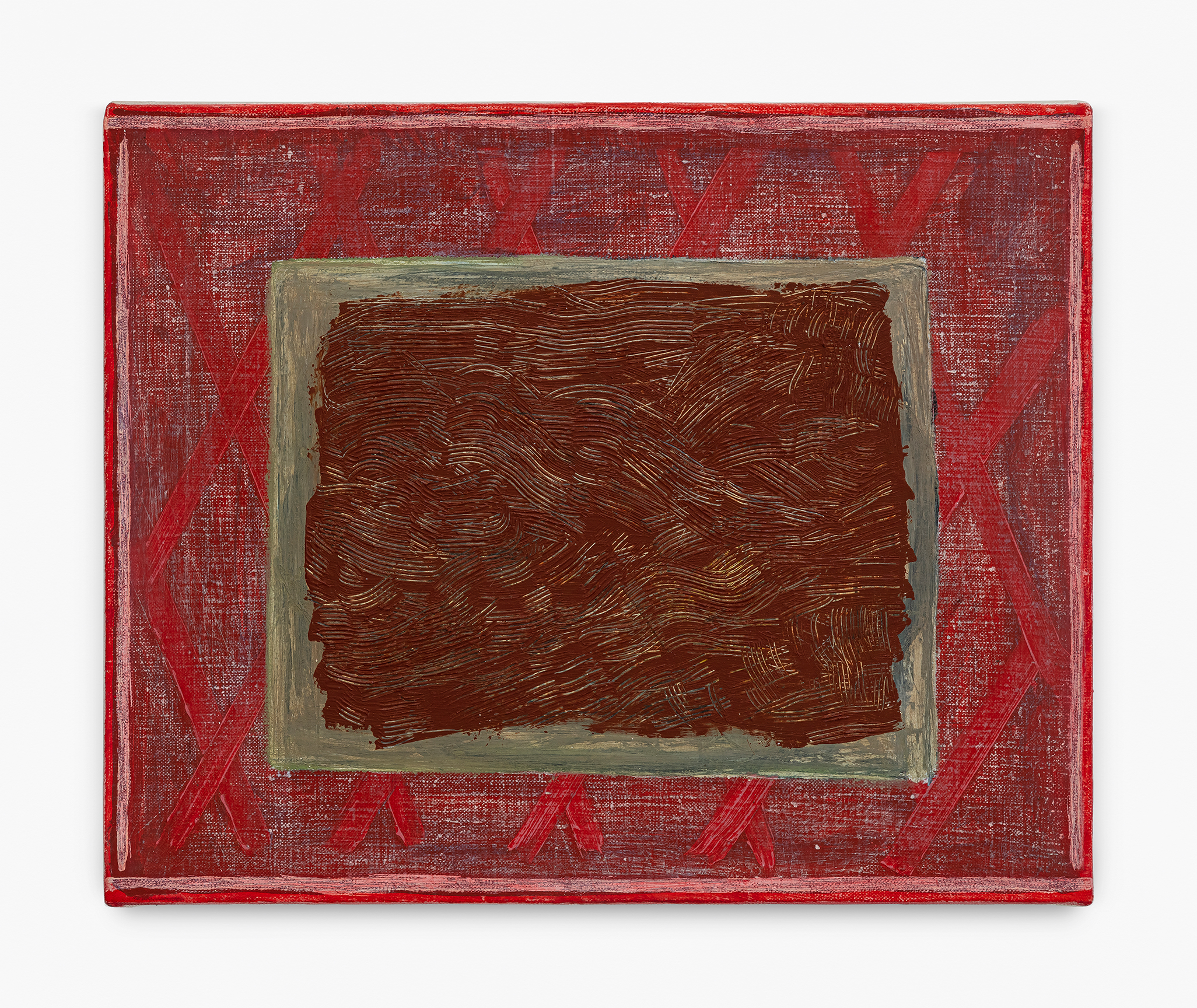
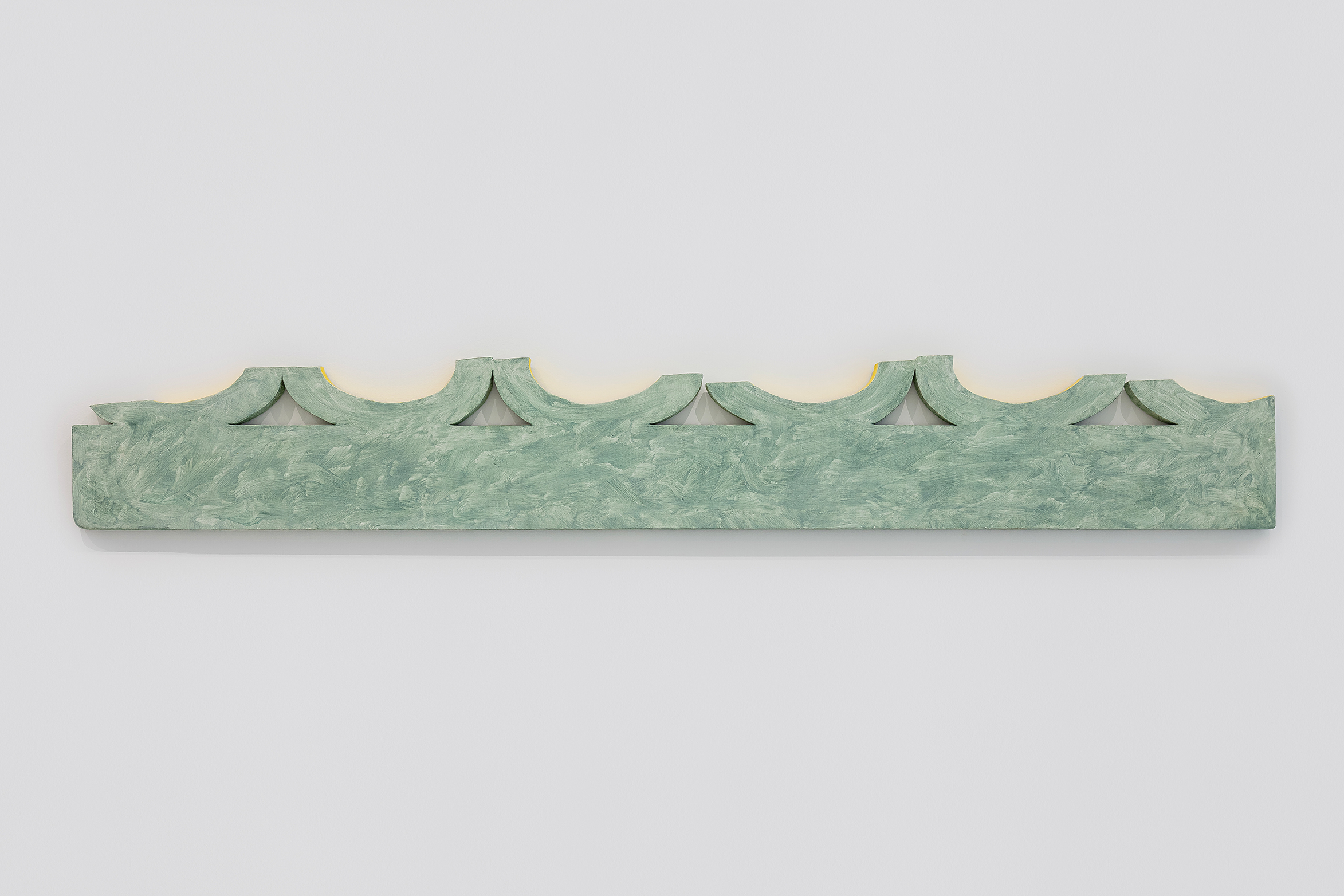
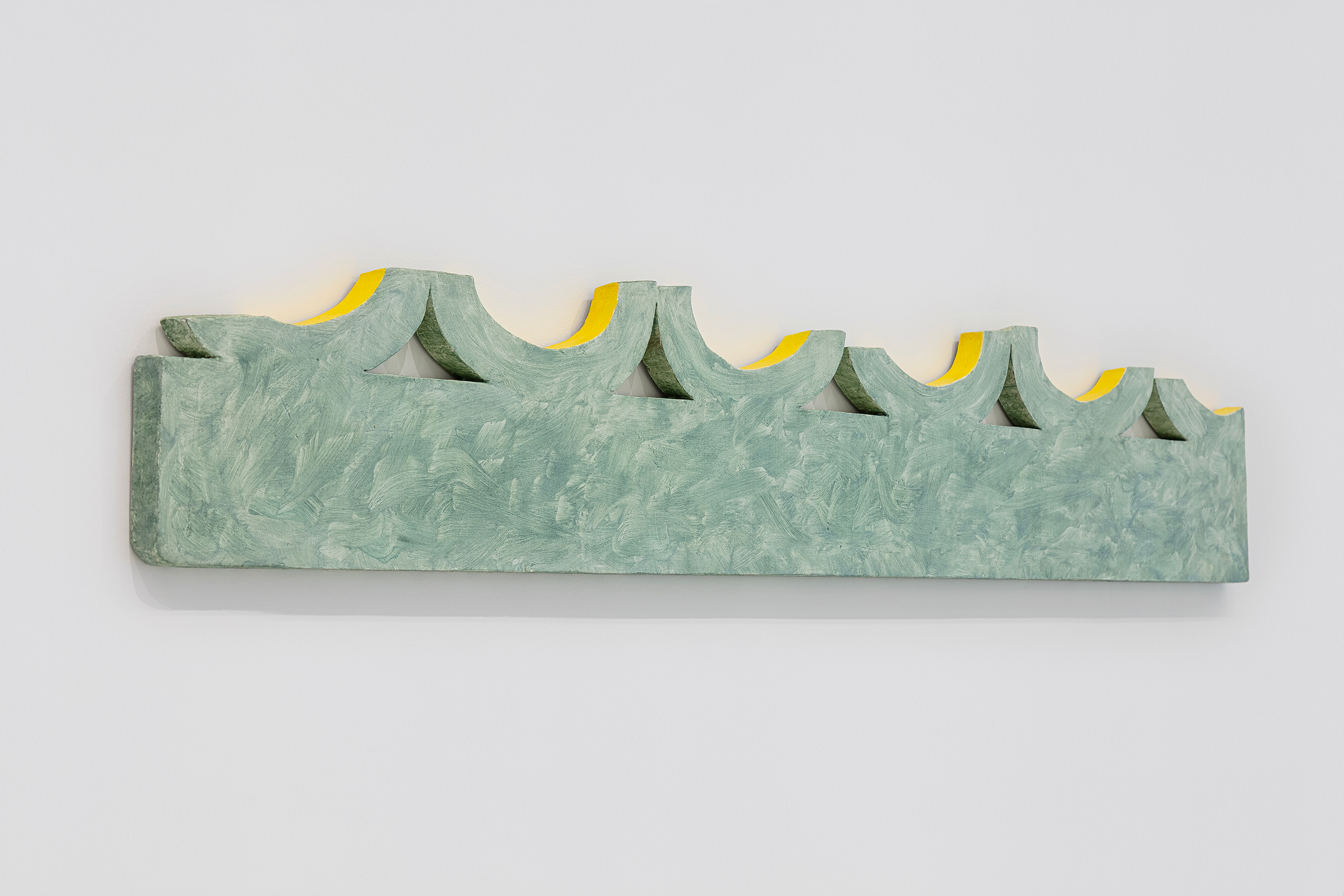
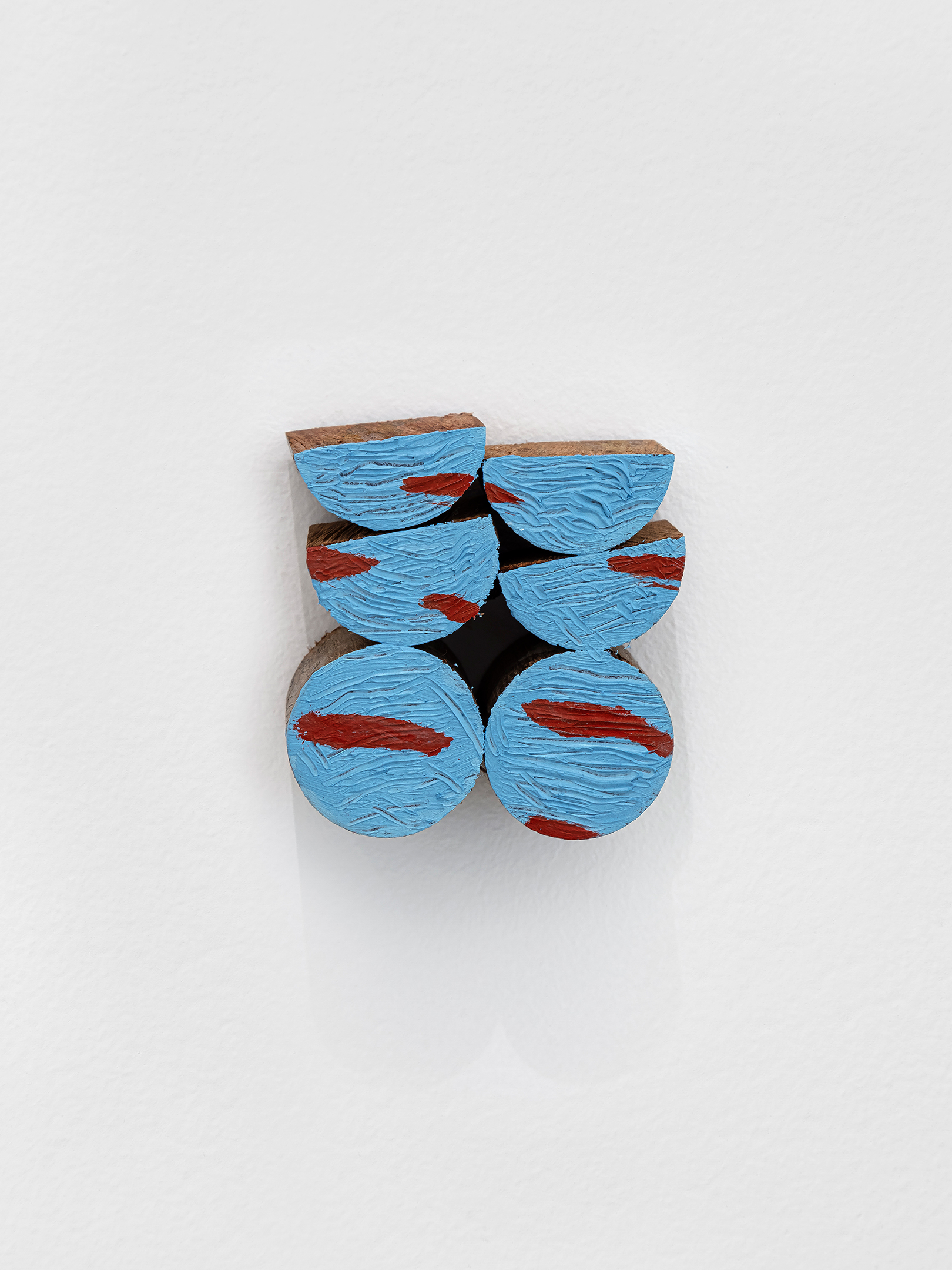
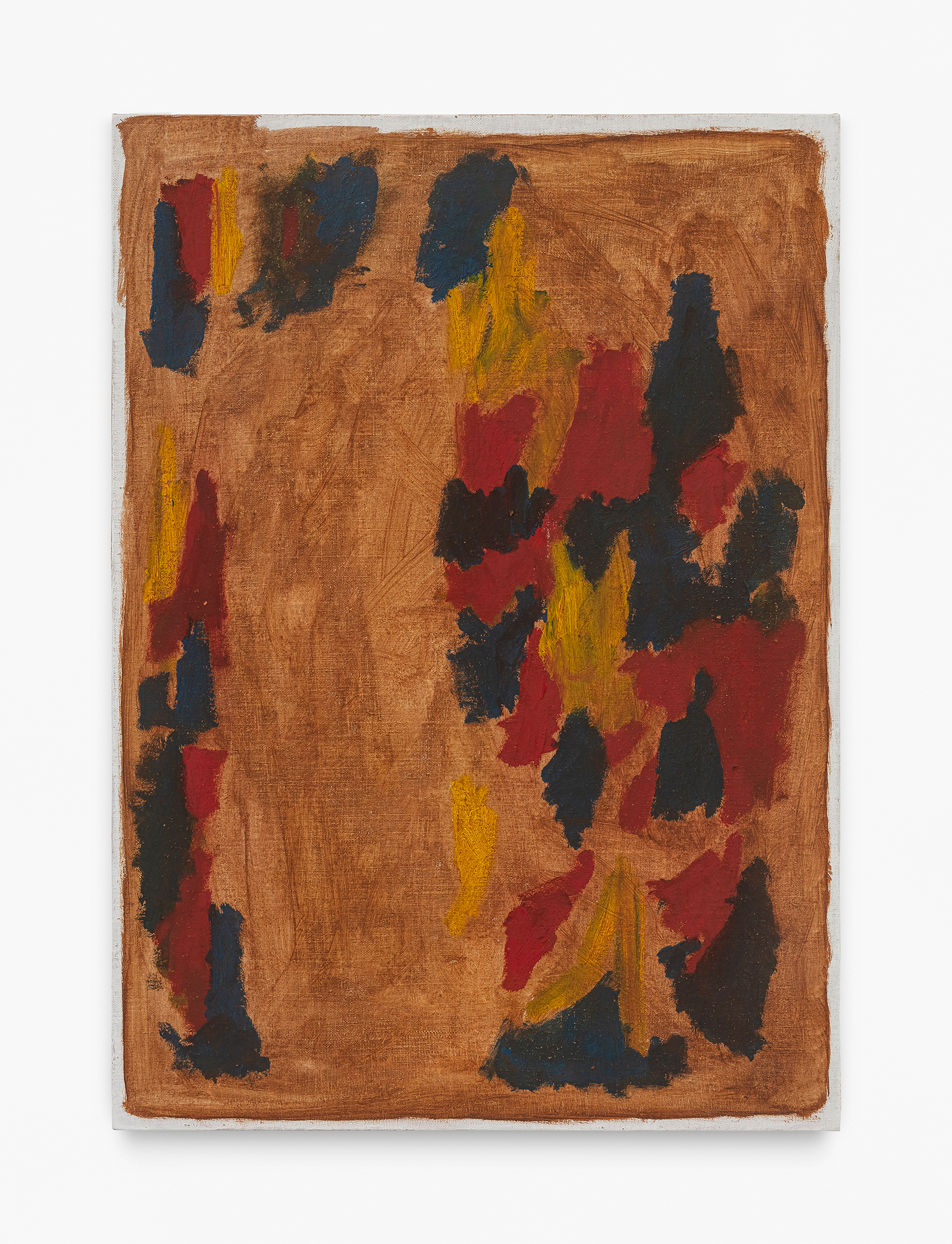
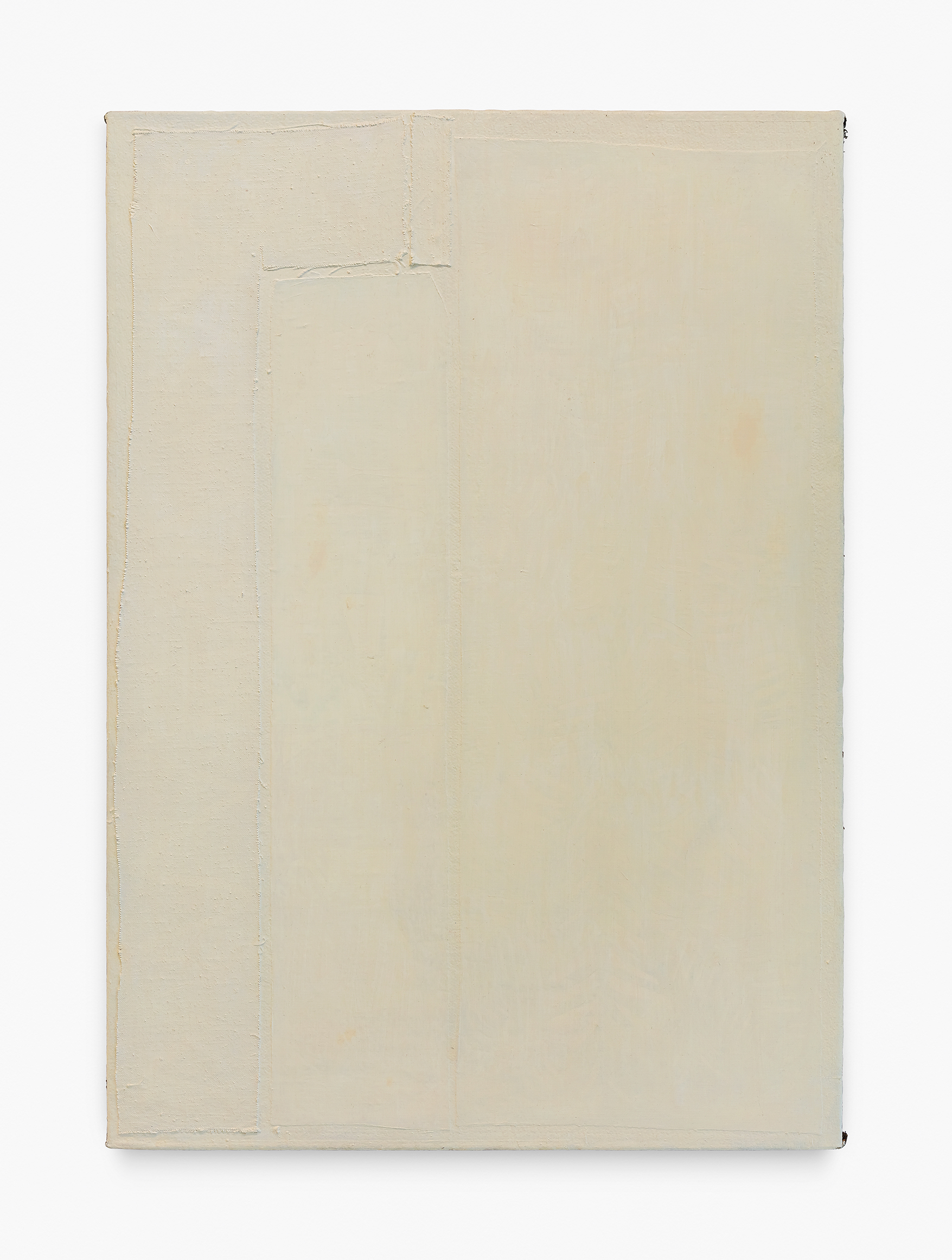
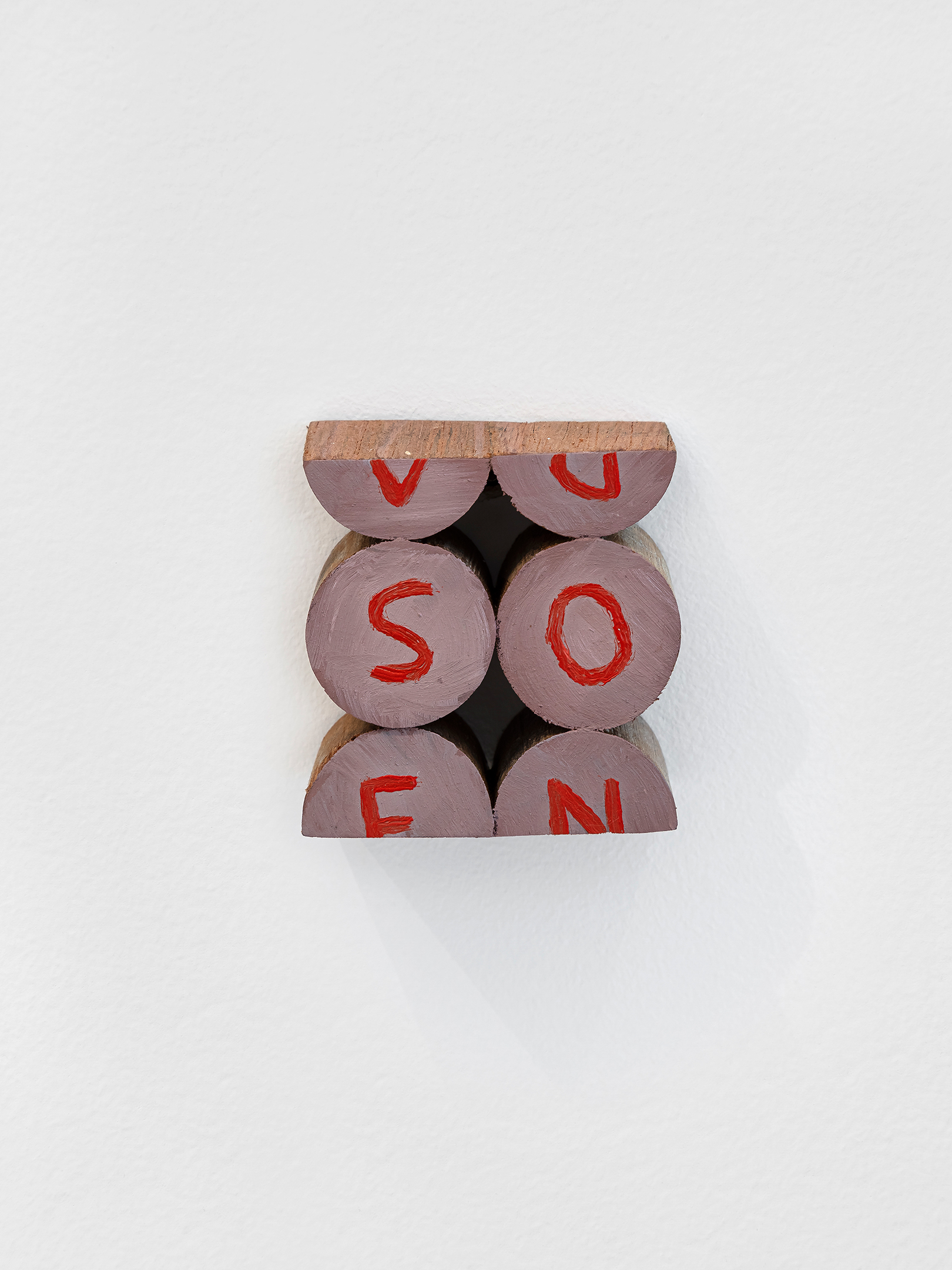
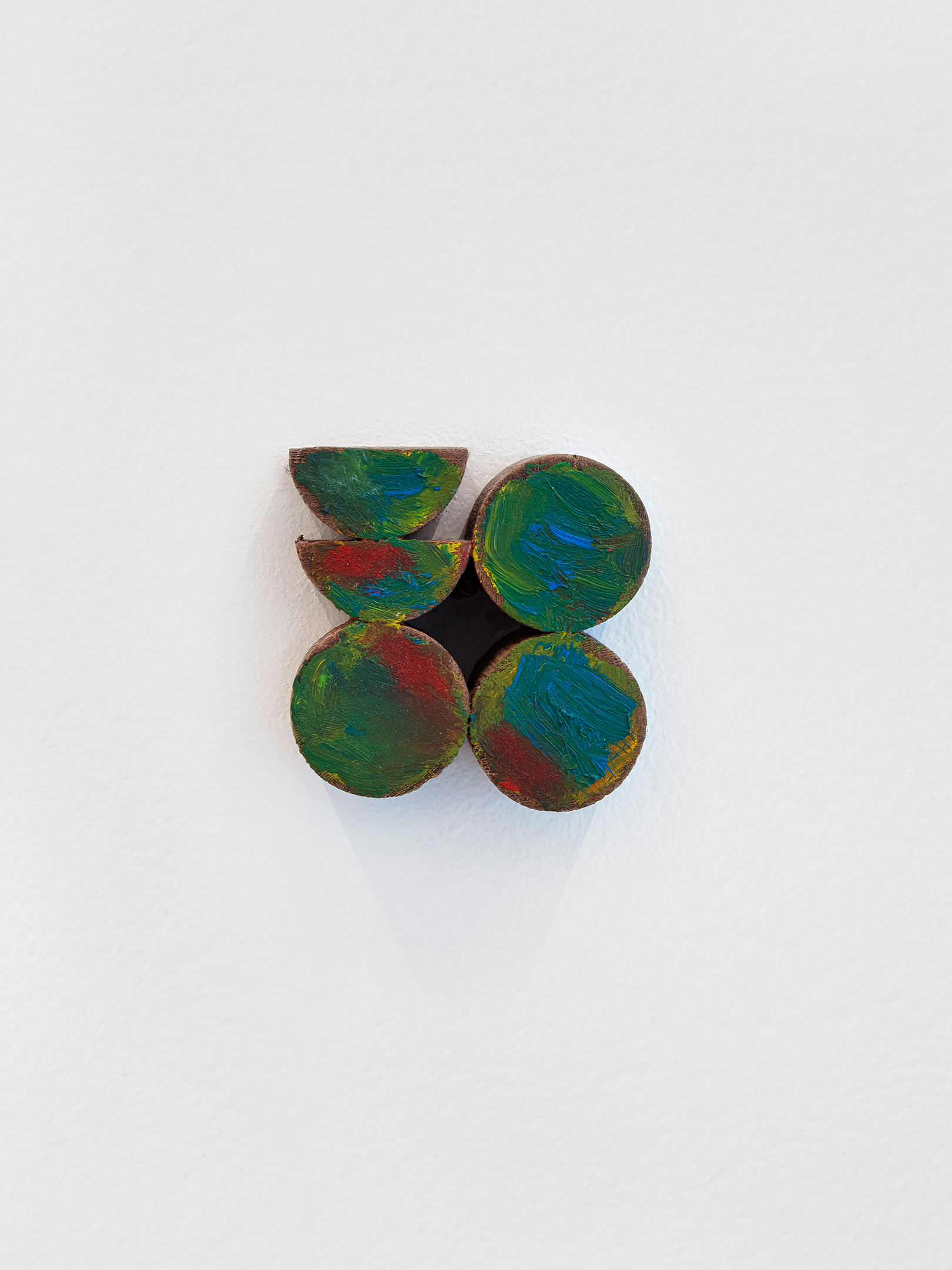
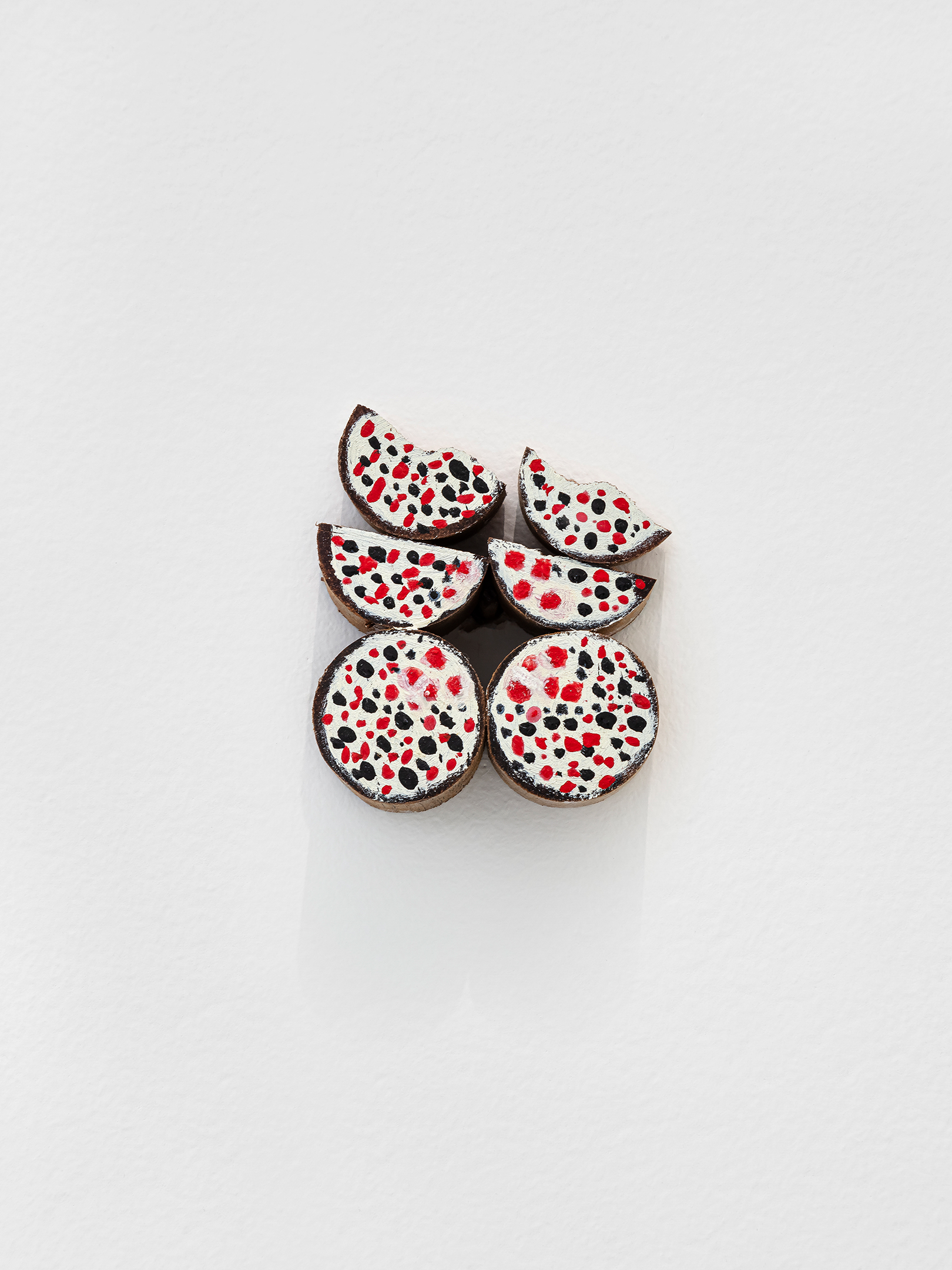
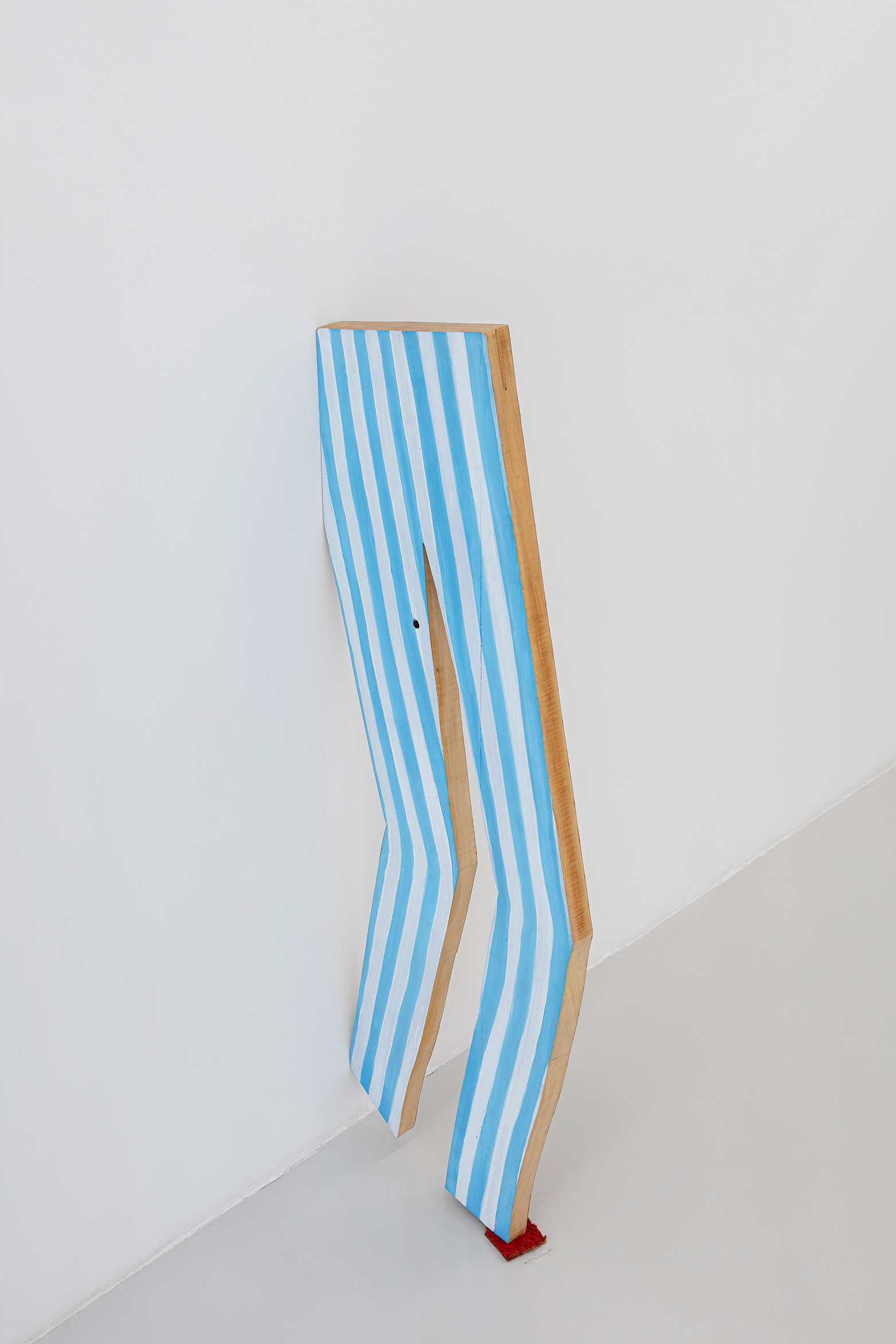
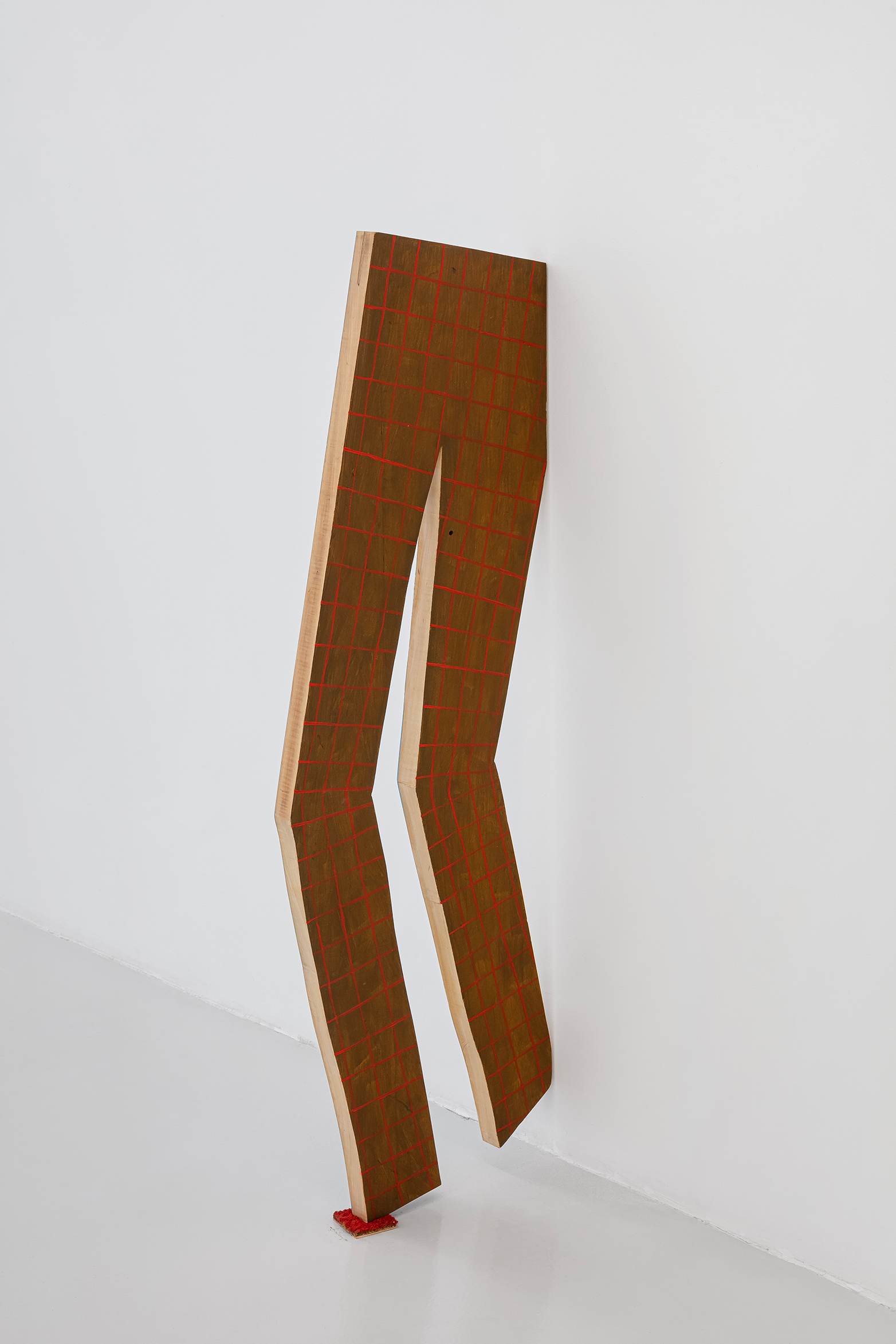
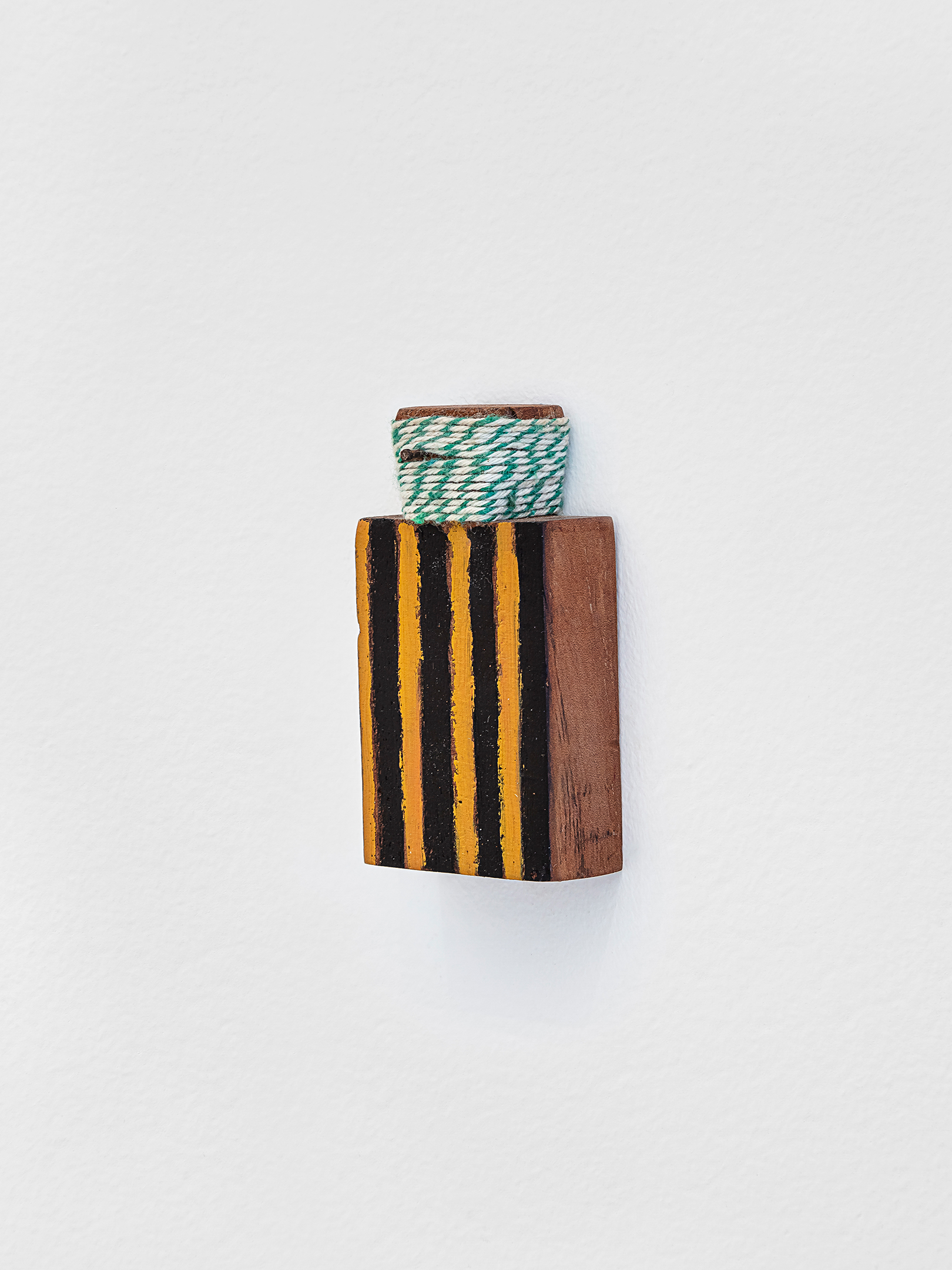
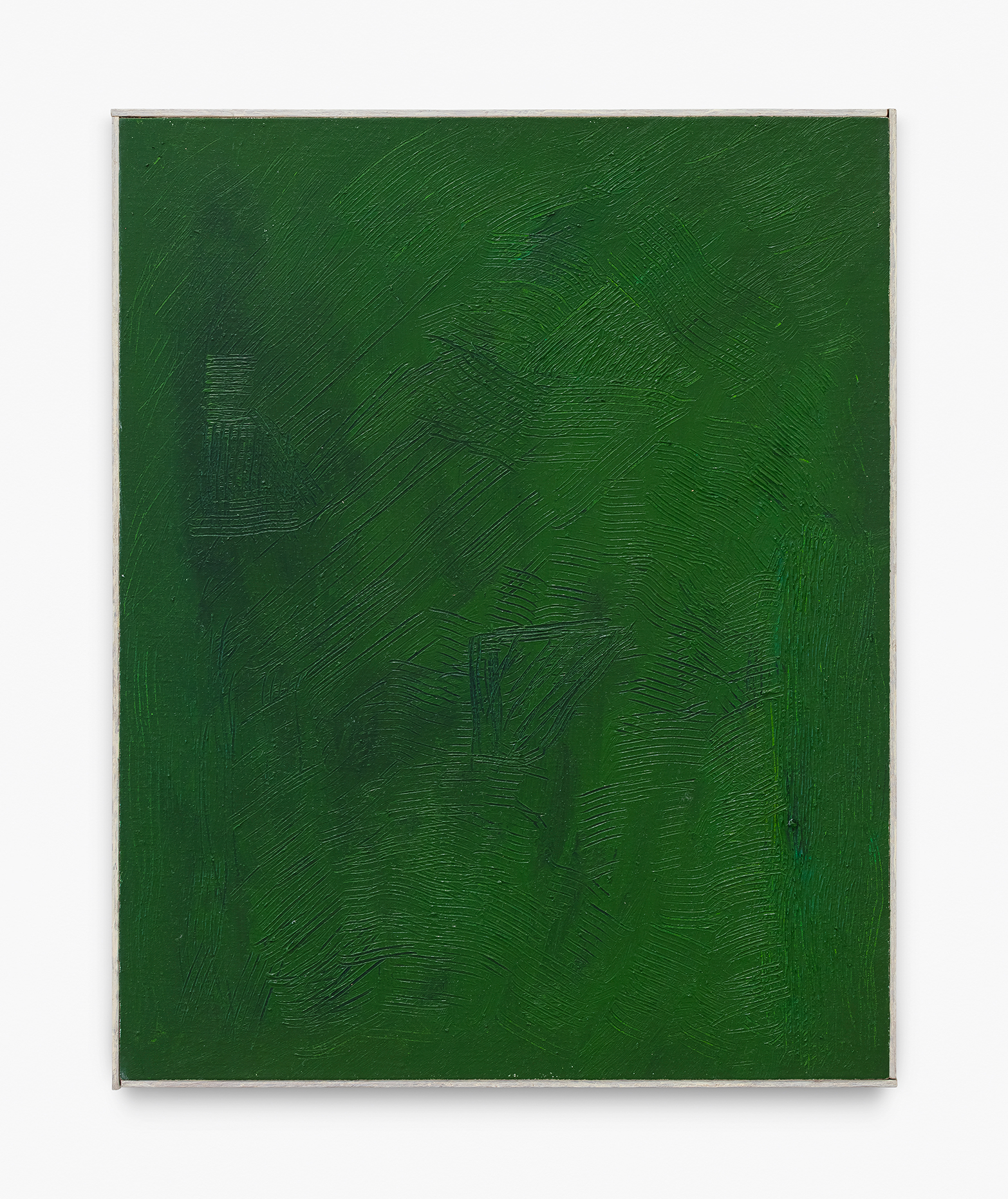
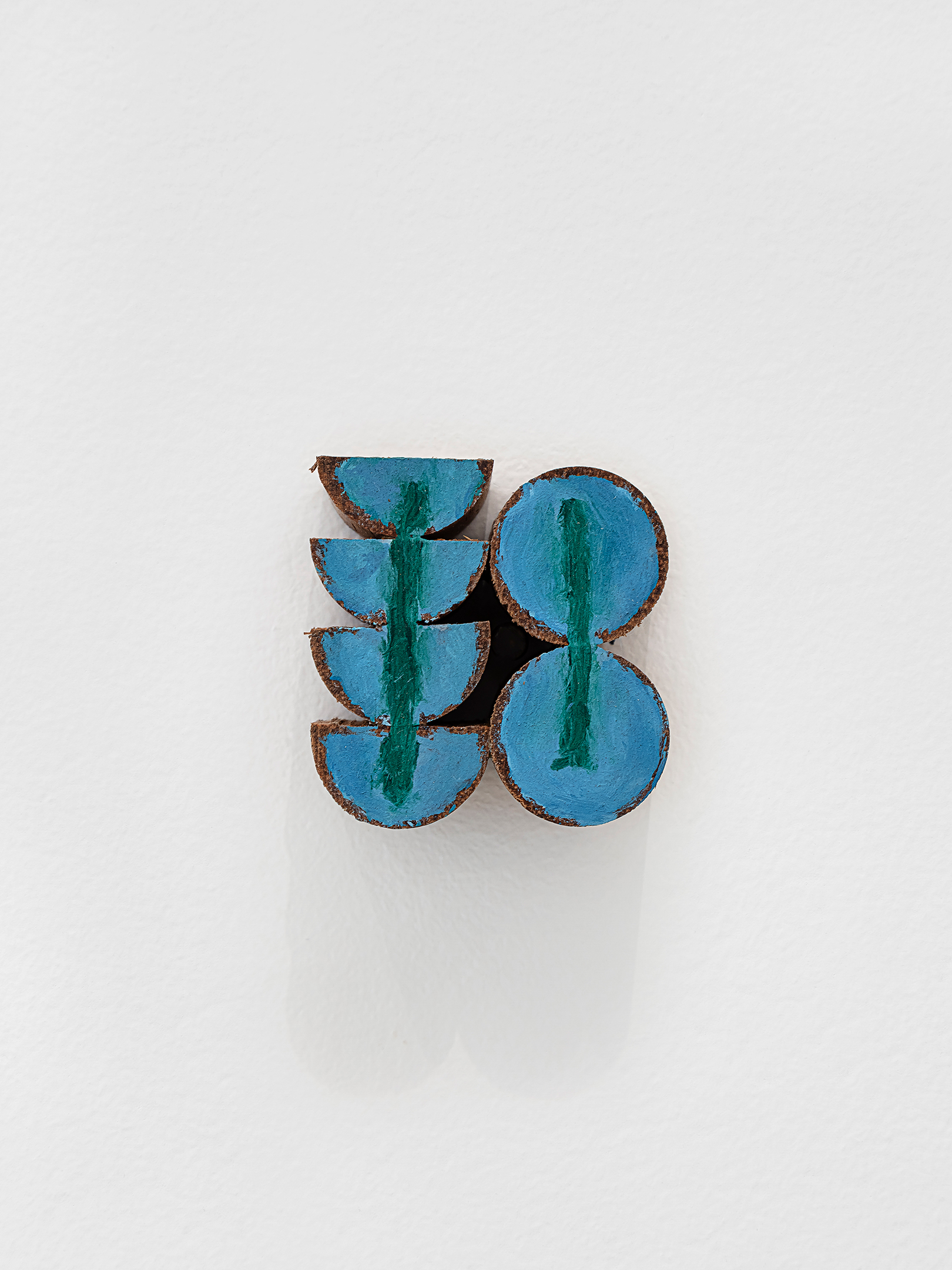
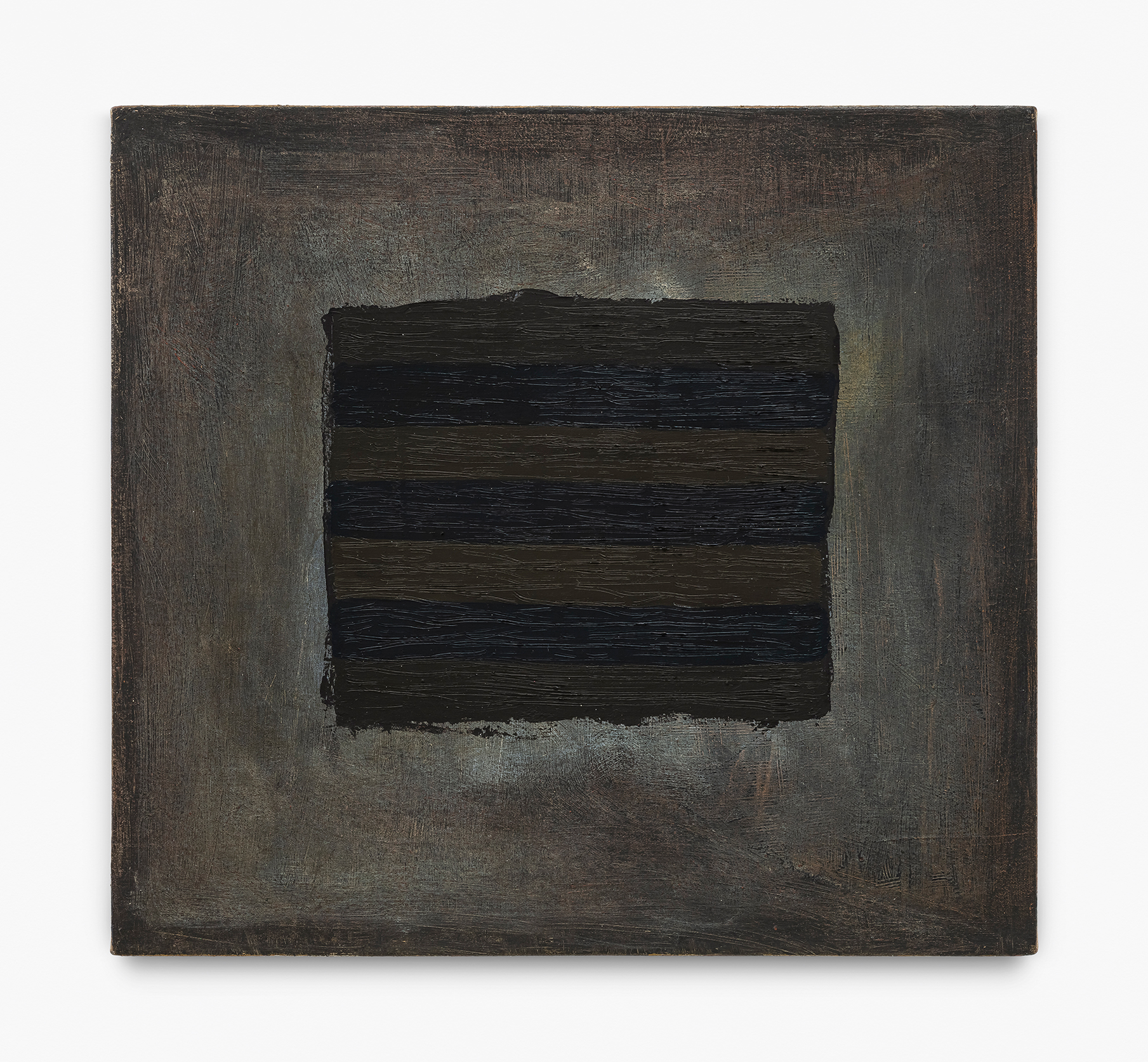
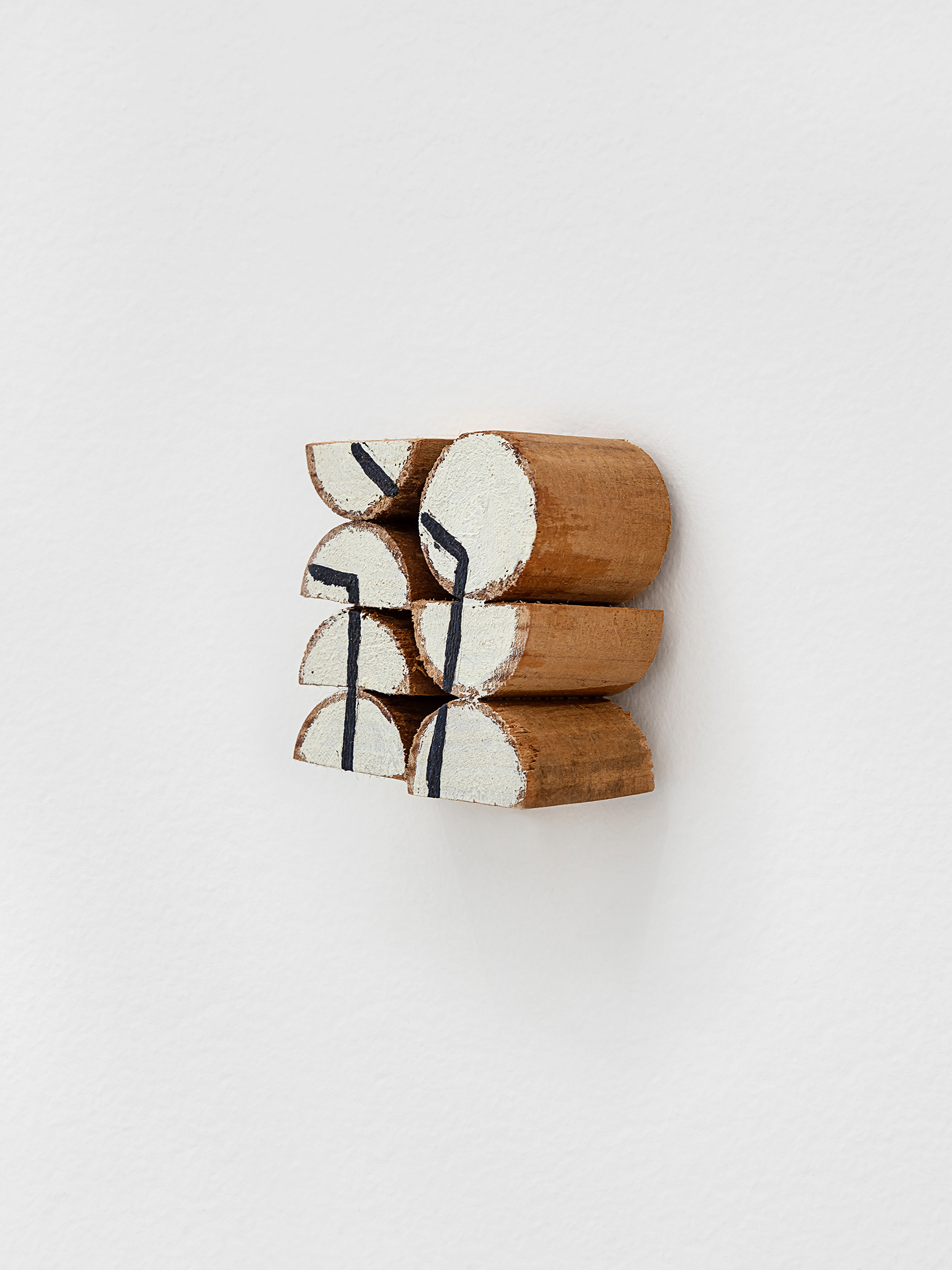
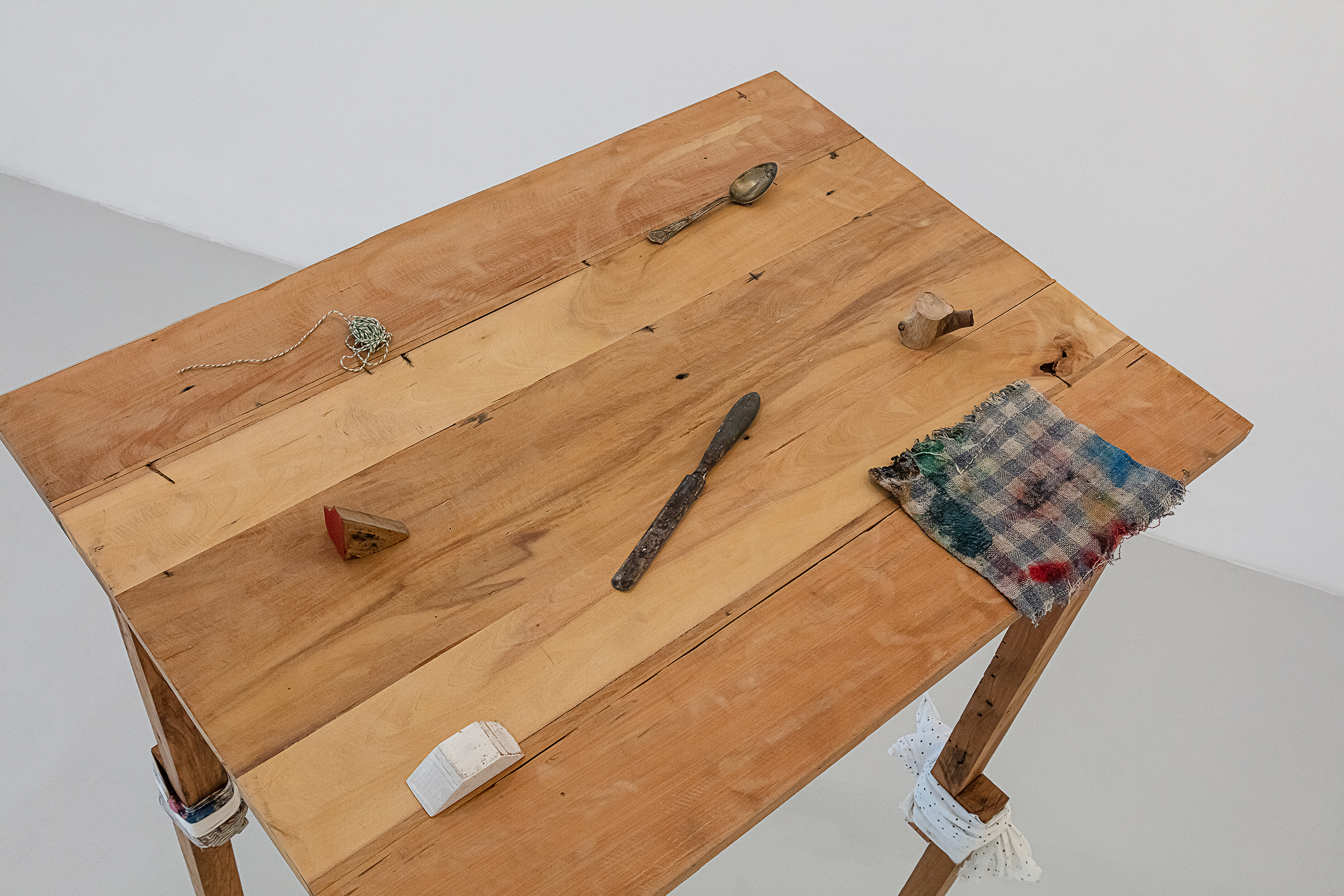
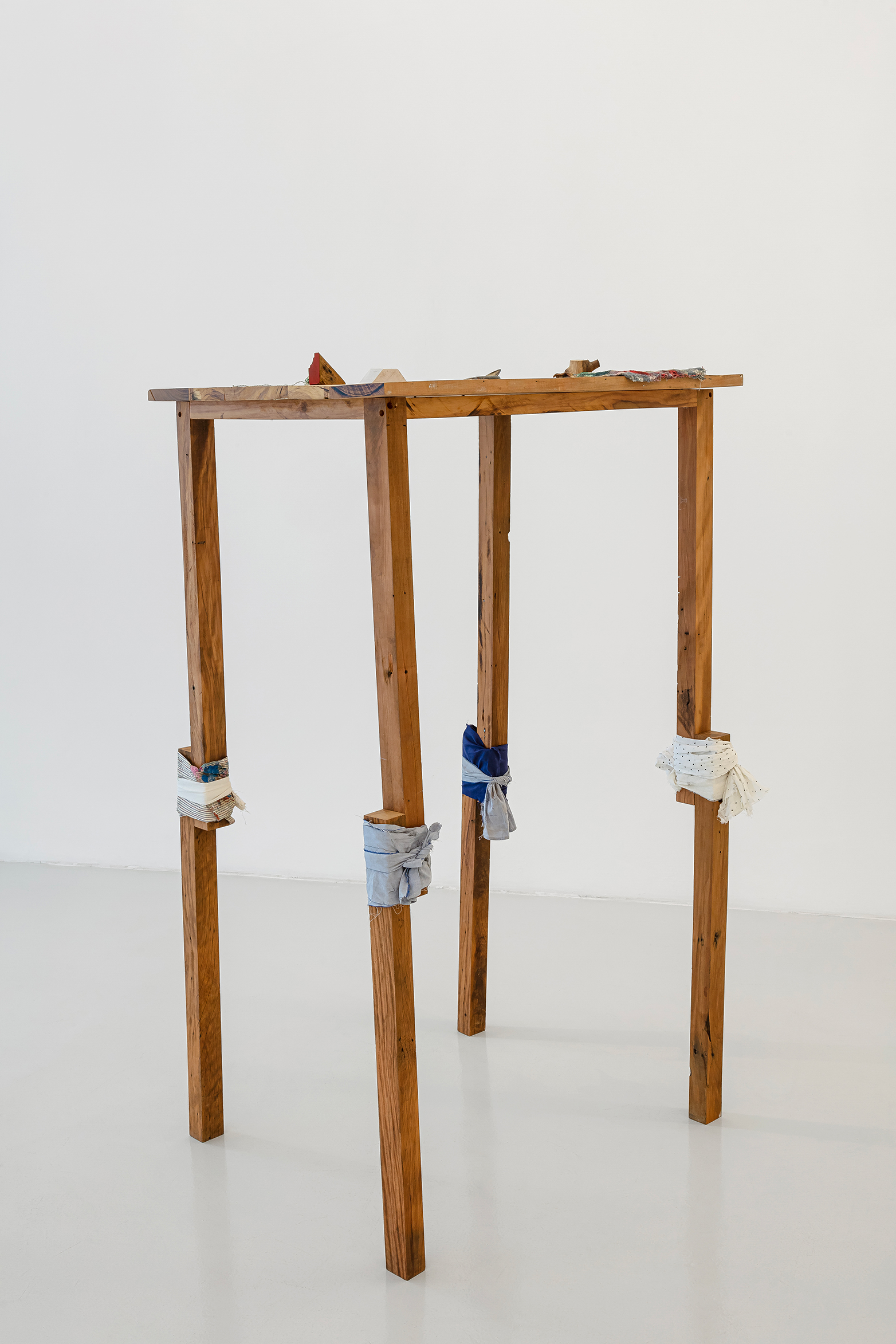
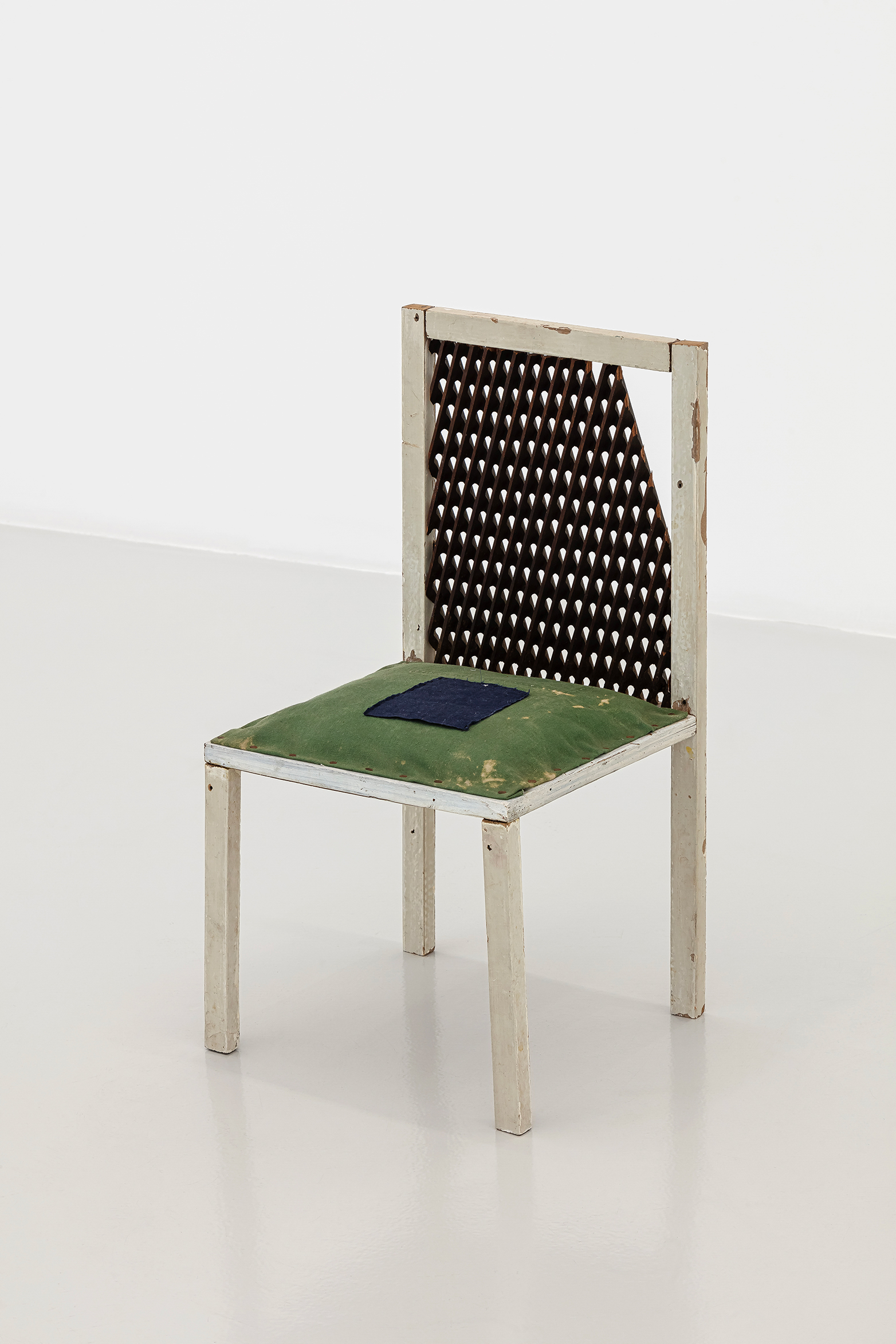
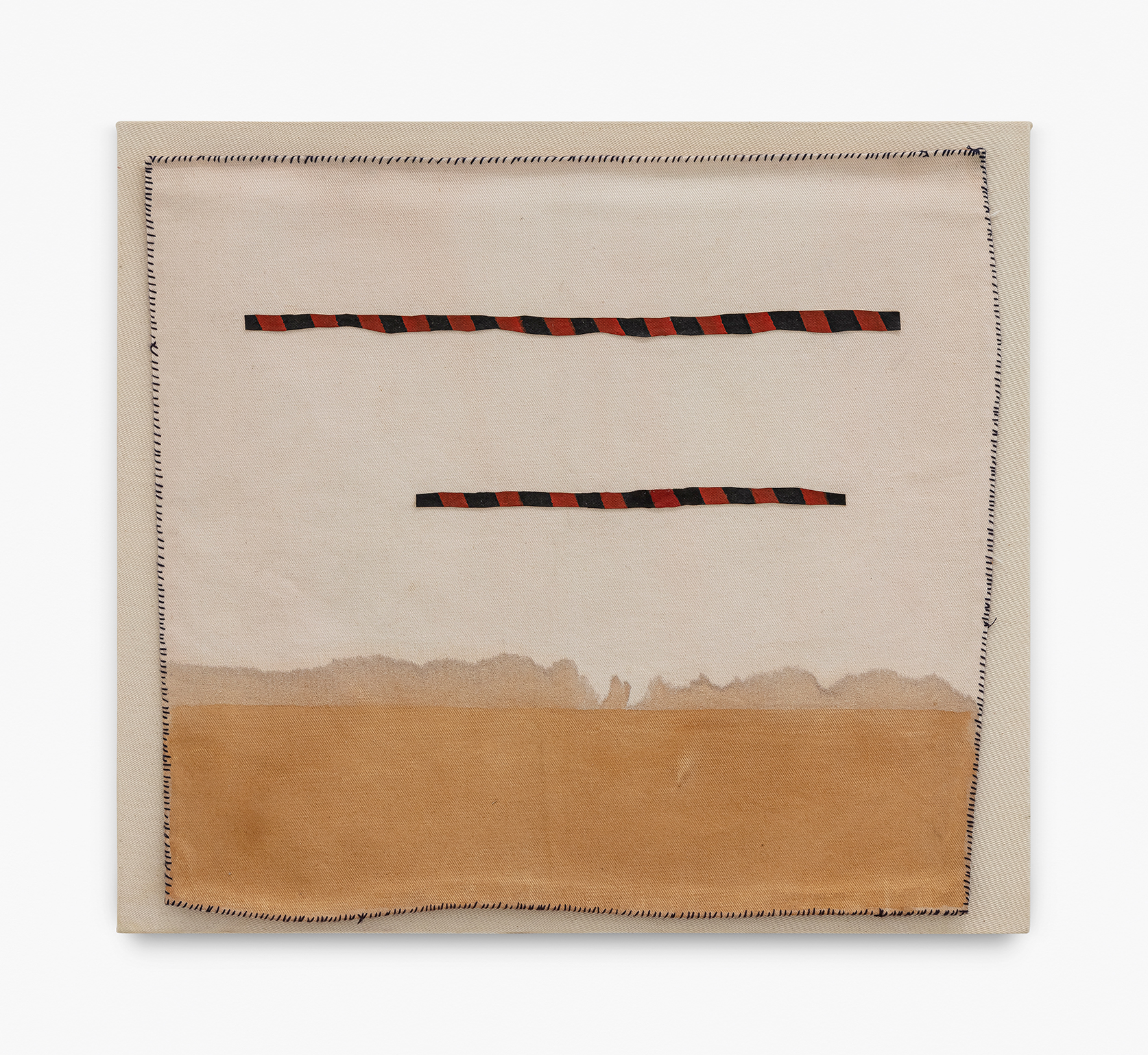
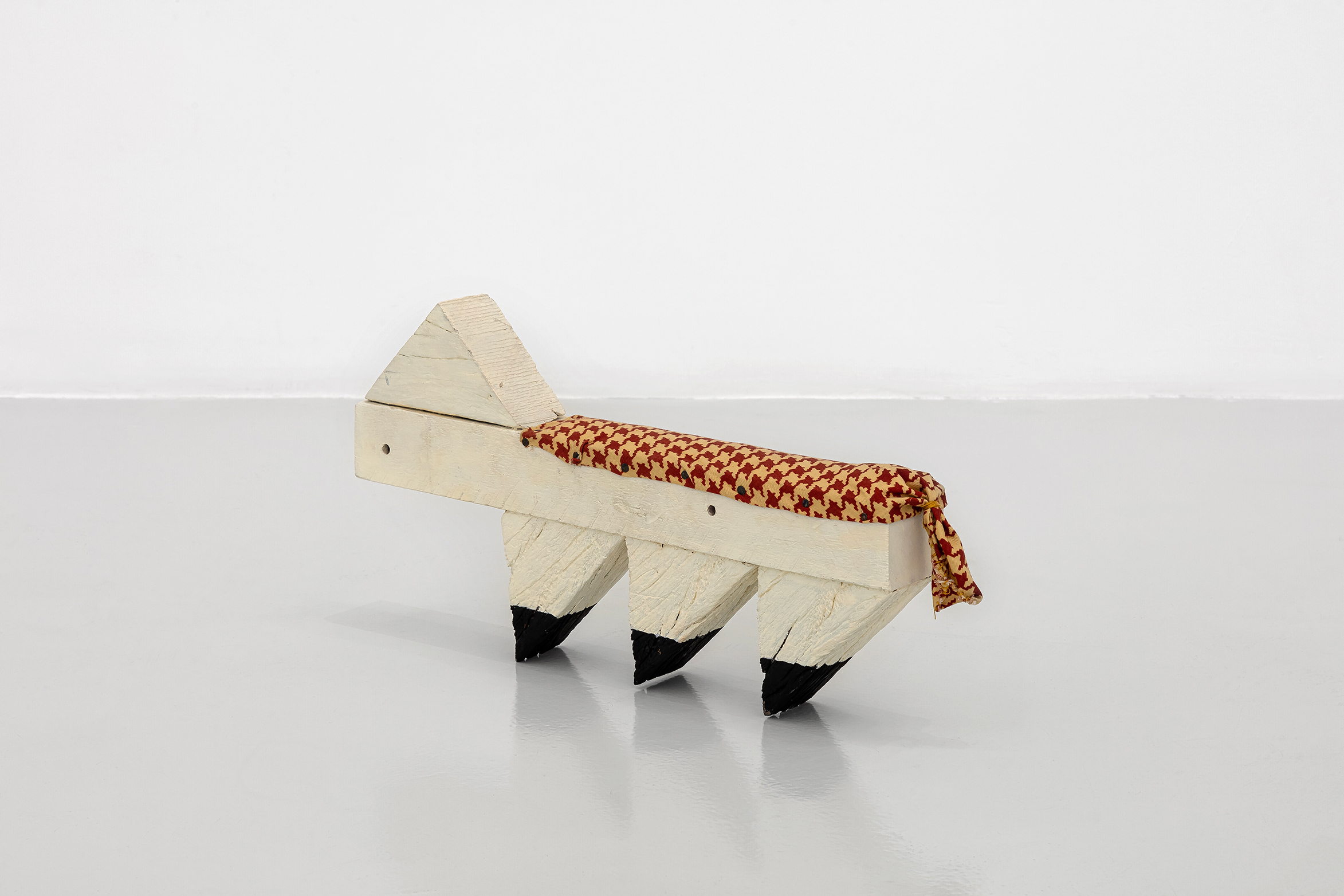
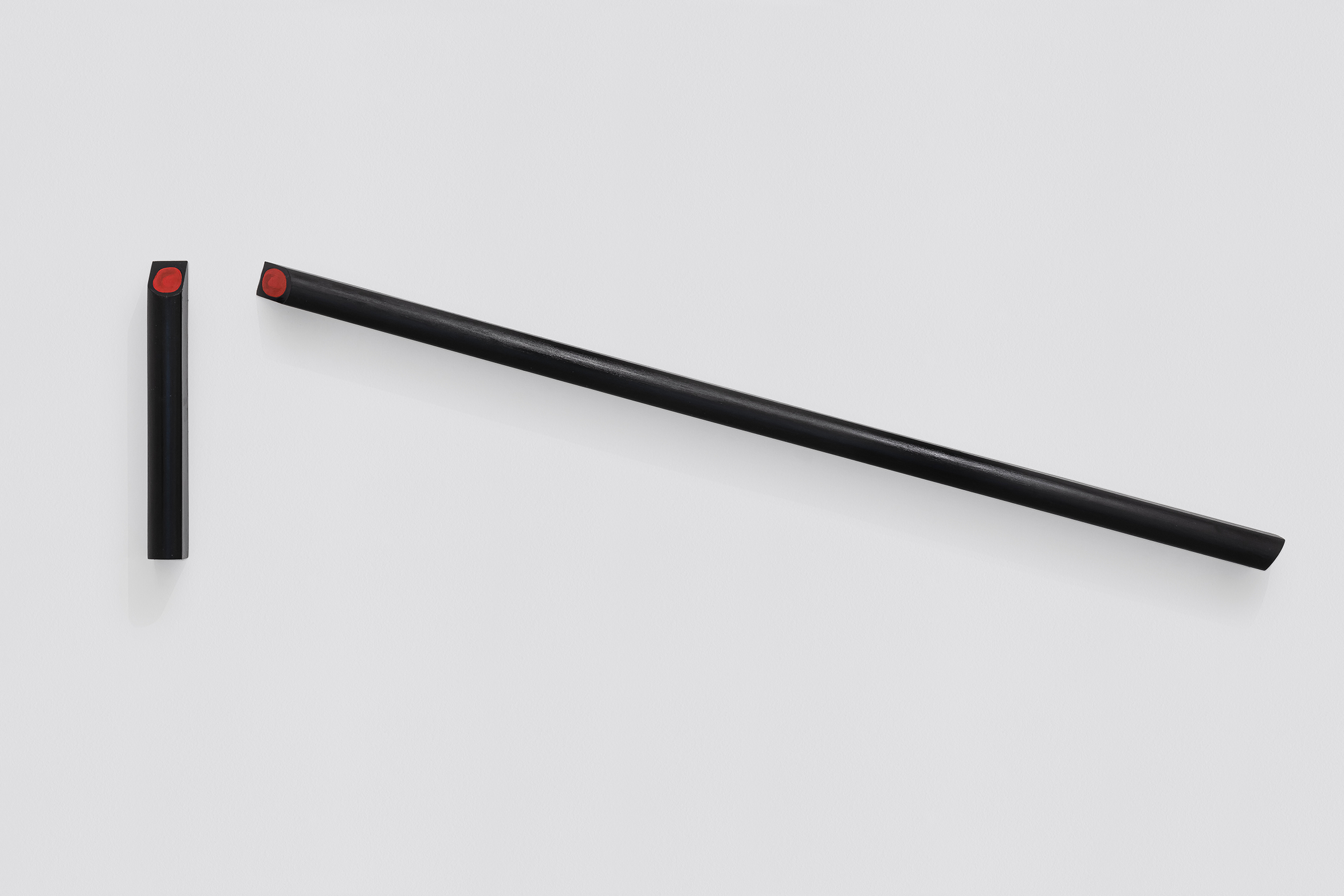
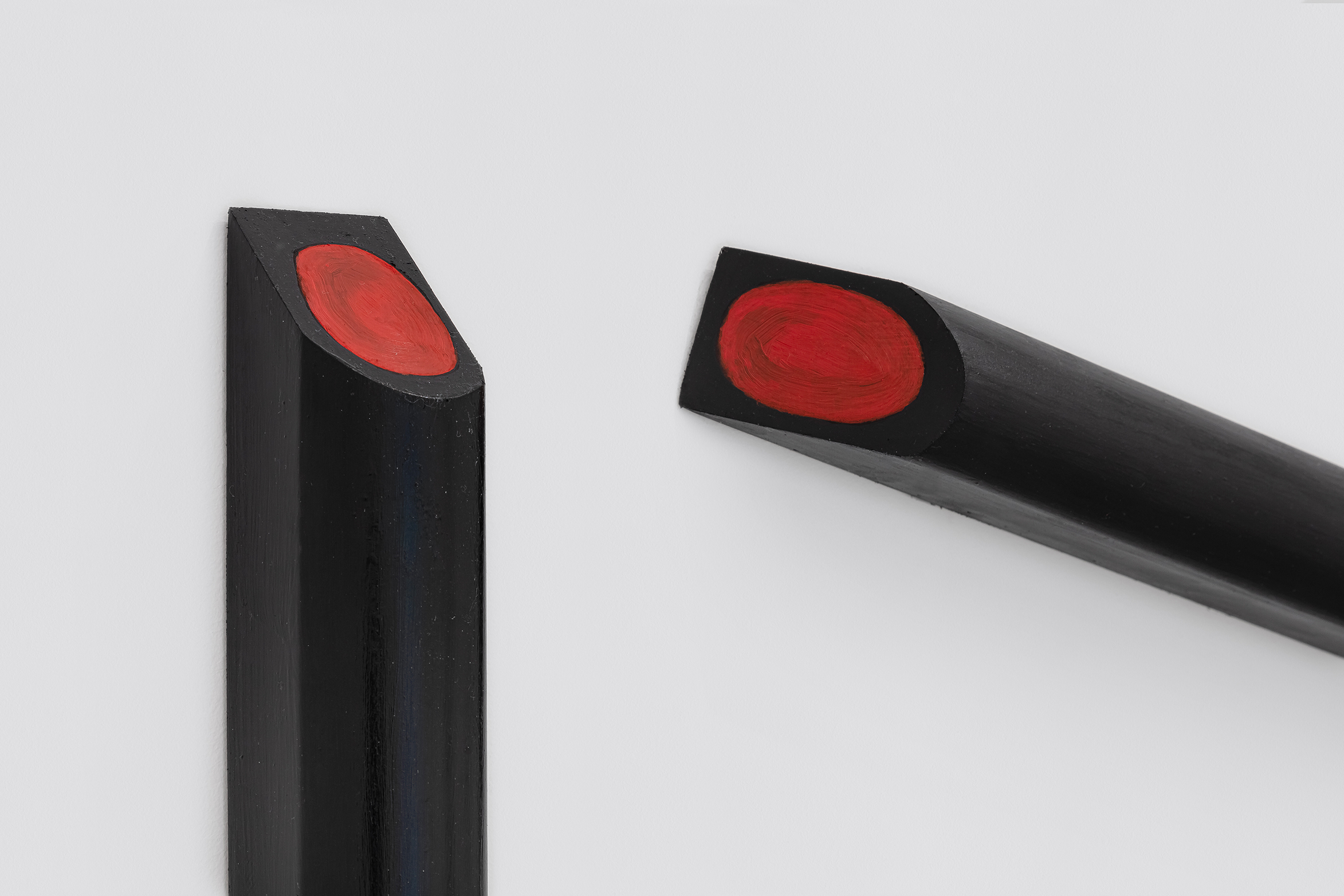
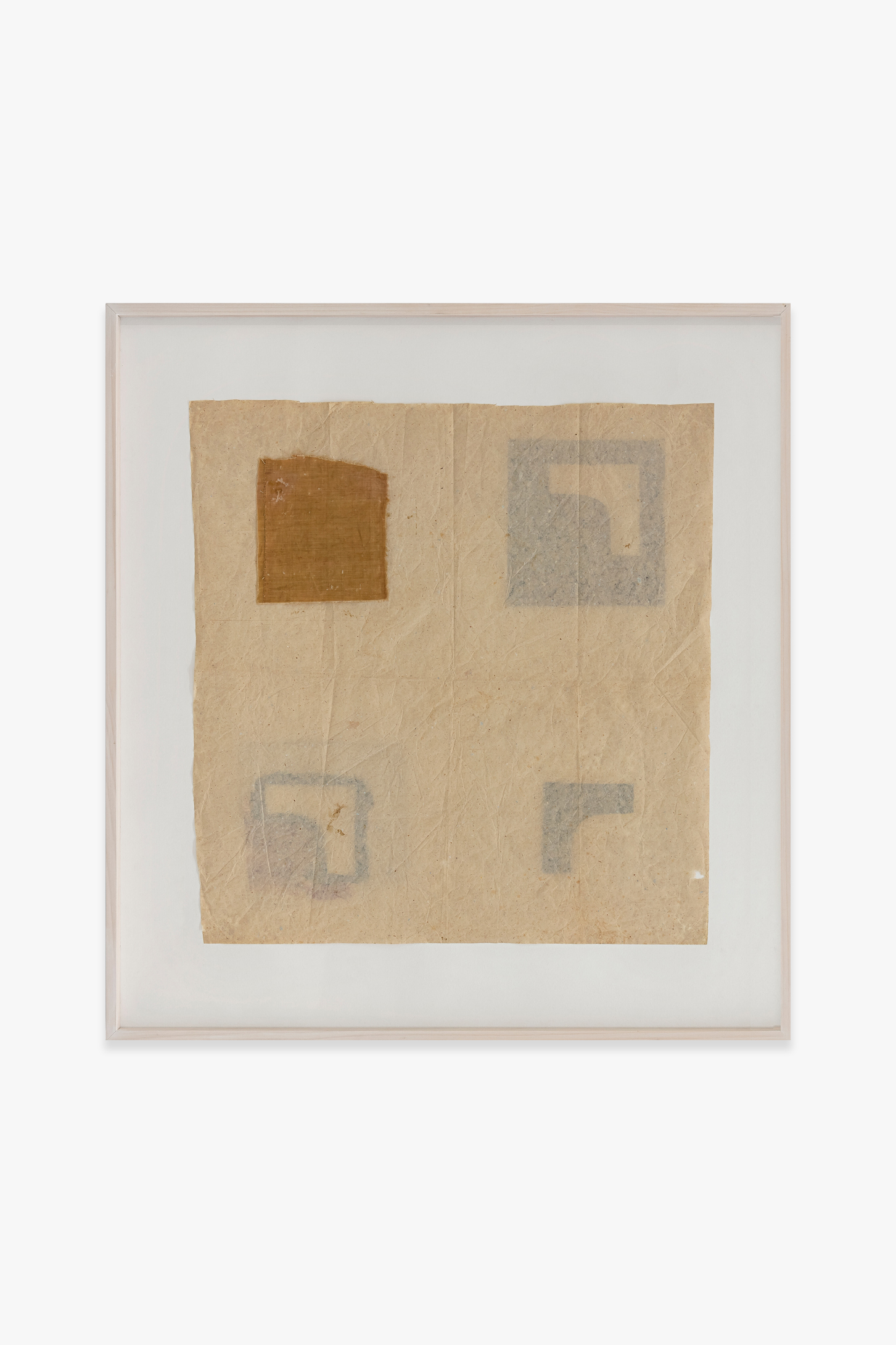
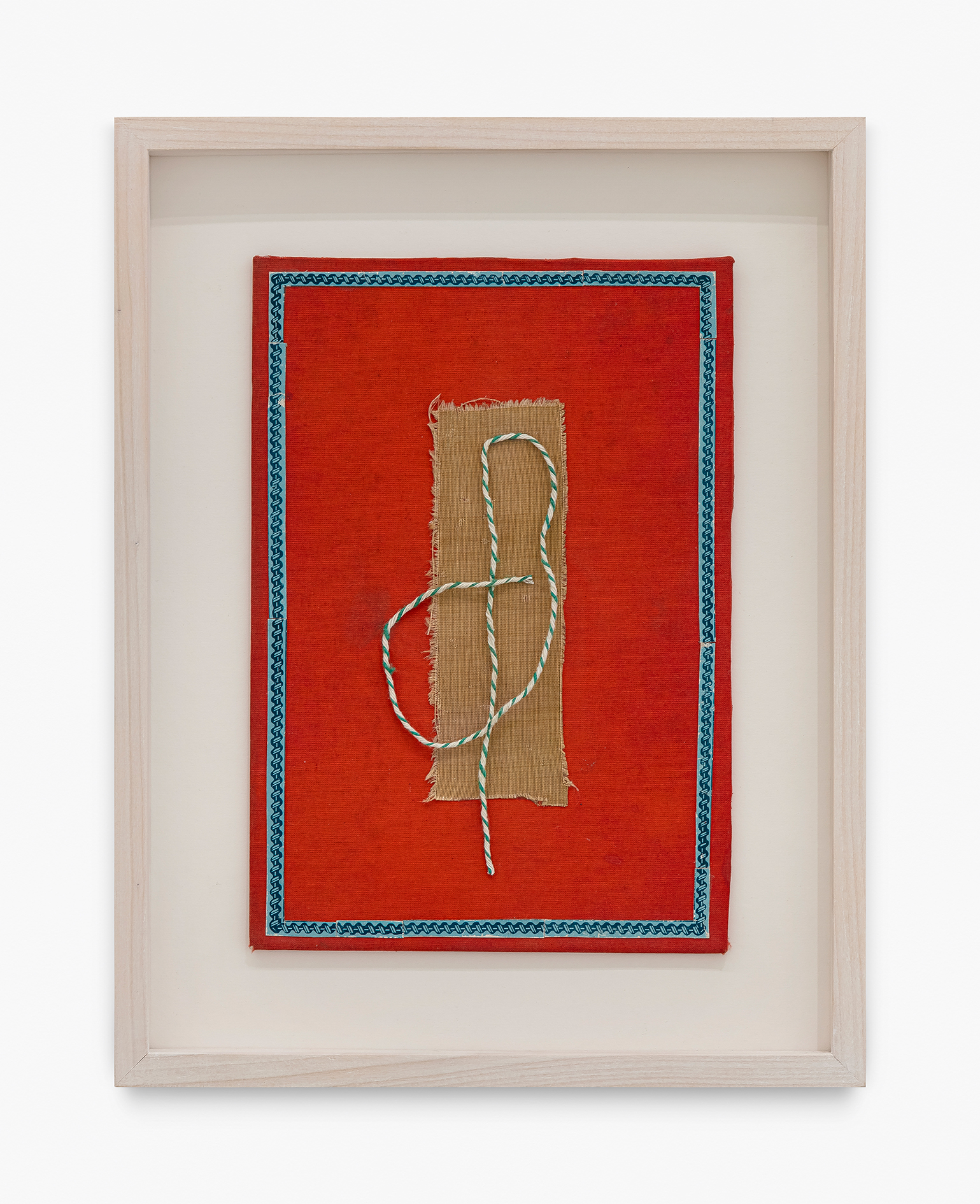
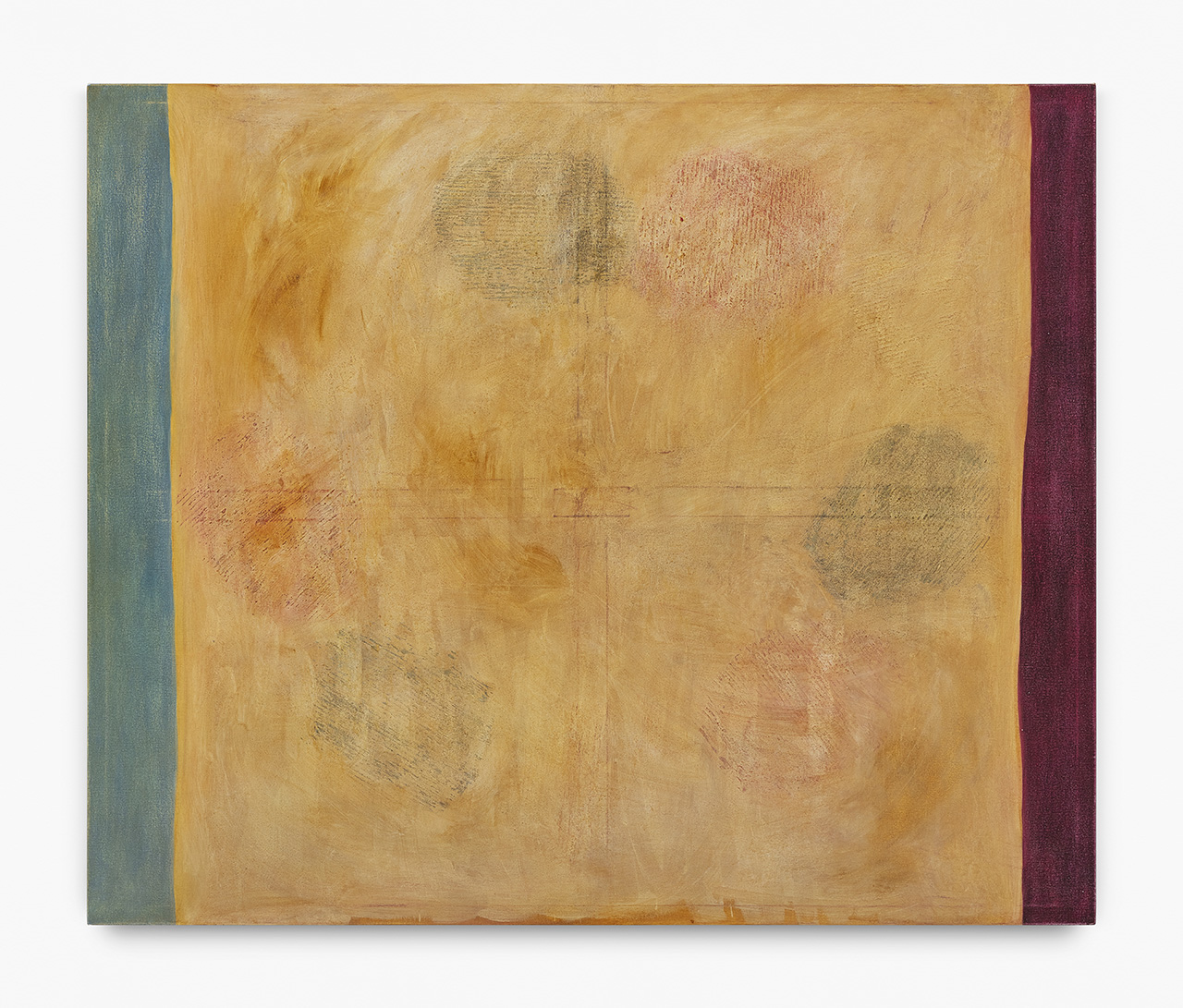
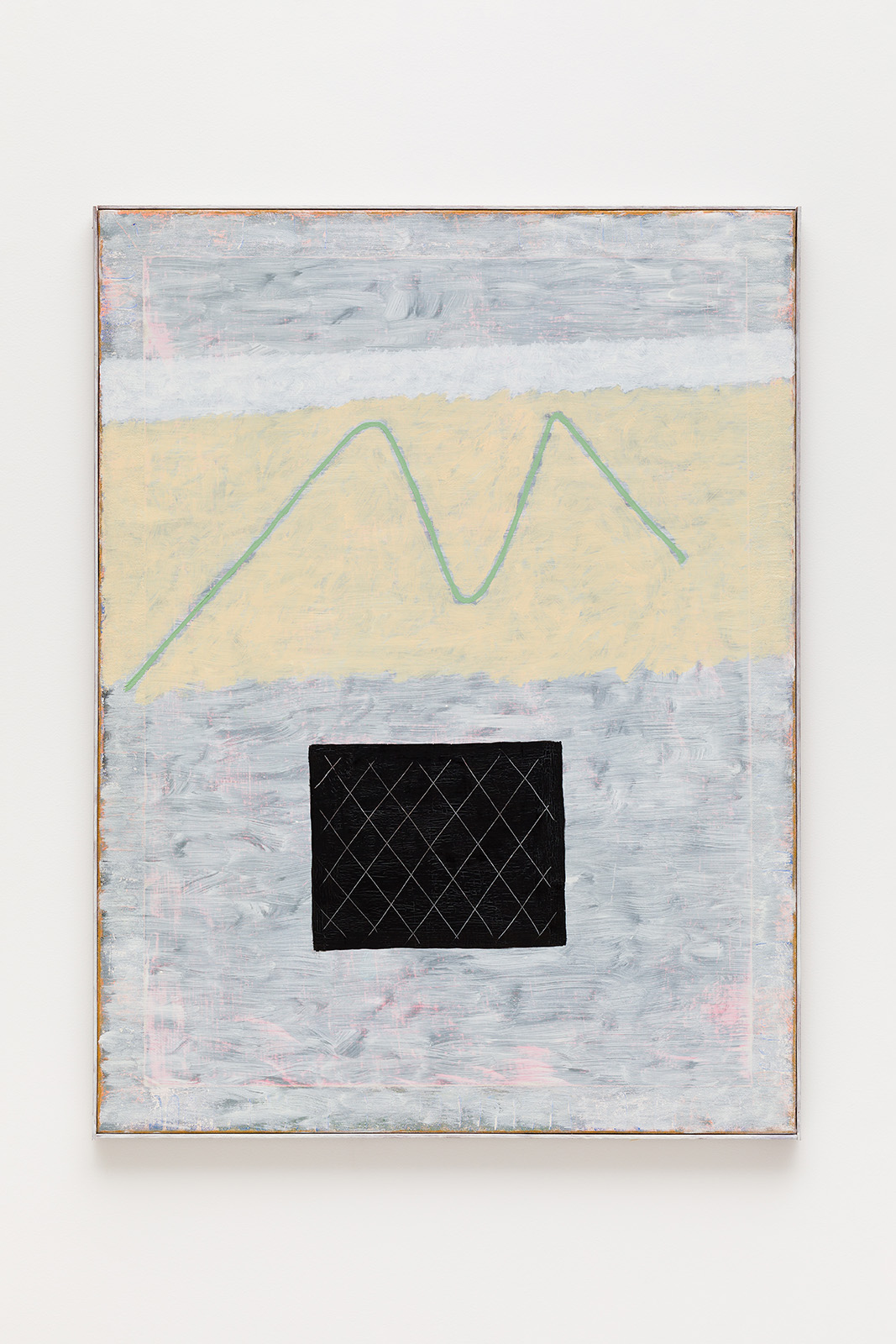
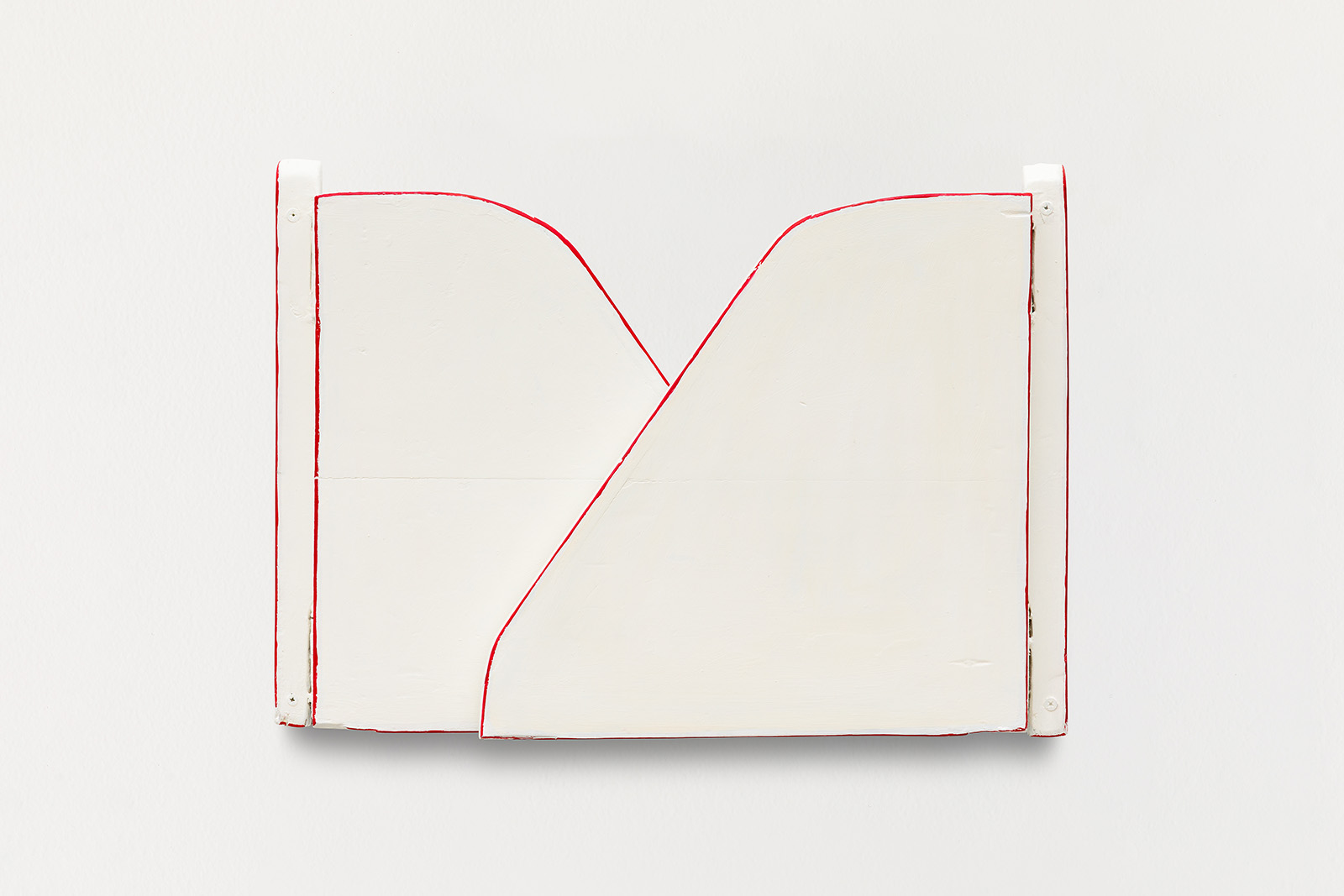
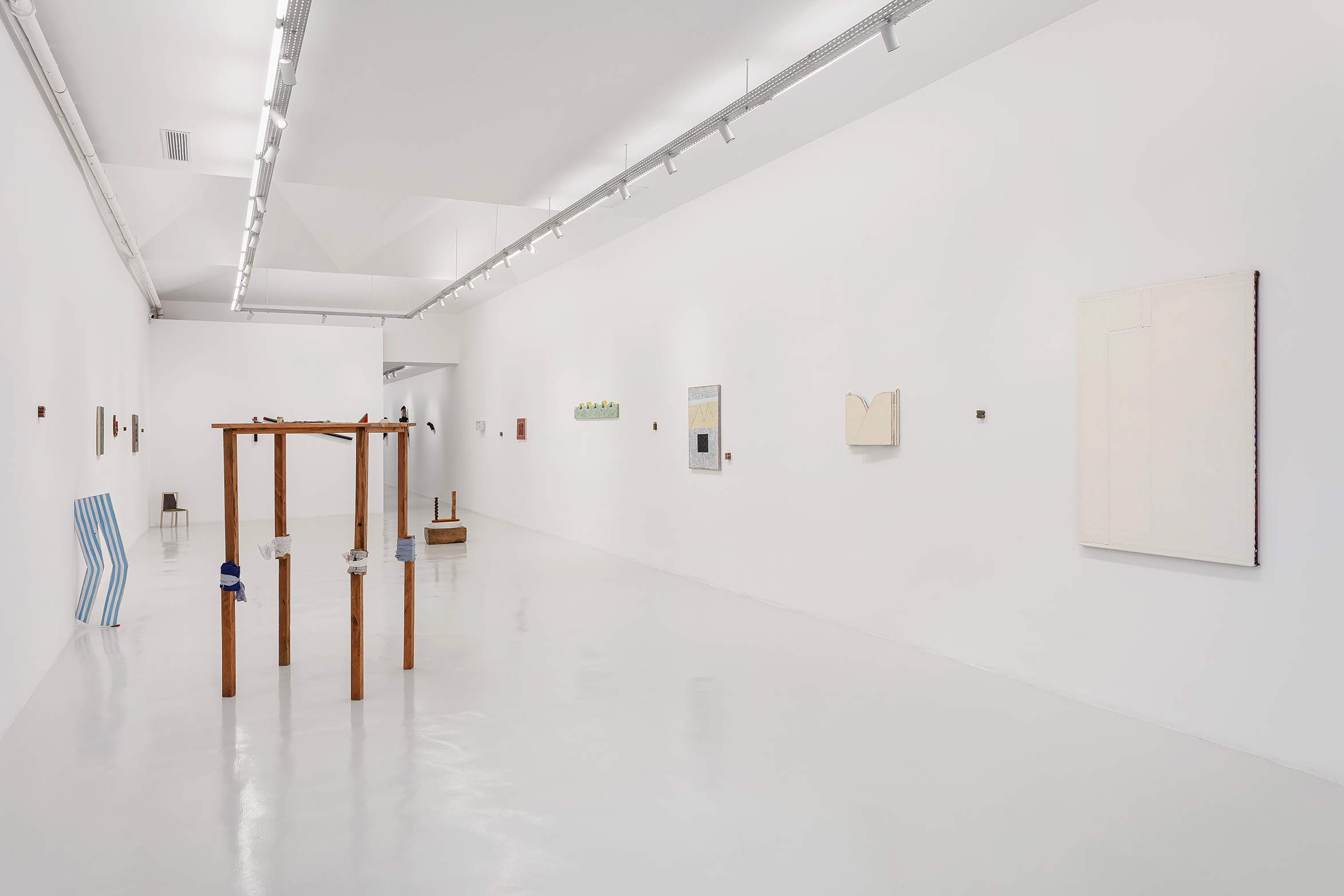
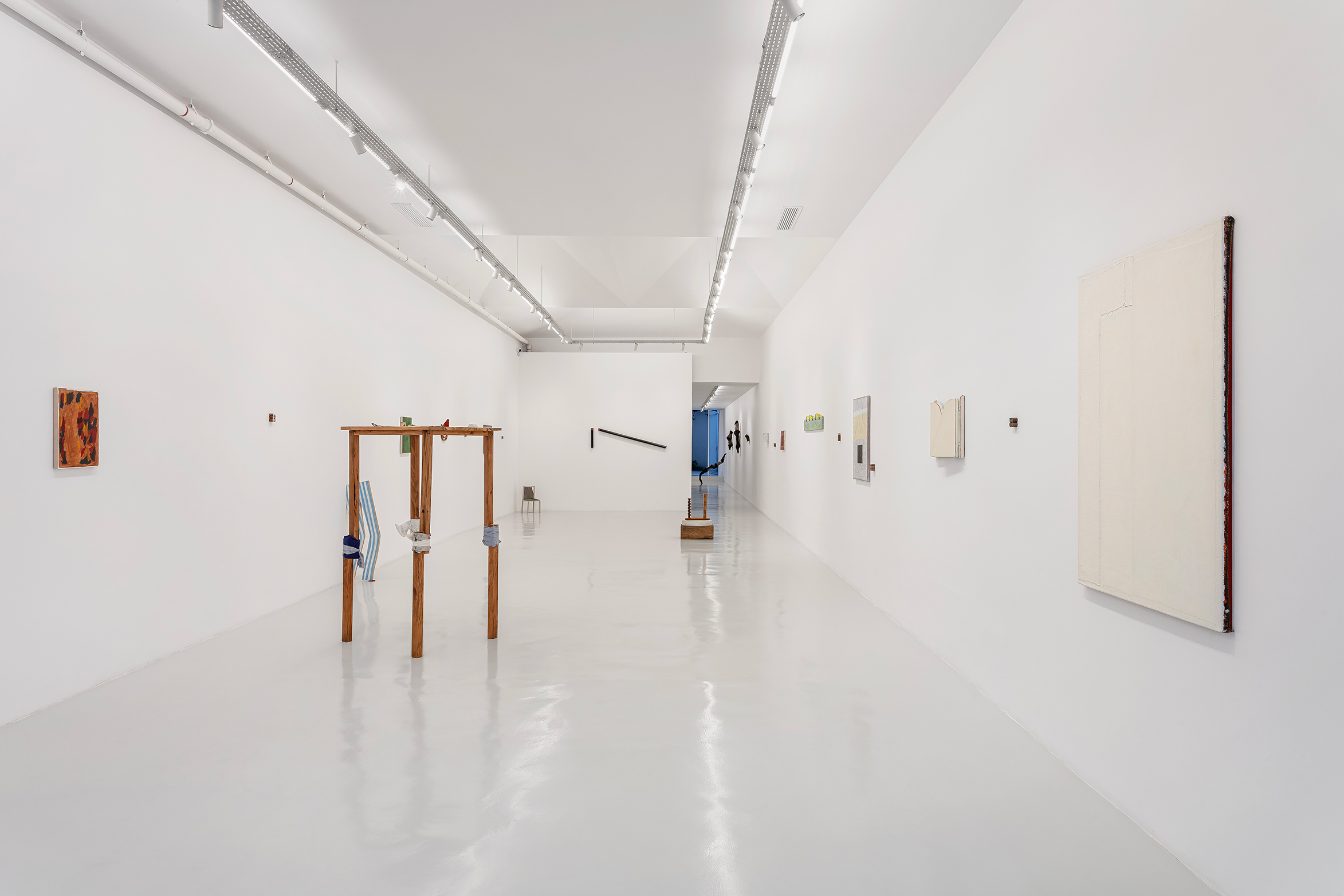
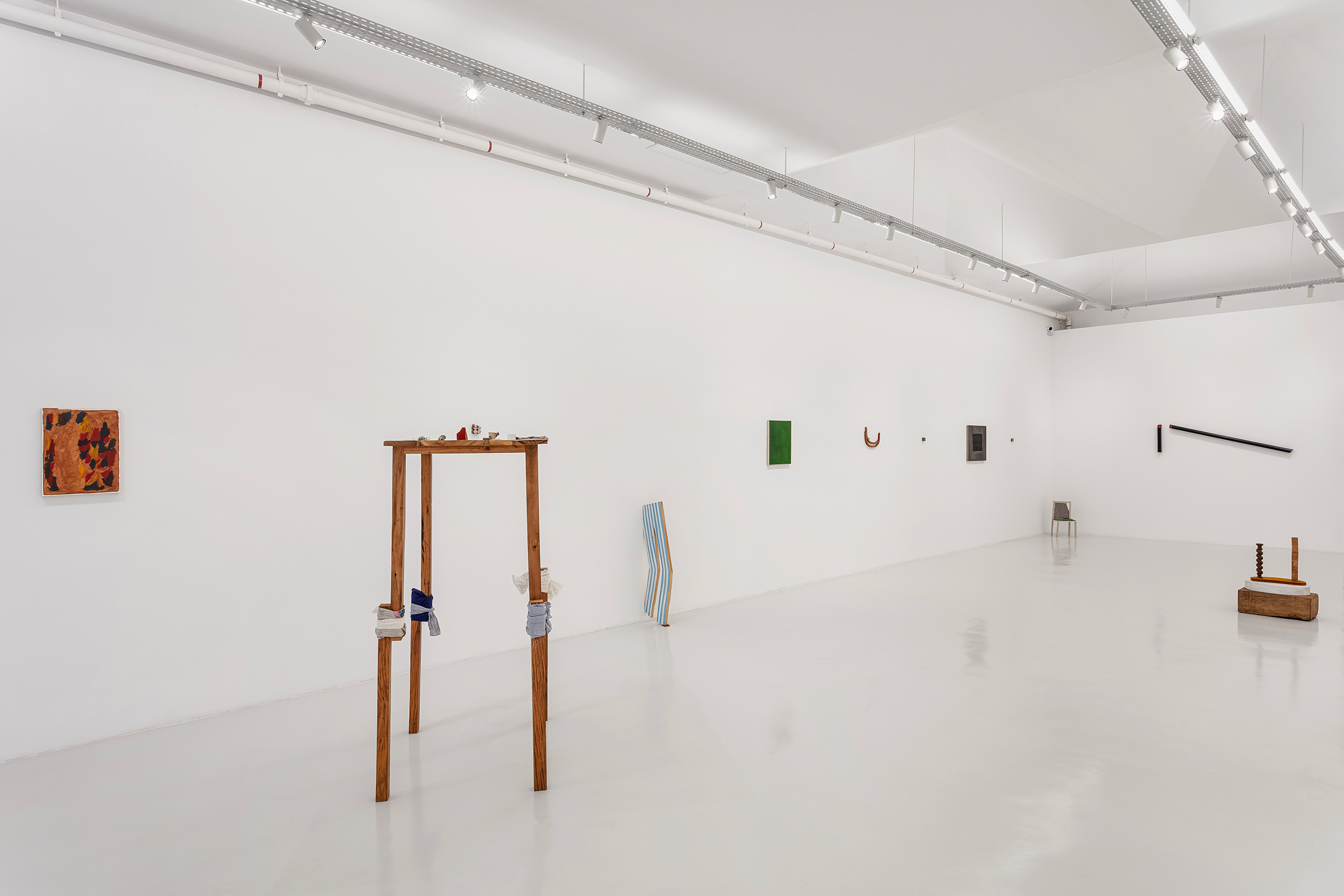
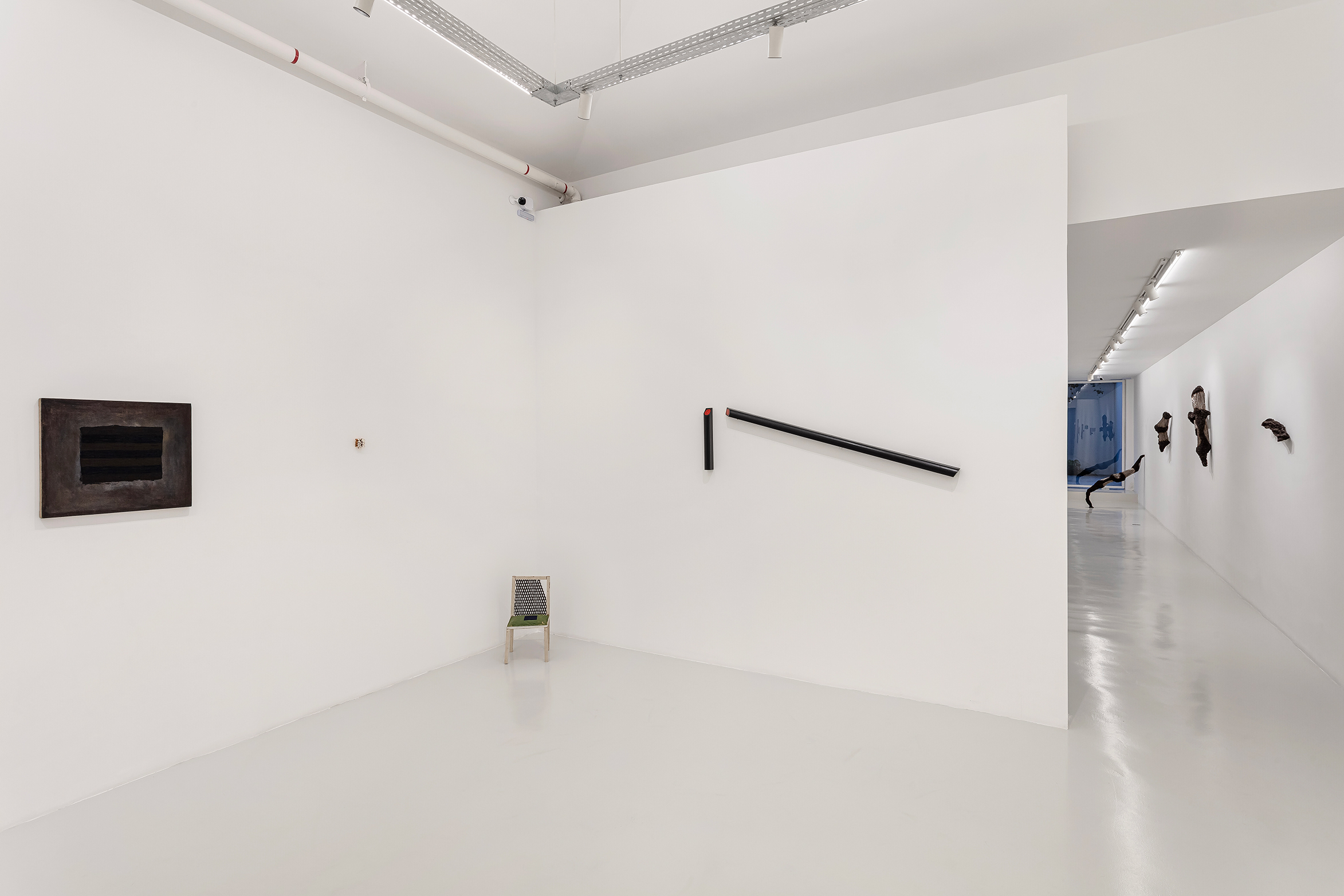
In this exhibition, Marcelo Pacheco sets up his house with bits and pieces, as it should be. Chair, table, drawer, toy, towel, door, coat rack, banner, painting. His materials are durable, telling us about the survival of wood, metal and fabric. The artist recovers abandoned objects, reintroducing them to the world by highlighting their shapes, textures, patterns – and applying chromatic elements and geometries to them. This process of rehabilitation is based on urban wandering, evocative of surrealist wandering, an activity that provides moments in which the artist identifies objects to be transformed. The paintings escape the collection procedure, but repeat the shapes found during the process.
Through this empathetic gathering, Pacheco finds waste that will be cut, painted, sewn and combined. This stage of disassembly and reassembly is not fortuitous, as it is based on a visual repertoire of Brazilian painting that brings to mind Mira Schendel and José Antonio da Silva – as well as evocations of Leonilson, Lore Koch, Volpi and Lorenzatto. It is a citation of the modernist gaze that had the same interest in the form captured both in what was called popular and in its antithesis, the erudite.
All the time Pacheco quotes the artists that interest him – they are conversations with death as if they were in life. Although a fundamental reference for his production process, the artist does not repeat the modernist reading of formal universality. He promotes encounters that are sensitive to the differences that, here and there, play with the sternness of the modern. They are geometries inscribed in the domestic environment, playful, humorous, albeit melancholic.
The contradictory encounter between fun and melancholy, translated into funny shapes and vibrant colors, has already been presented to us by Pop Art, in Claes Oldenburg’s squishy, oversized objects and Andy Warhol’s flat images filled and hollowed out by fields of color, among others. However, they could hardly have imagined the hyper-consumer society we would find ourselves in today. We operate between the excitement of consuming and the sadness of being surrounded by objects and images that, at the end of the day, don’t feed us. Casual relationships between individuals and between individuals and things only generate anxiety. We consume compulsively. Finally, Zygmunt Bauman will help us understand this state: we seek the immediate satisfaction of consumption to suffocate our insecurities in the face of a broken world ². Like the Warhol of video performances, we have become automatons.
Pacheco’s works – sweetly – take us out of this lethargic repetition. They are not representations of us, nor of our personal memories. But they make us stop, together with the artist, to look, to associate, to discover, to pause. We understand that the discarding of yesterday’s objects is the discarding of today’s subjectivities. We look at the objects and remember times when our relationships with them and with each other were more personal, singularized and less made in China.
Ana Avelar