Holes, craters and hugs
Ana Cláudia Almeida
curated by Tarcísio Almeida
May 22, 2021 - July 2, 2021
Rio de Janeiro
body calling space
Perhaps the question on our horizon here is: How do we, bodies rising from the tremors inherited by the present, experience modes, however subtle, of freedom and liberation? Even in 2019, when we began the work process that is now taking shape and strength in its first section, the echo of this question functioned both as a driving force and as material for the development of the muscular and sensitive tone necessary for us to inhabit the depths of this question.
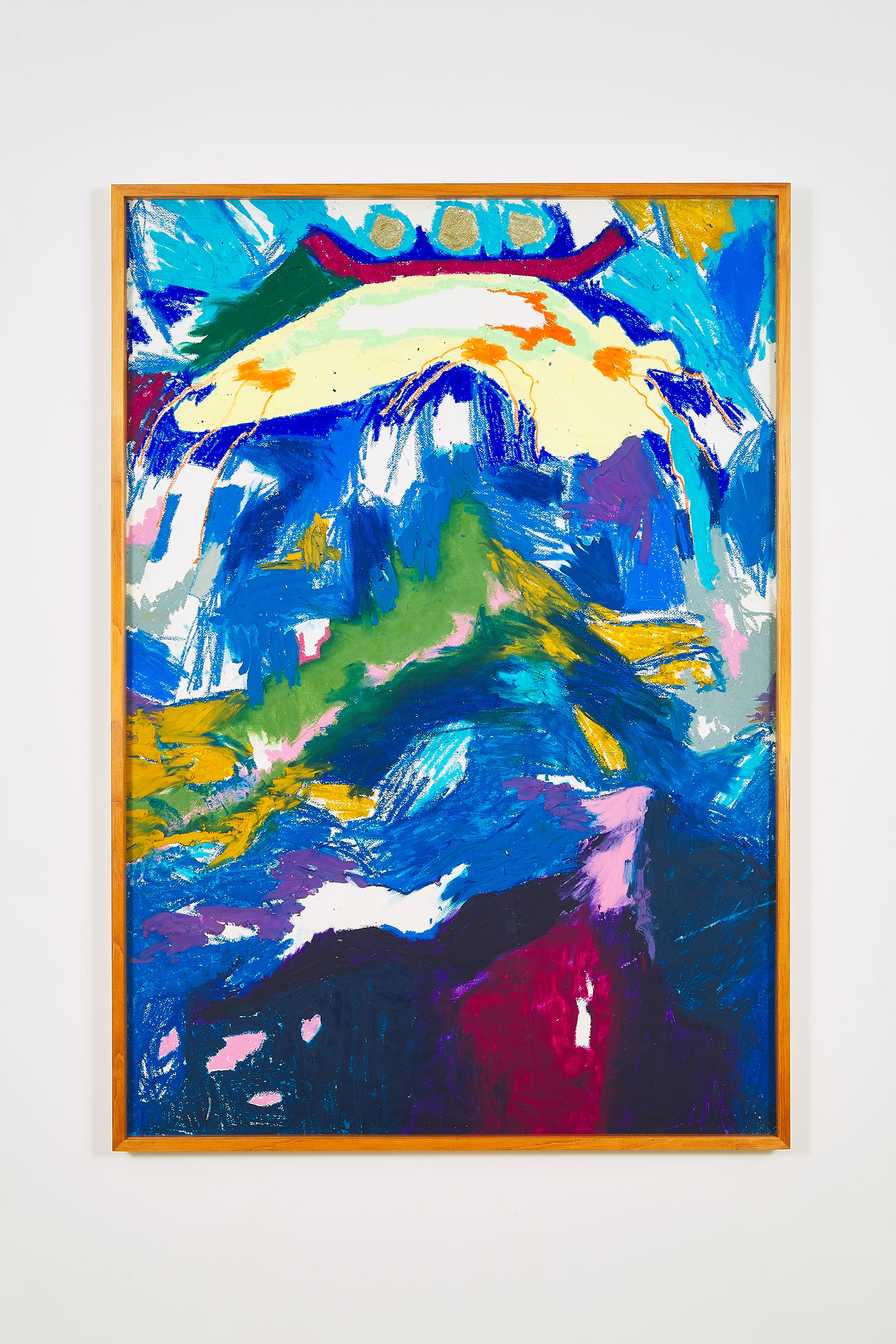
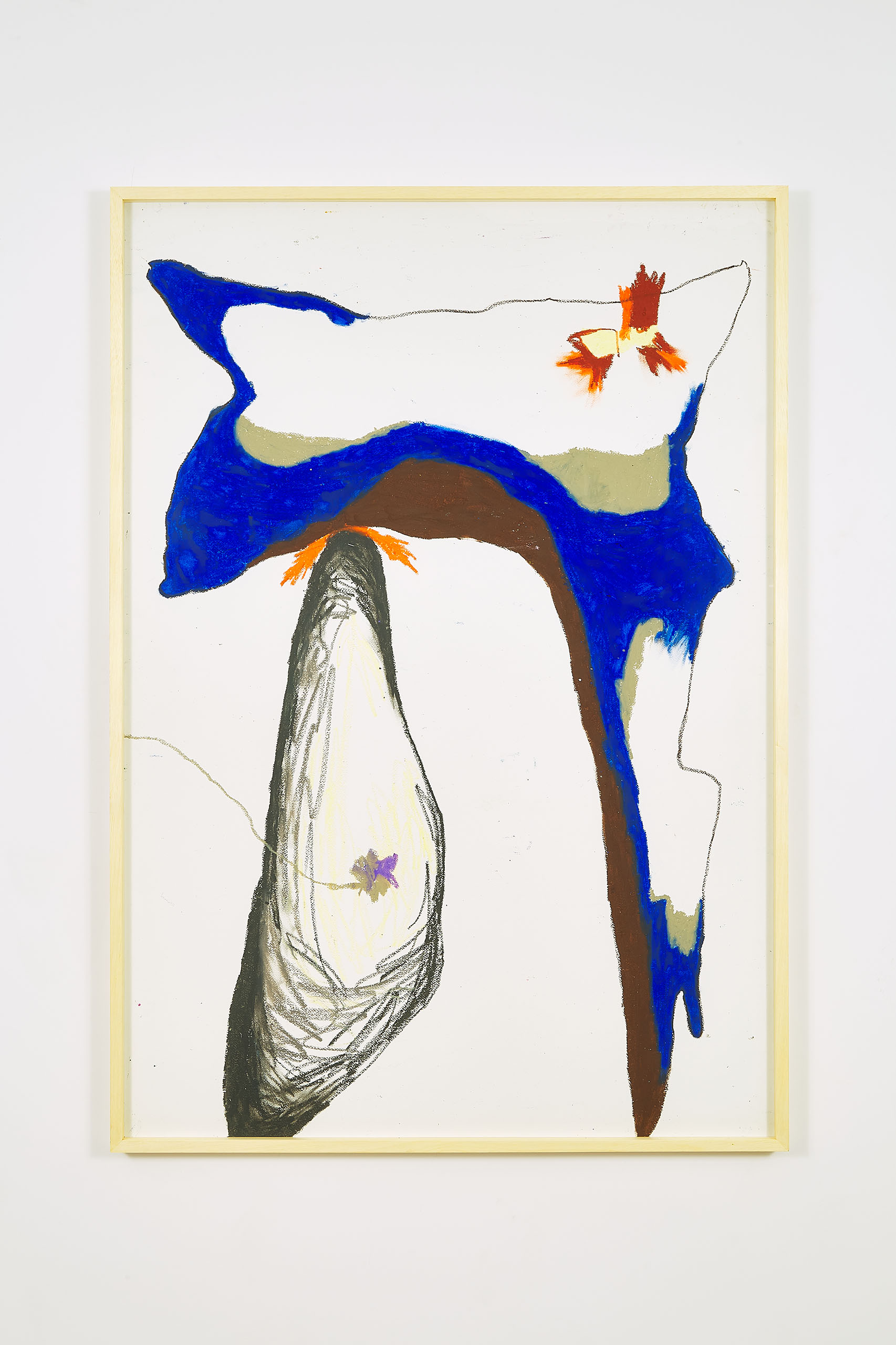
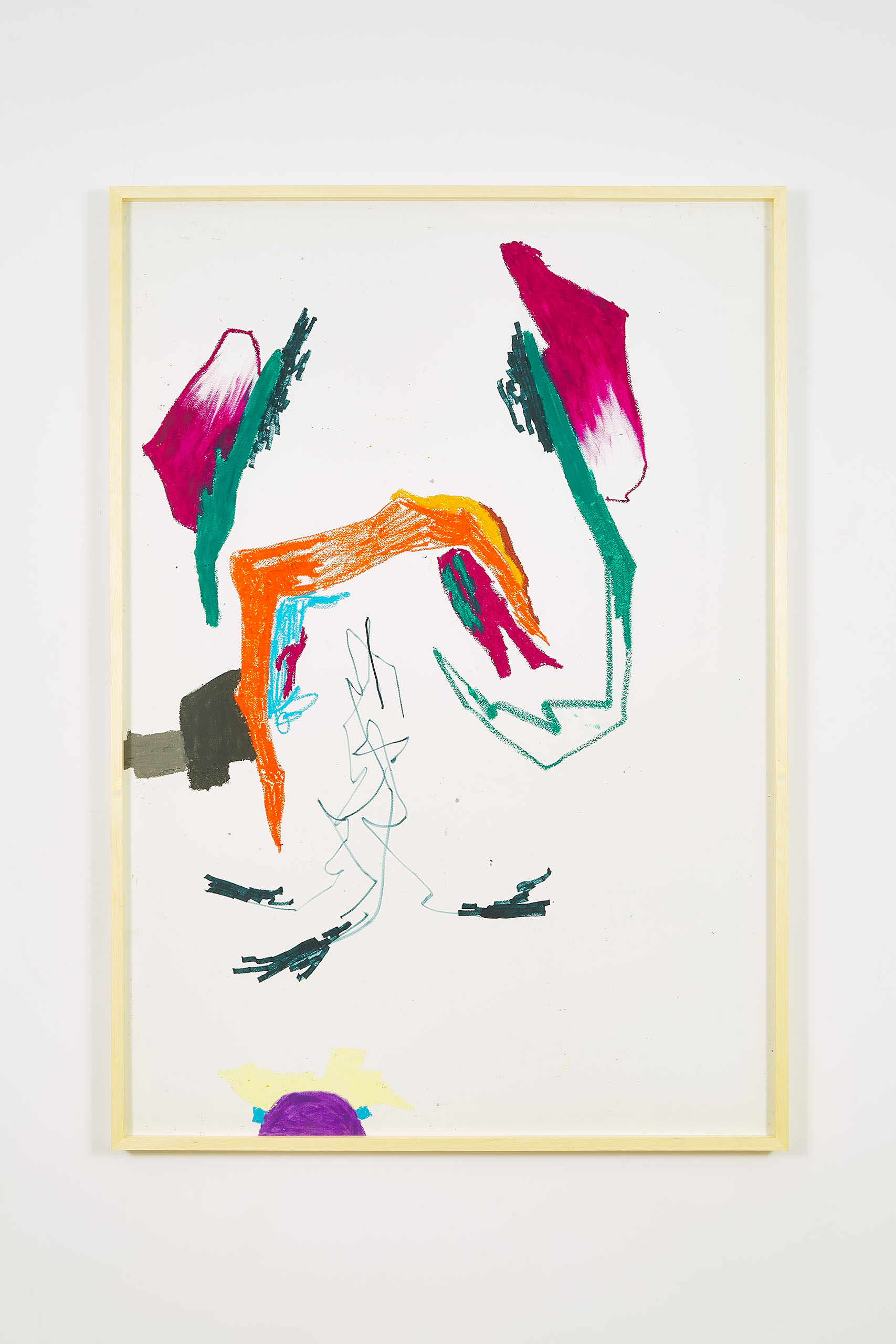
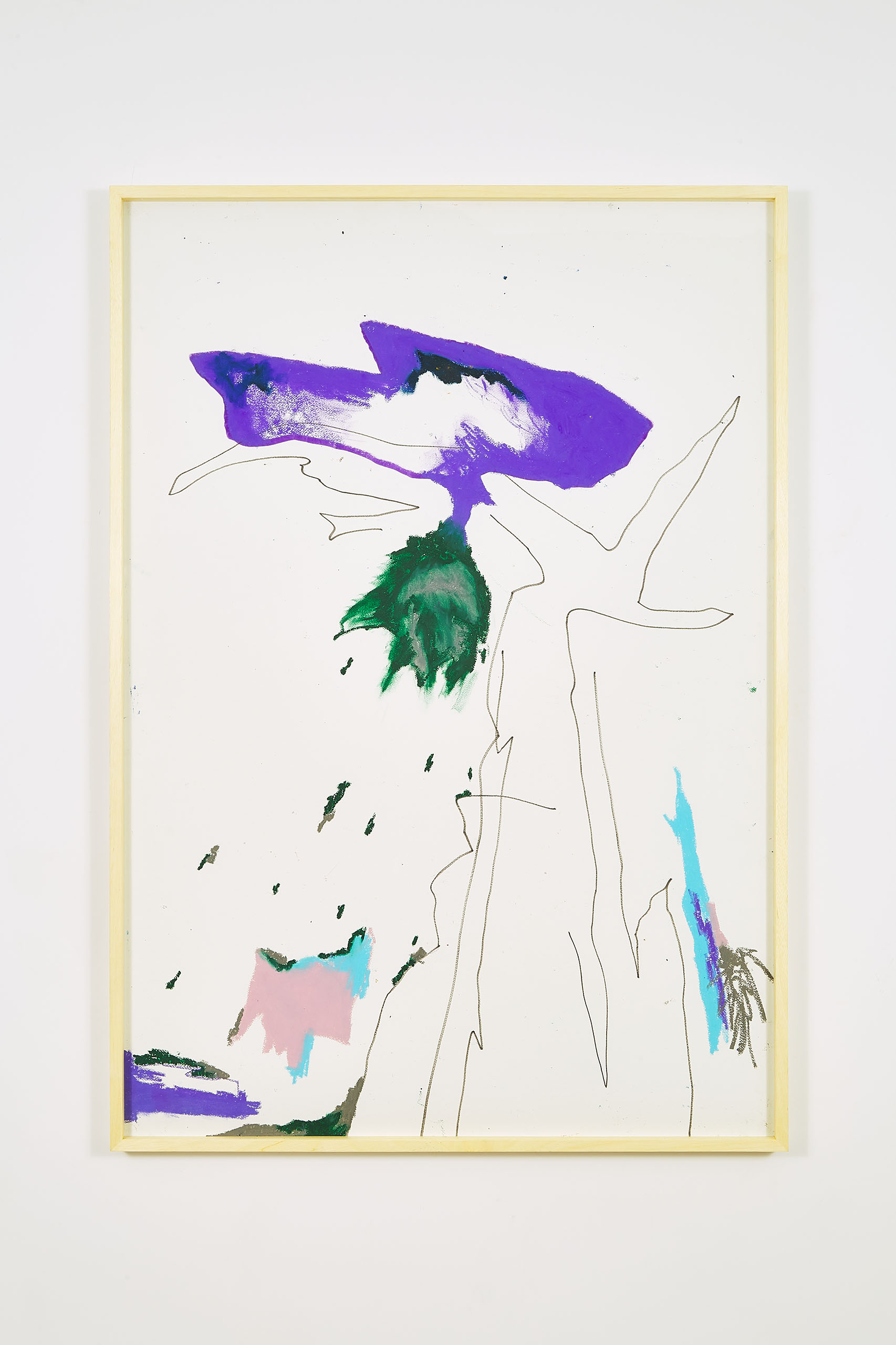
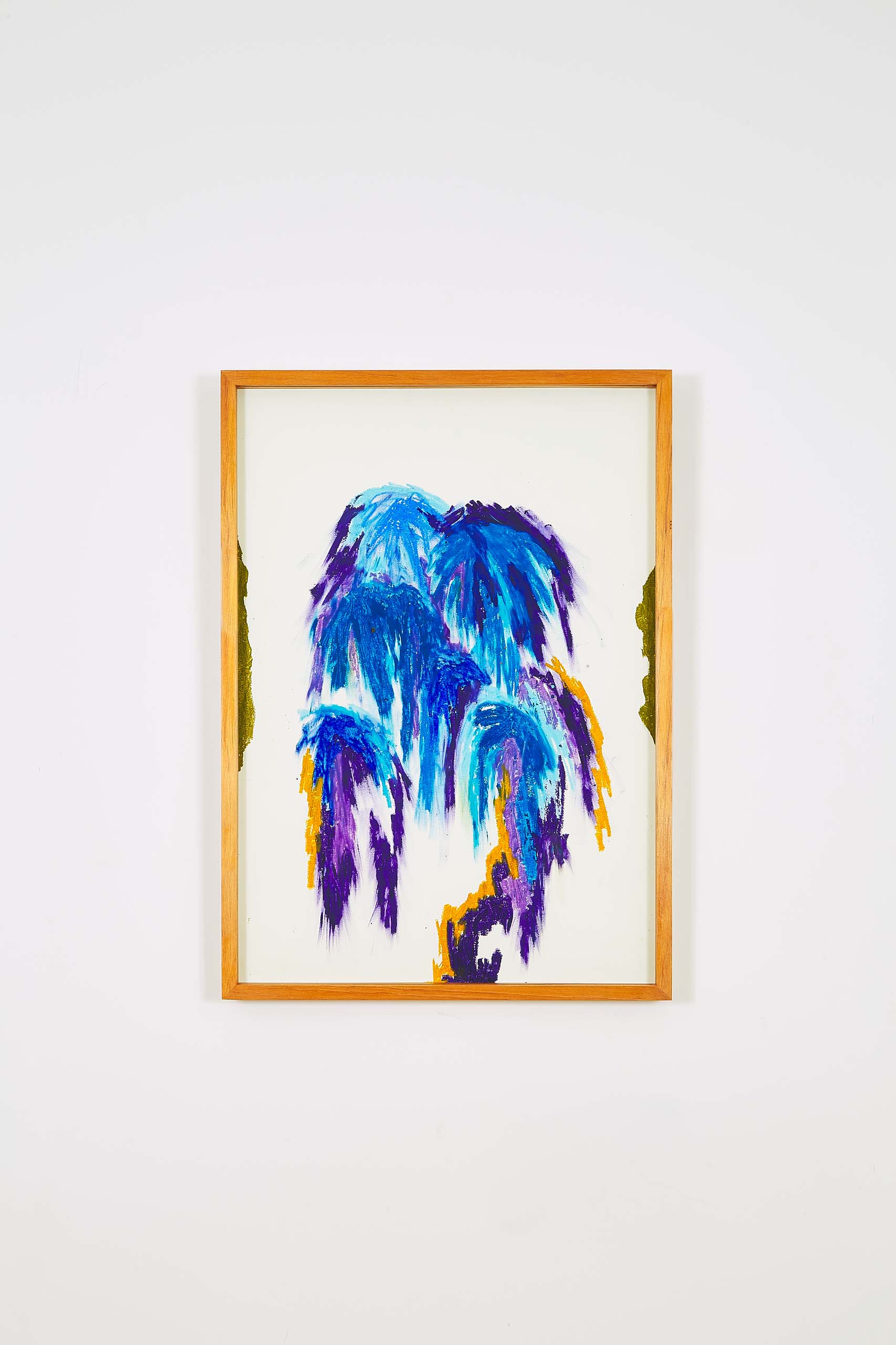
Here, where the body occupies the space of the crater itself, far beyond sound, what projects and expands from it is a mass made of air and color in which everything is rhythm and intensity. Both, impossible to predict, conform to apparently dispersed situations, and it is through them that everything flows. The body that is now the crater itself experiences its visual records by annunciation.
Here, where the light can’t enter through the dictates of the illuminated, relationships occur through refraction, in other words, nothing manifests itself in its entirety. Being does not exist before experience and nothing is completely diluted so that the parties involved can remain firm enough and soft enough so that their rhythms and intensities can carry out the work at hand.
Here, where the claims are made in the abstract space of the holes, what is present is the multiple itself in its capacity for contamination and propagation. And the fear operated by the imperative of unity is doubled, redoubled, lowering the effects of the machine that produces the secular prison of the name. The body of the crater is also a vessel. Gesture and pure resonance of a manifestation driven by the rearrangement of energy: the materiality that conducts experience.
In 2020, when yet another transcontinental explosion overshadowed our thousand suns, we were reunited through pixels with the geography of Milton Santos and an old-new intimacy suggested by his philosophy indicated that in addition to a way of making and embodying intensities, a problem about space was also emerging. Spaces, sets of actions purified and built up by experience, as well as their techniques (instrumental means with which life takes place) were enlarged by the force of the body printed on paper, by choreography in the face of color and by the desire aroused by proportions.
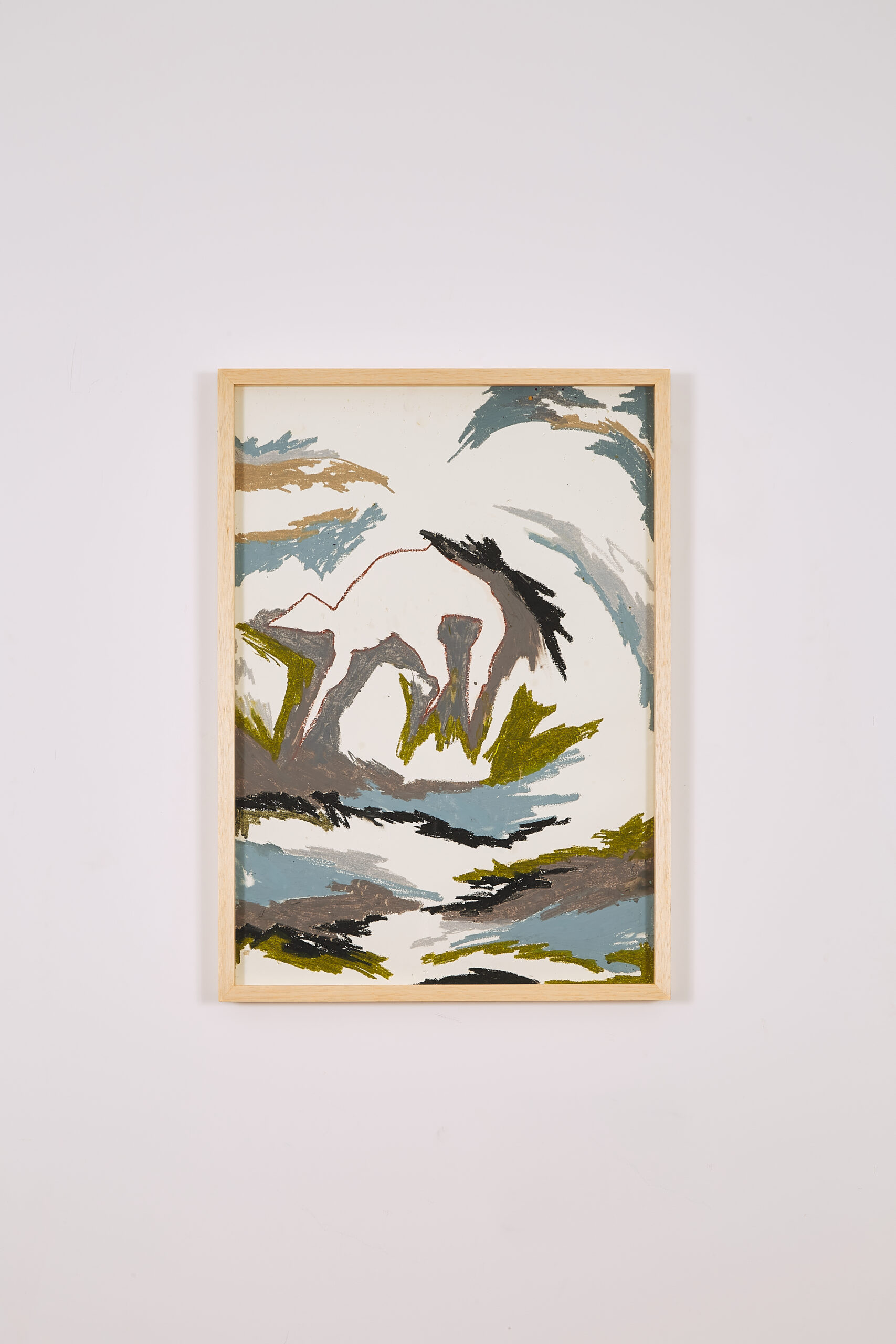
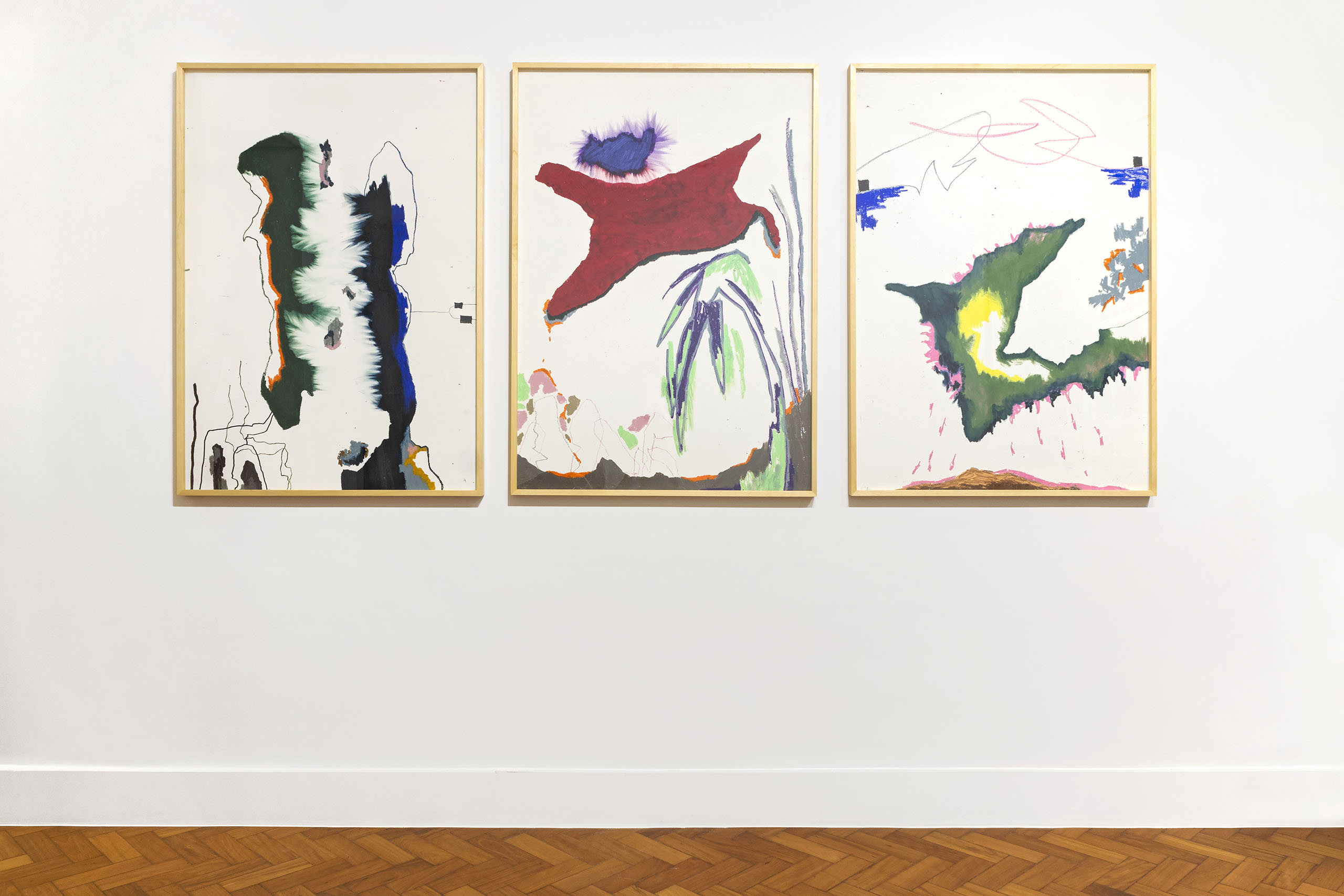
More than a theory about space, what the oil pastel compass directed was a desire for space. A place through which the air could flow and which would take us both to sidereal heights and to the meticulous crevices of the infra-quantum particles of sensation.
To call space into being through that which does not yet have a form is to make tangible in itself the matter that is needed when the real seems to tremble. In this sense, to abstract is to act from a world in favor of what asks for passage and therefore urges the creation of a place that is still unprecedented. On the horizon of these ways, we find ourselves, bodies that have not been completely mapped out and that sustain the possibilities of saying from (re)composition in the passages, in the refusal of a previous meaning and in the withdrawal of the protagonism of words.
To call space as one that fights for “de-facialization” is to make it possible to form a living block, in which unknown landscapes are fed, enunciated by its forces and, therefore, make us enter a multiplicity that does not cease its creative effects.
How, then, does the encounter between different planes of force produce a space? How can these forces be made sensitive (and visible) in a practice committed to their appearance? The problem of transporting forces through space is mixed up with a form of knowledge and affection eminently linked to the ethical capacity of the body that summons them. What the forces call forth when they cross the body-space is always of the order of a health operated by the encounter. Renouncing the spectacle of representation in favor of sensation always places us before a declaration of faith in life itself.
Again: What the problem of forces brings us is always a problem of space. A space that opens up to its forces and offers us the opportunity to redesign the living. It is in the body of space that something happens: it is now a pure source of movement. Of course, the event, a condition of access to the forces and forms that rearrange space, is not a matter of mere chance or luck. Access to forces is first and foremost about taking possession, even if clandestinely, of the right to them. To take forces into oneself is to take space into oneself. How, then, can the body be guaranteed access to these forces if the updating of historical captures is fundamentally aimed at anesthetizing it?
potholes and craters
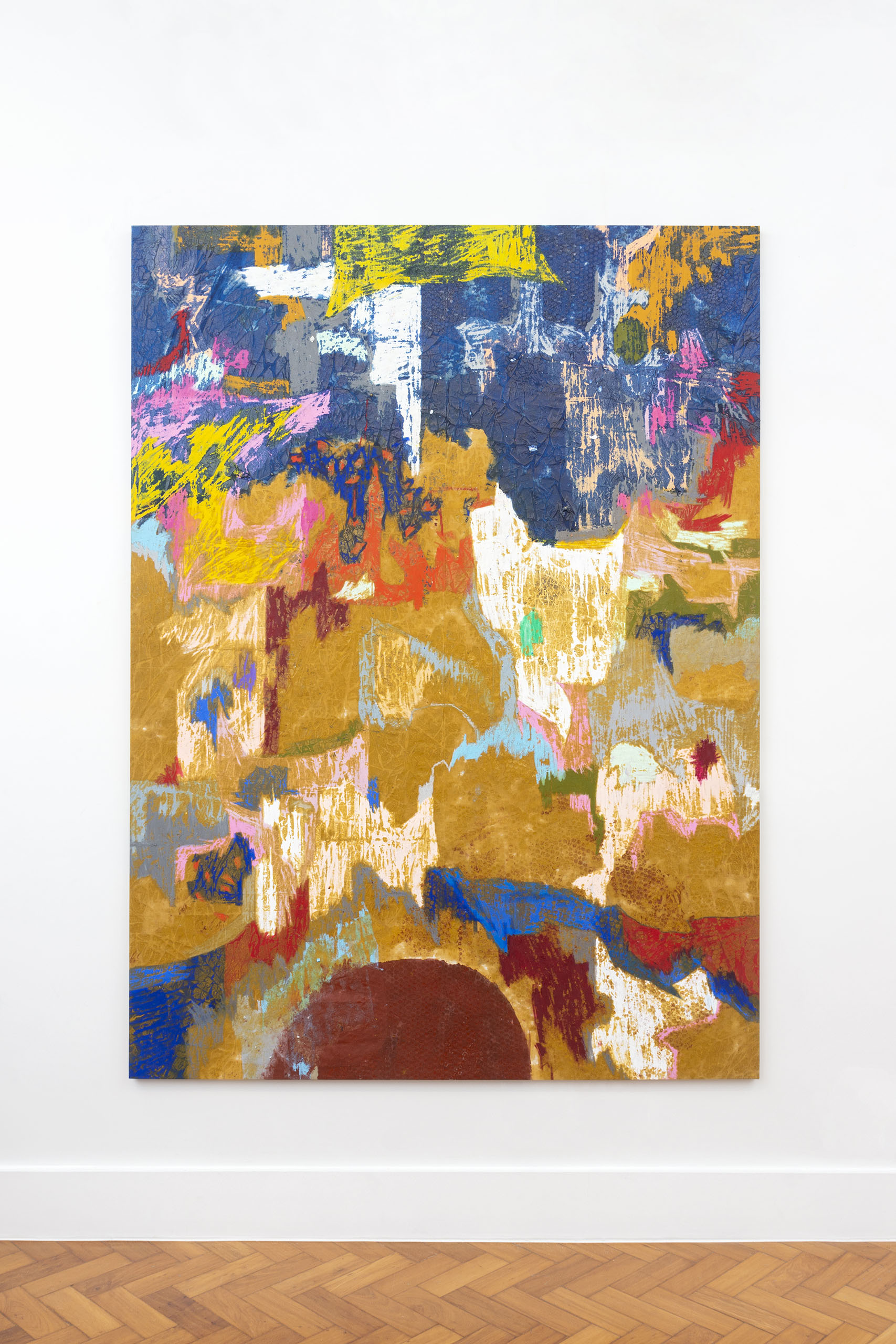
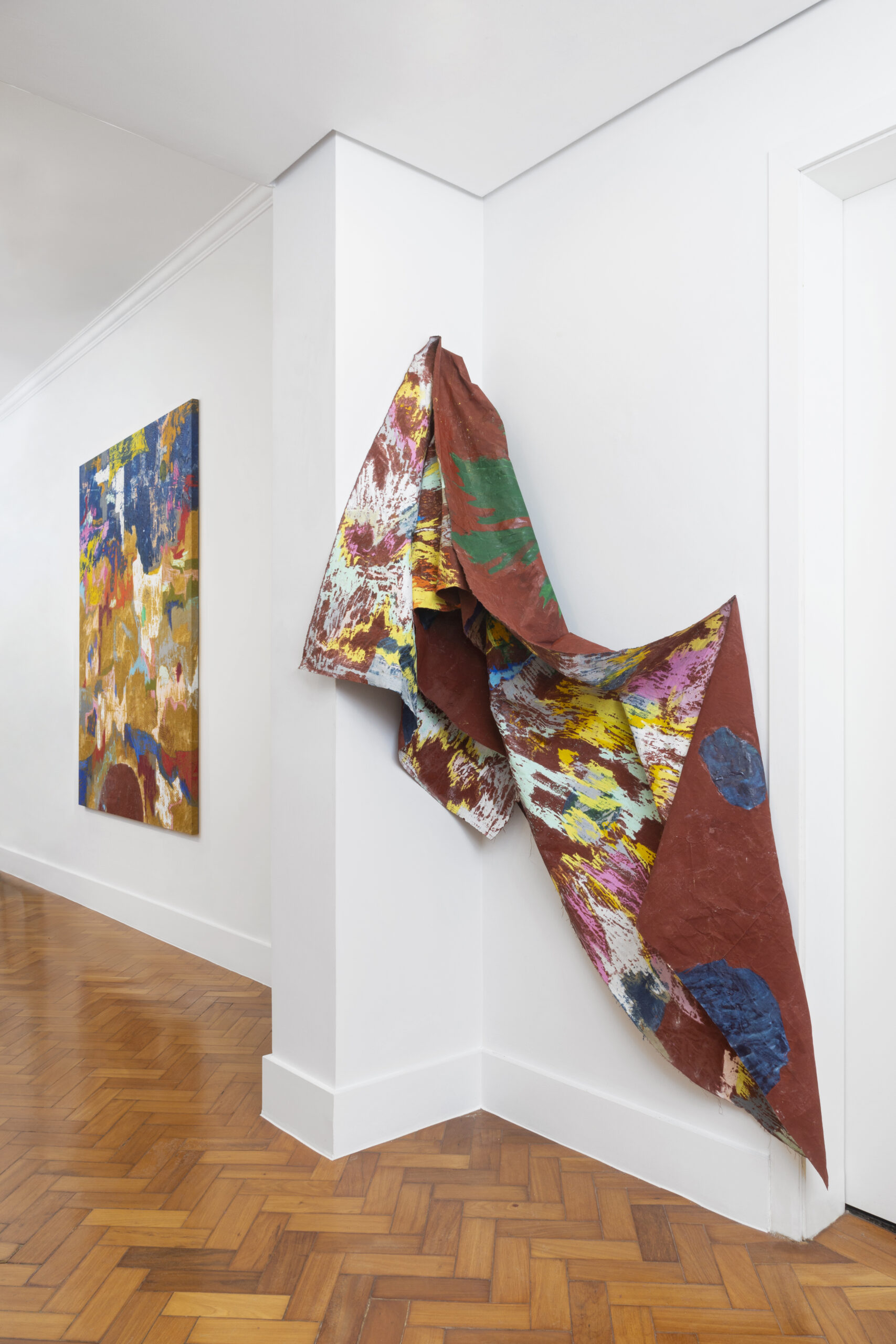
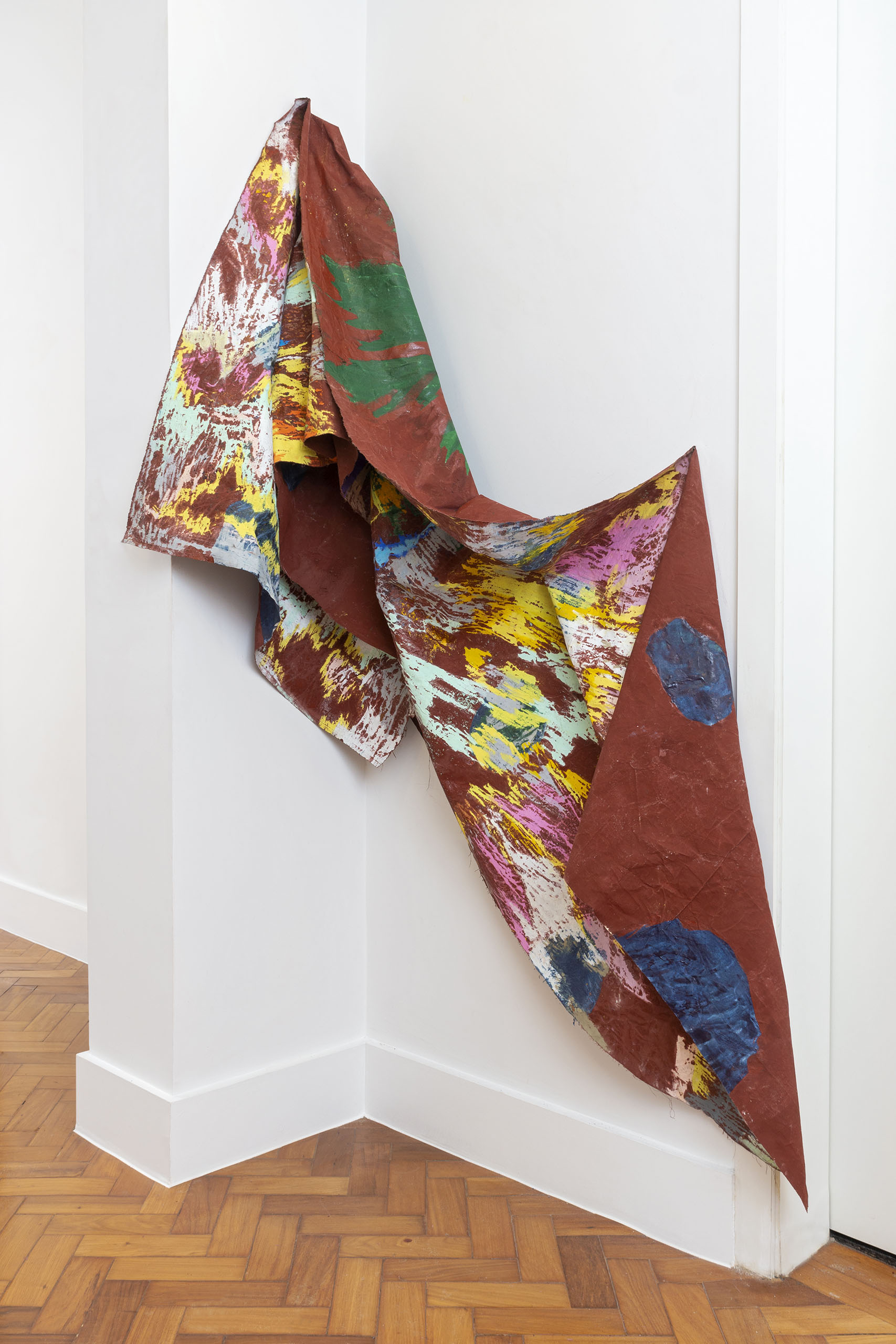
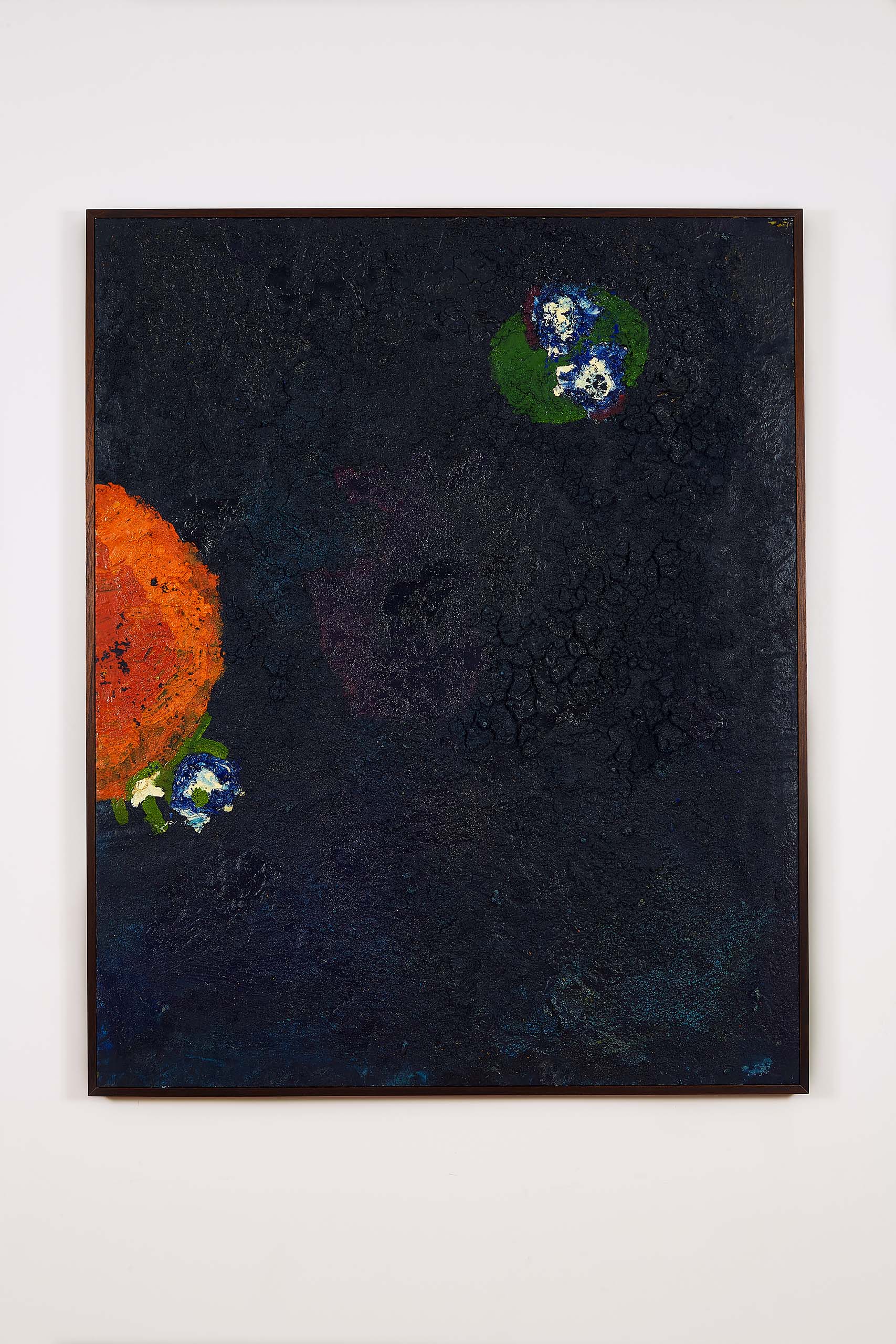
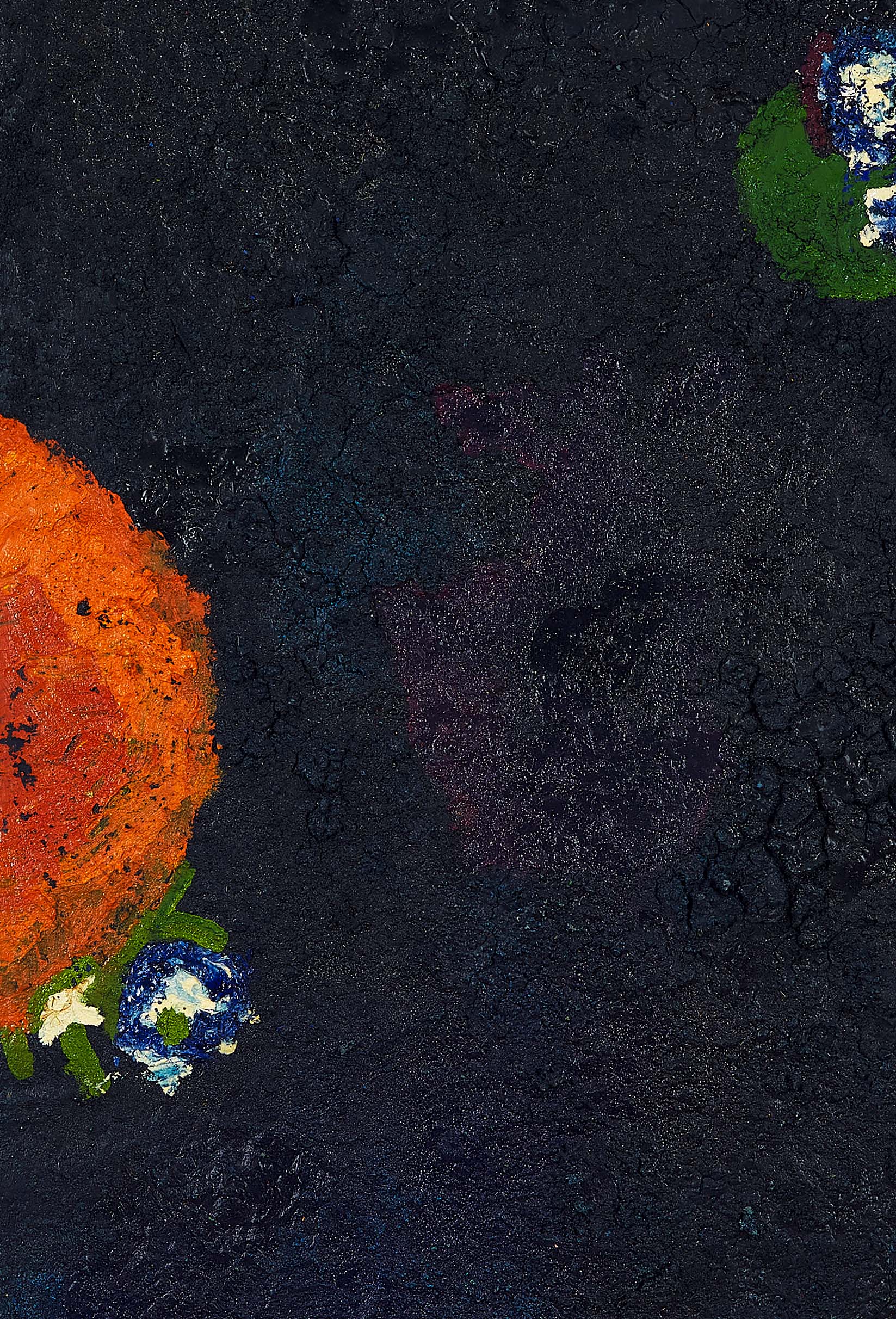
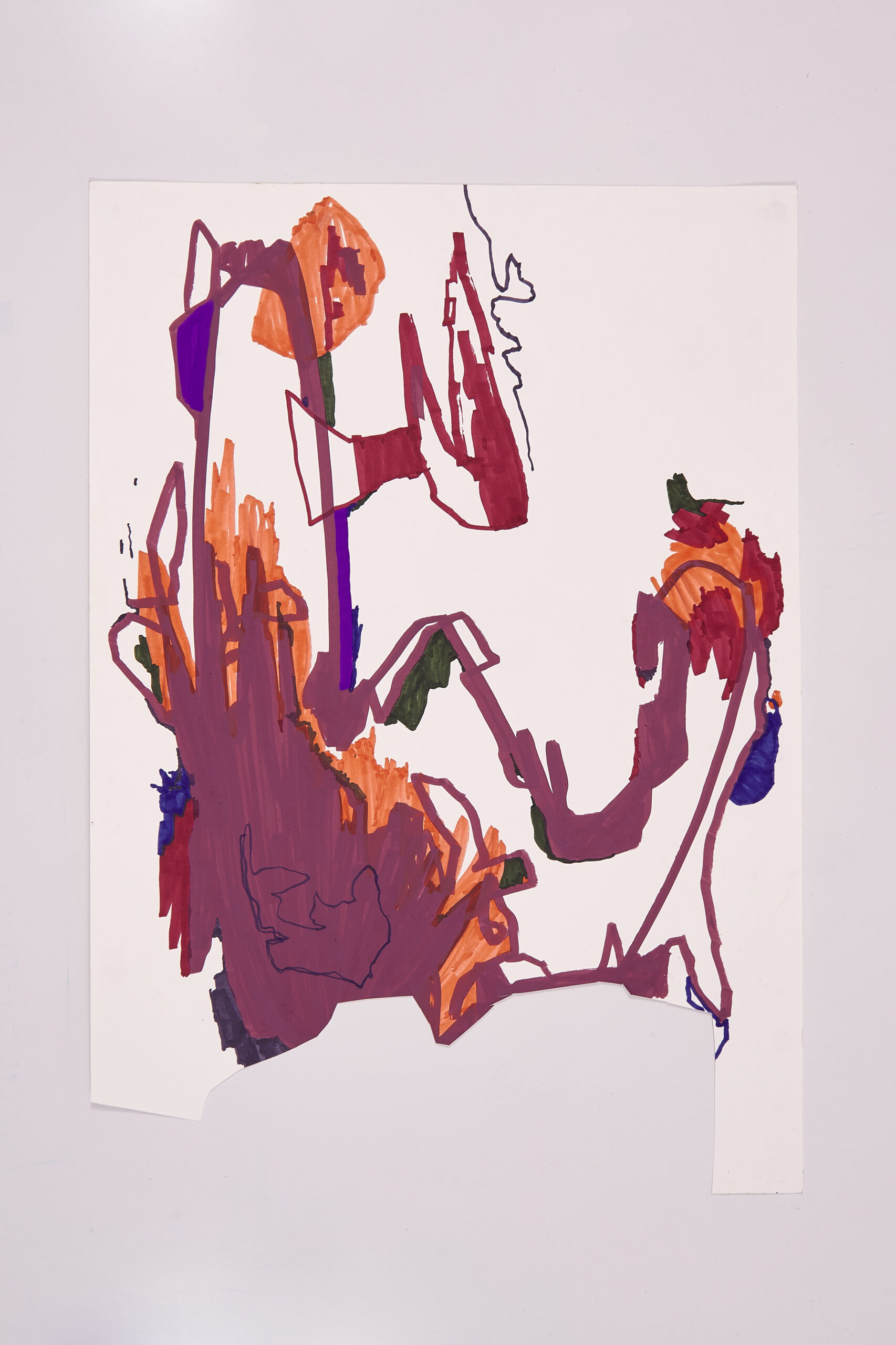
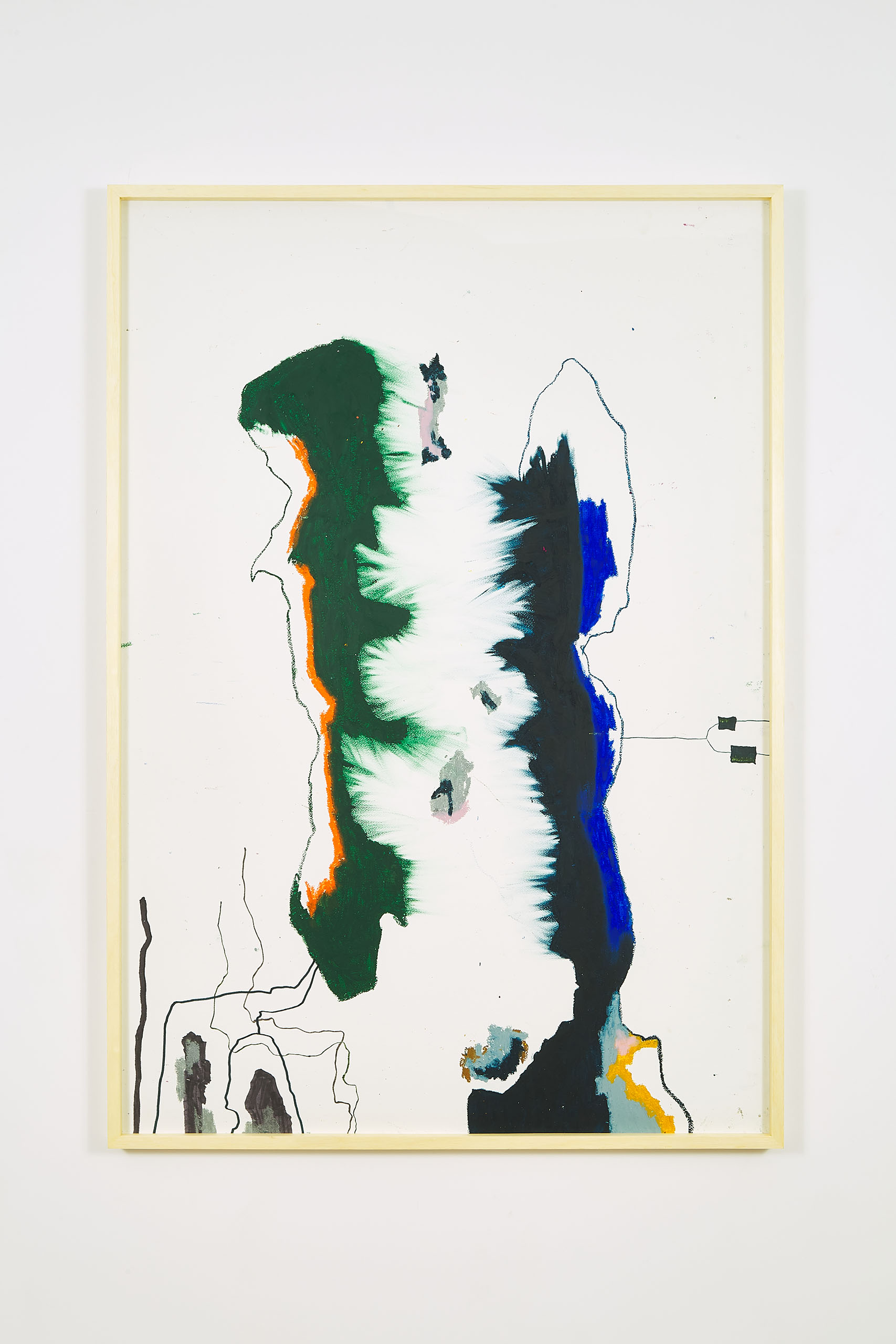
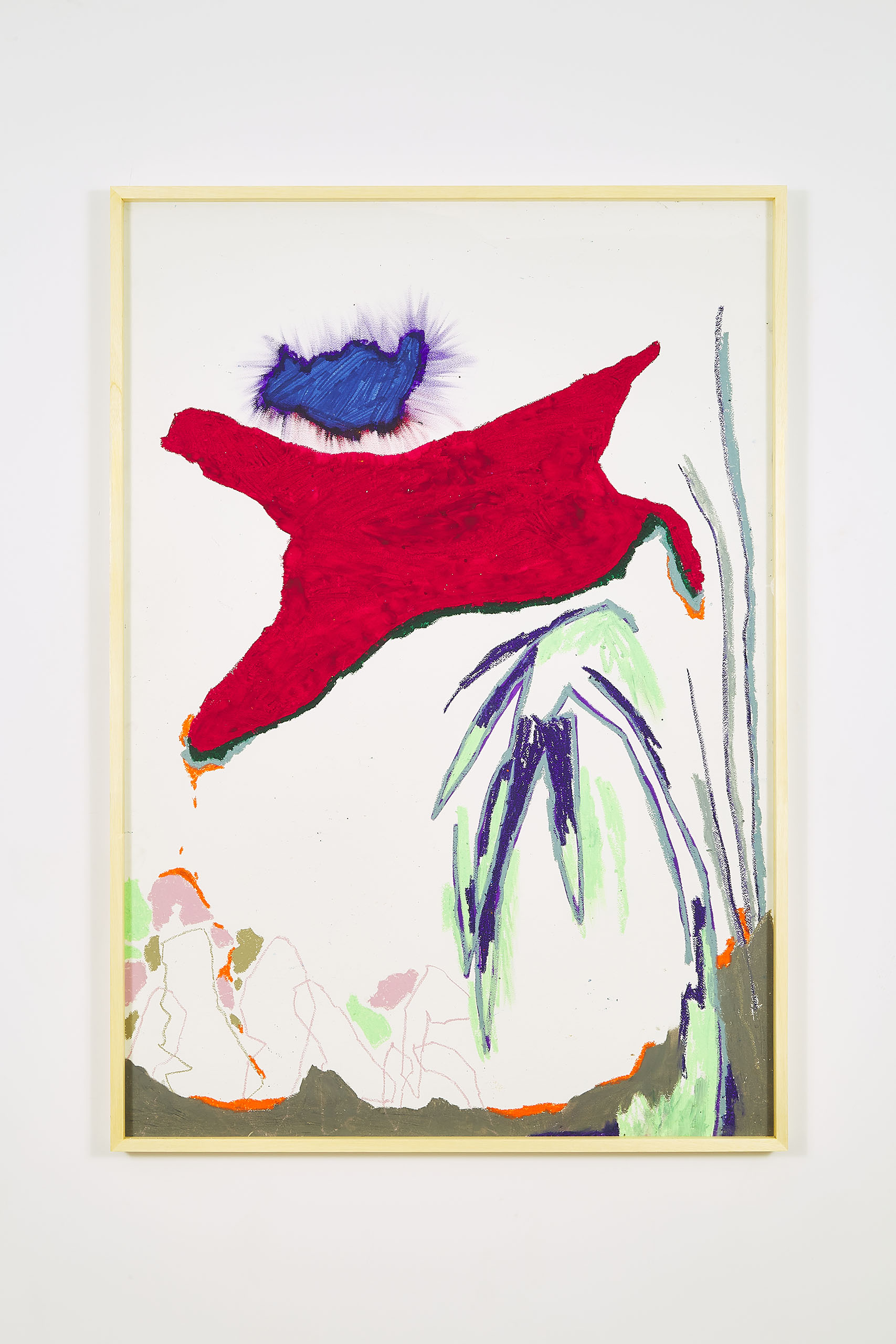
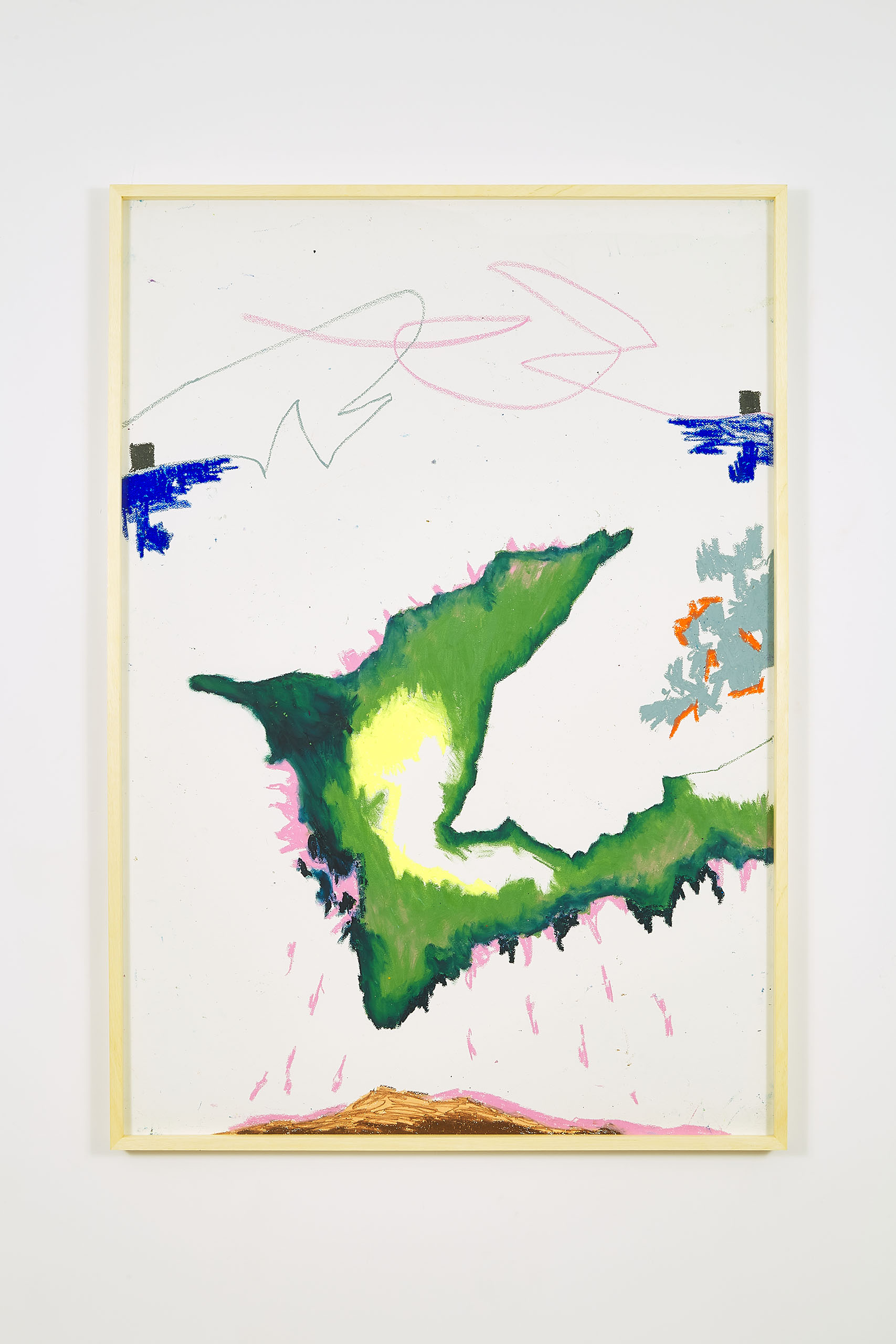
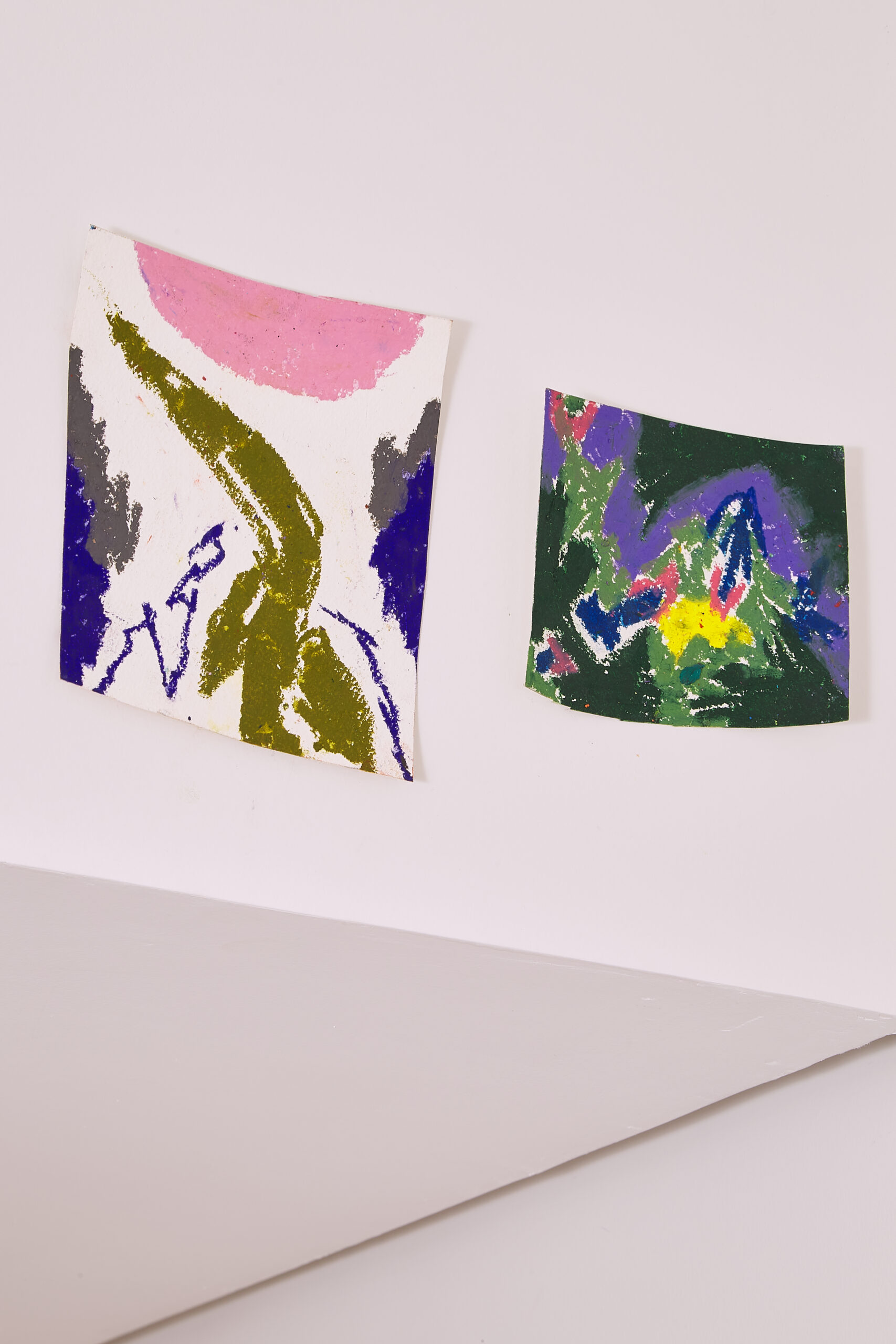
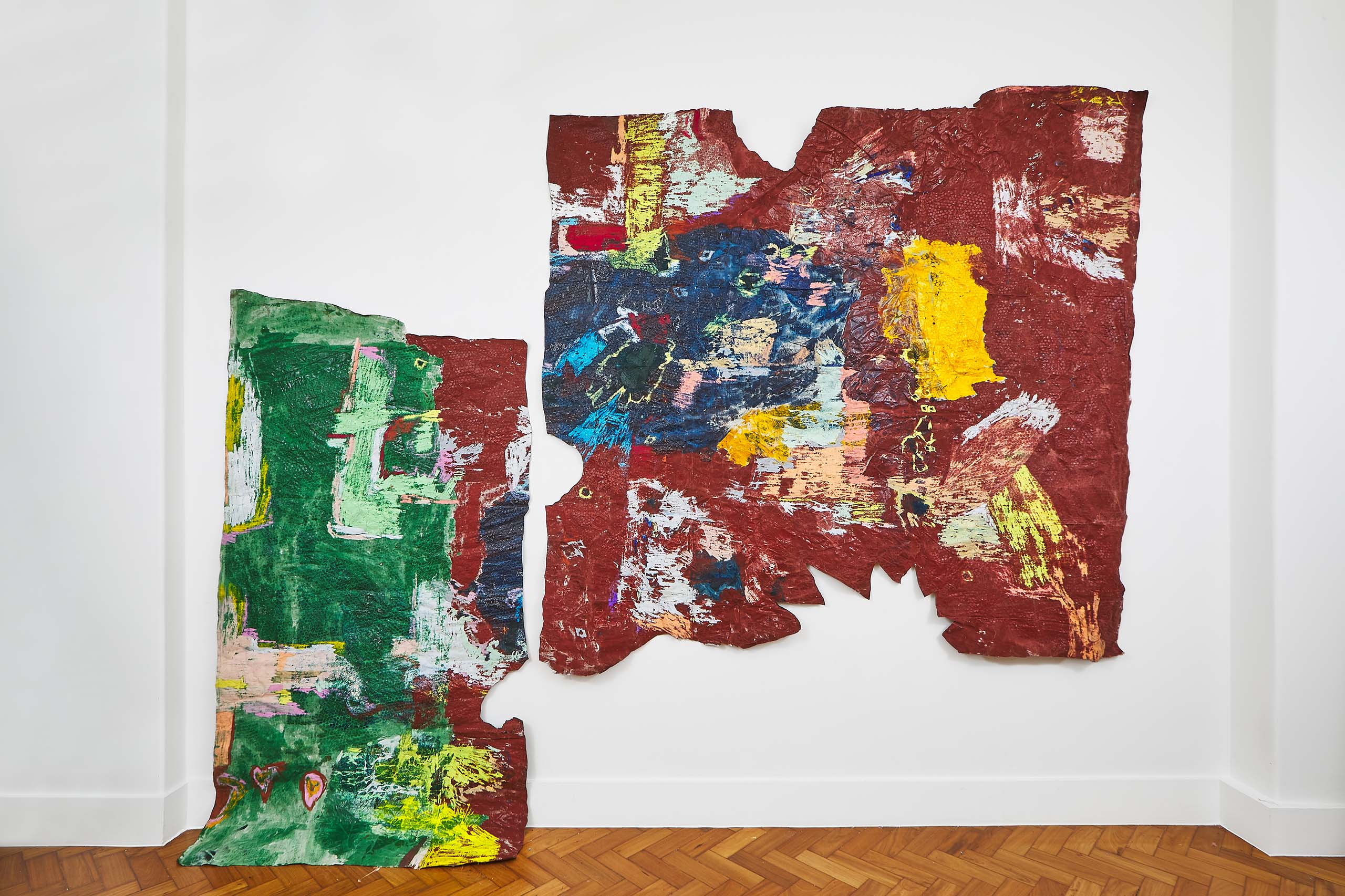
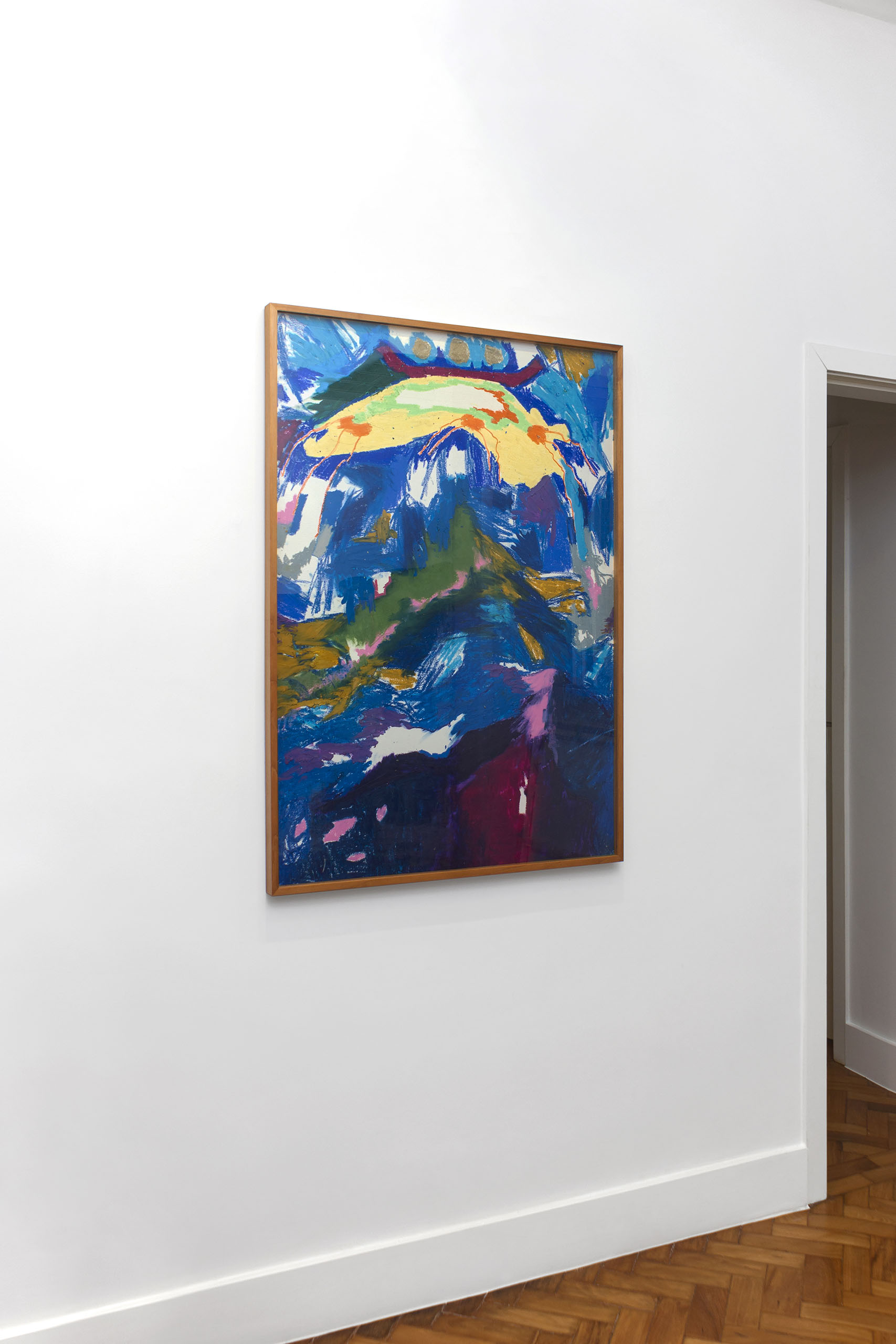
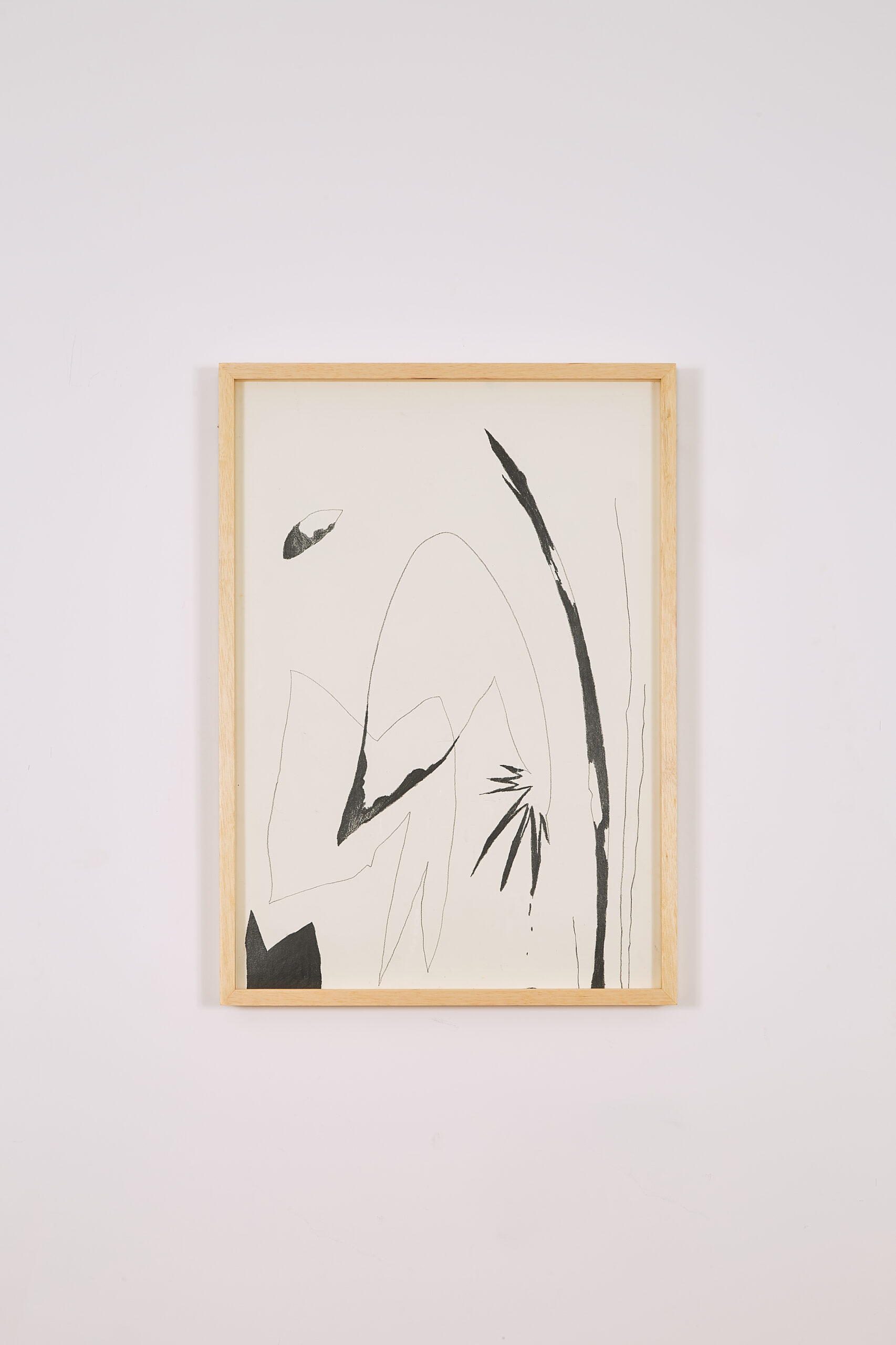
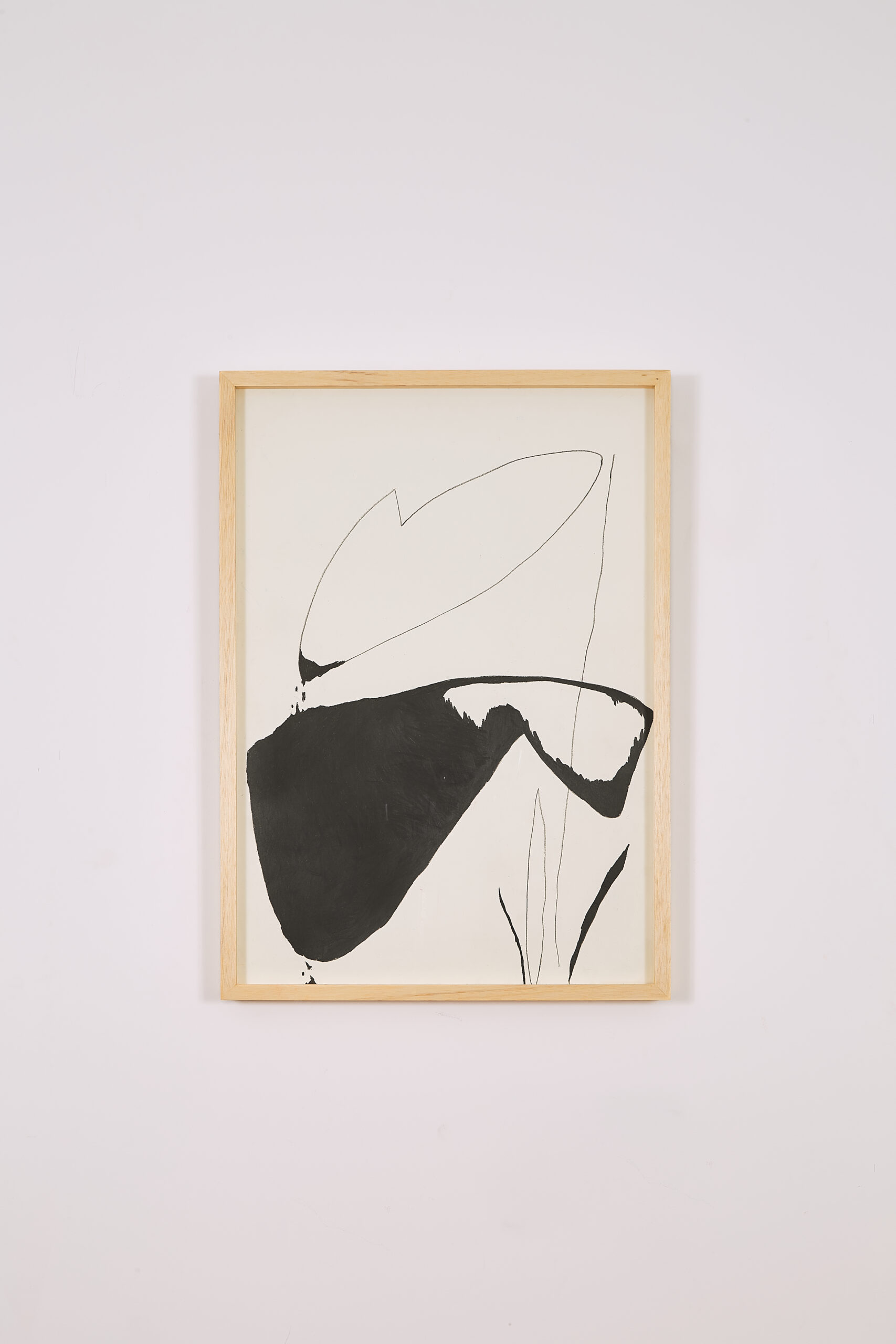
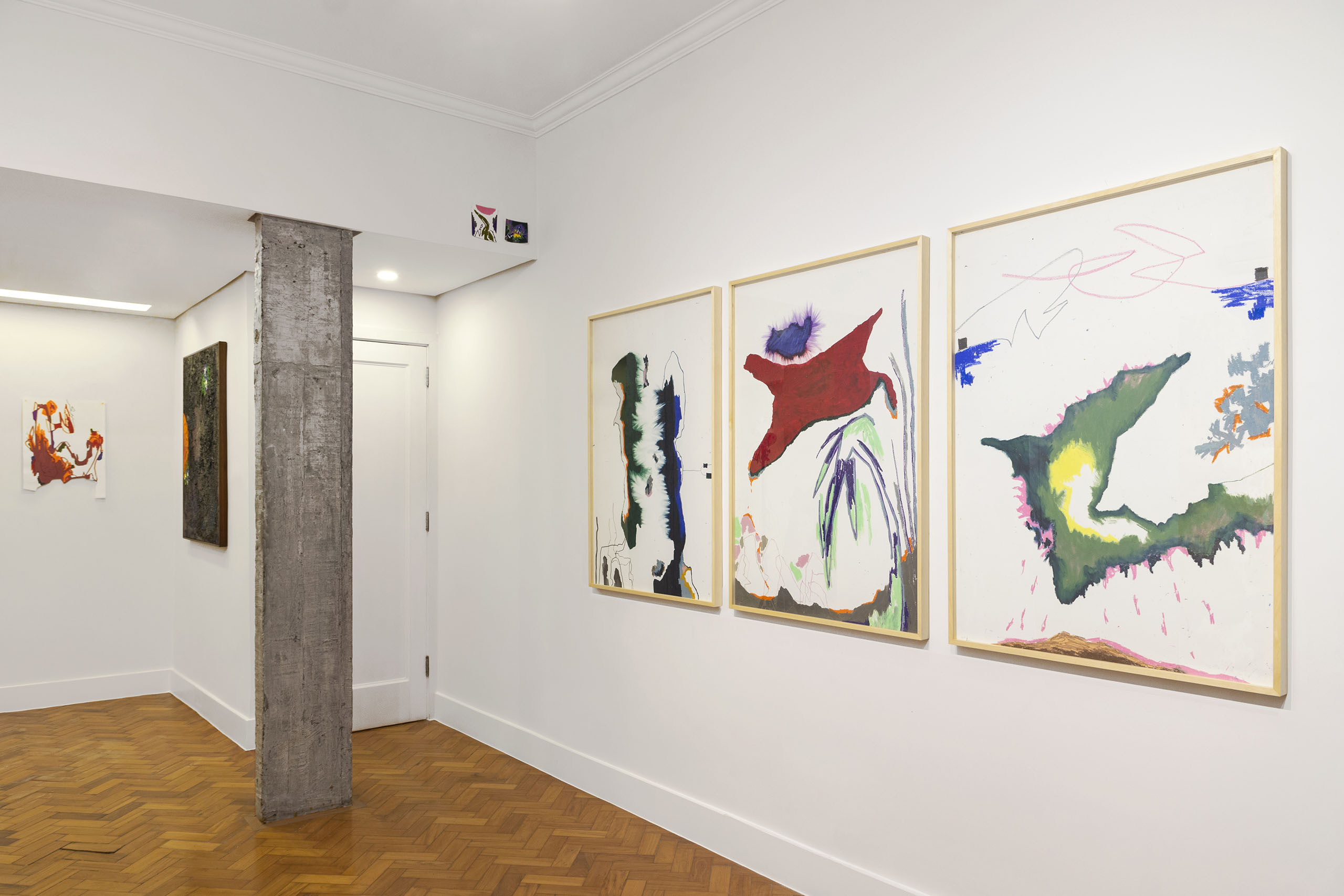
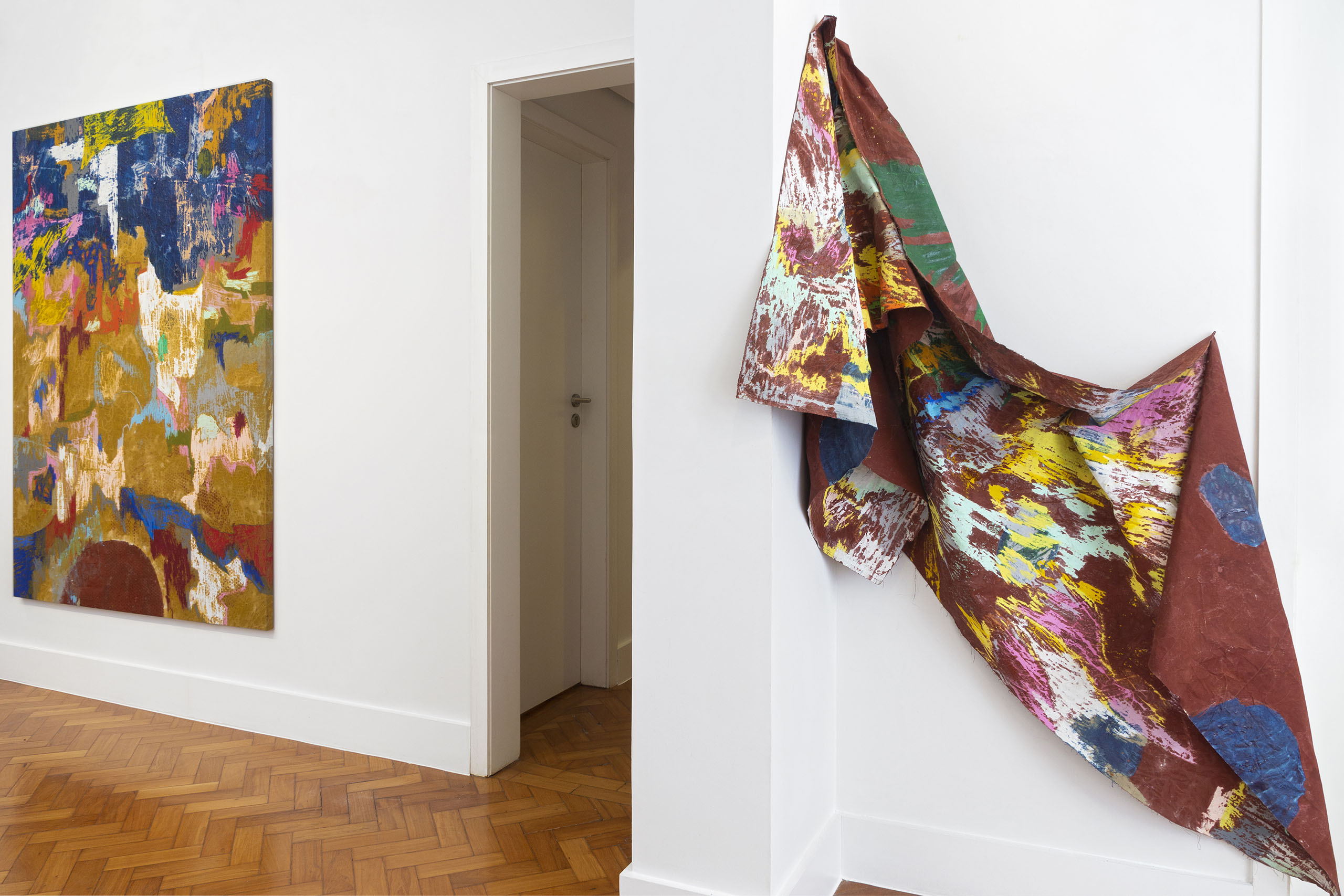
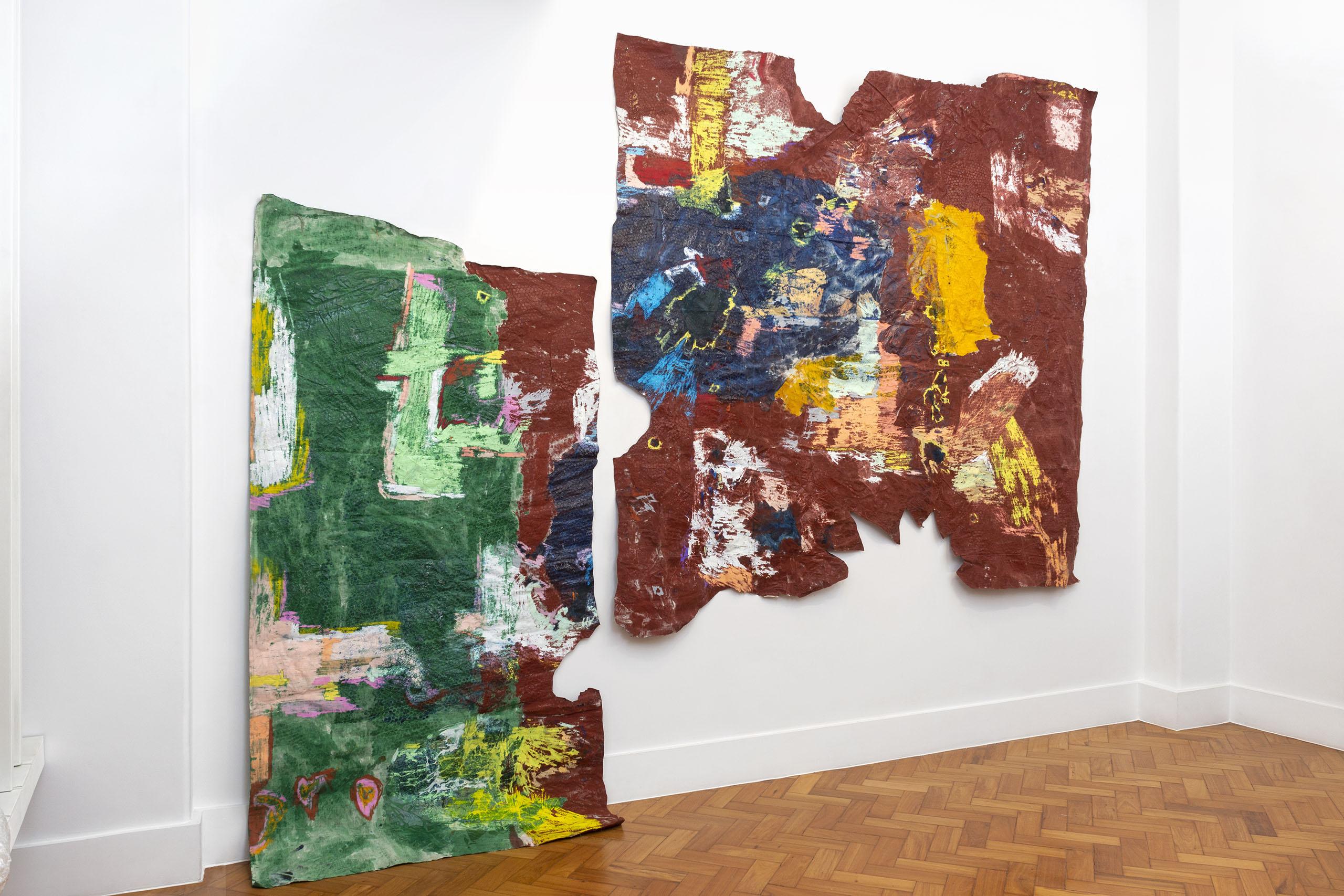
It is through holes, craters and hugs – sensitive places dedicated to all her peers who don’t always like to talk – that Ana Cláudia Almeida articulates the selection of works presented here in her first solo exhibition at Quadra. The fruit of her research, which has been ongoing since 2019, Ana uses a series of procedures that are apparently incompatible with the pictorial field, such as smiling, dancing, tracing nameless routes, exchanging glances… to move towards her desire for space. Visual topologies, and no less political ones, arranged between expanded painting and drawing that function both as calls and as traces of her own movement.
In this exercise of summoning, there are many forces that the artist puts into play: temporal forces that confront us through the plasticity and perenniality of the materials; gestural forces such as those imprinted in the act of drawing, making the action not only the trace of the body but a map of the forces that create its siatuations; forces of ventilation that ventilate life outside the dictates of containment; forces of rhythmic deformations that saturate the colors so that they pour out another politics for the body itself.
But there are many other forces. Forces of dismantling, dismantling, unlearning. Untimely forces that put time outside of itself. Abstract forces that transform the still unrecognizable image into a political operator that allows us to tear up certain social horizons without the risk of getting lost in the defense of a generic spatiality that is as obtuse as the privilege of those who don’t need to claim it. Forces of refusal when the “nameless” goes beyond the absence of a title, demanding that the word be opened up to a semantics of what cannot yet be said or must be kept secret.
What can we say about the forces of decapture, the phenomenon of seeing, as if the body, in the instant in which it can inhabit the space of the unspeakable, can at the same time repel what is intolerable from it, and see in that same gap the possibility of something else. The possible and the unspeakable do not exist beforehand, they are created by the relationship and the event. It’s a question of life. The relationship, whether it’s a crater or a hole, is what creates the possibilities for new interactions with time, the body, the environment, the work… What invisible force can only be captured by the conscious cunning of formal non-commitment, of that non-conformity that makes us agree to certain anxieties? By crossing gesture, painting and drawing to suggest her uses of space, Ana Cláudia Almeida strains the limits of painting and generously offers us another softness.
“Today I remembered the emptiness, the holes and the craters. At Sometimes a hole is used to feel the other side of things or to escape things or to escape liquid or granular content of a container. The hole is a form of silence and allows the through, craters are a type of hole in a specific place. Both assume the absence of a matter. The presence of words has been so and such is the pressure they can exert on a surface that exert on a surface, that when they are removed, the that when they are removed, the marks they leave resemble craters – established and heavy as a form of language. From a so incisive, everything that after passing through the eyes and eyes and hands still can’t be very well described by them, becomes a problem. Thus, absence is the pressure relief, with its visual and tactile register that doesn’t let us fool ourselves. Namely, something was there. About languages that are not mediated by words are: holding hands, hugging, exchanging glances, performing some action, painting things that don’t necessarily have name, make a stupid face, smile with their eyes or dance. All these things are holes through which we can pass and also surfaces to be inhabited or deepened. They all function as new possibilities for life”. [Ana Cláudia Almeida – Dec. 2020]
Tarcísio Almeida