Mysterious Bow
Gilson Plano
curated by Lucas Albuquerque
April 20, 2024 - July 10, 2024
São Paulo
“The truth always has a false bottom where a word hides
or essential event. Therein lies our integrity, the knot of ties,
the the meeting of forces, the center of the secret, the true Name of ours.”
[Osman Lins1]
Tying a bow between your fingers to remember what must not be forgotten. The strength of the knot slows down blood flow, vessels contract and squeeze in the hope that the secret entrusted to the physical element that surrounds the body will find us in the future. If history is a great loop of remembrance, we can imagine a web of threads and knots – complex and constantly expanding – whose loose ends and apparent lines defy the prospect of a single path, making such blind knots less a challenge of discovering the route than contemplating the overall tangle. This seems to have been one of the greatest contemporary challenges for reviewing the human relationship with history, nature, life and epistemes. As Denise Ferreira da Silva writes, understanding an entangled ecosystem implies realizing the “uncertain condition under which everything that exists is a singular expression of each and every other actual or virtual existent in the universe” 2. Such a position is configured as a response to a humanist and Eurocentric perception of the environment, whose discourse rooted in the sciences has individualized the world in the image and difference of man, understood as the top of the thinking chain – therefore a distinct thread, which does not yield to the order of the entropy of the node.Paradoxically, it is on such bases that biology discovers that we are formed by spiral links that give shape to our genome.

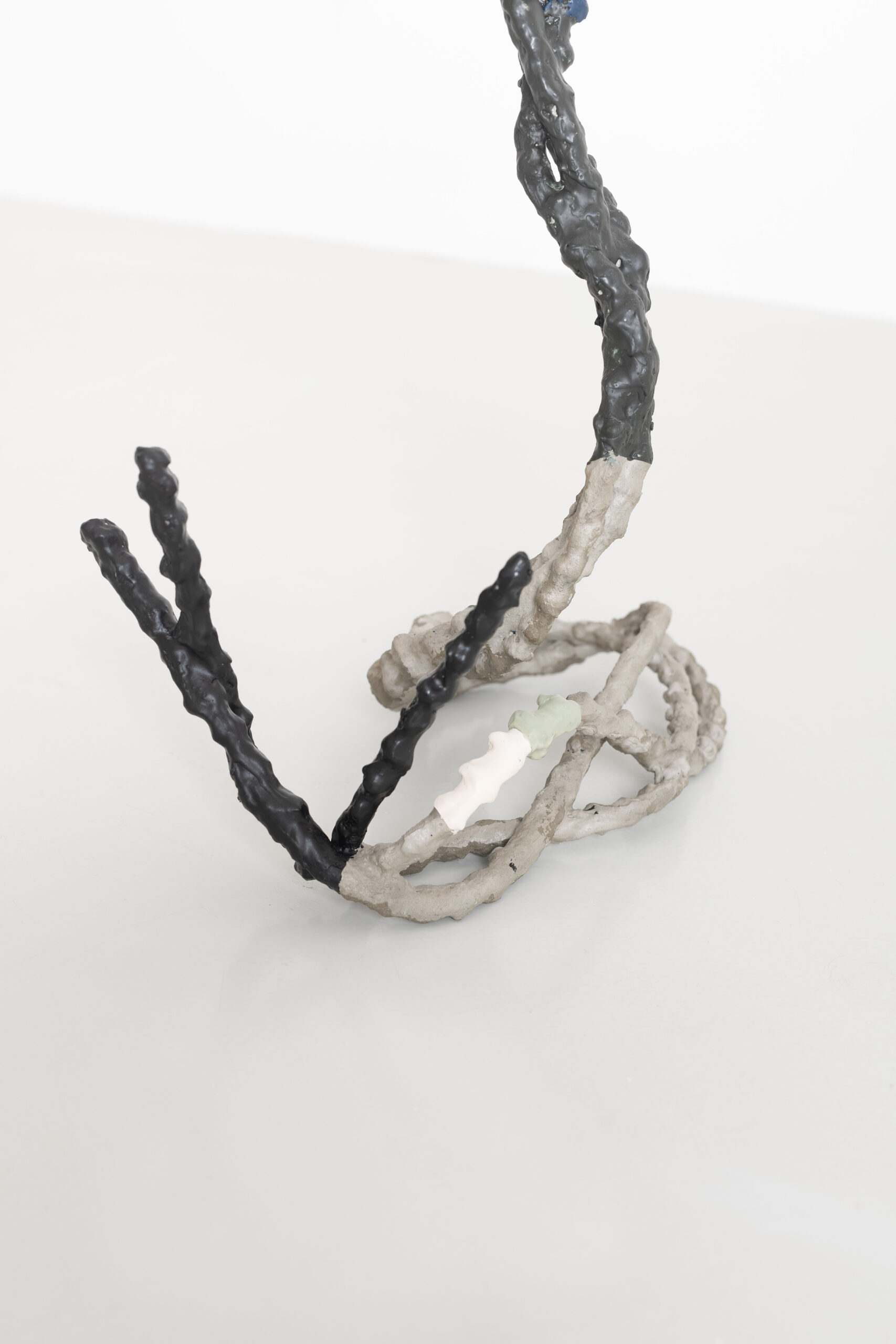
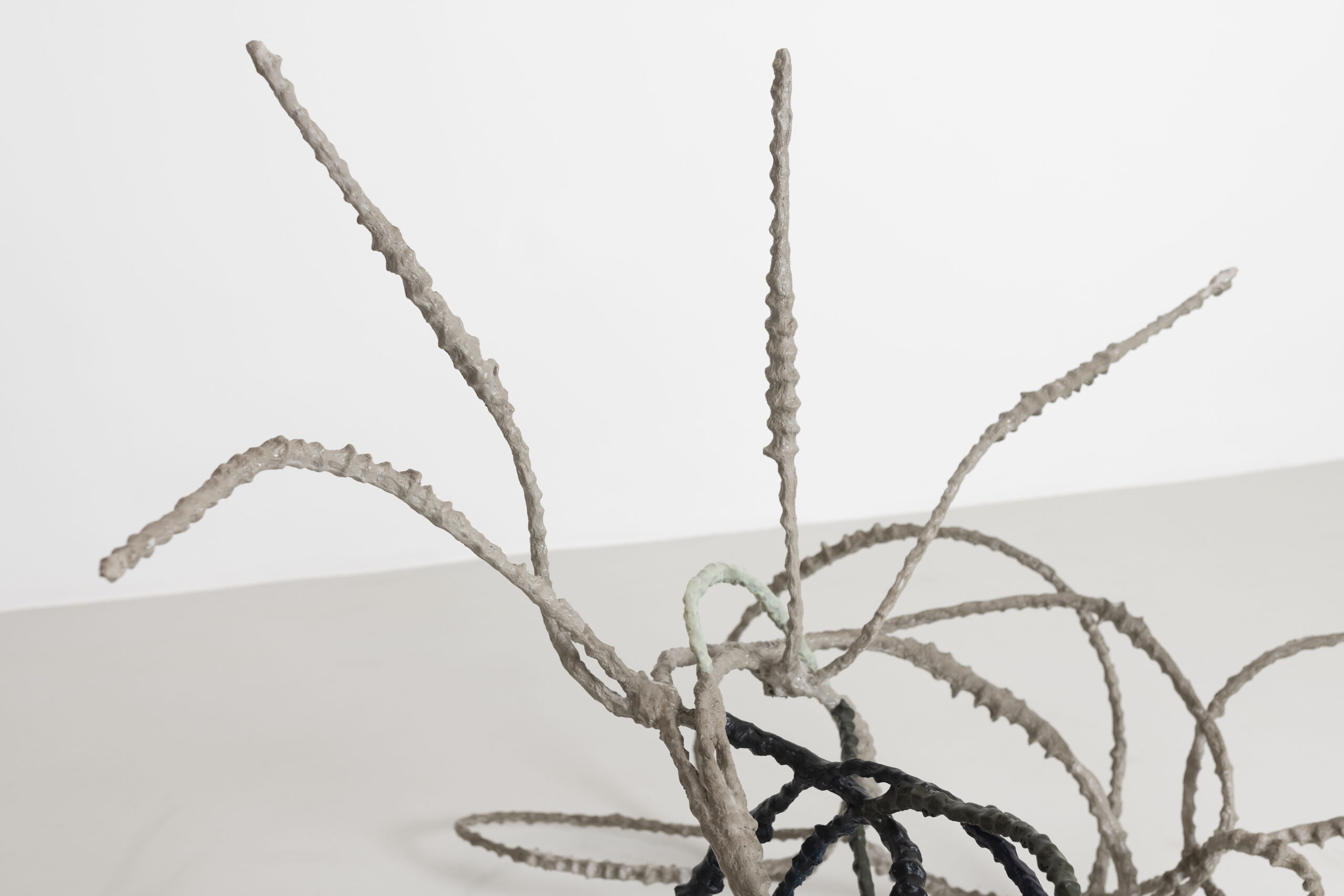
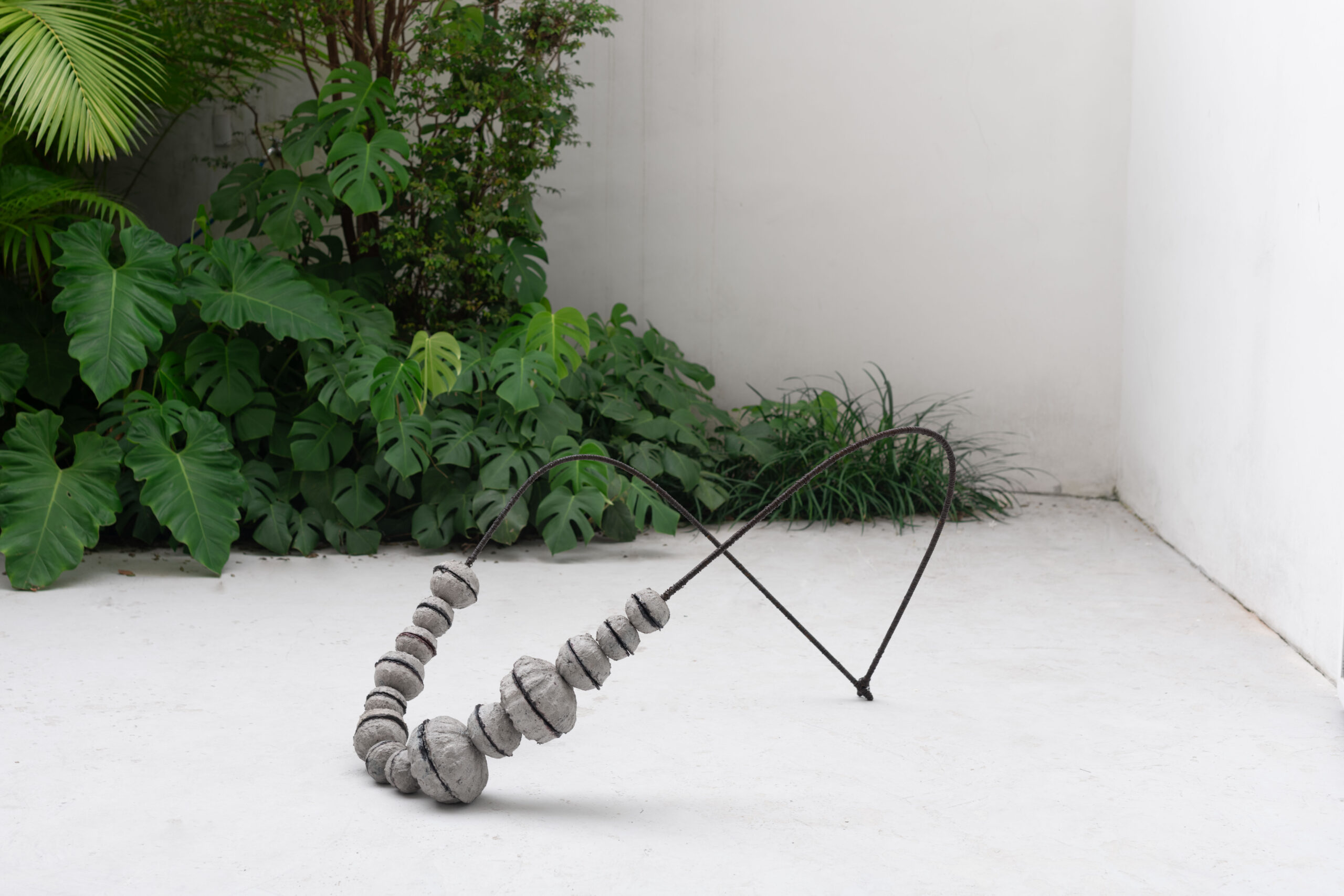
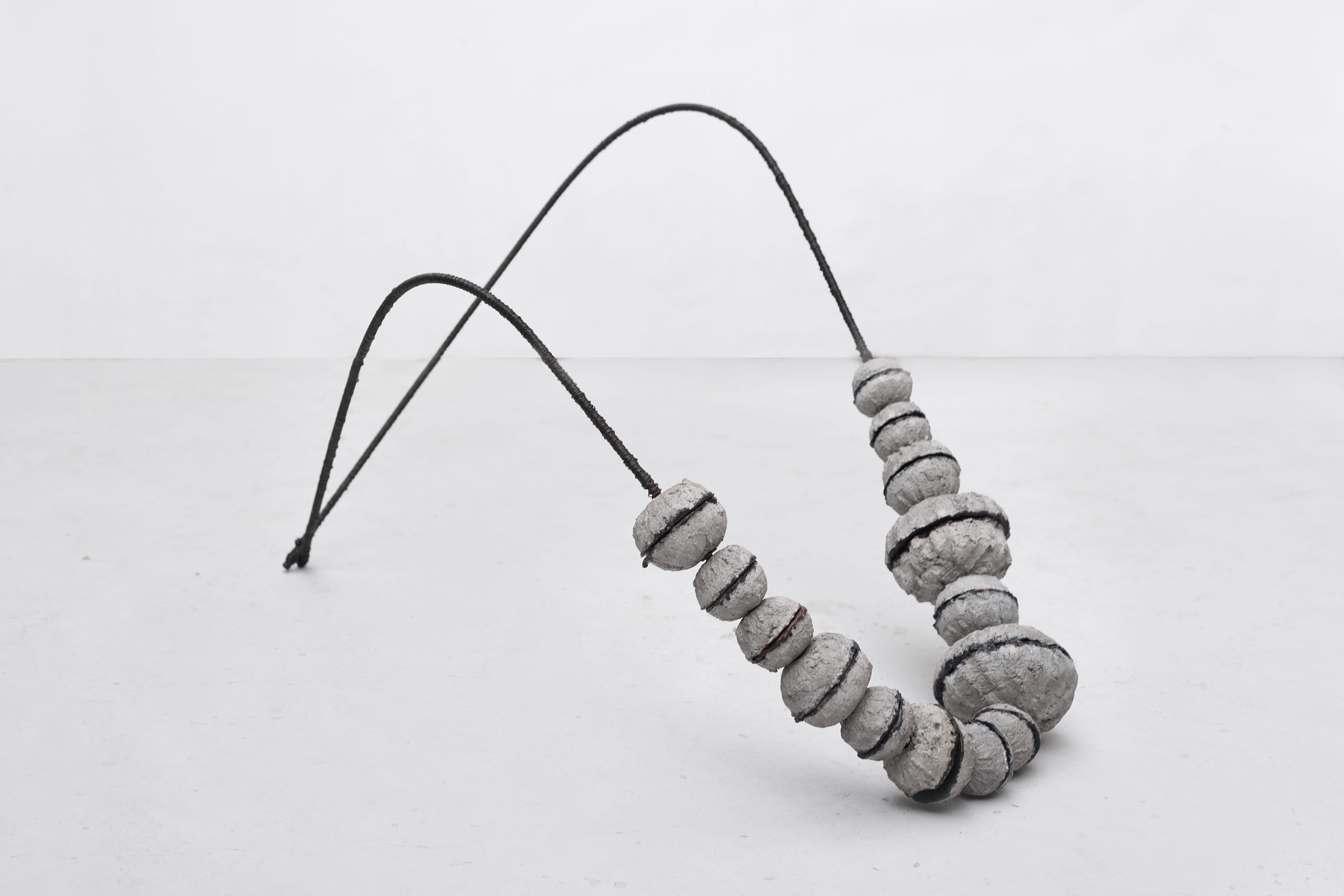
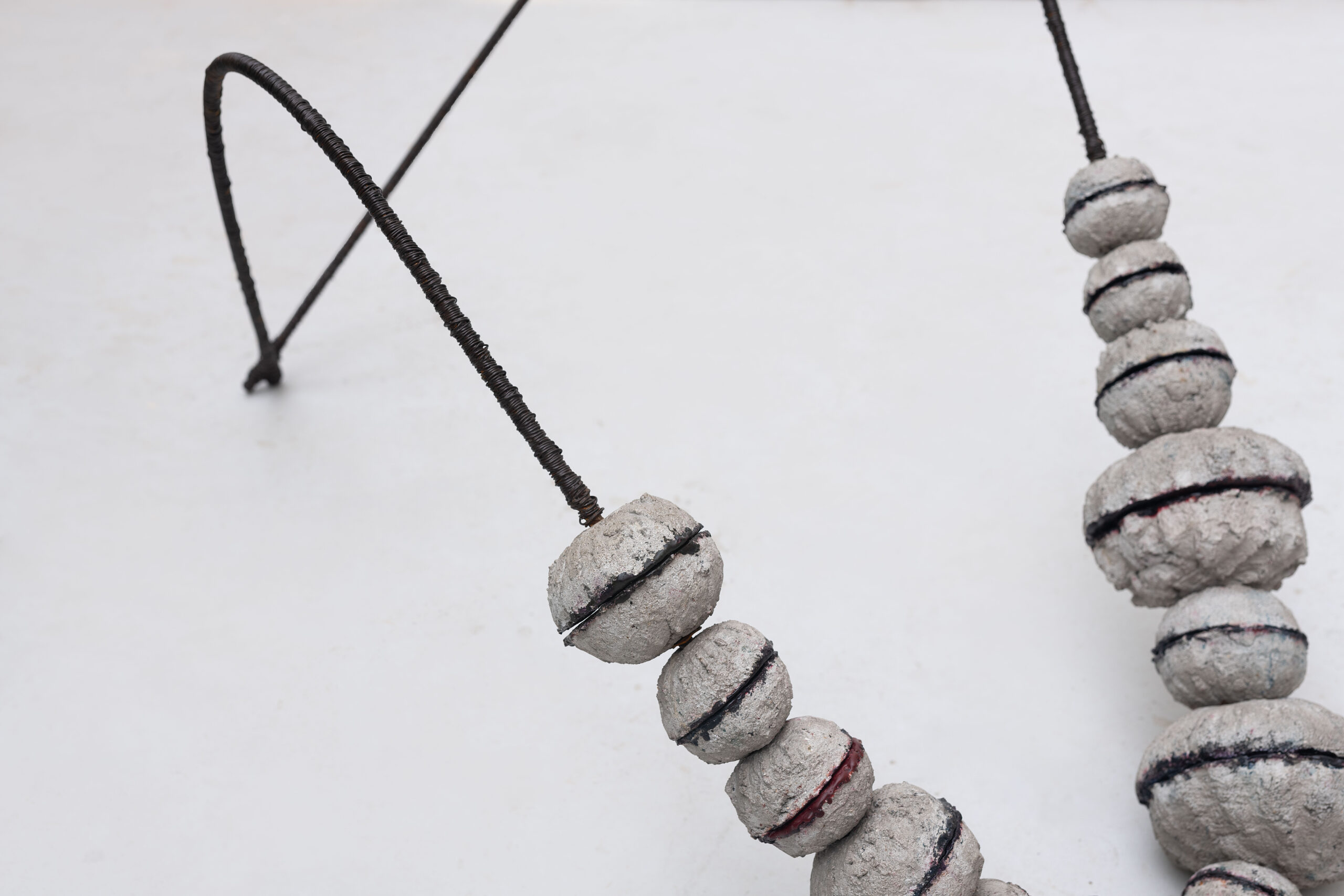
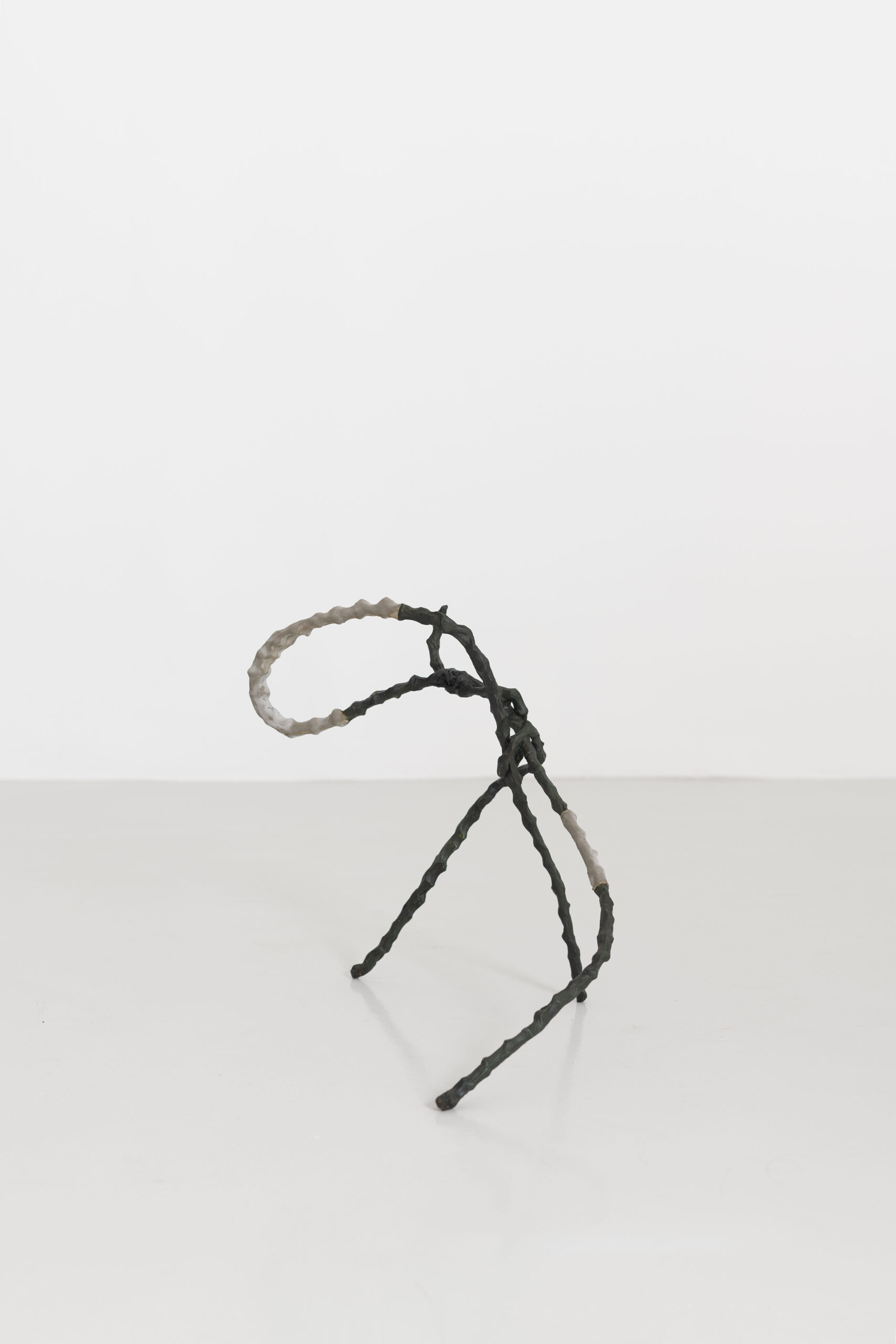
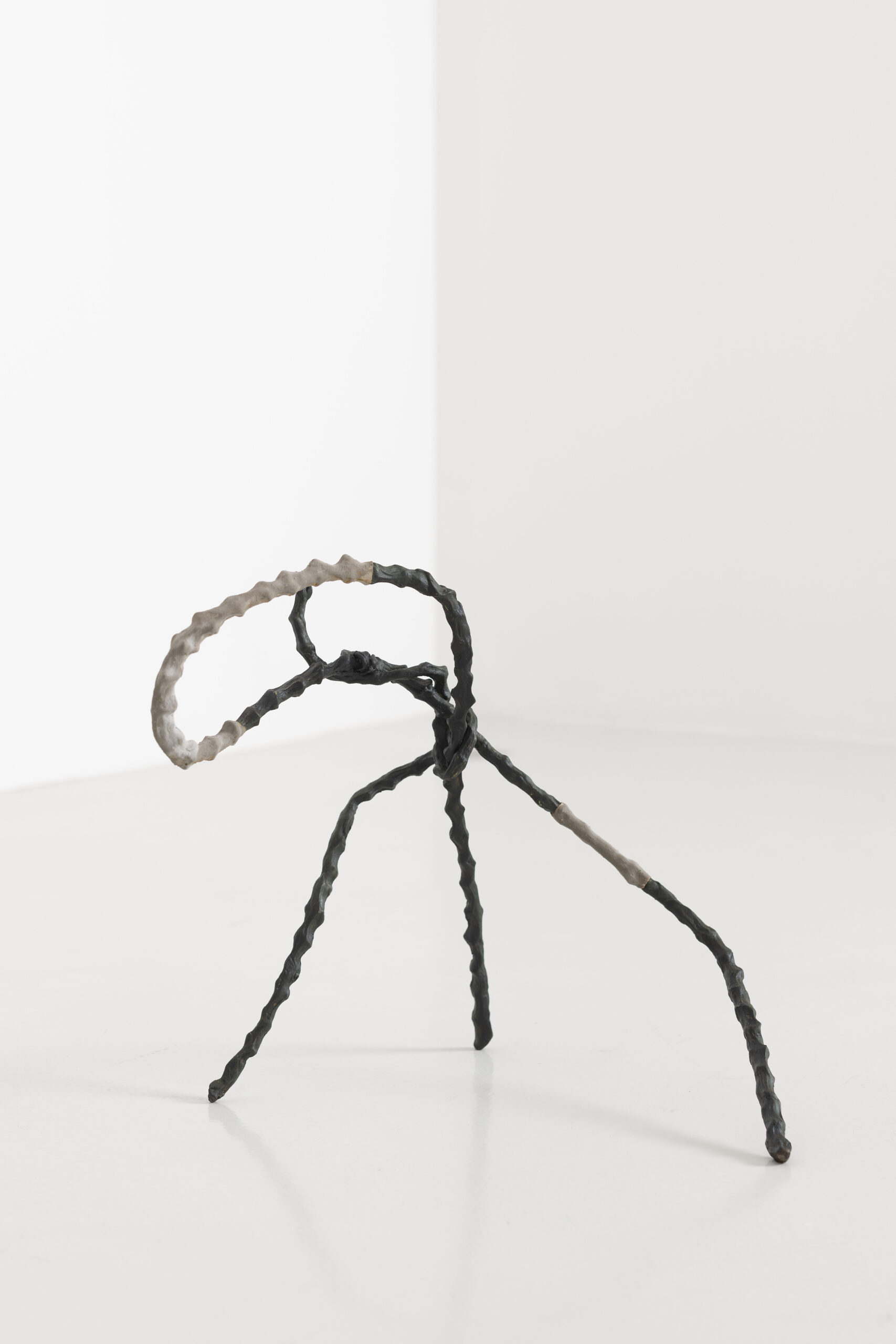
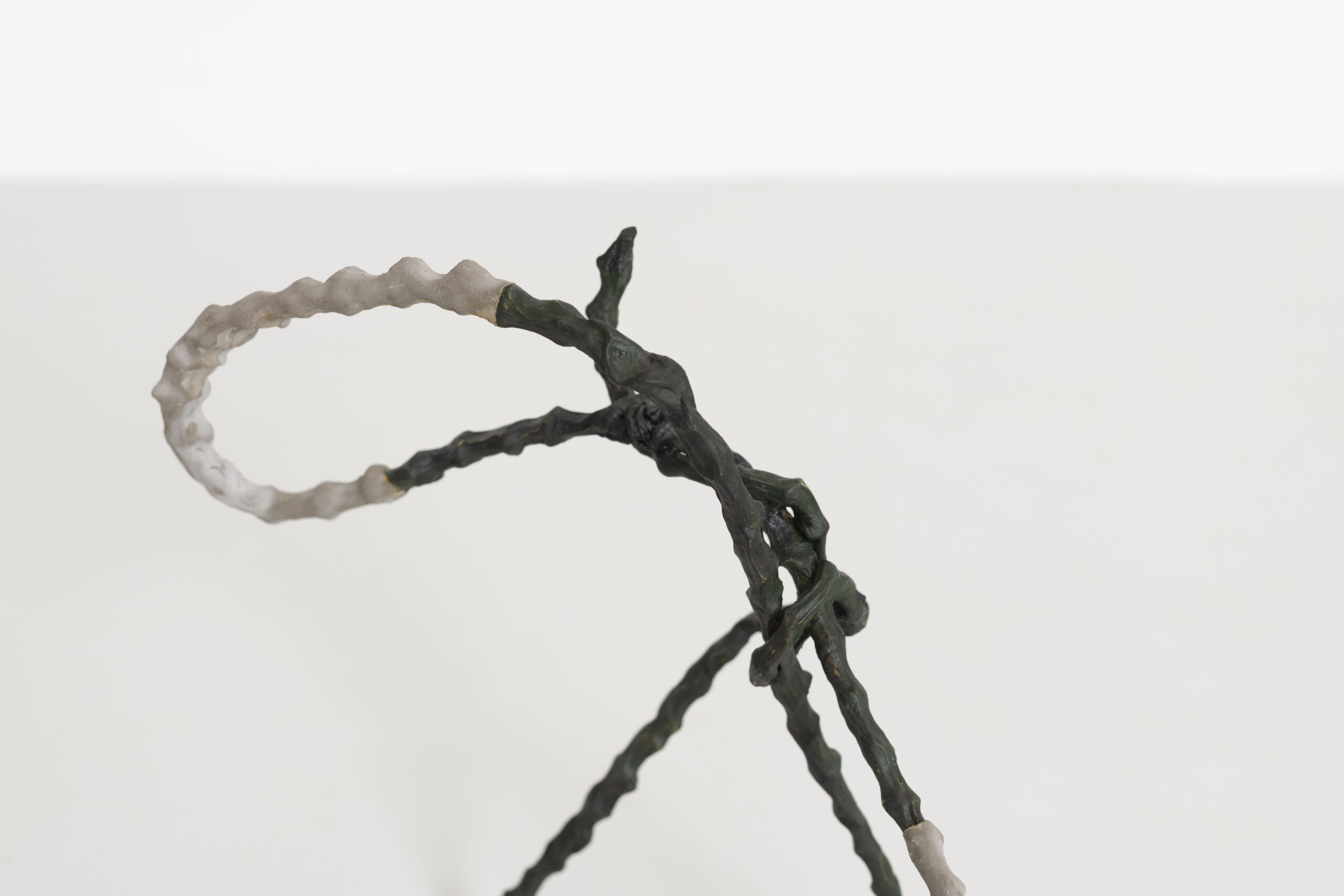
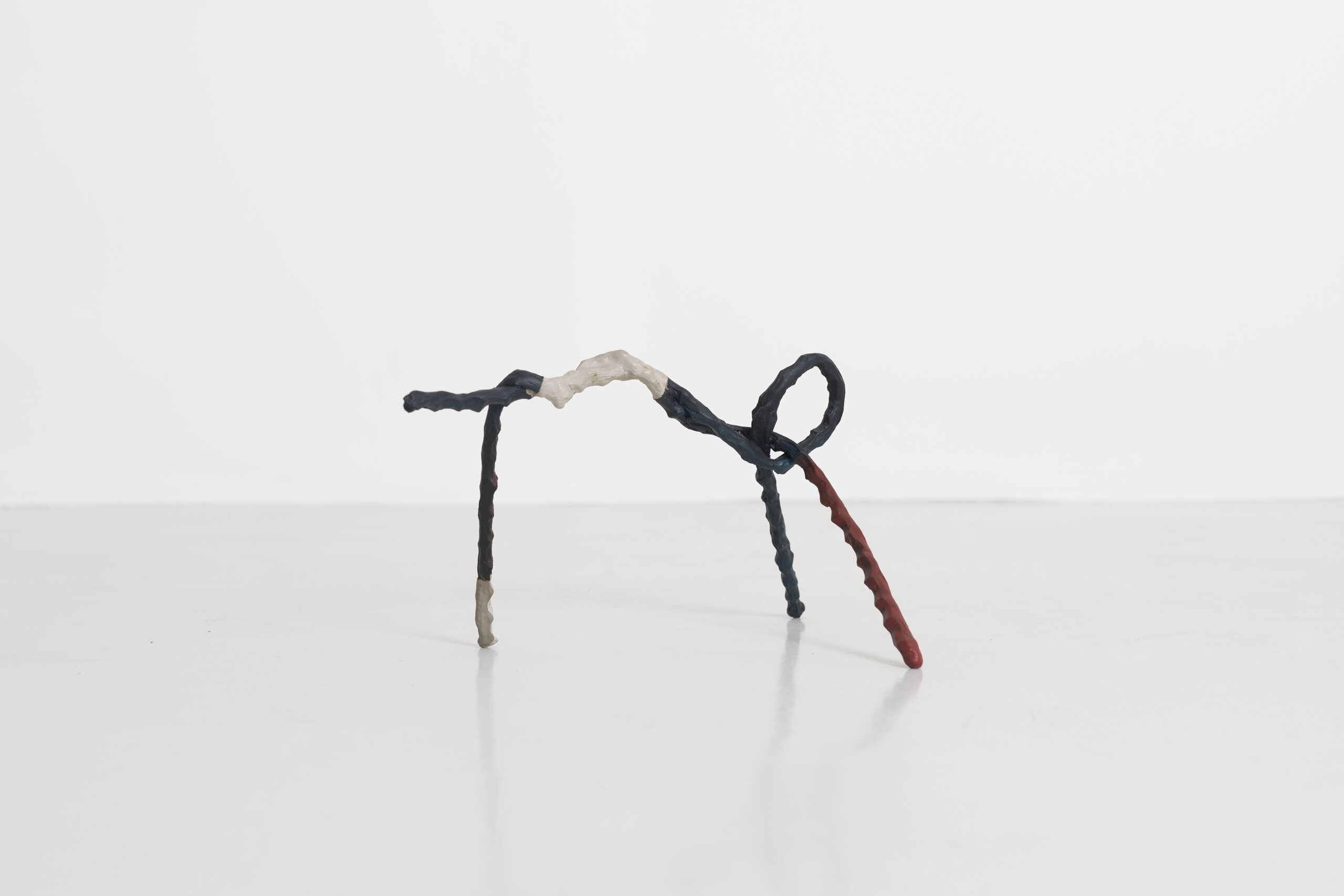
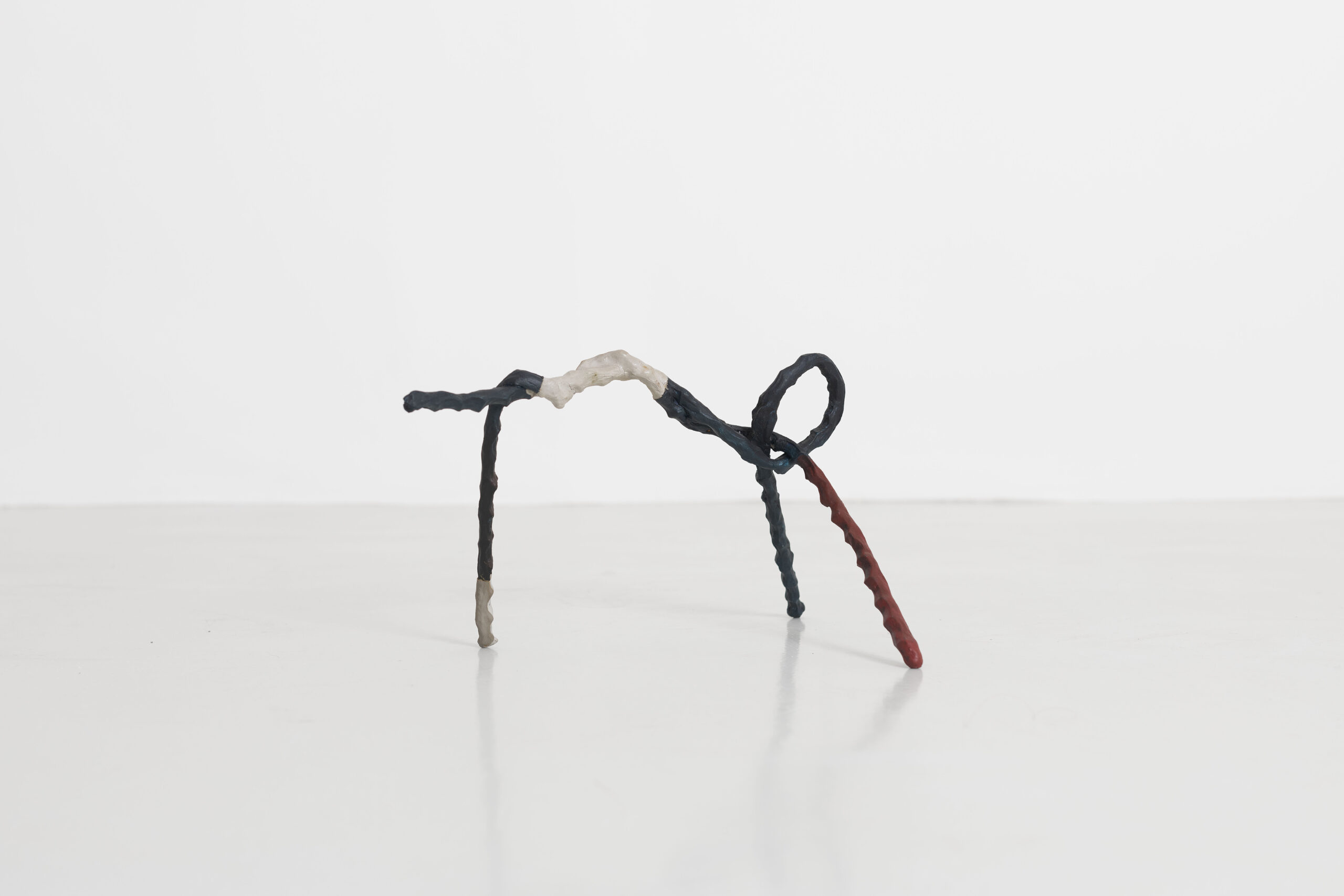
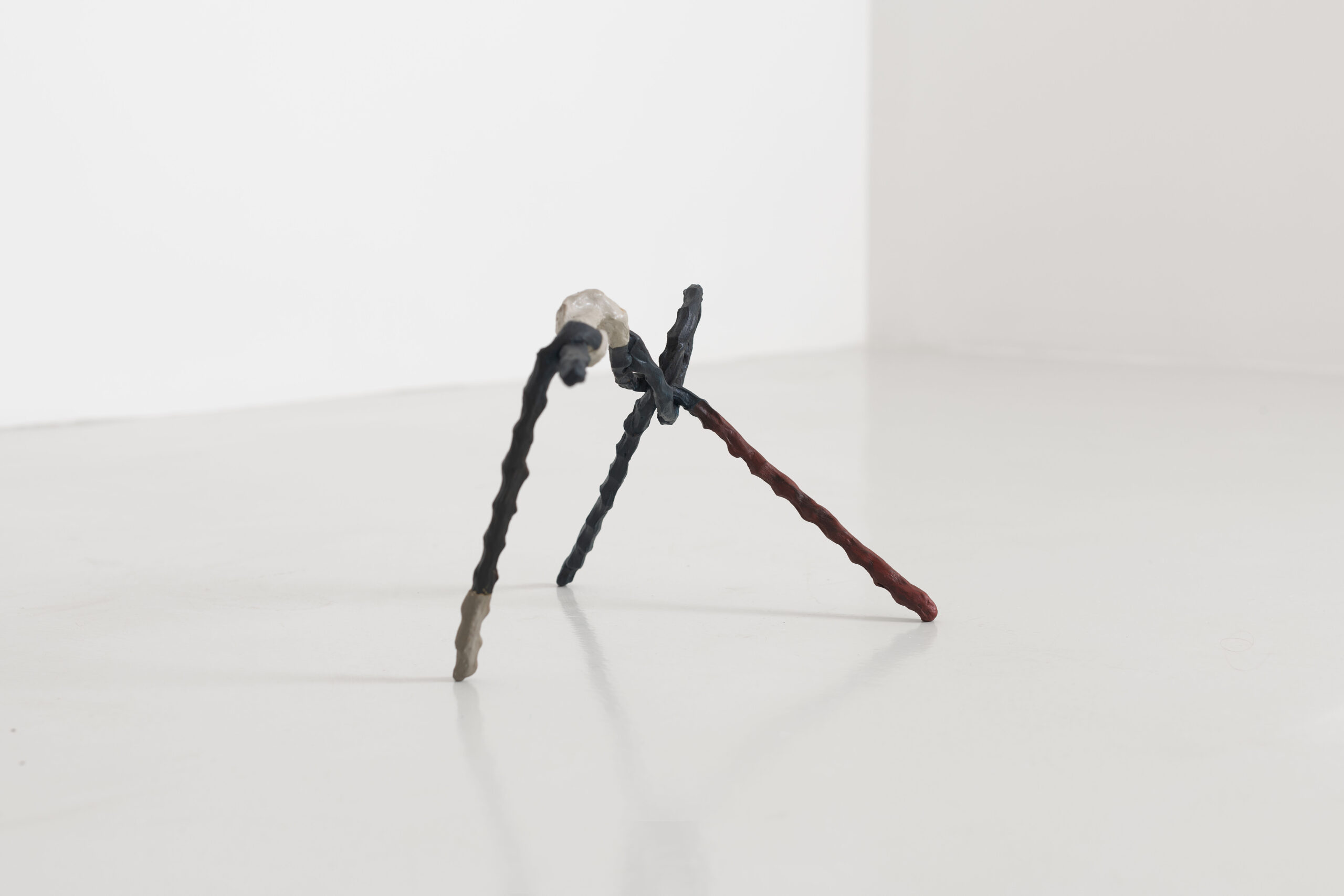

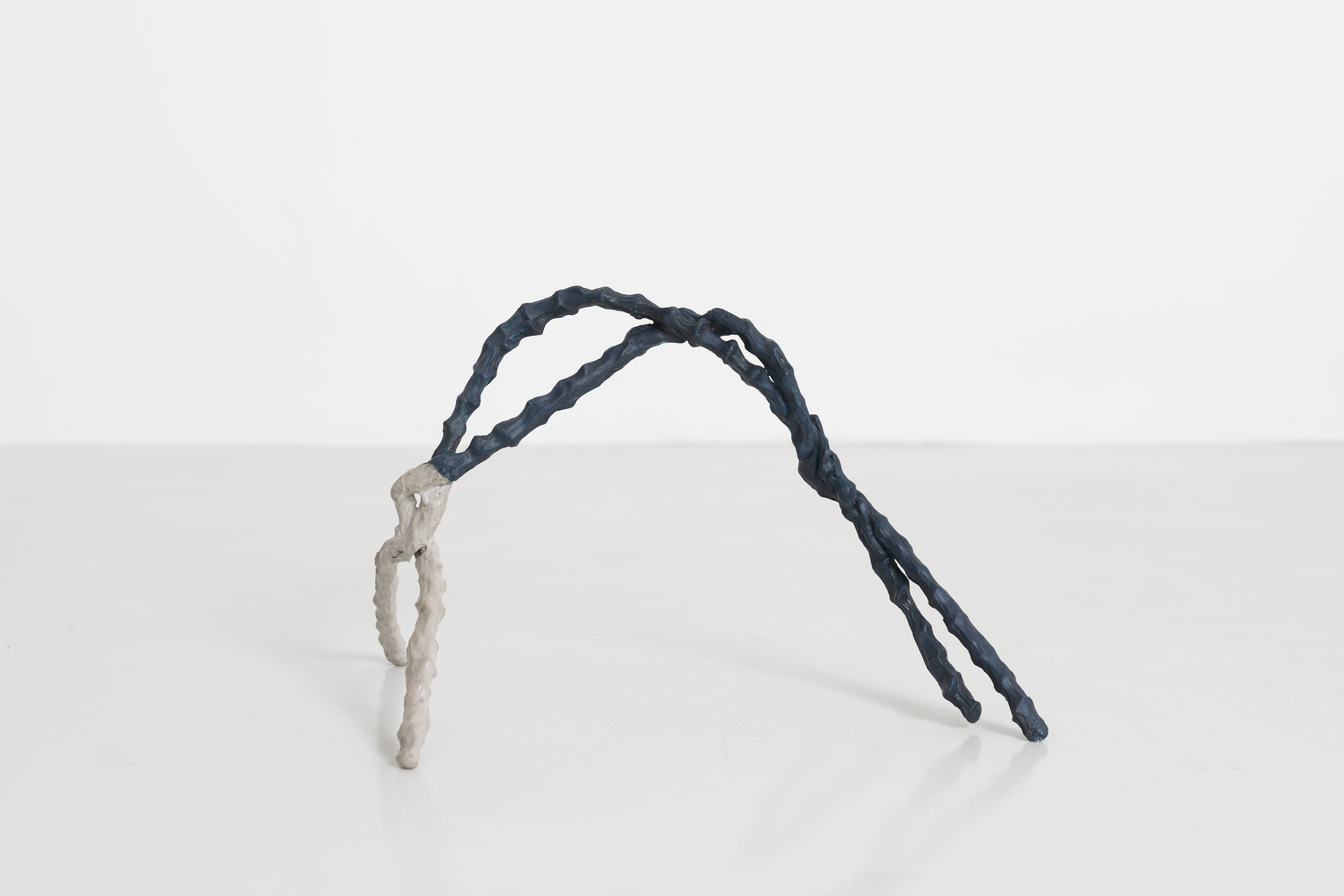
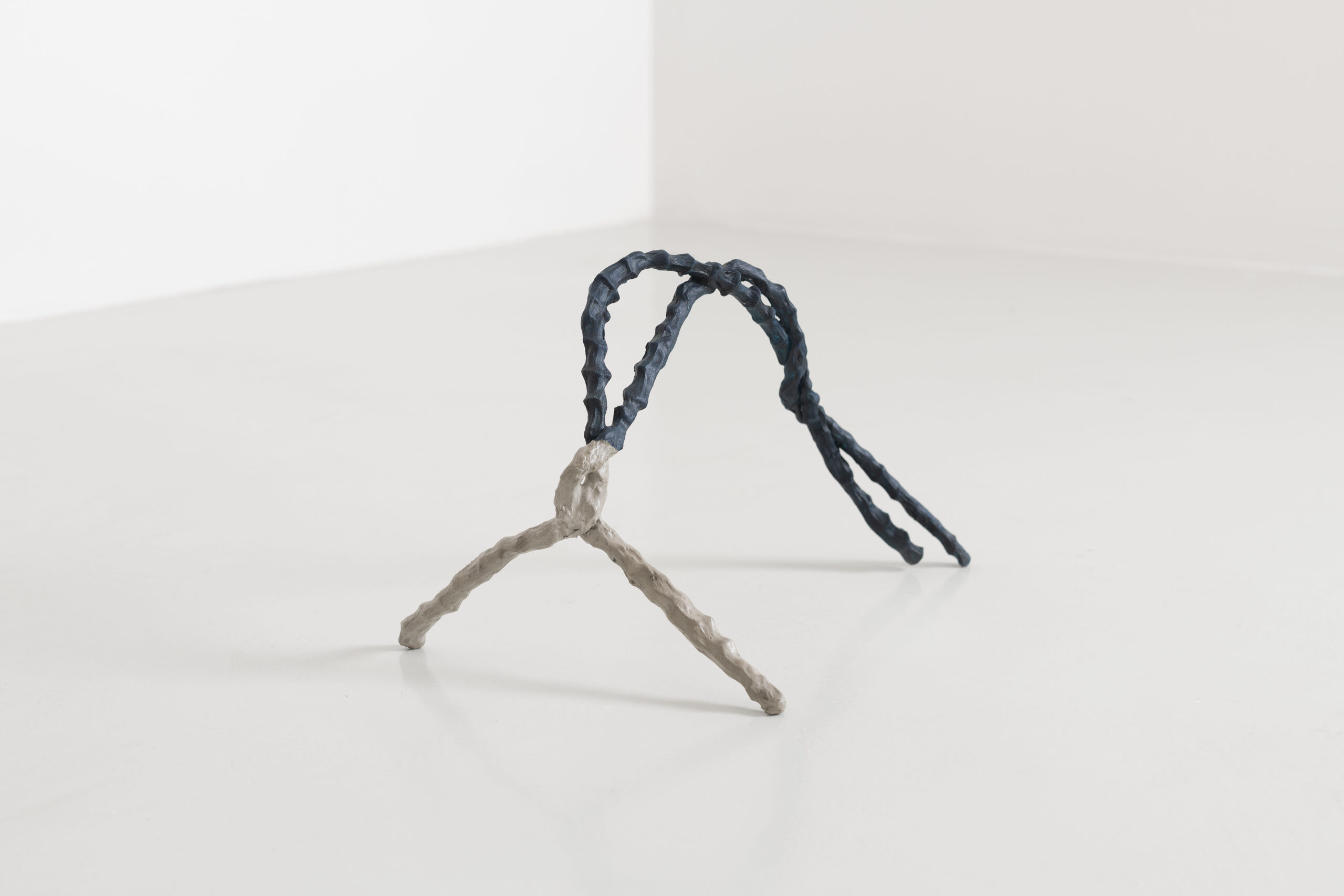
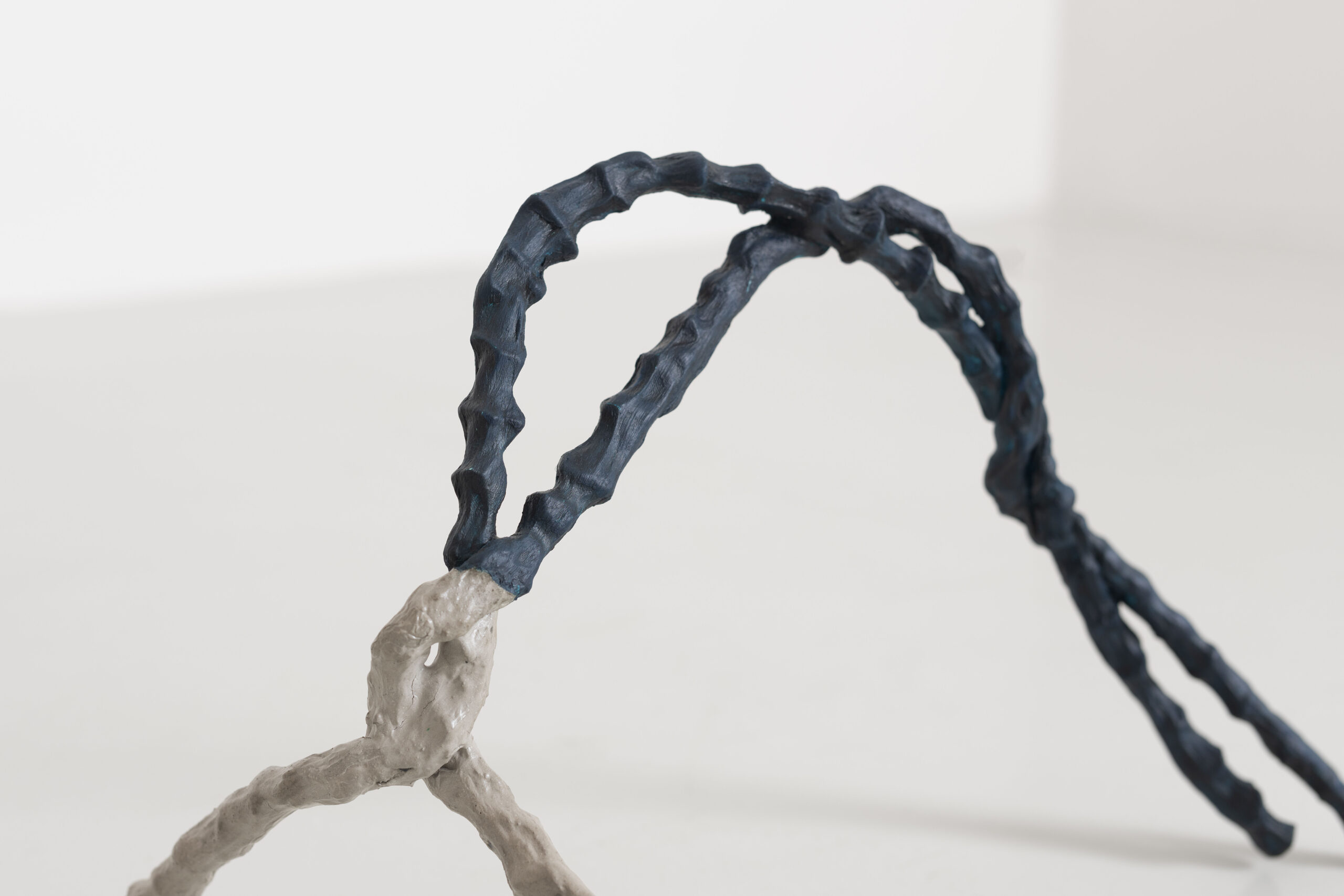
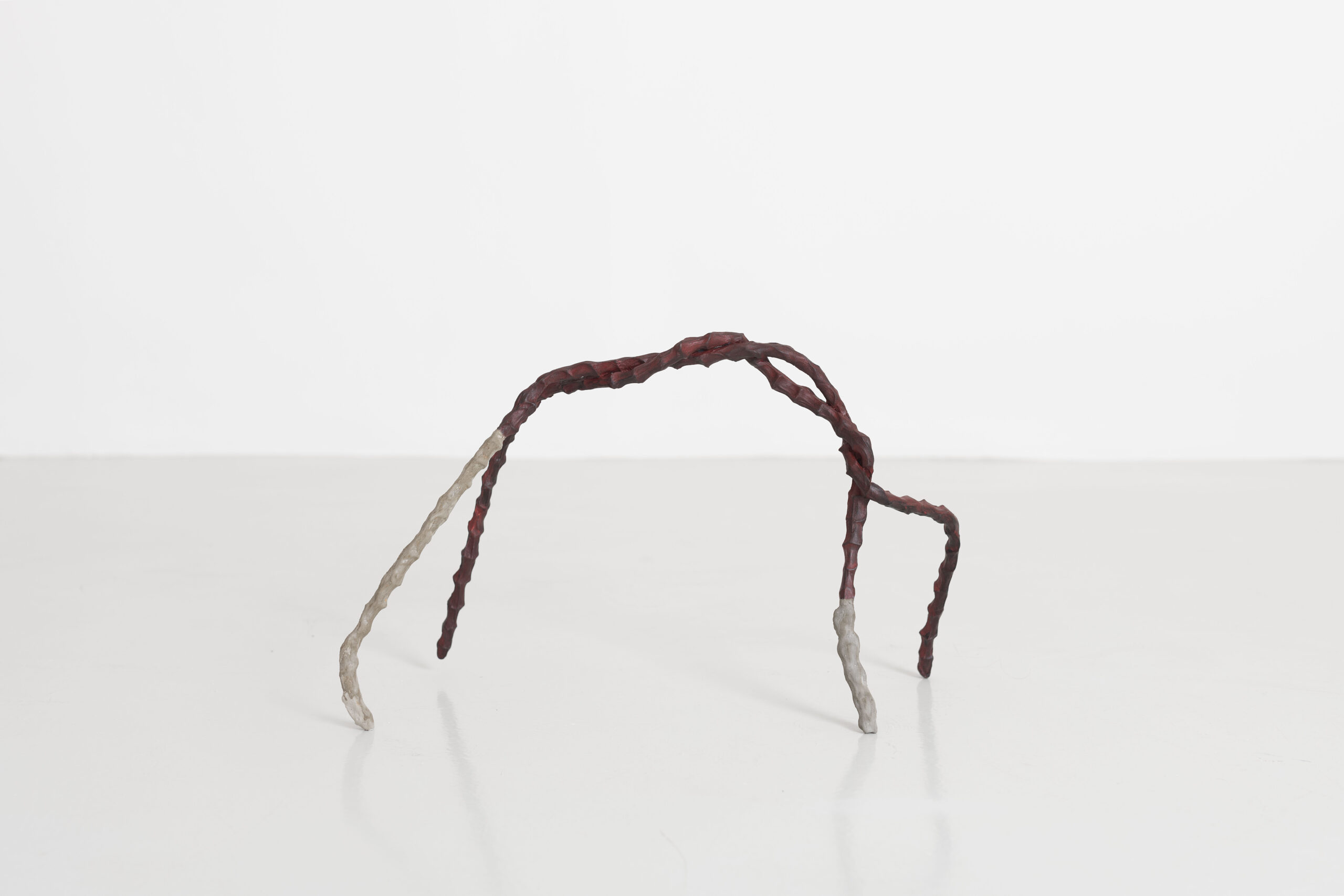
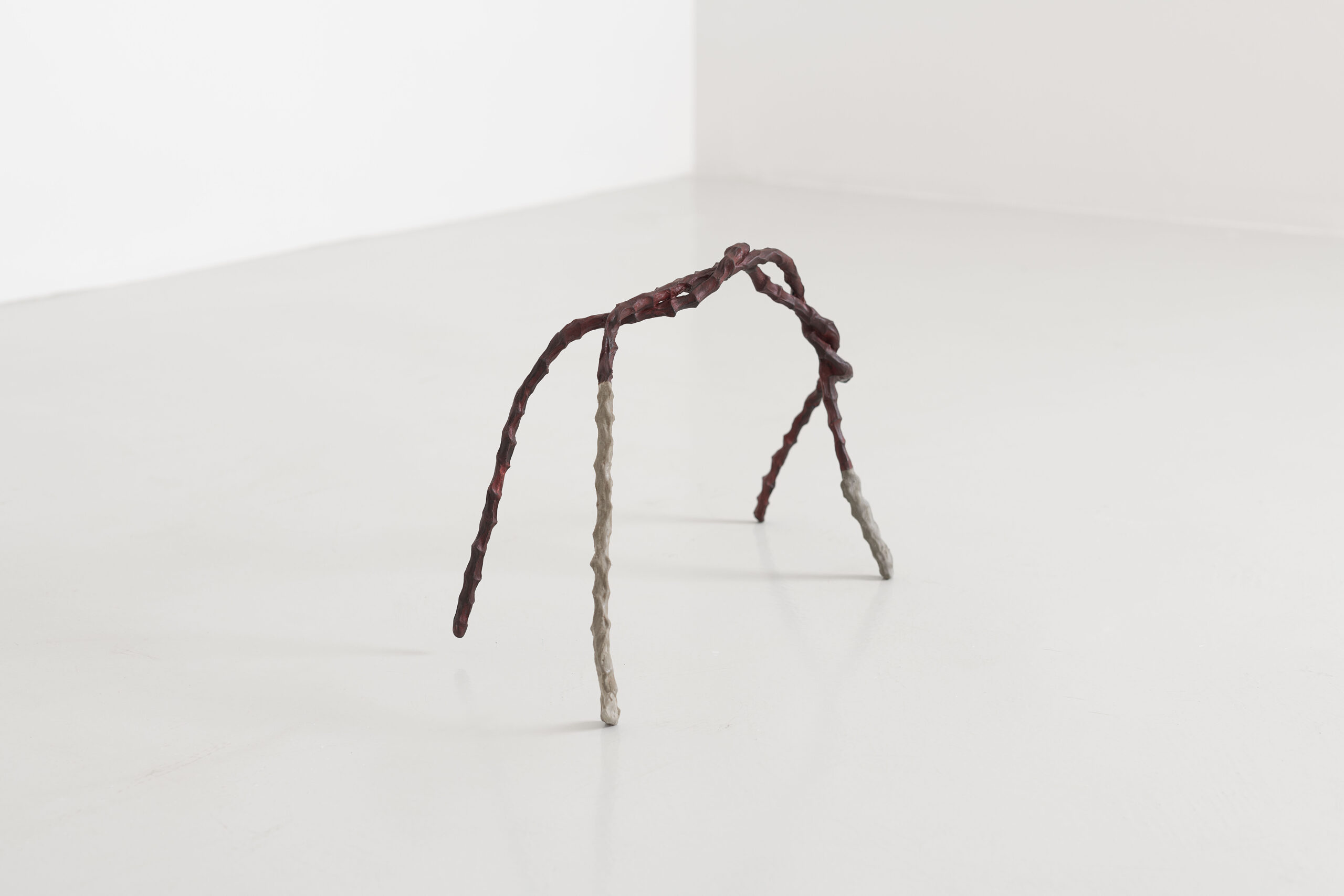
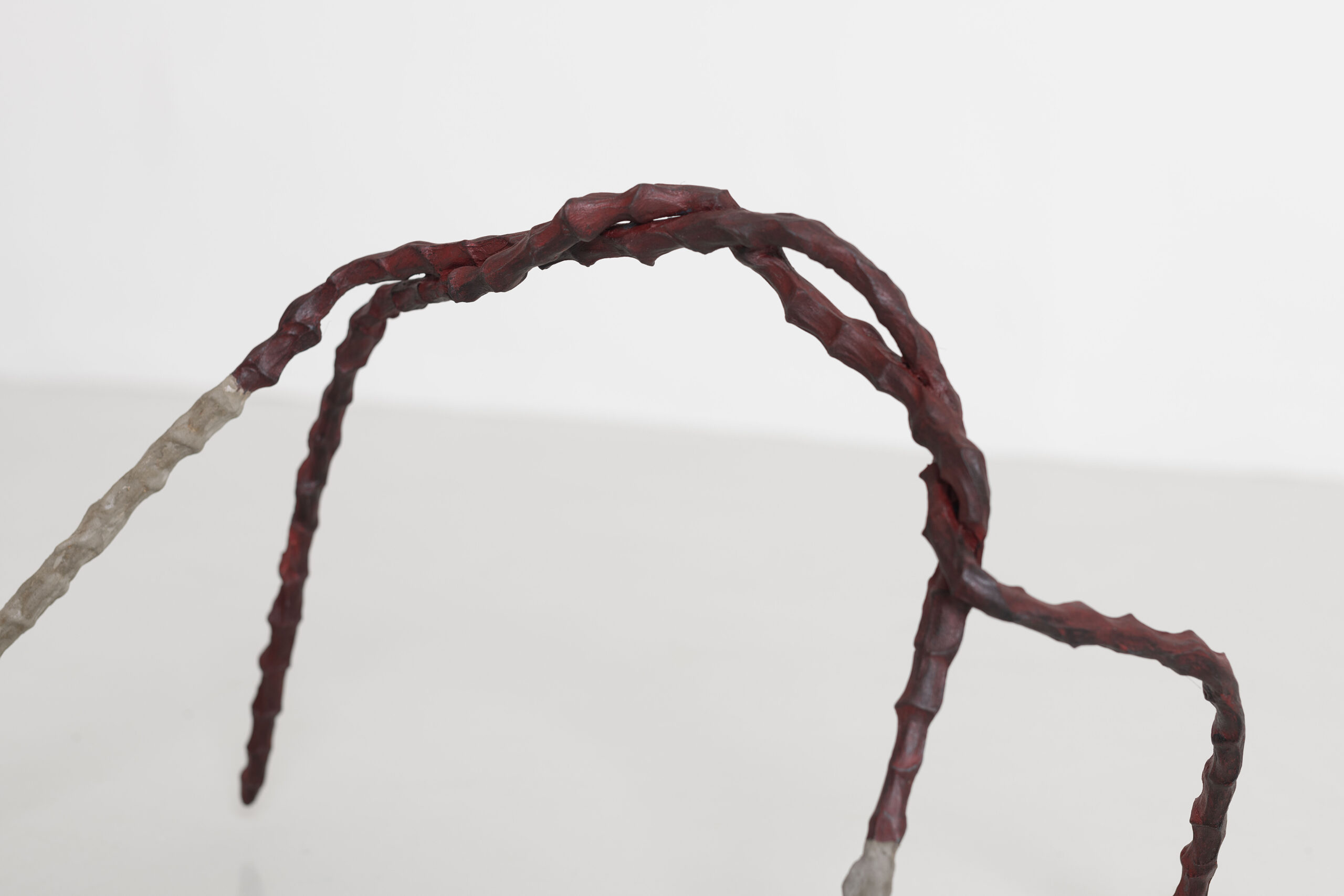
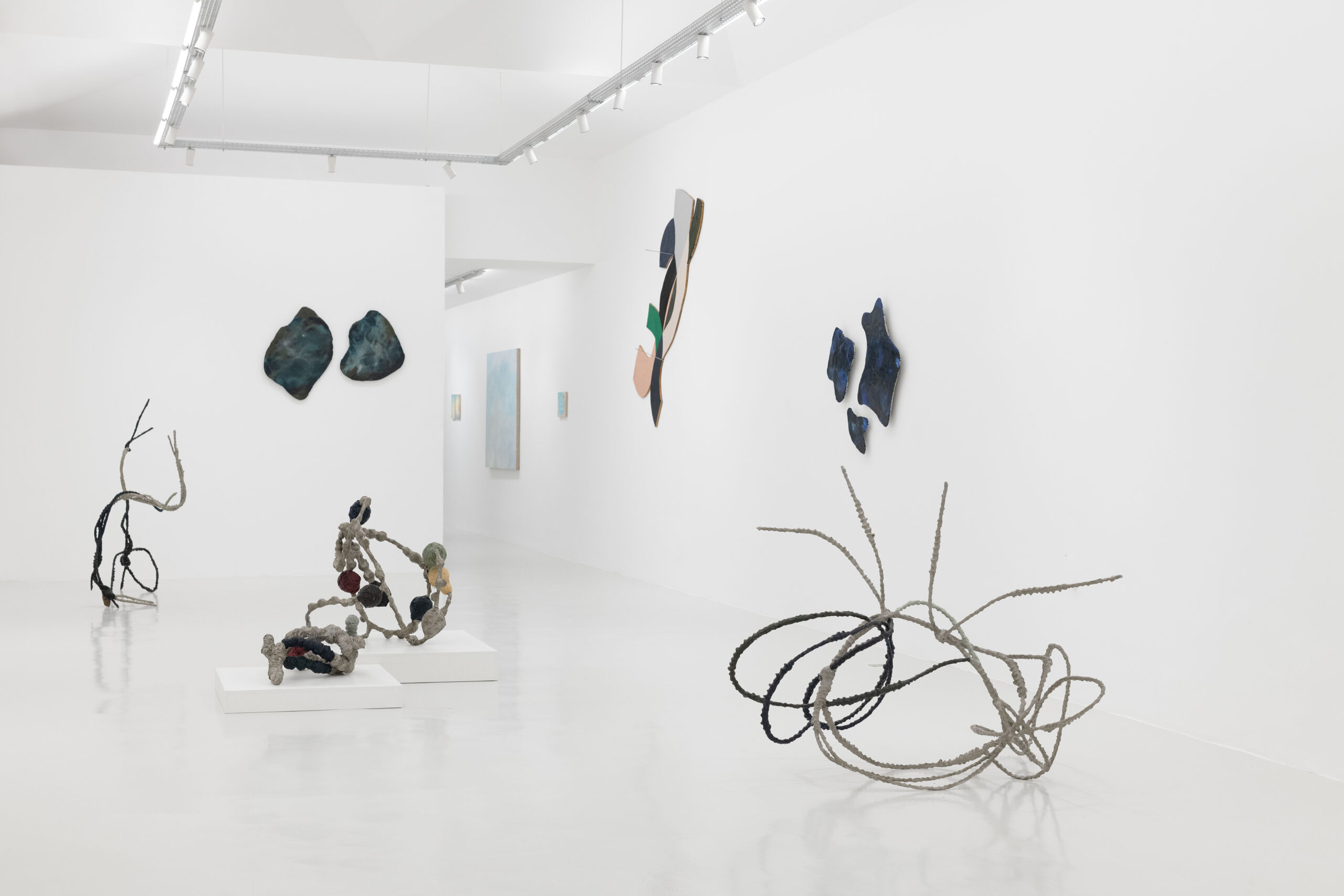
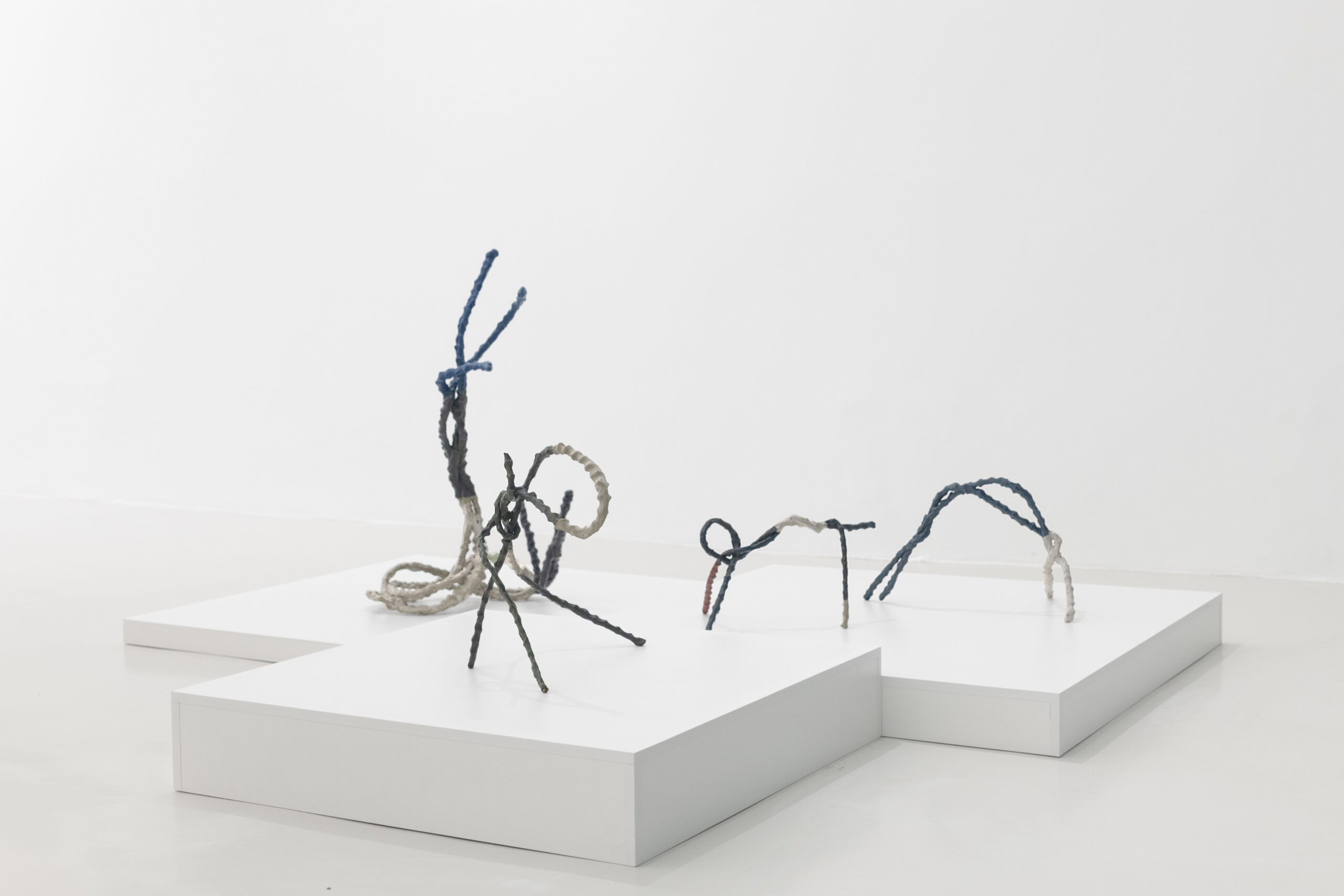
If today the idea of a decentralized, relational, entangled vital system seems to us an unavoidable maxim of life, this quality is chosen by Gilson Plano from Goiás as an irreducible gesture in the works that make up the exhibition “Misterioso Laço” (Mysterious Tie). Intertwining the pictorial and the objectual and proposing a shuffle around such notions, Plano uses elements such as iron rods and encaustic paint to propose material forms that seek their balance from a knot. He thus gives life to stable beings that acquire their autonomy in the proposal of a knot, mirroring the conquest of the emancipation of human experience. In the artist’s words: “One of the first challenges of childhood is to learn how to build a double knot on your feet; through trial and error, this is a tie that marks a sign of autonomy”. In this sense, the group of lives present here mirror the beauty of new people learning to walk and inhabit the world. Between stumbles and awkward poses, there are those who have already ventured out to show off or even dance. In fact, the creation of a set of choreographies is mobilized that invite a ballet, both individual and collective, capable of expanding space. They create a stage to call their own.
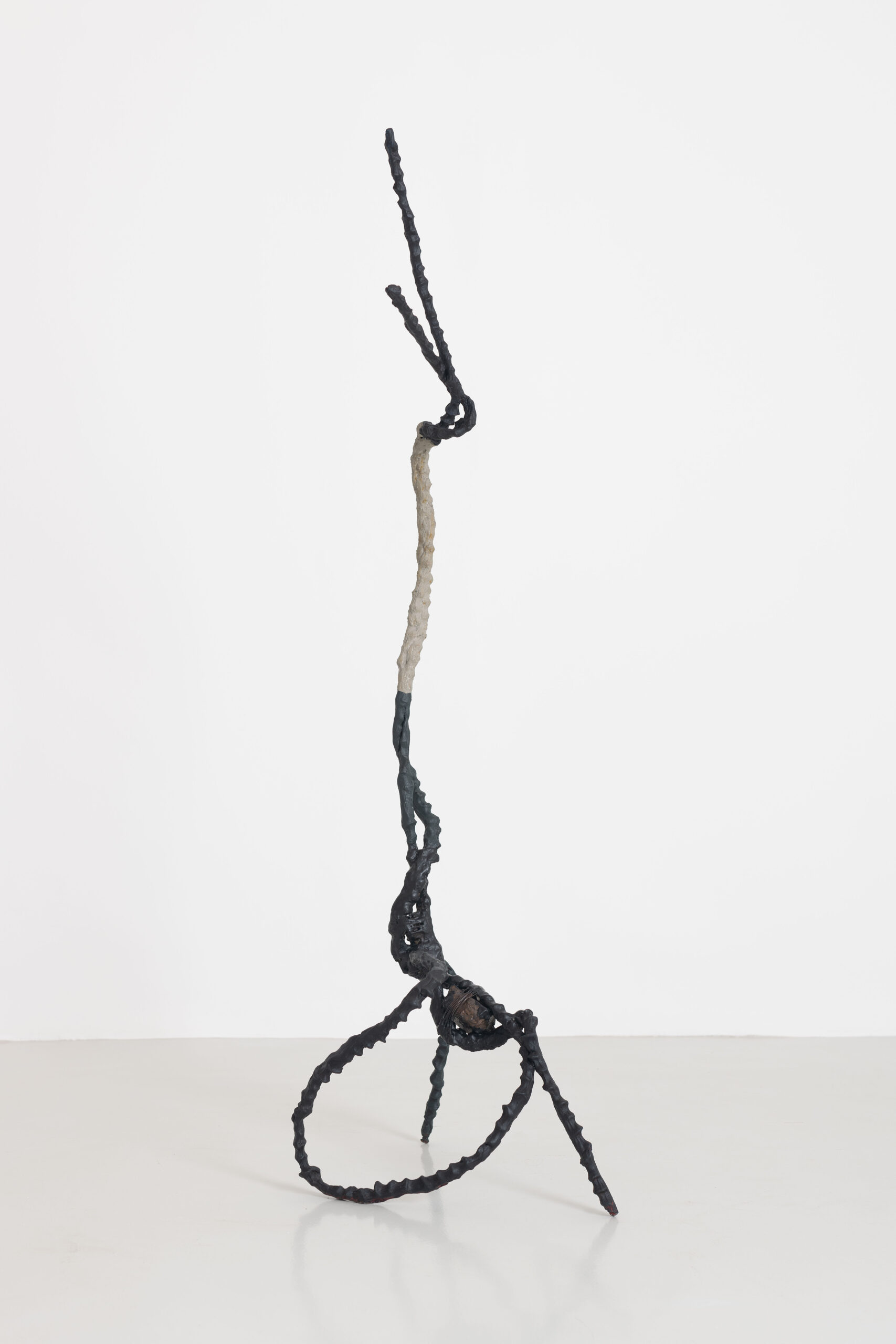
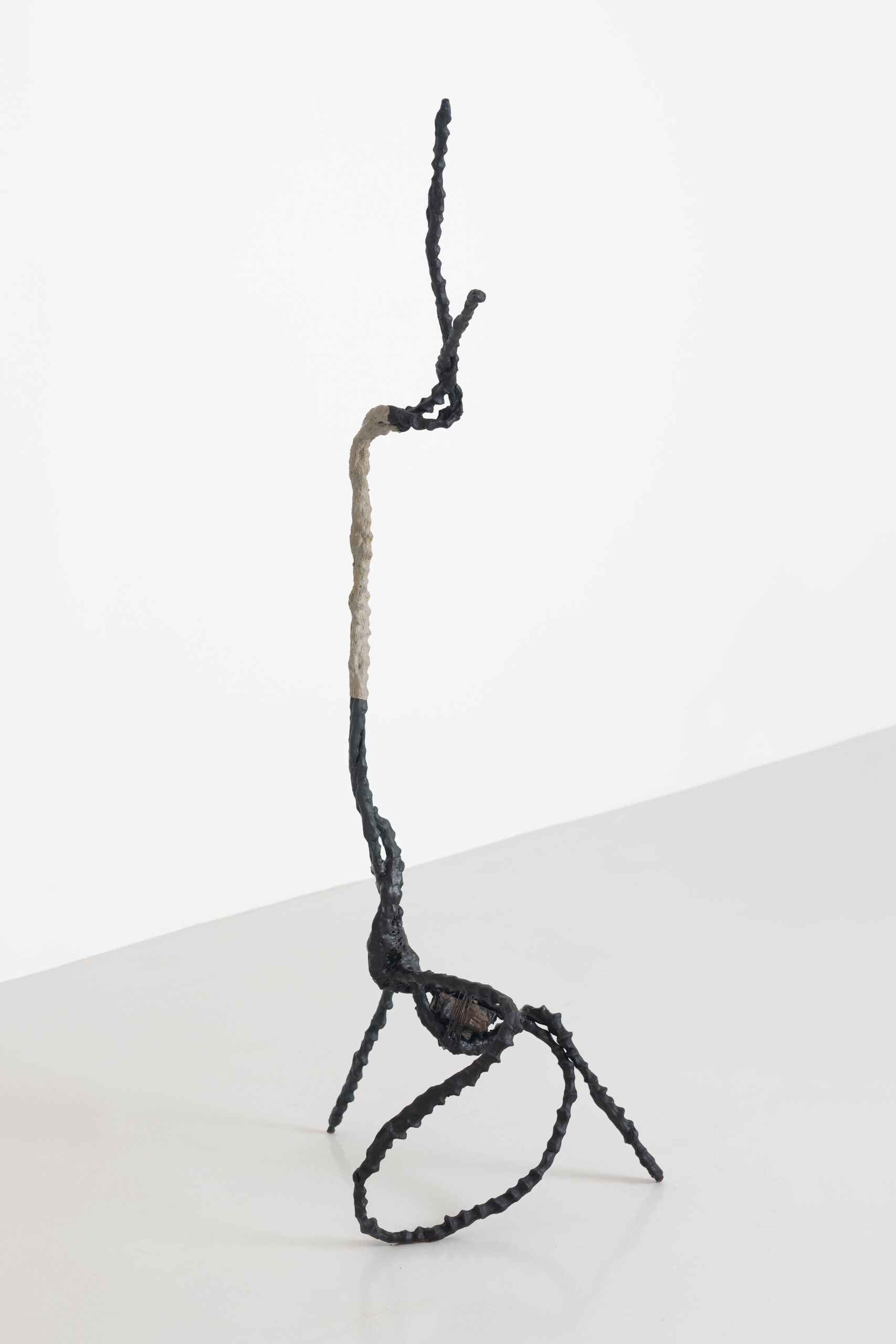
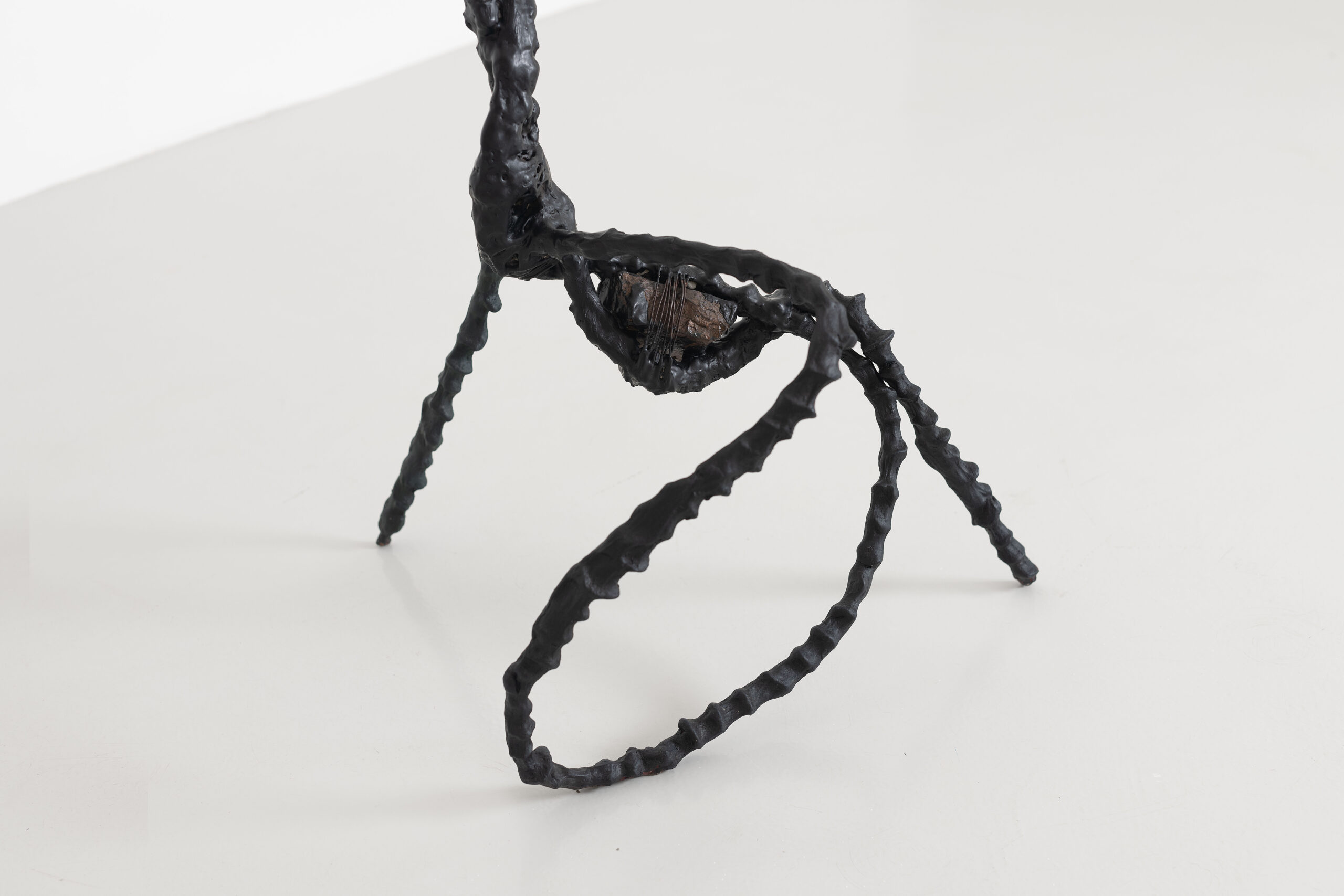
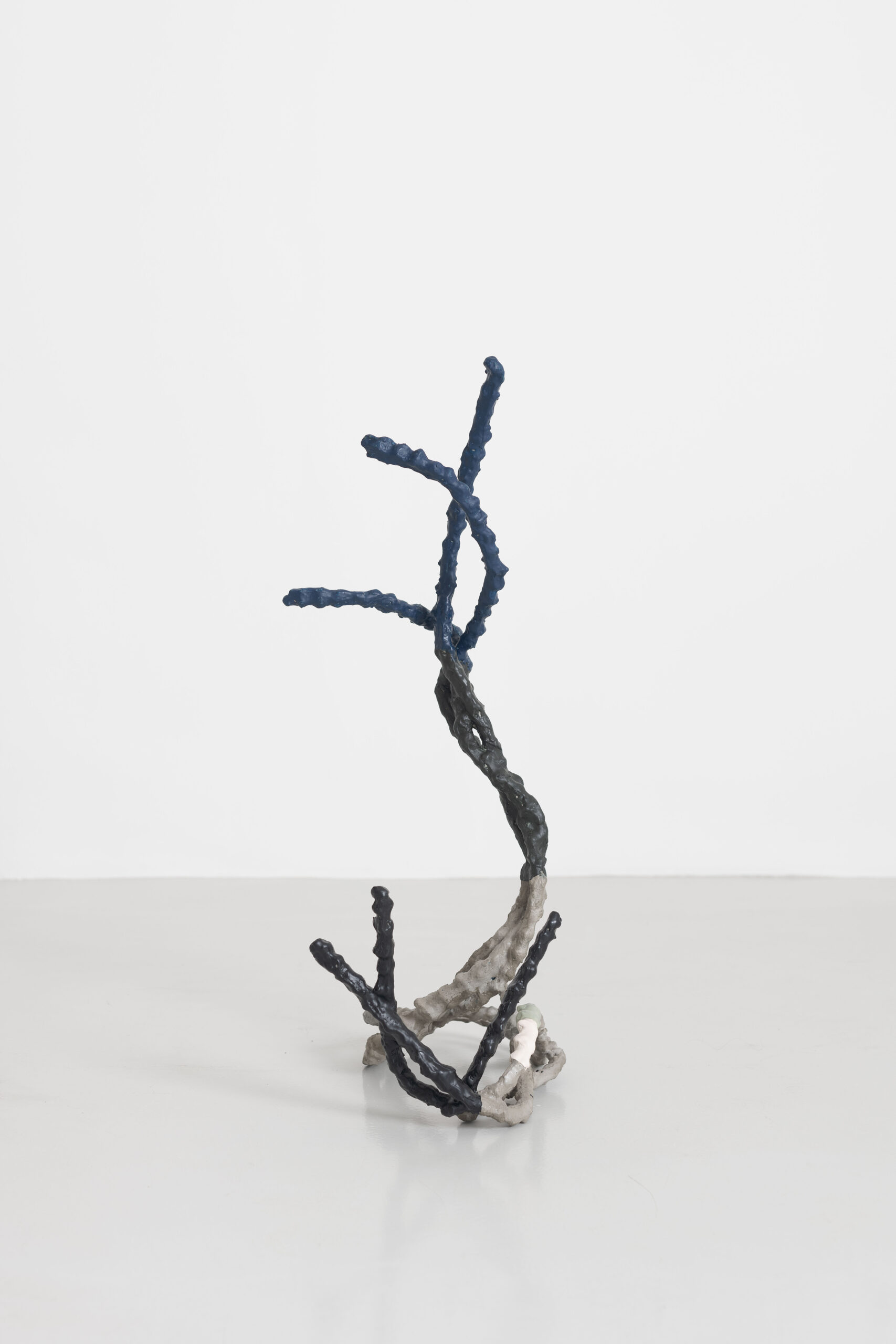
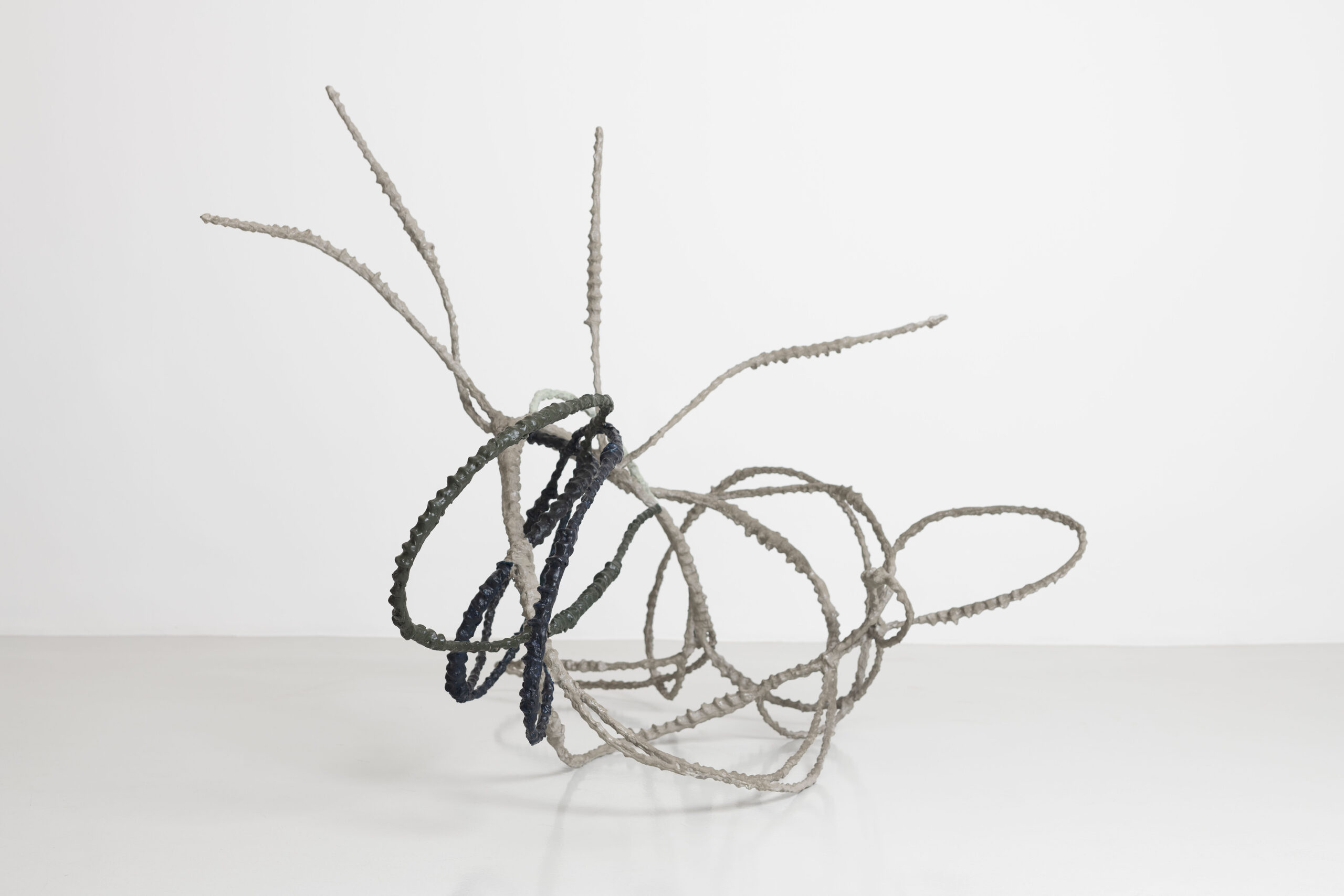
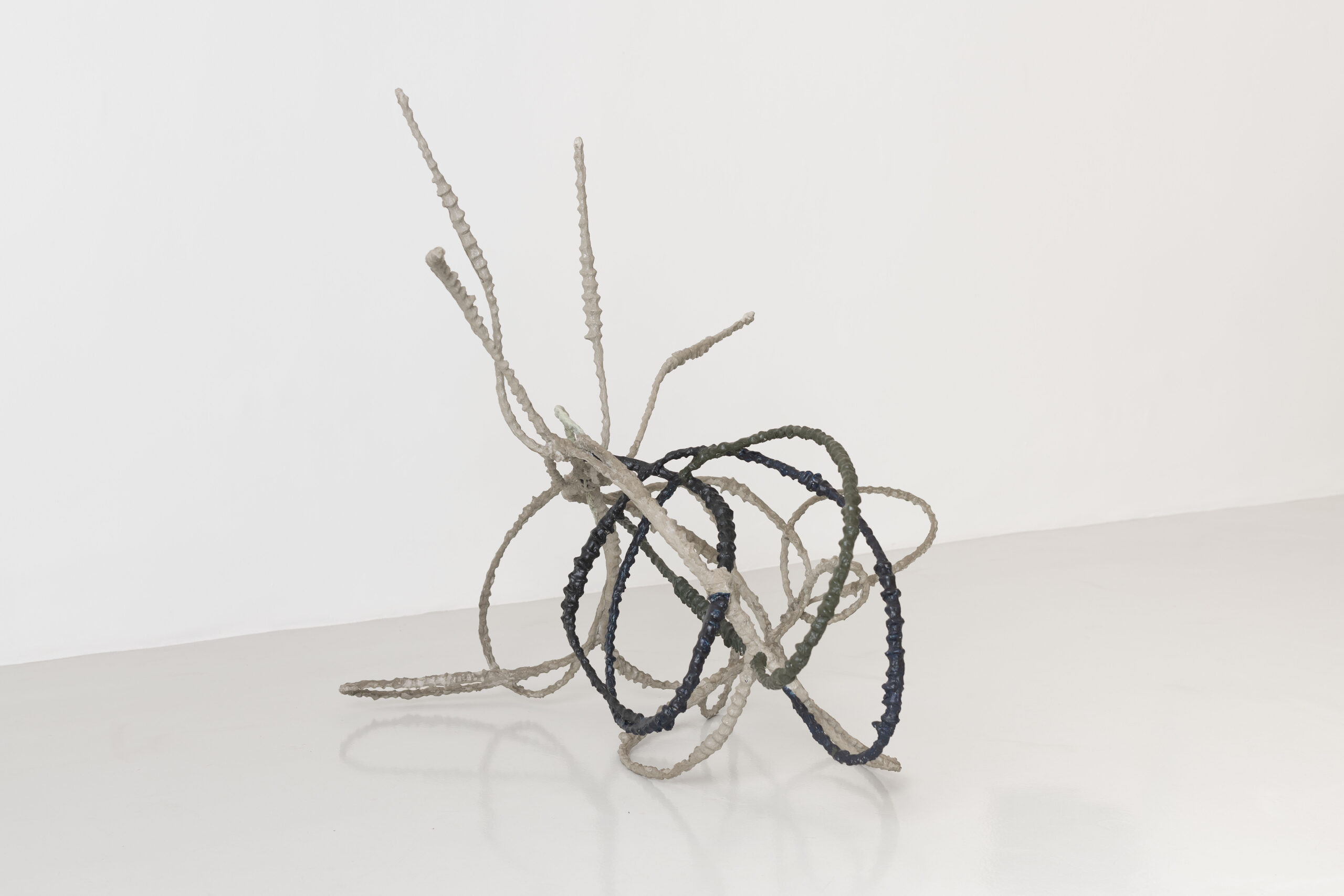
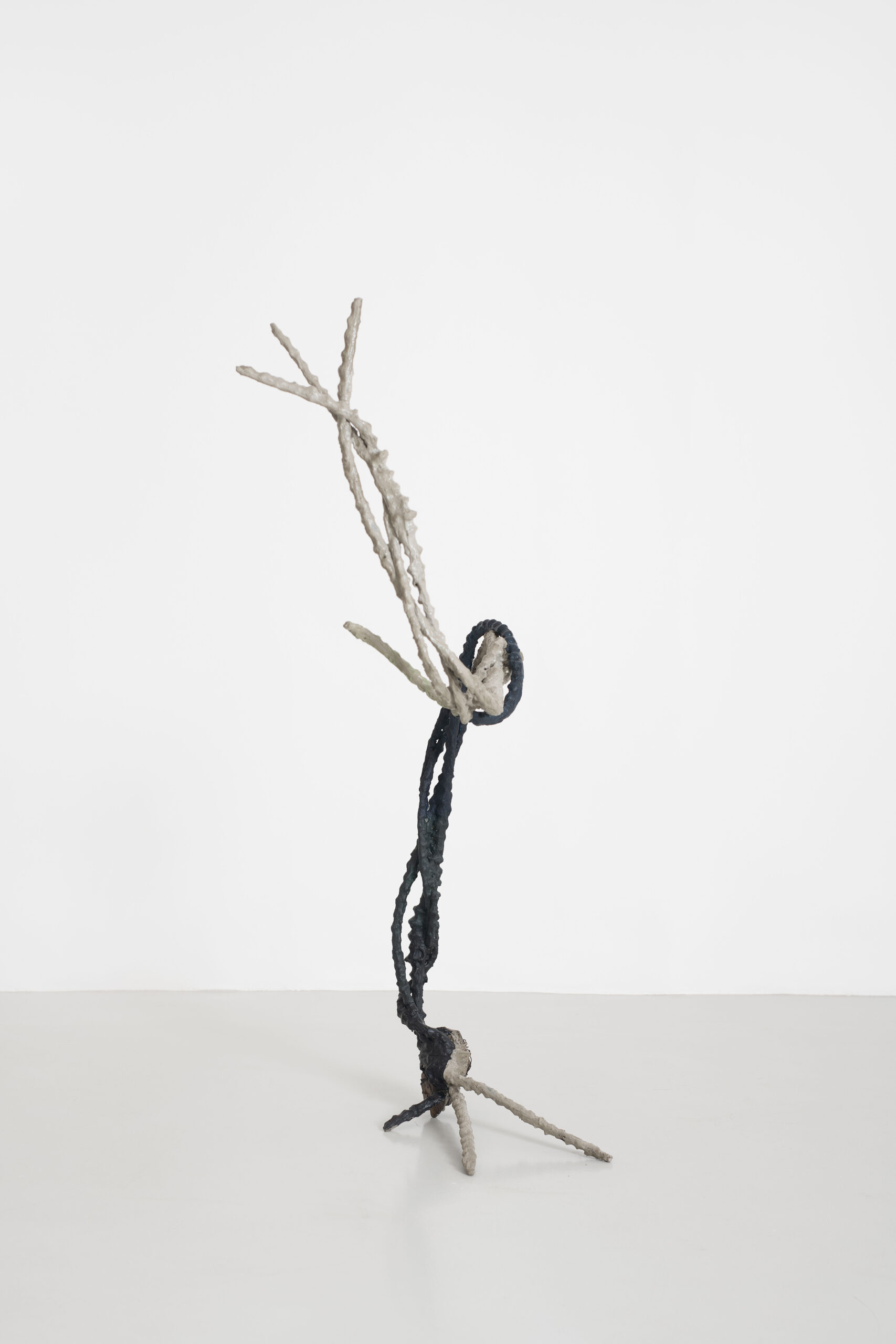
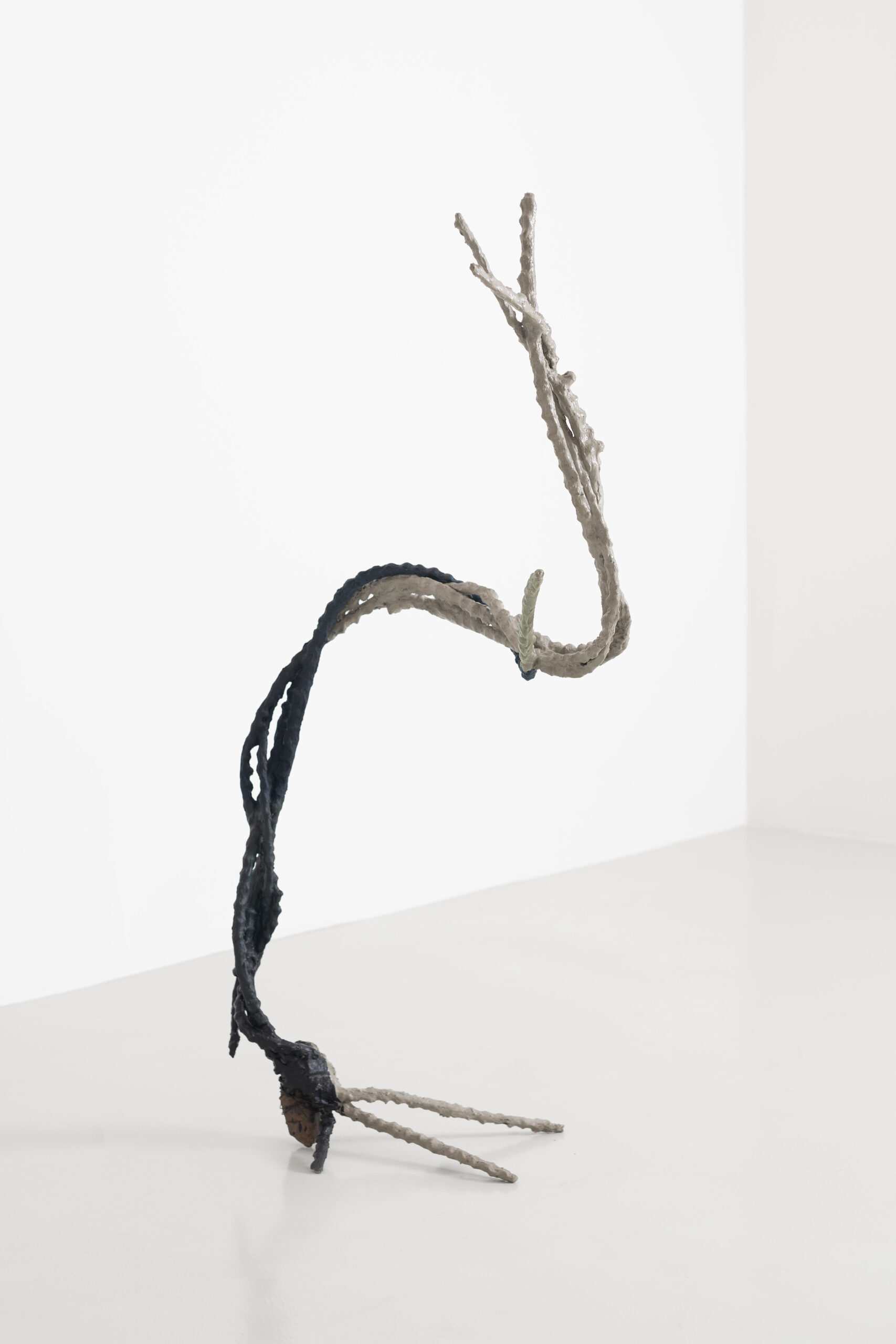
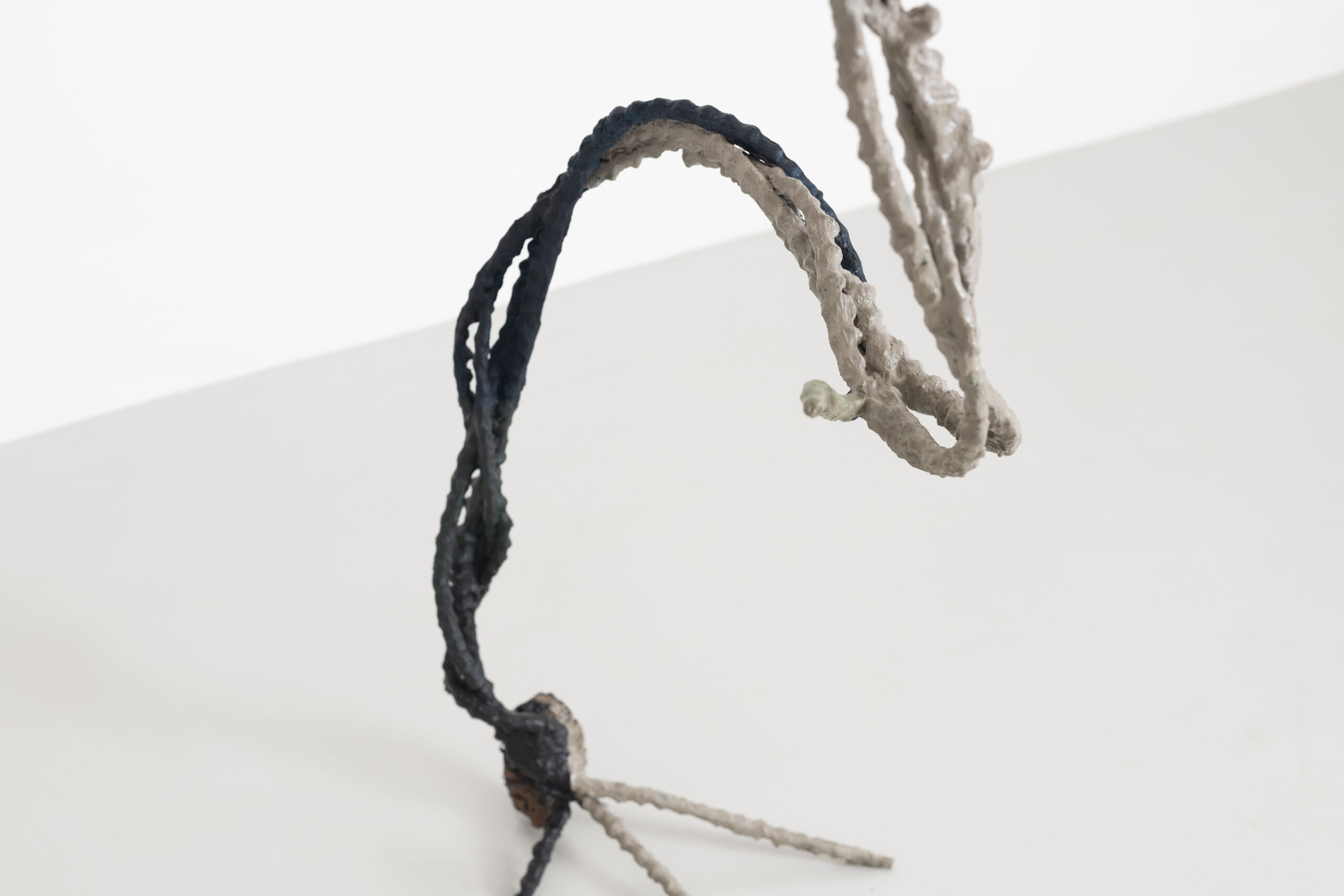
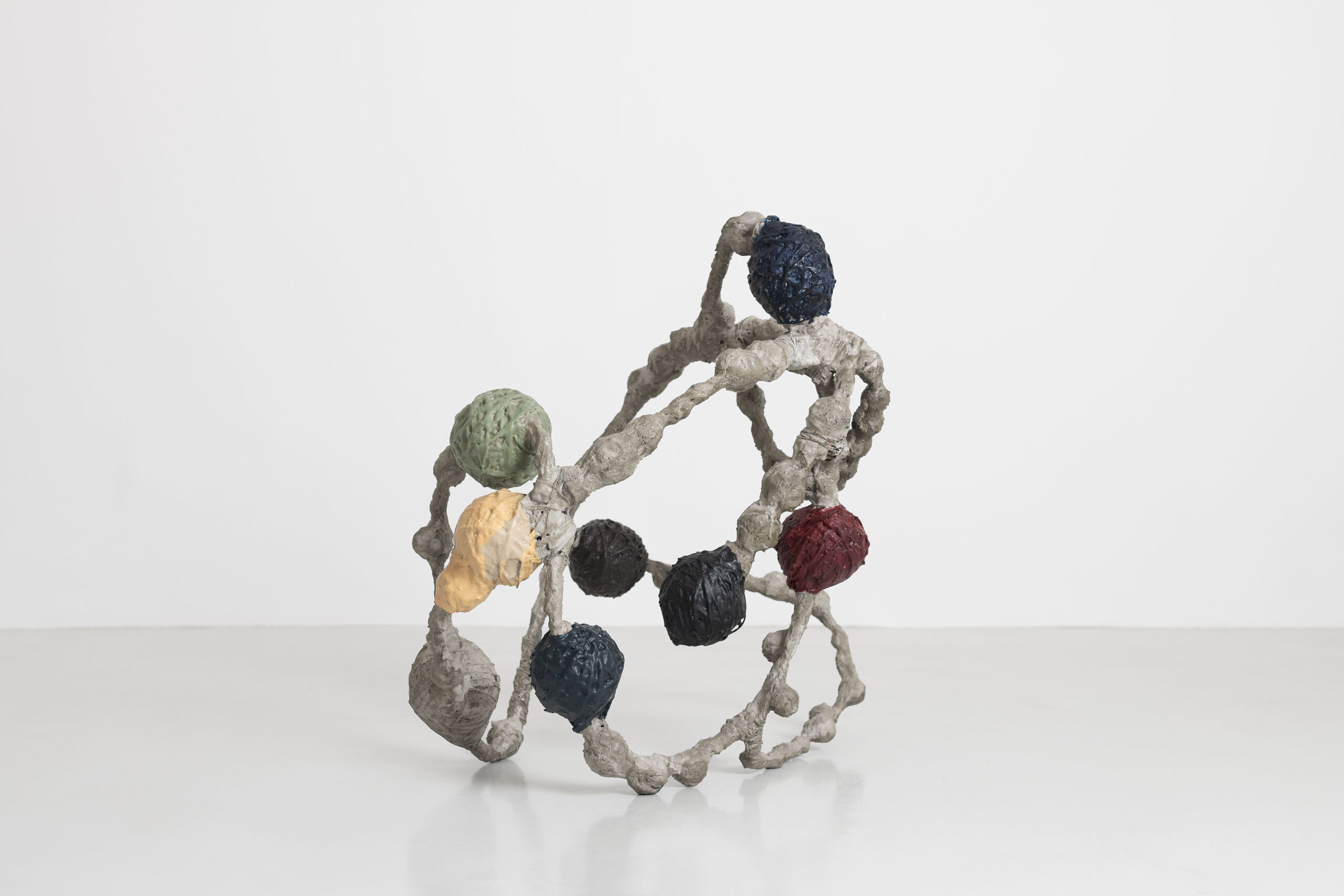
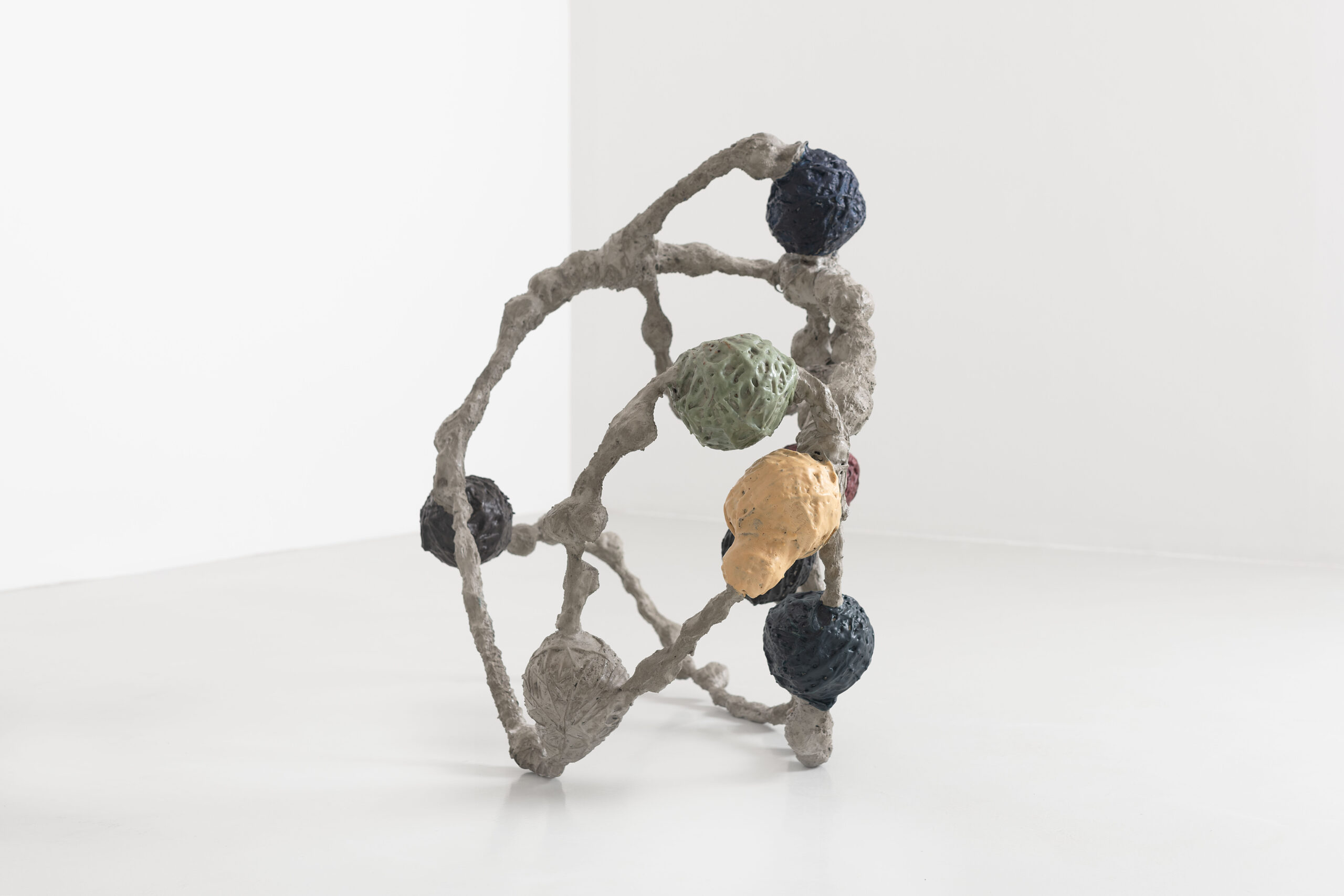
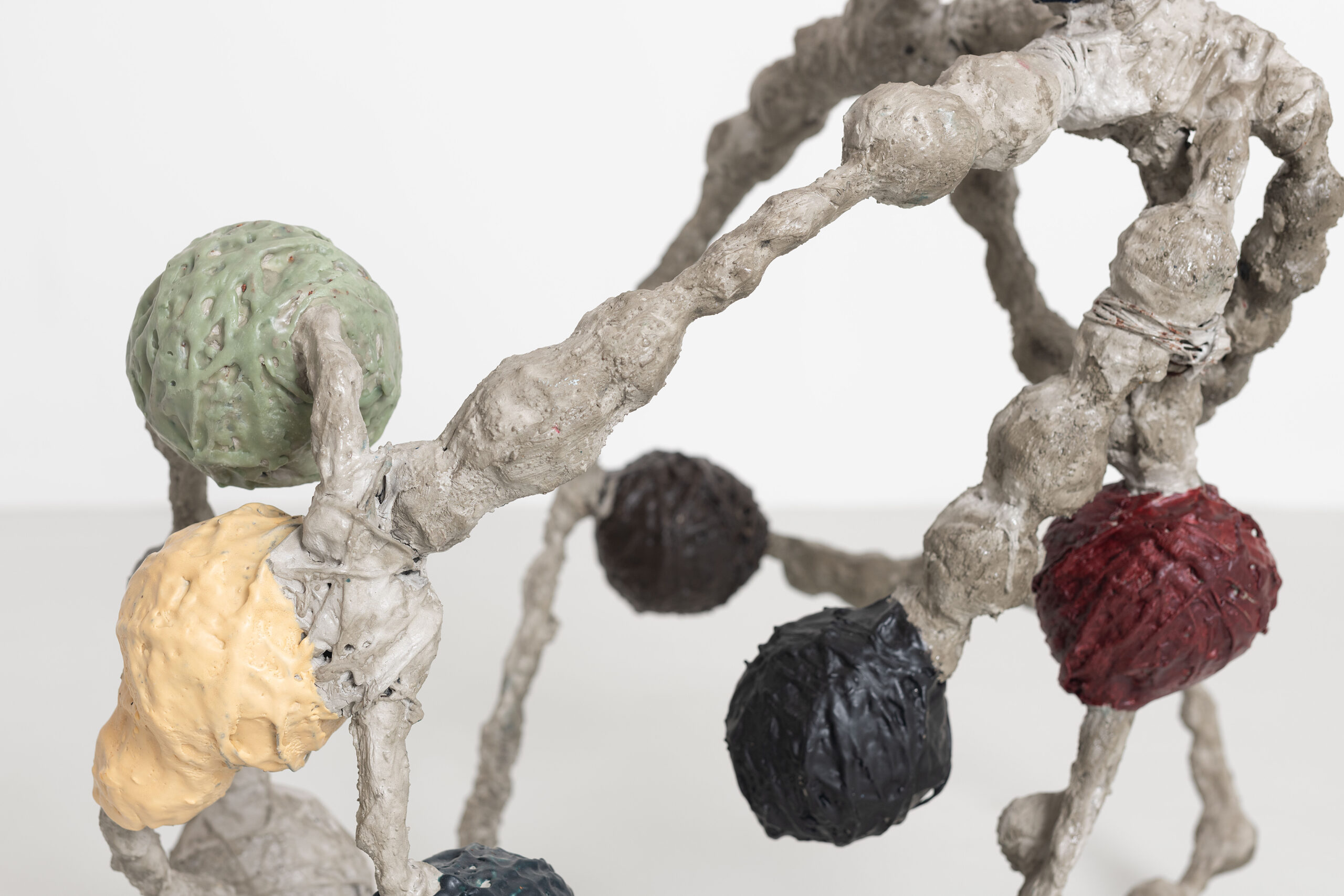
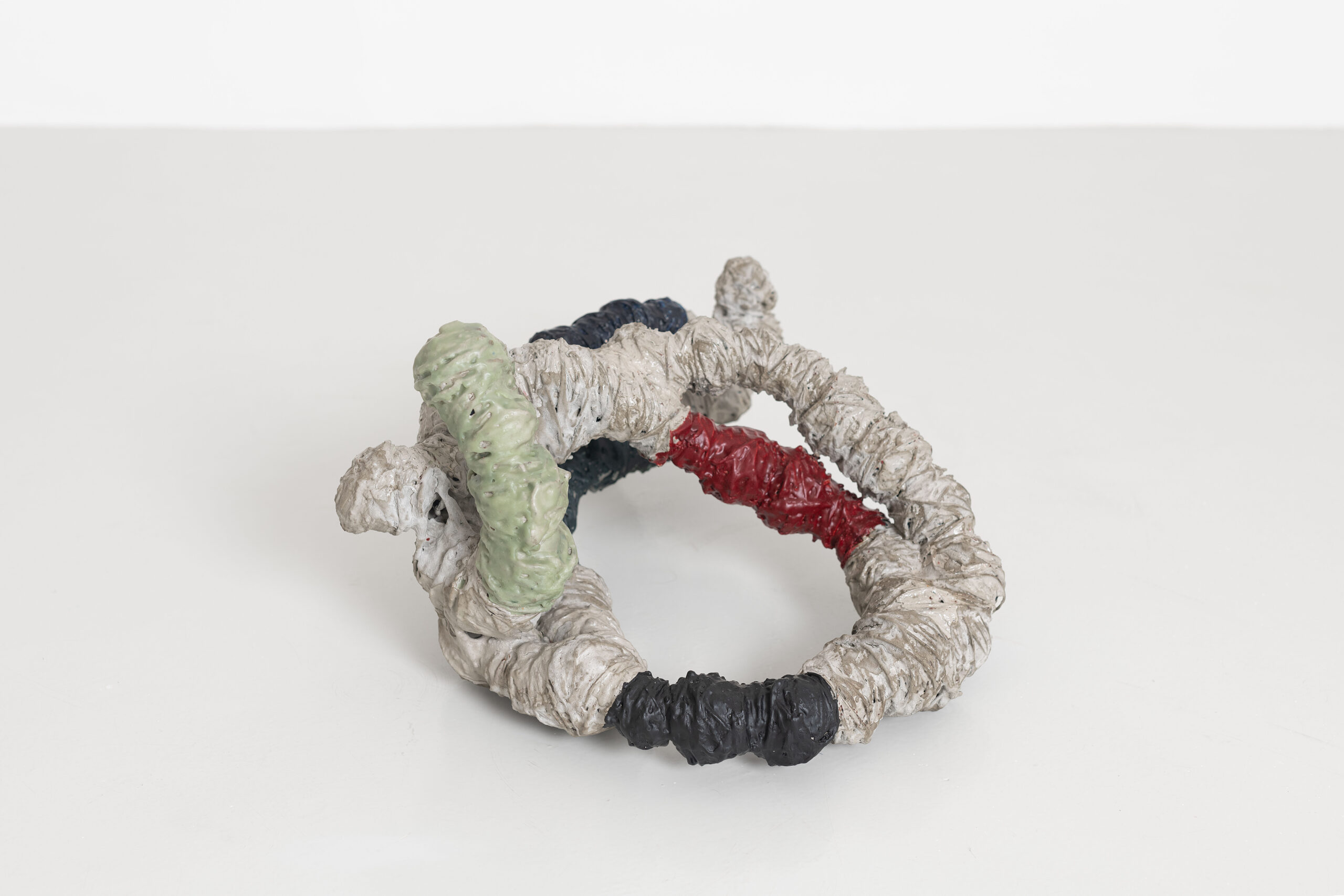
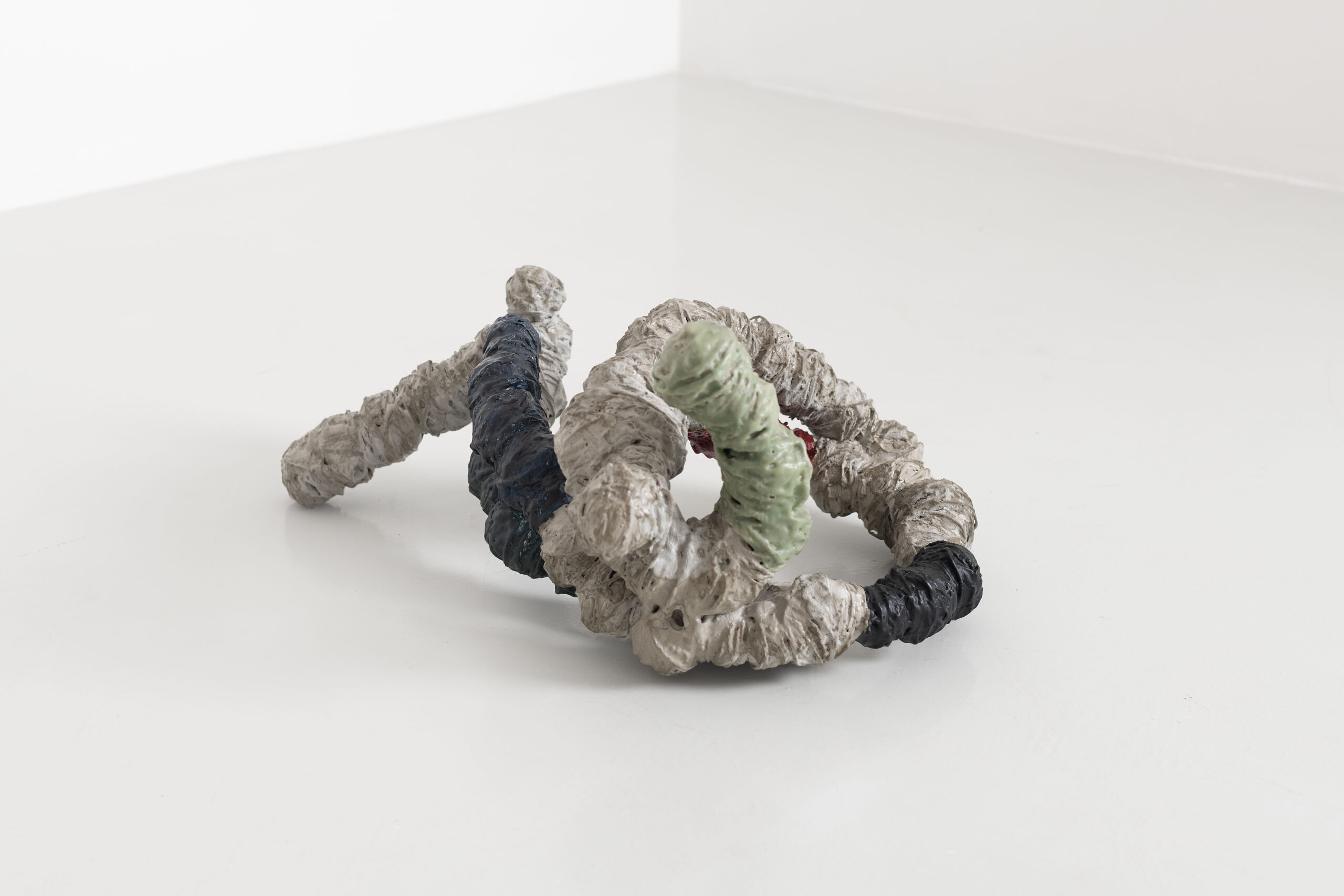

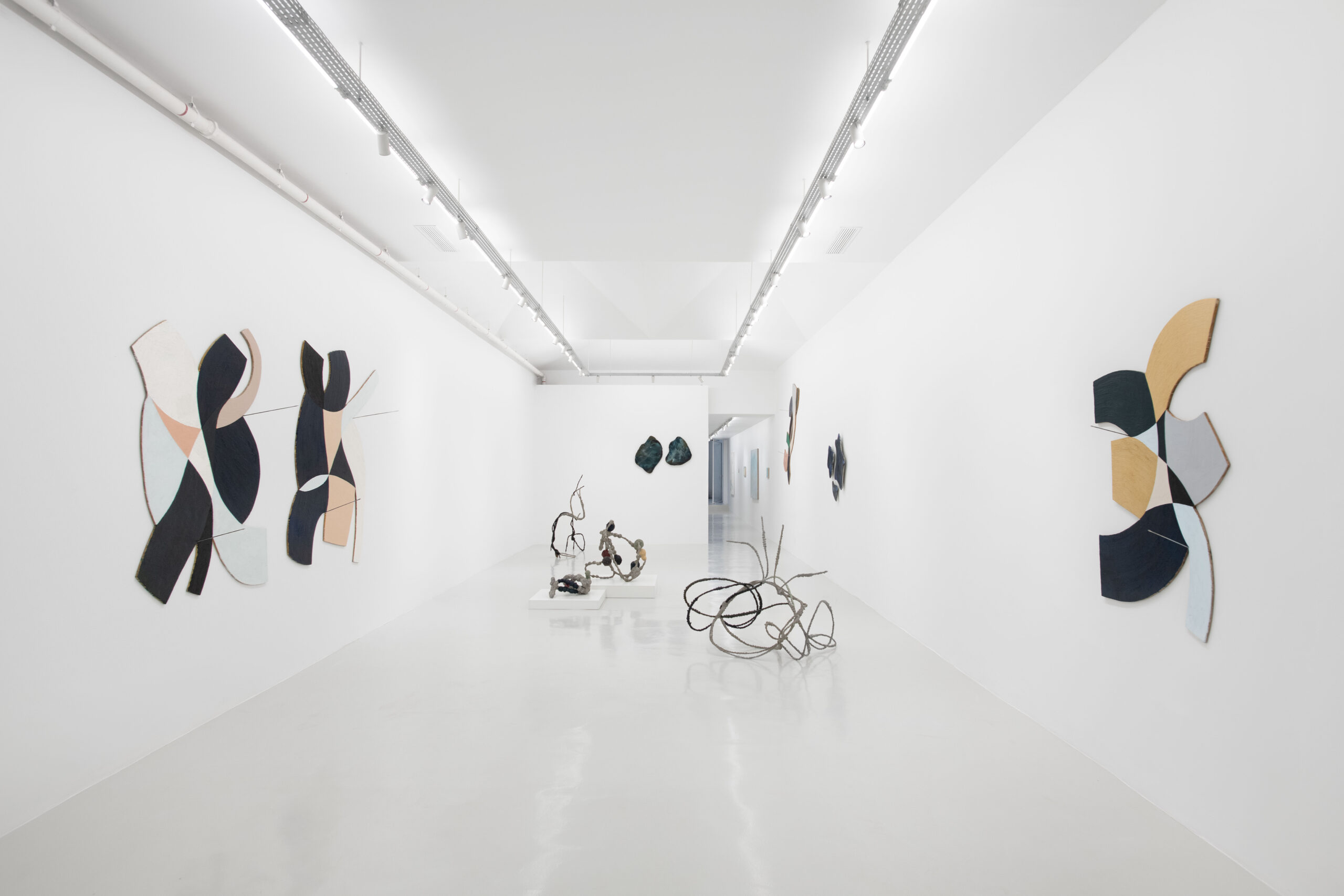
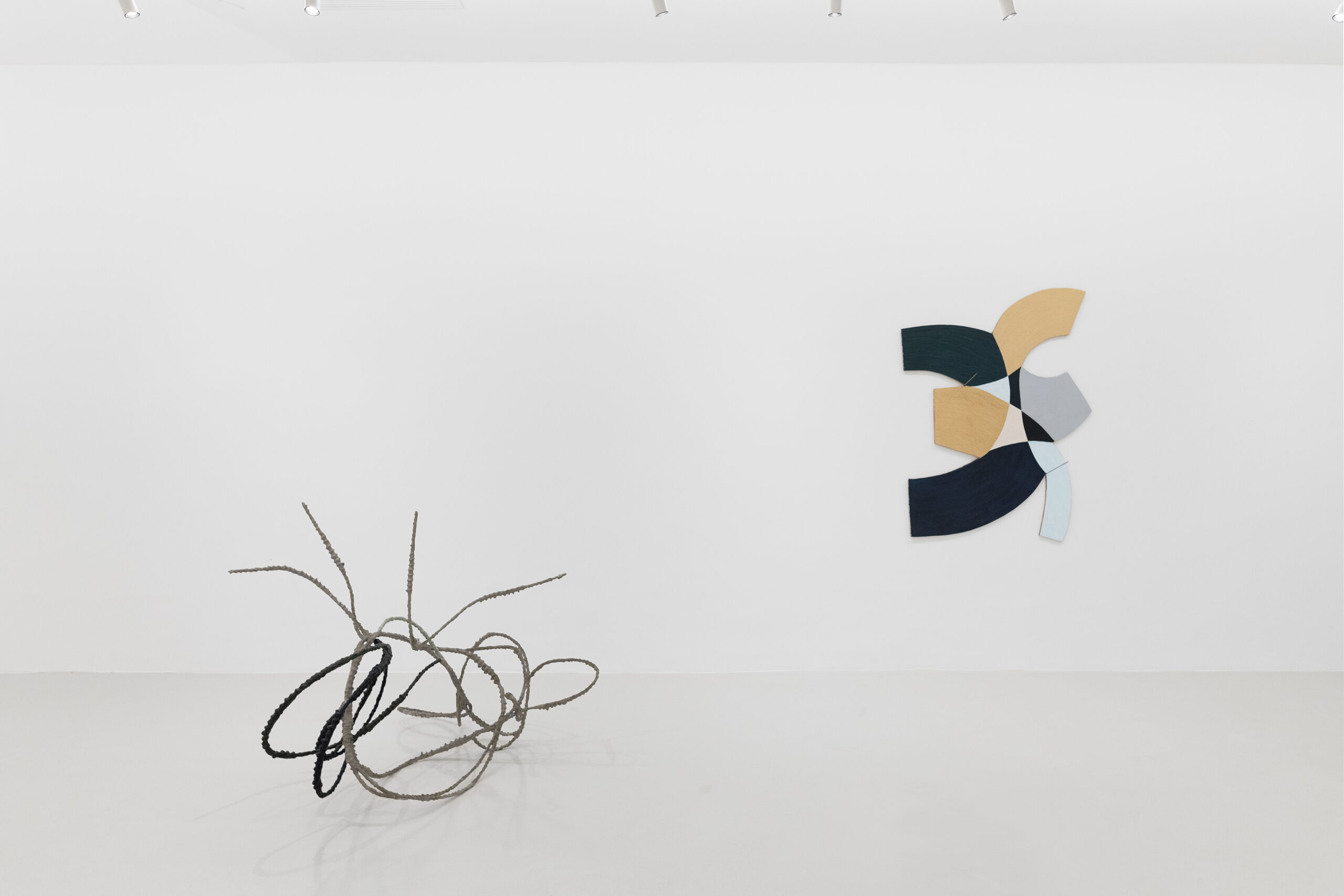
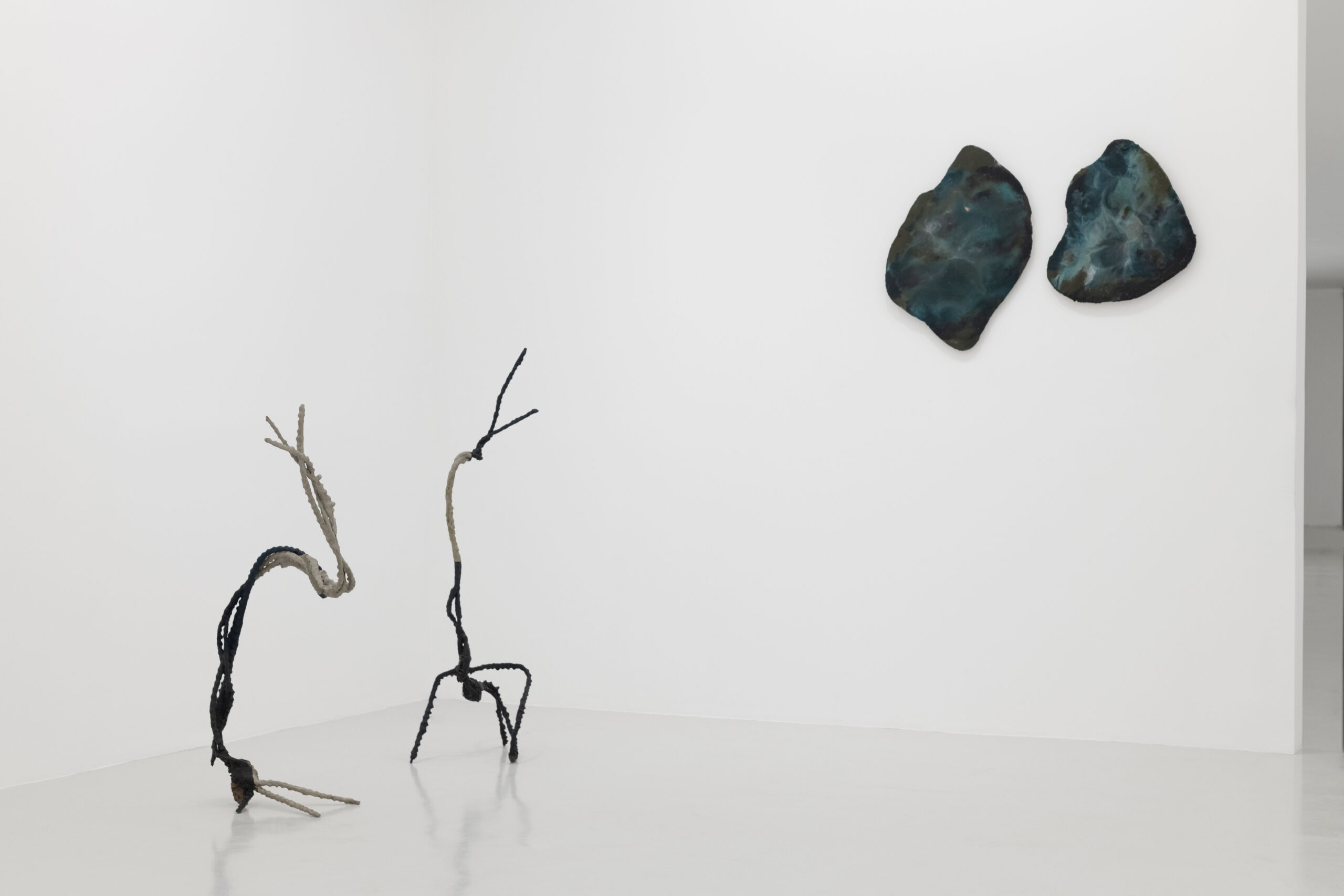
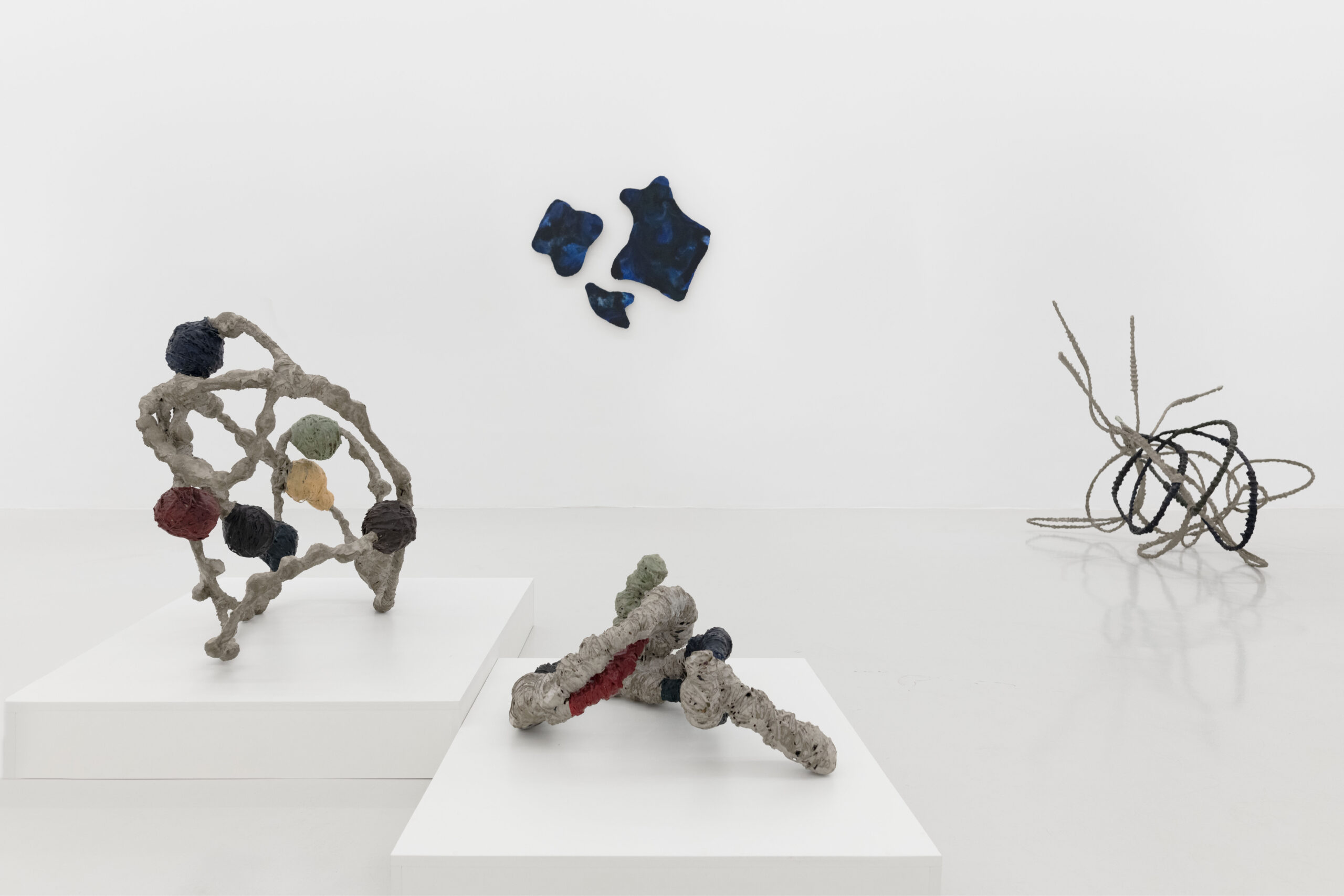
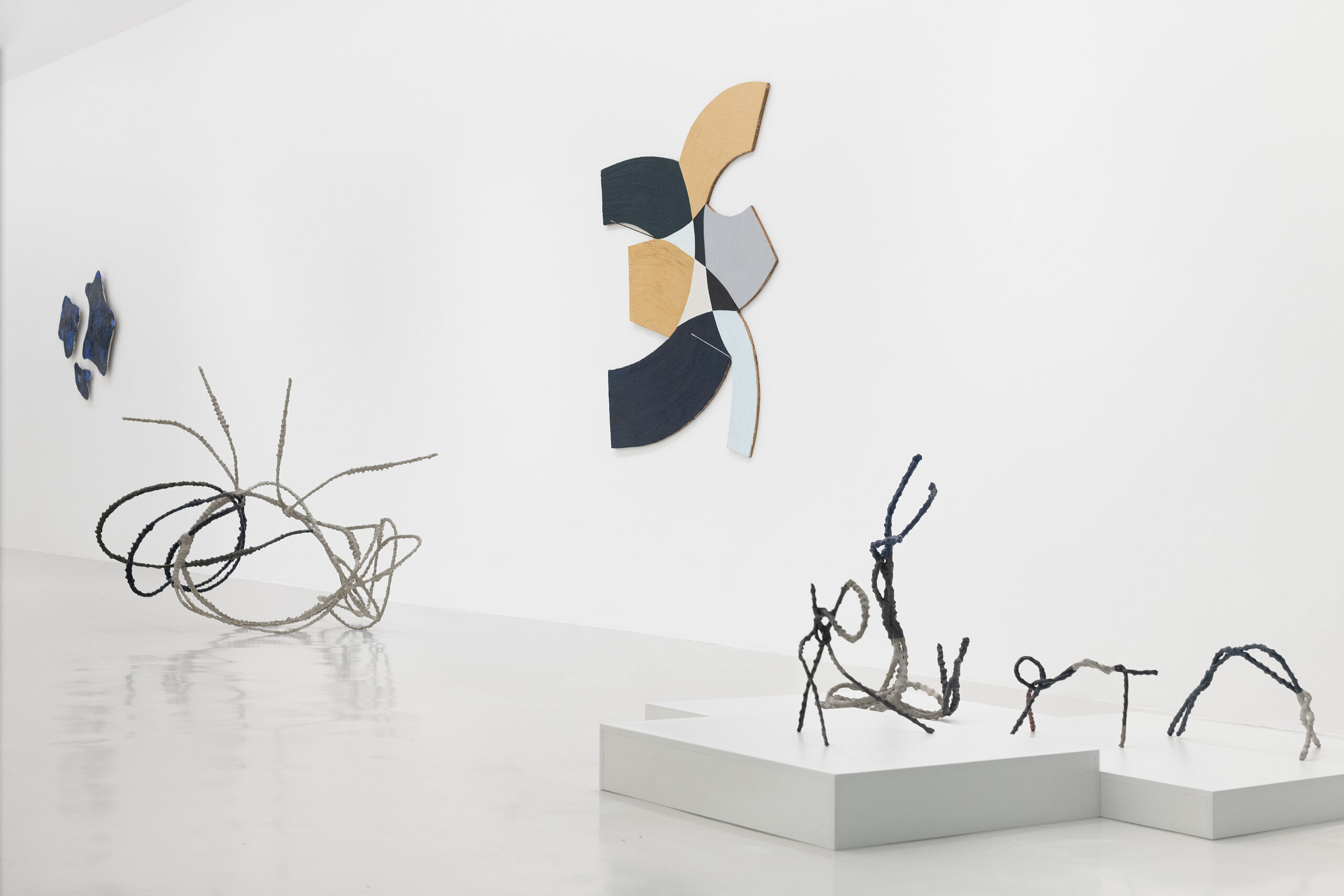
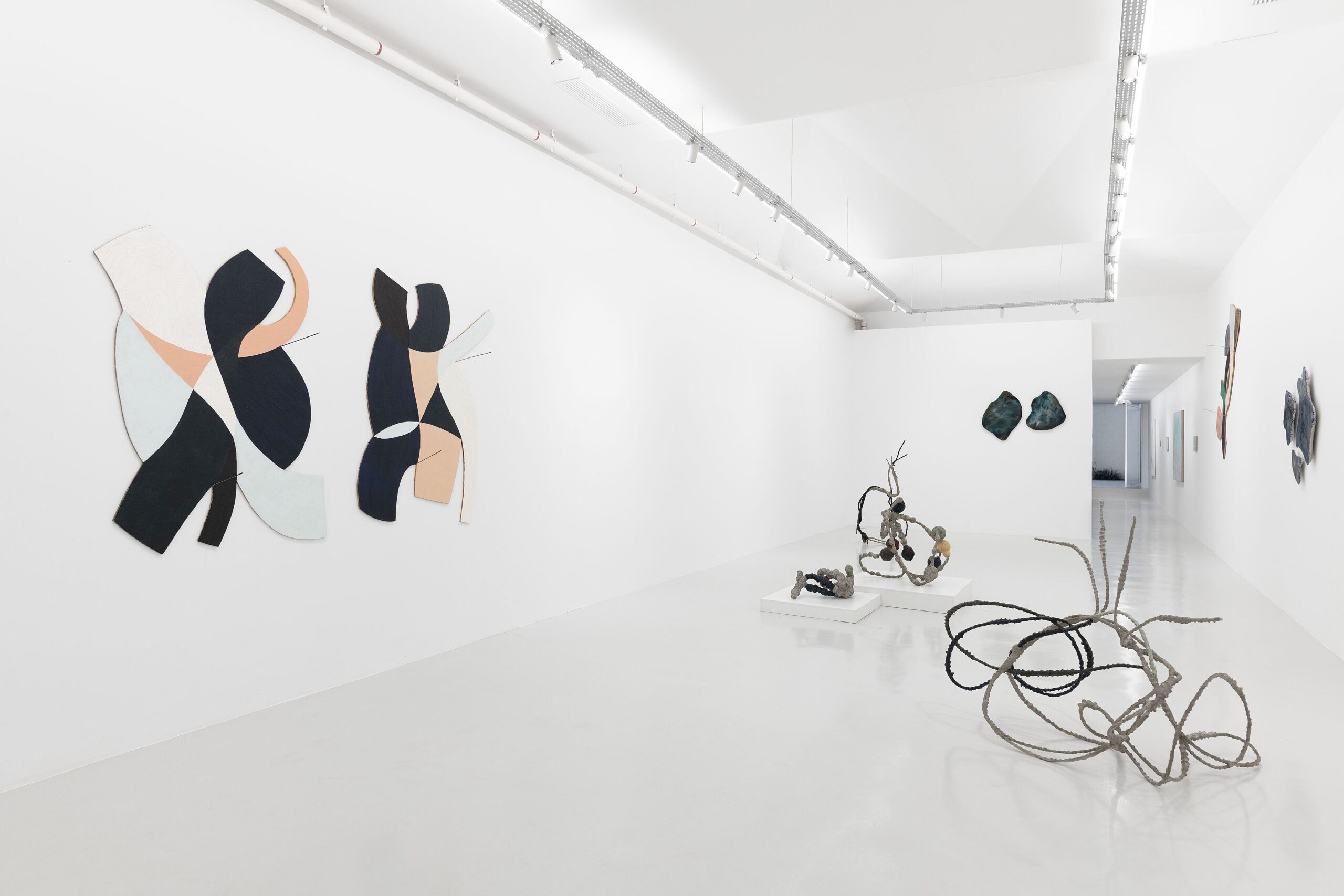
Among these, the first group appears in the center of the room. They are made of iron, porcelain, concrete and encaustic, and the focal point of their profusion lies in the knots that connect two or more objects. Squalid, they draw sinuous shapes in the air with their arms, legs and torsos, sometimes in gray, which refers to the concrete that gives the object its corpulence, and shades of color that often vary in saturated palettes. These variations are visibly demarcated throughout the piece, without the use of gradients or chromatic gradation; they suddenly flow between textures, colors and reflections in an exquisite morphological game. The set of sculptures use the material covering of their bodies as a ruse to hide their skeleton and formation, keeping this secret like the magic that keeps them alive, as they dispense with any foundational narrative for their autonomy. They are because they are, even if the memory of their birth remains inside the shell. However, they don’t hide the interspecies interaction on which they depend: their bodies are molded between the rhythms of slopes and accumulations, revealing the hand of the creator who sculpted them.
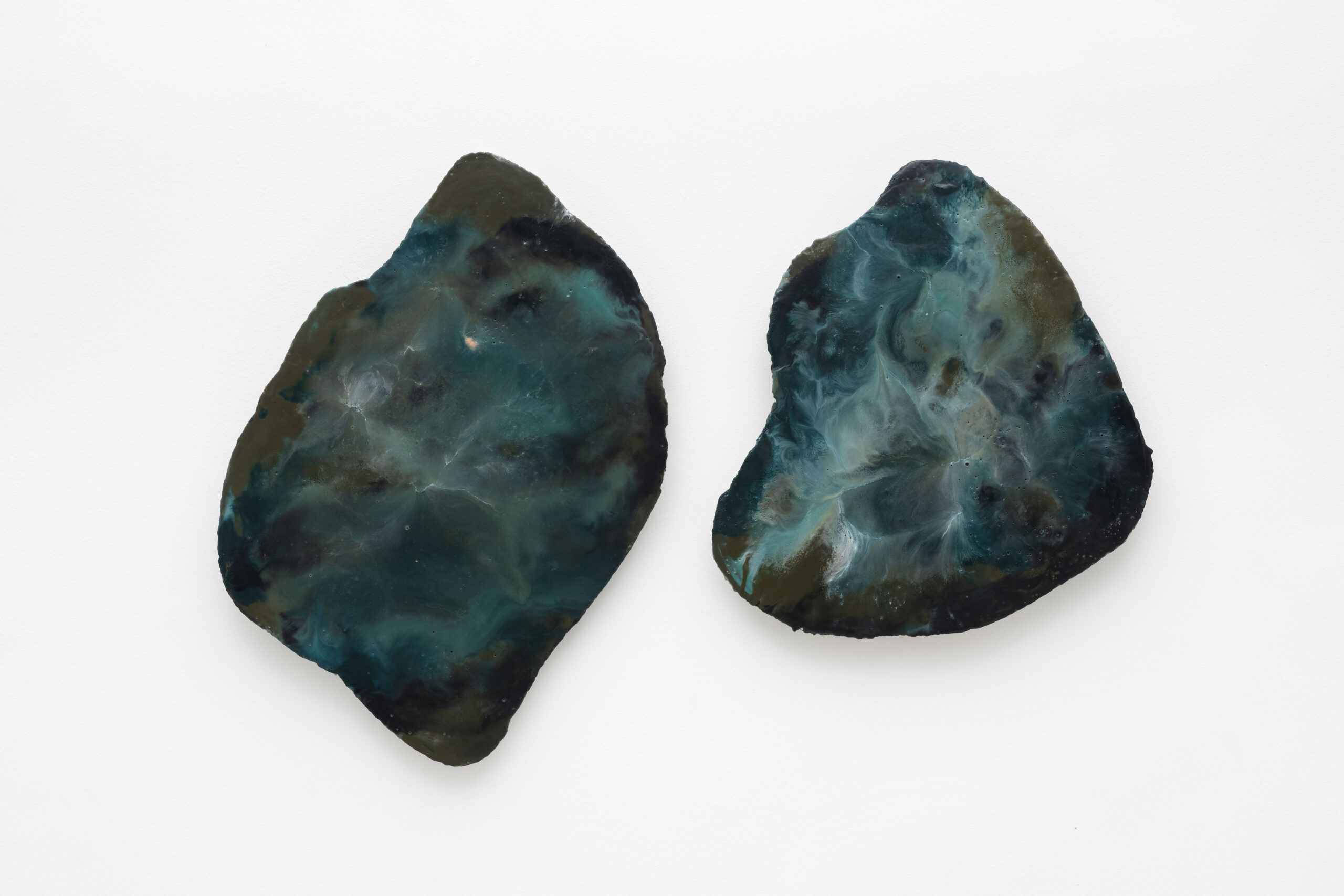
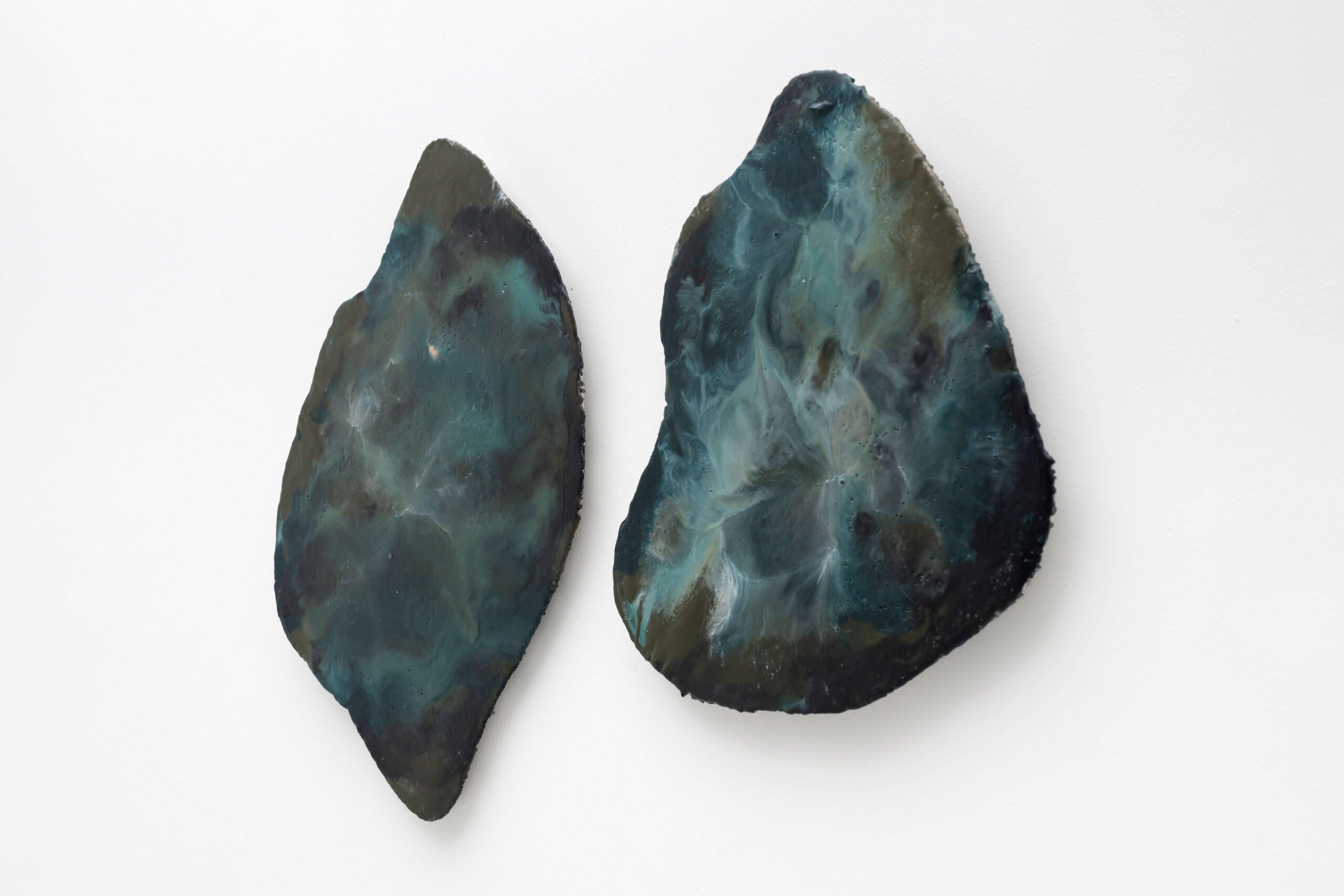
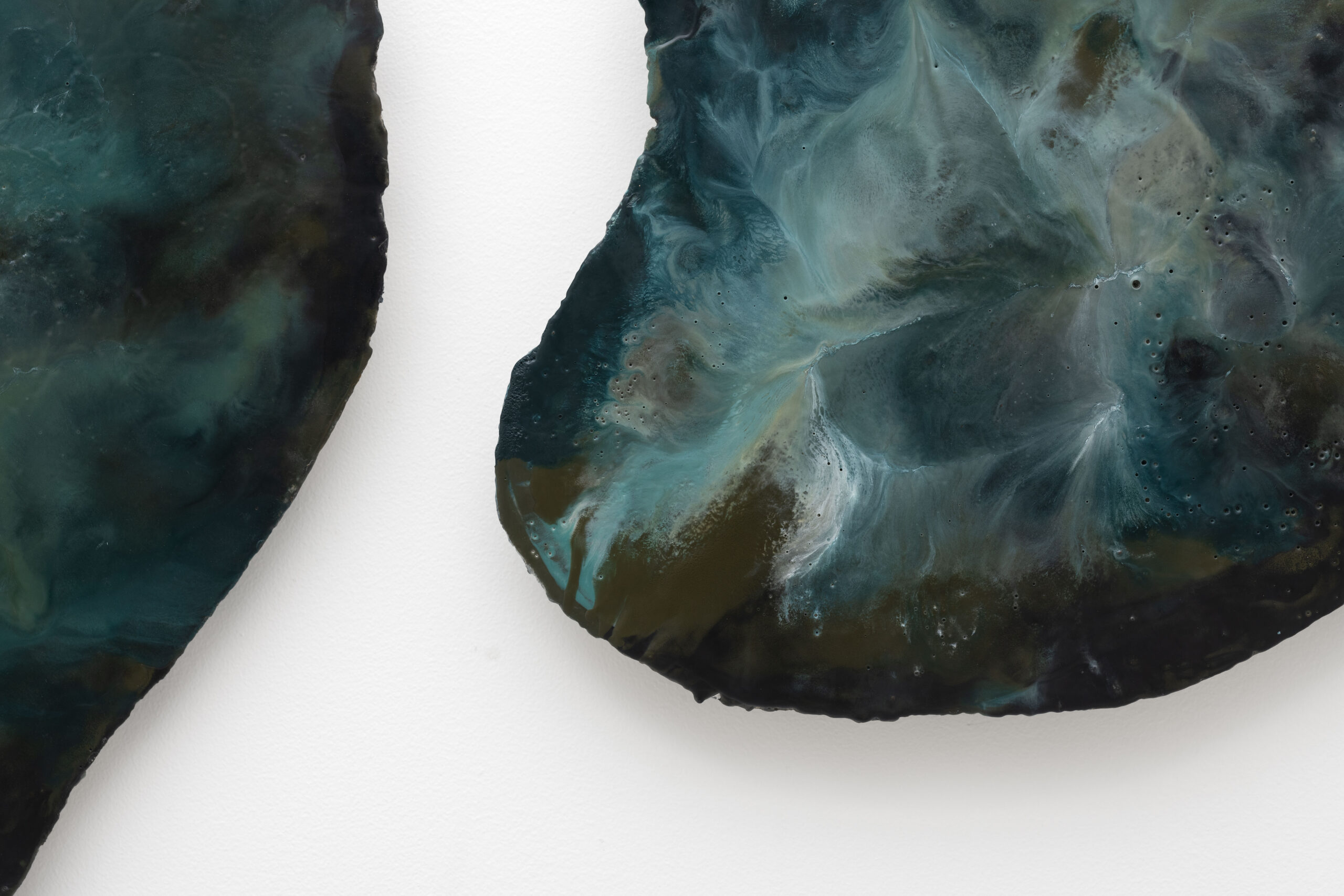
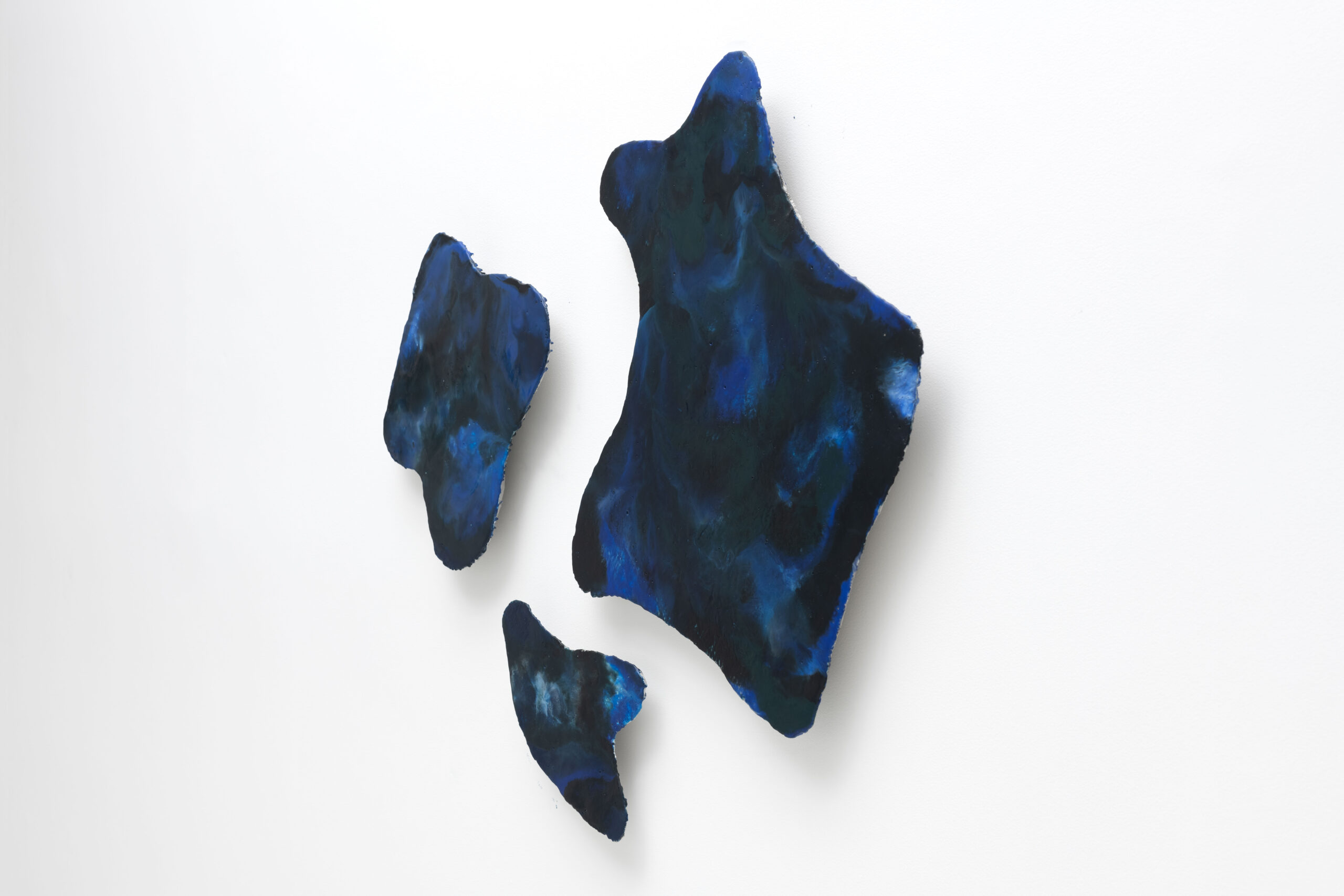
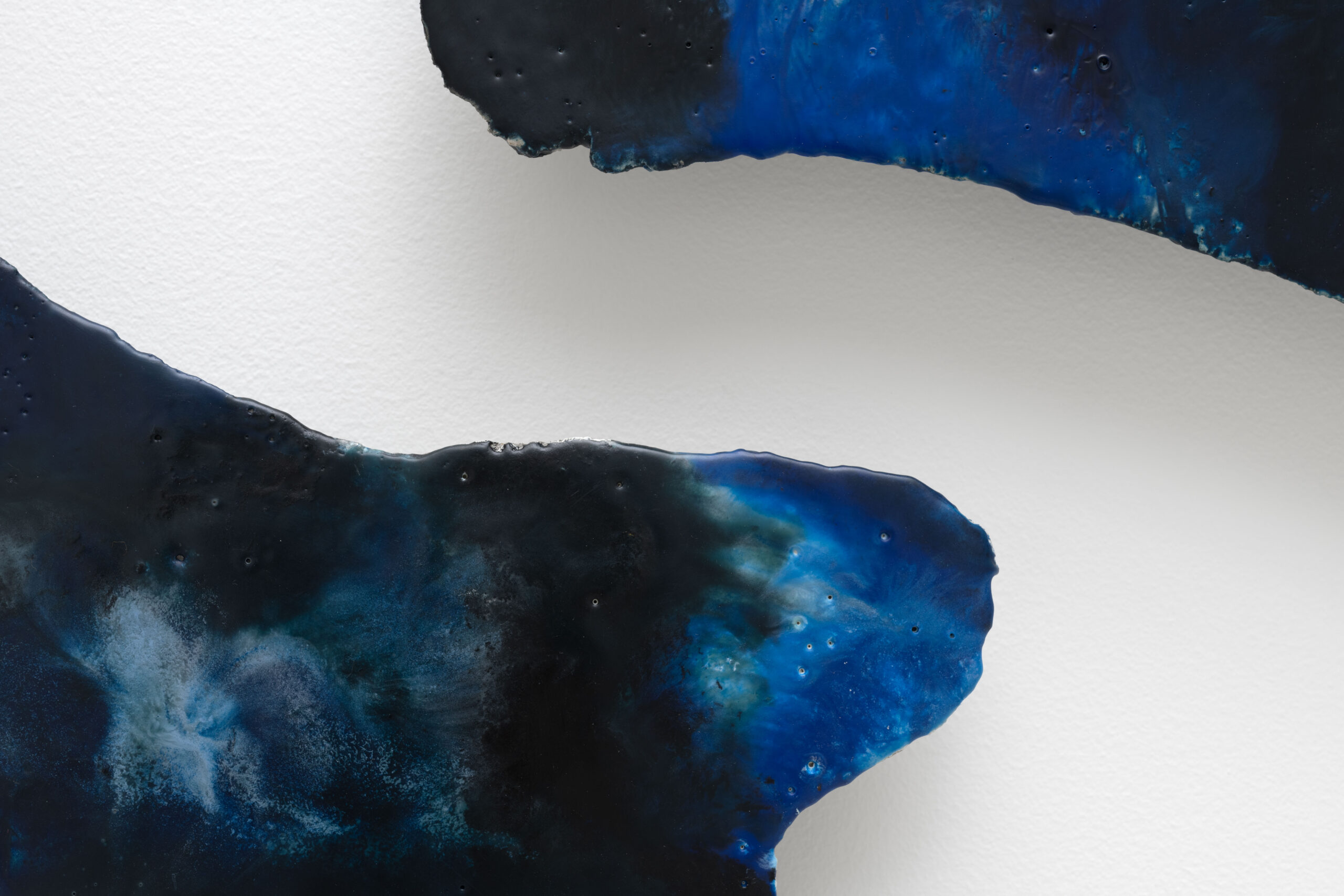

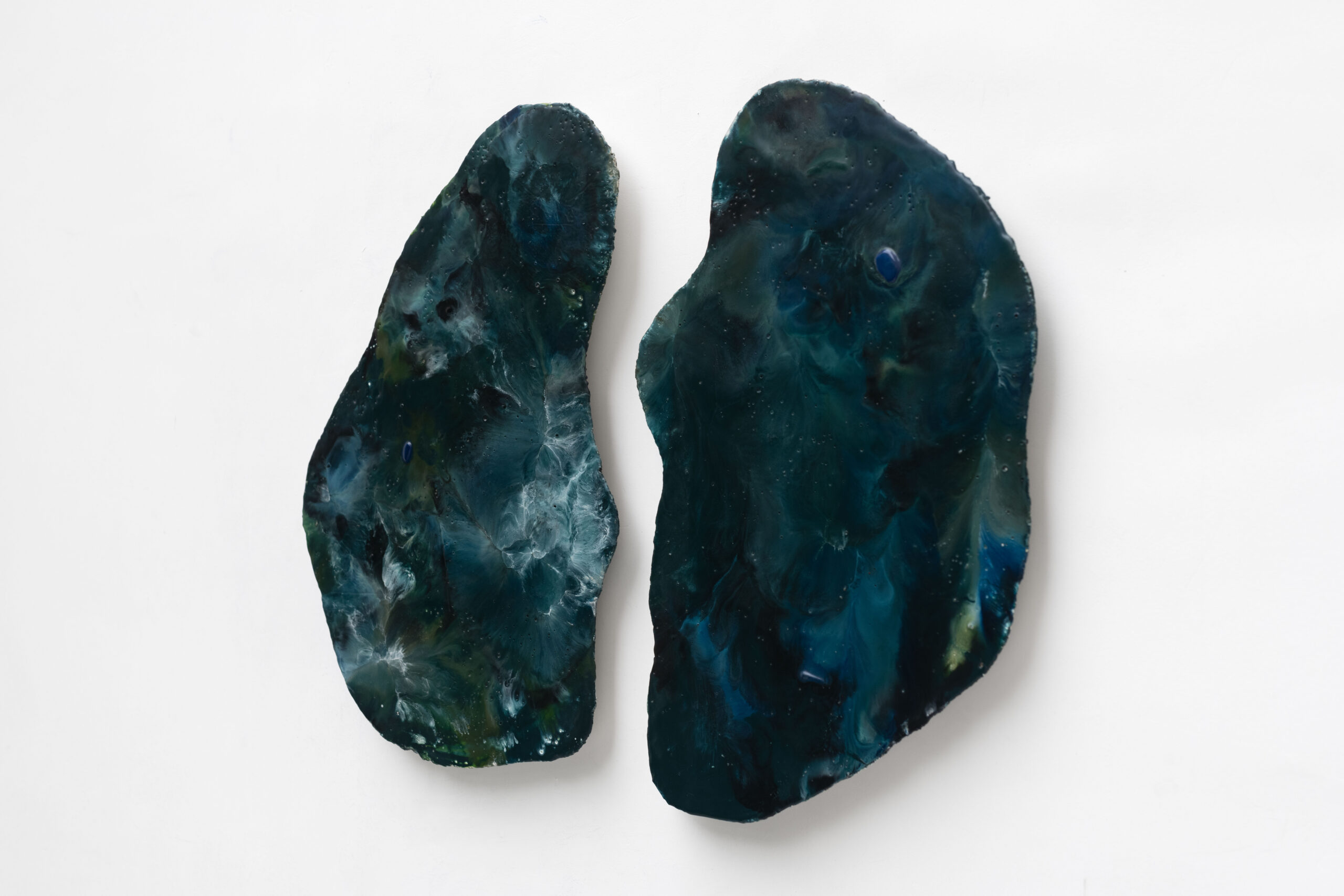
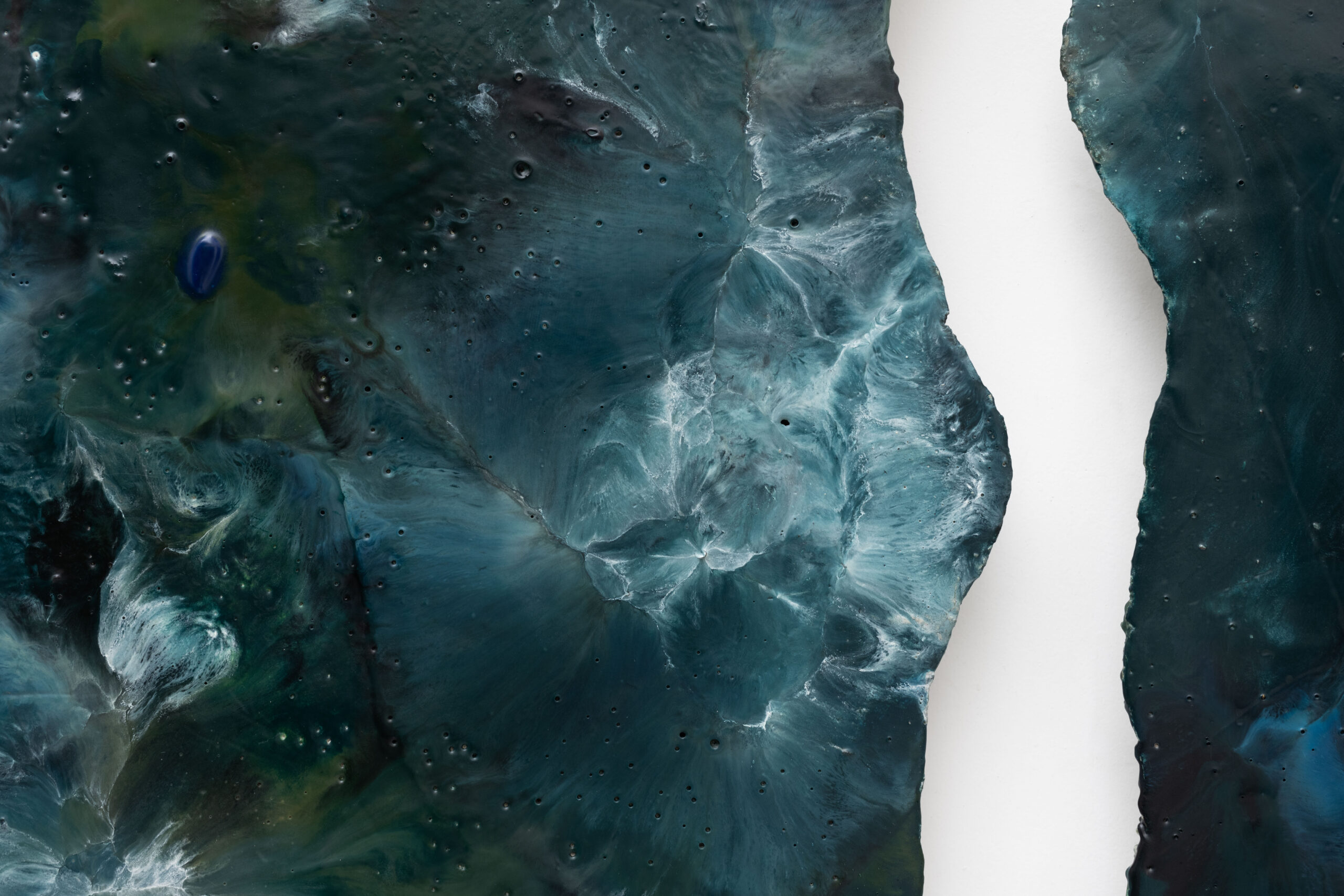
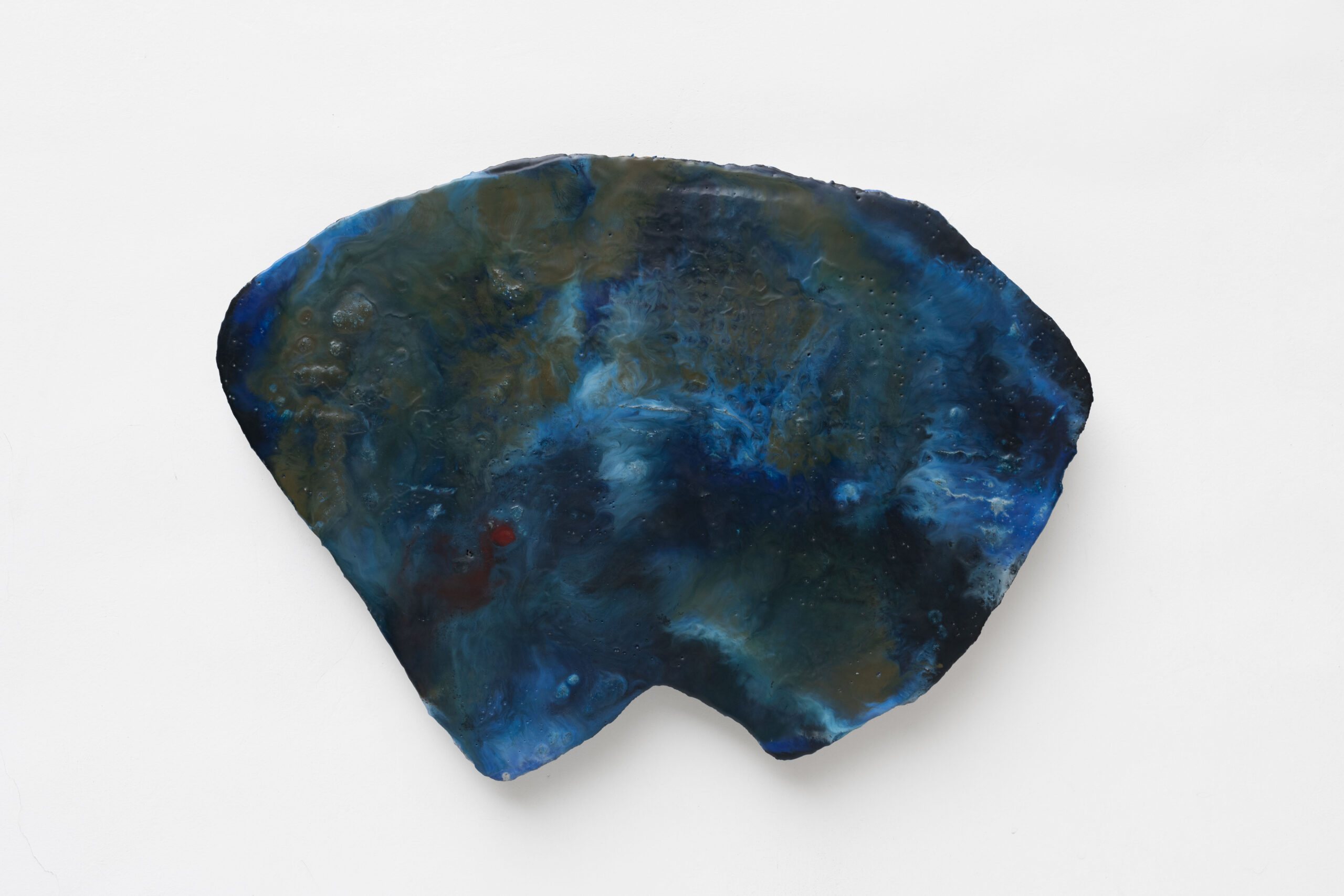
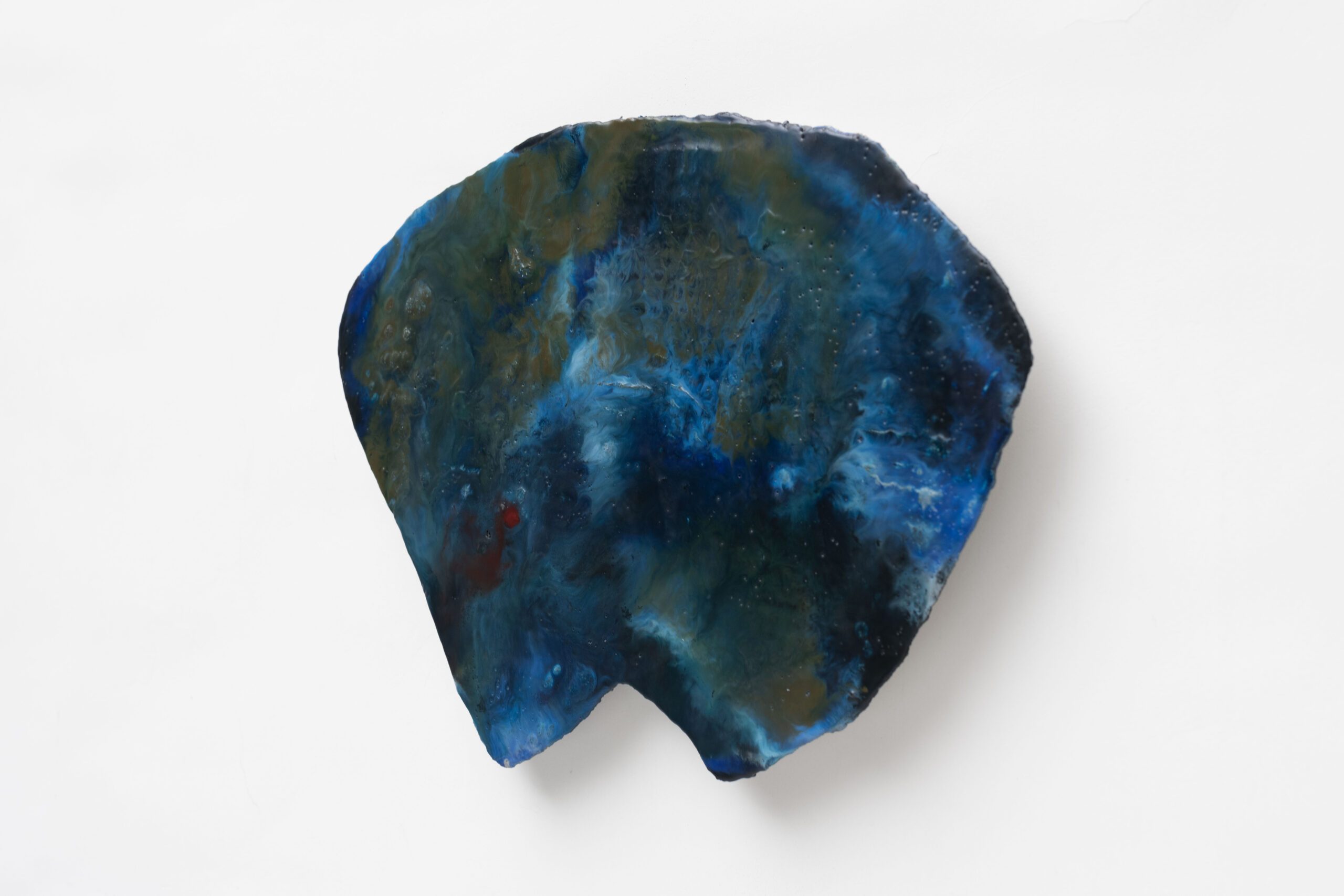
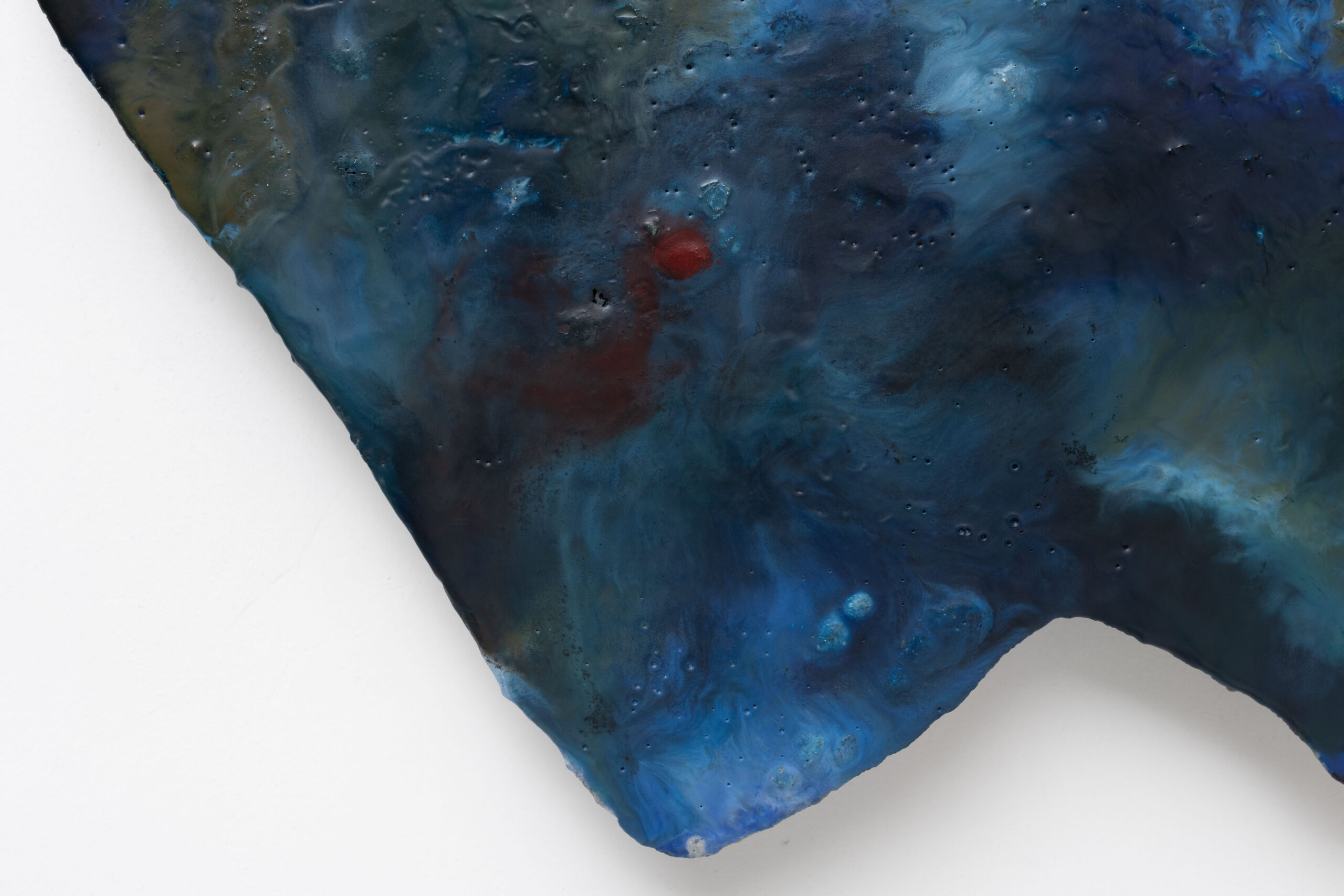
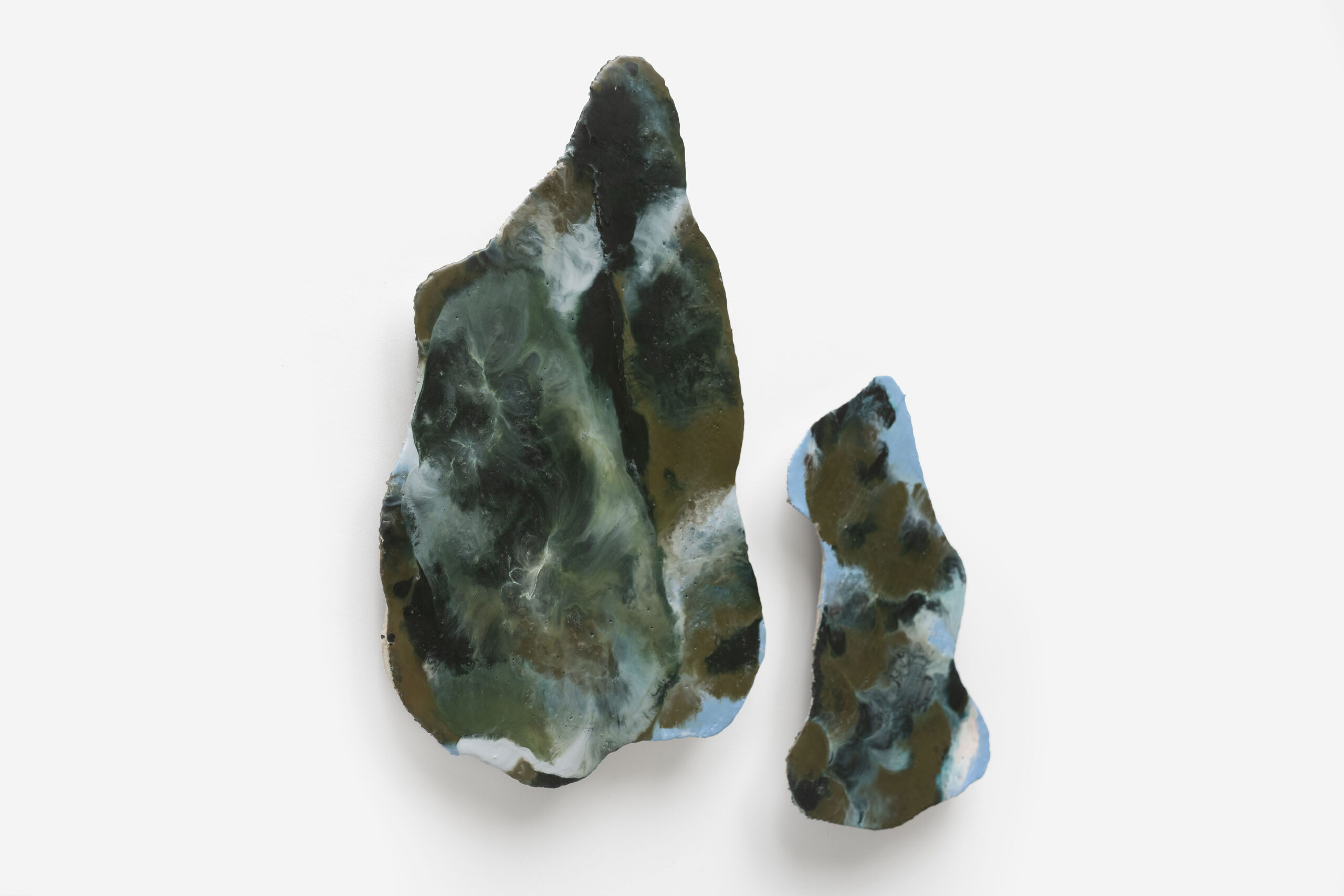
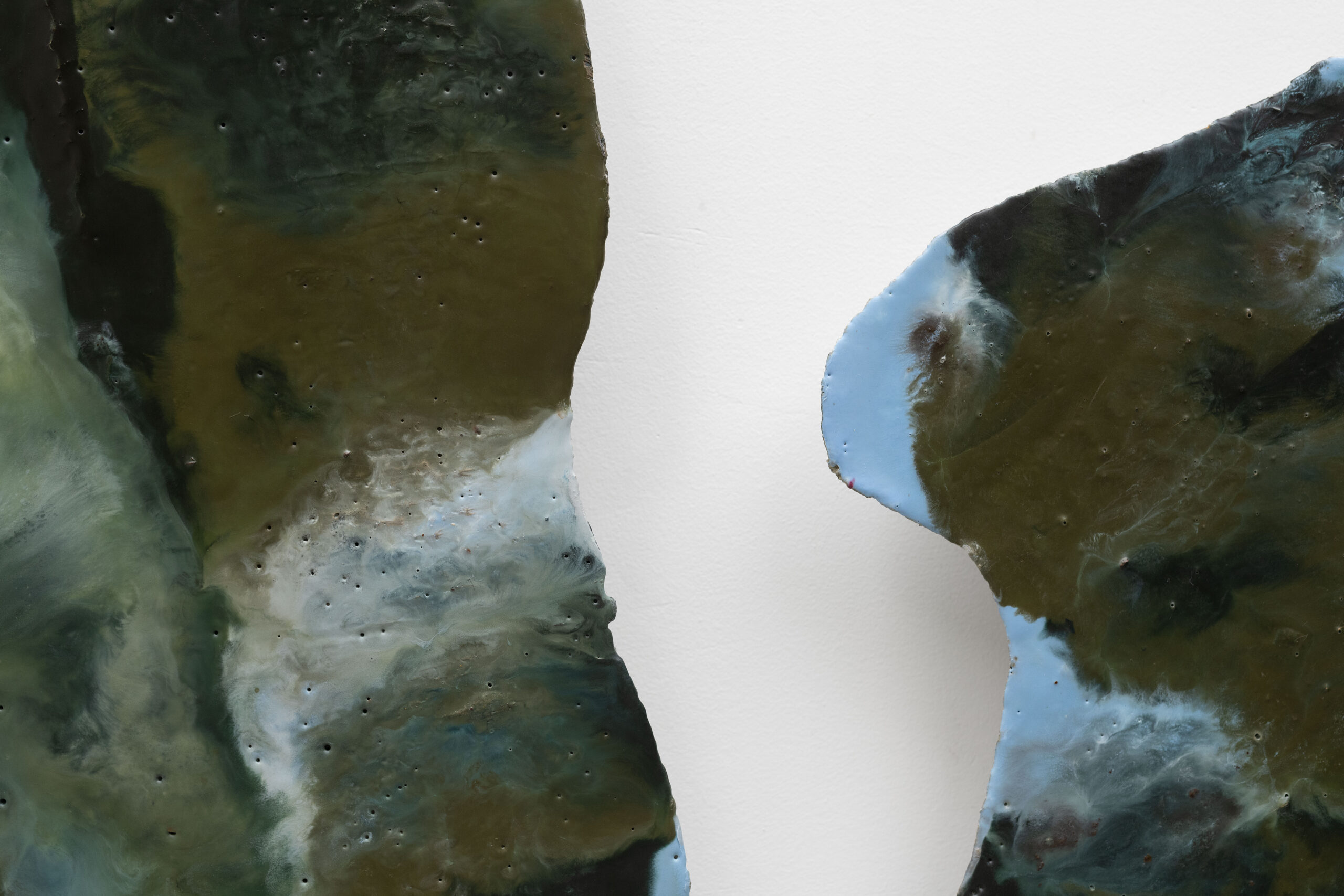
Next, a group of concrete and encaustic objects form islets that, while on the one hand resemble panoramic views of planets from space, on the other seem to reflect on emptiness and darkness. If such materiality is common in Plano’s production, who in works such as Calor sem luz and Depois d’agua, a terra makes use of the abstract quality of hot wax to create points of heat that resemble terrestrial islands and geological formations, the use of cold encaustic in the series of works presented here creates a zone of waiting and interest in the penumbra that seems to cool the temperature of the room, proposing an equalization with the tone of the other pieces, generally the result of processes involving direct melting. In this uncertain terrain, these black mirrors invite the viewer to look and wait for the new to emerge.
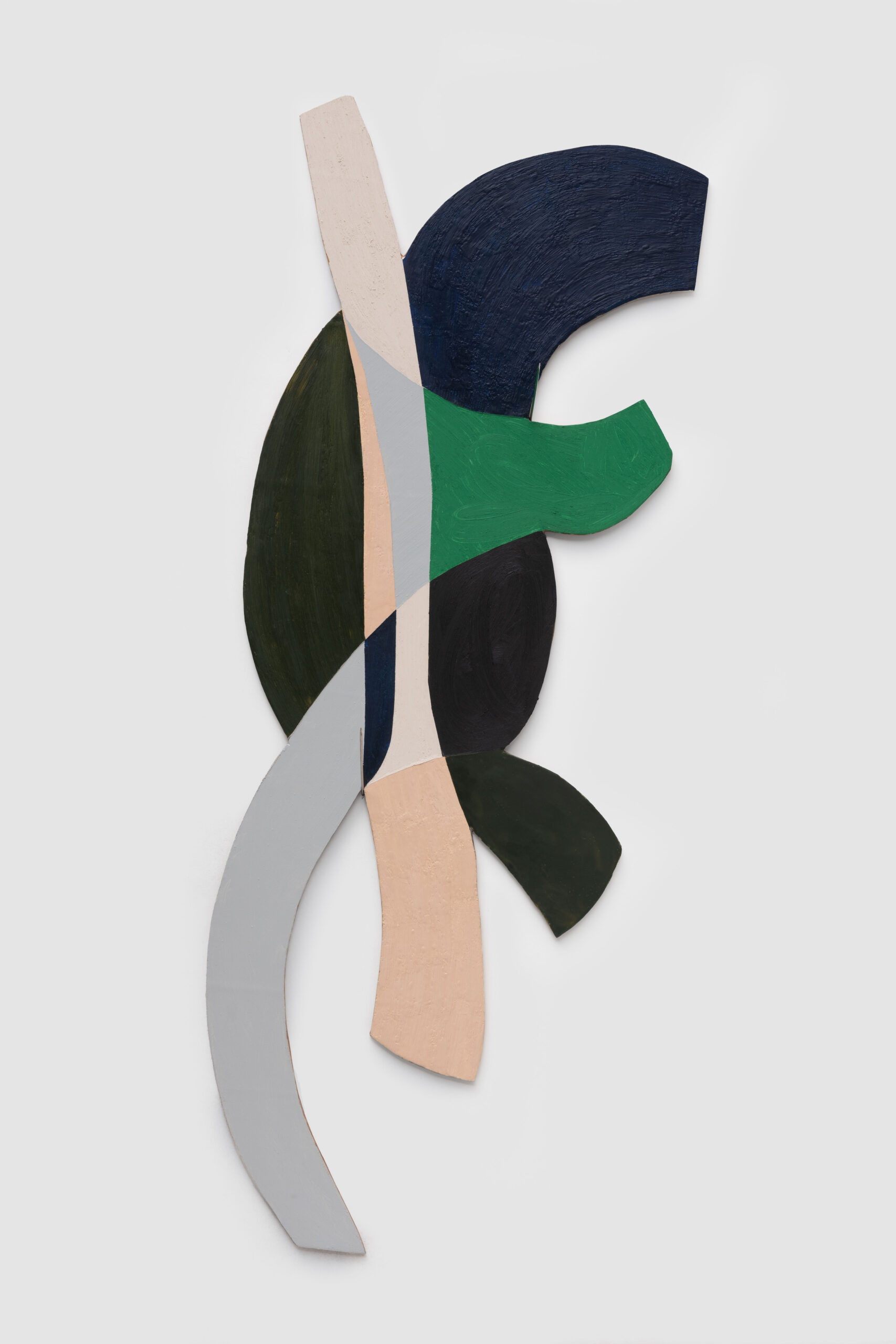
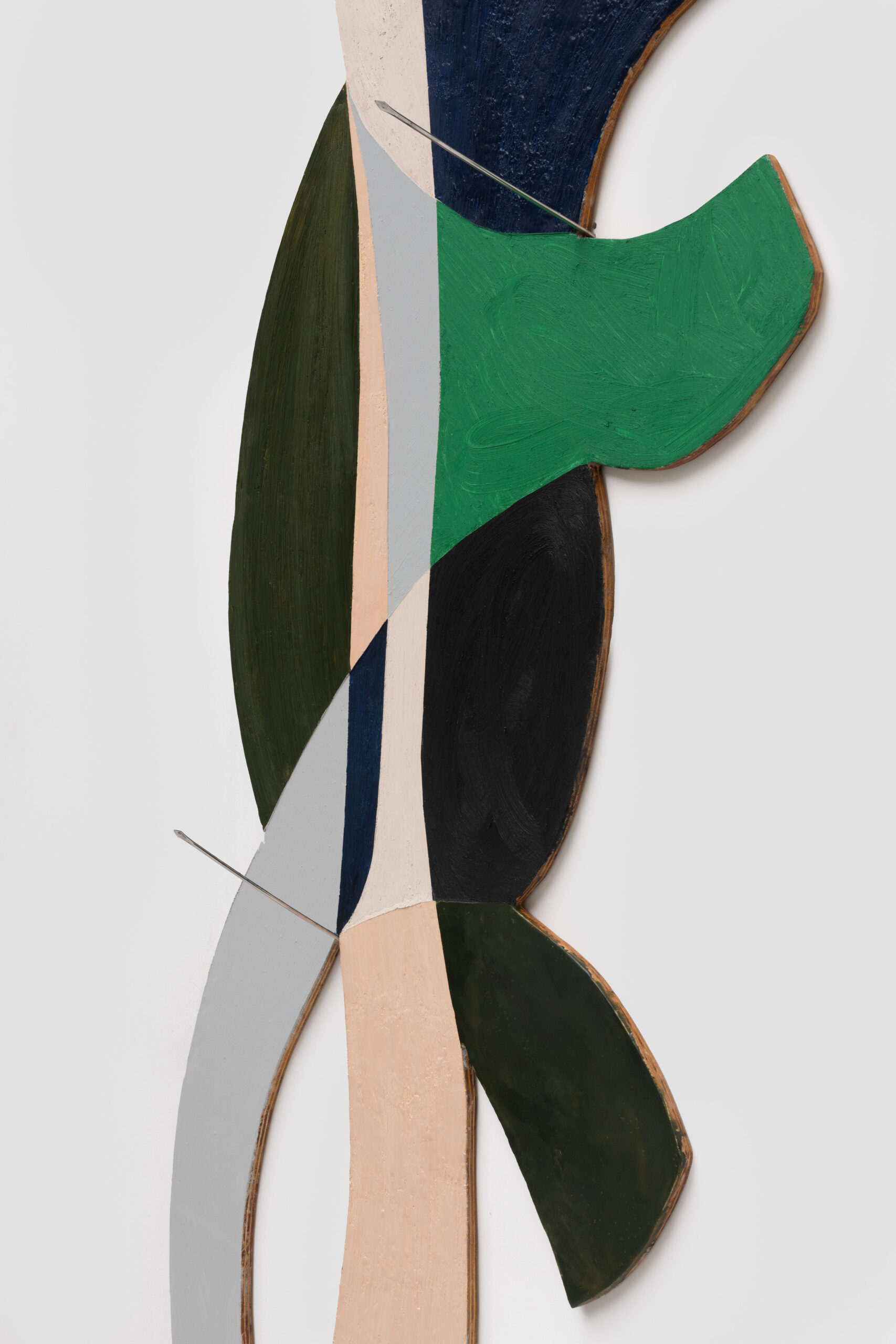
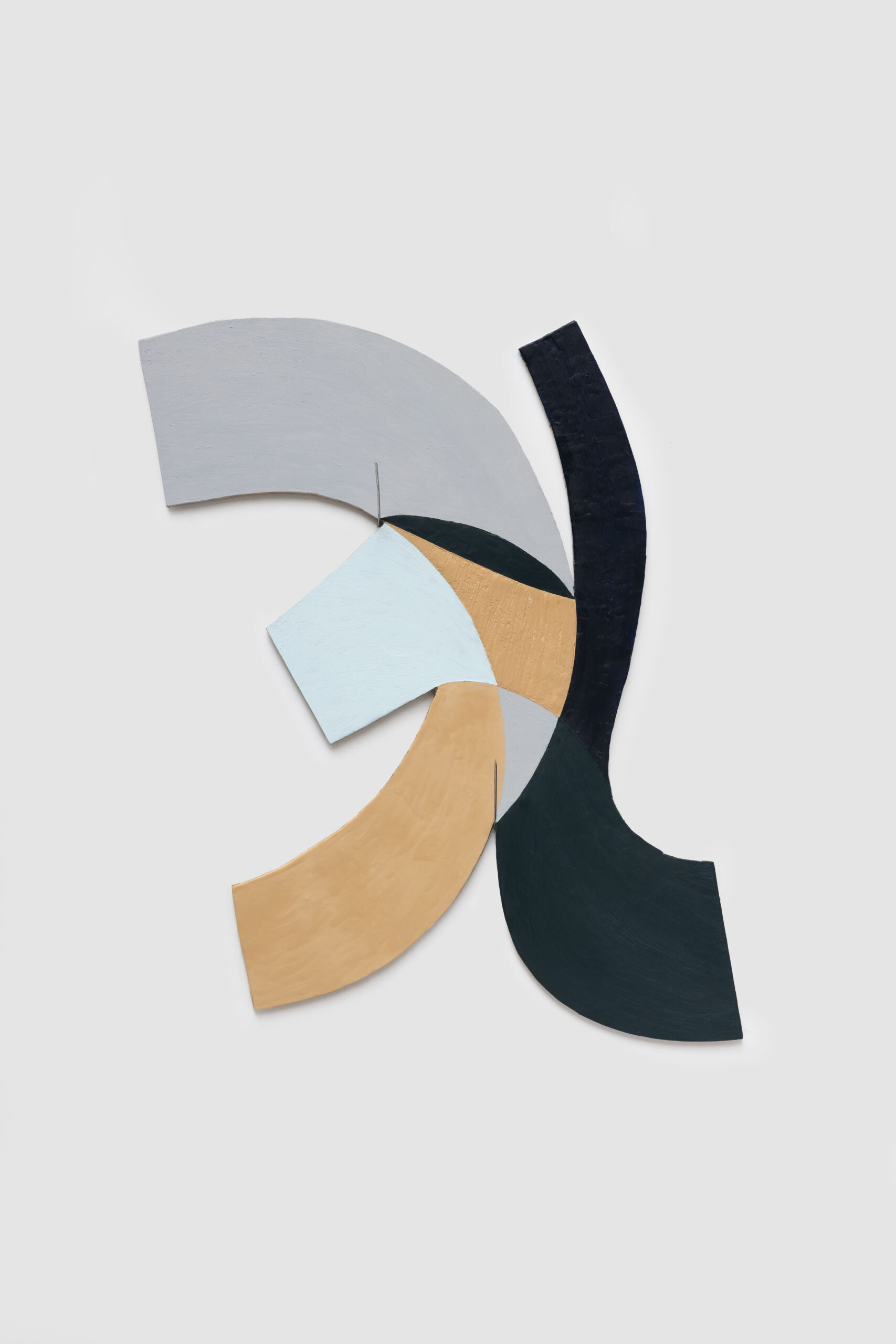
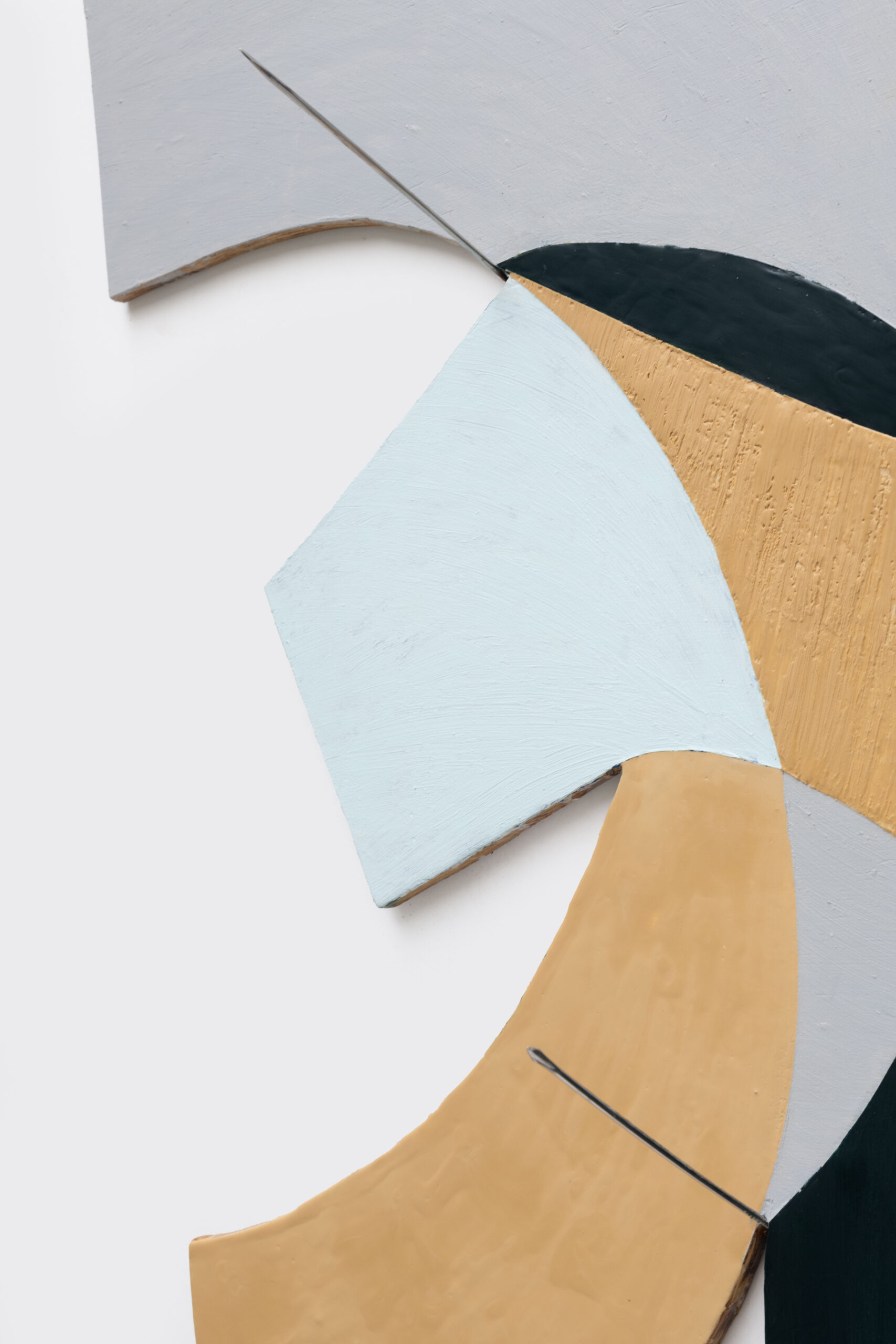

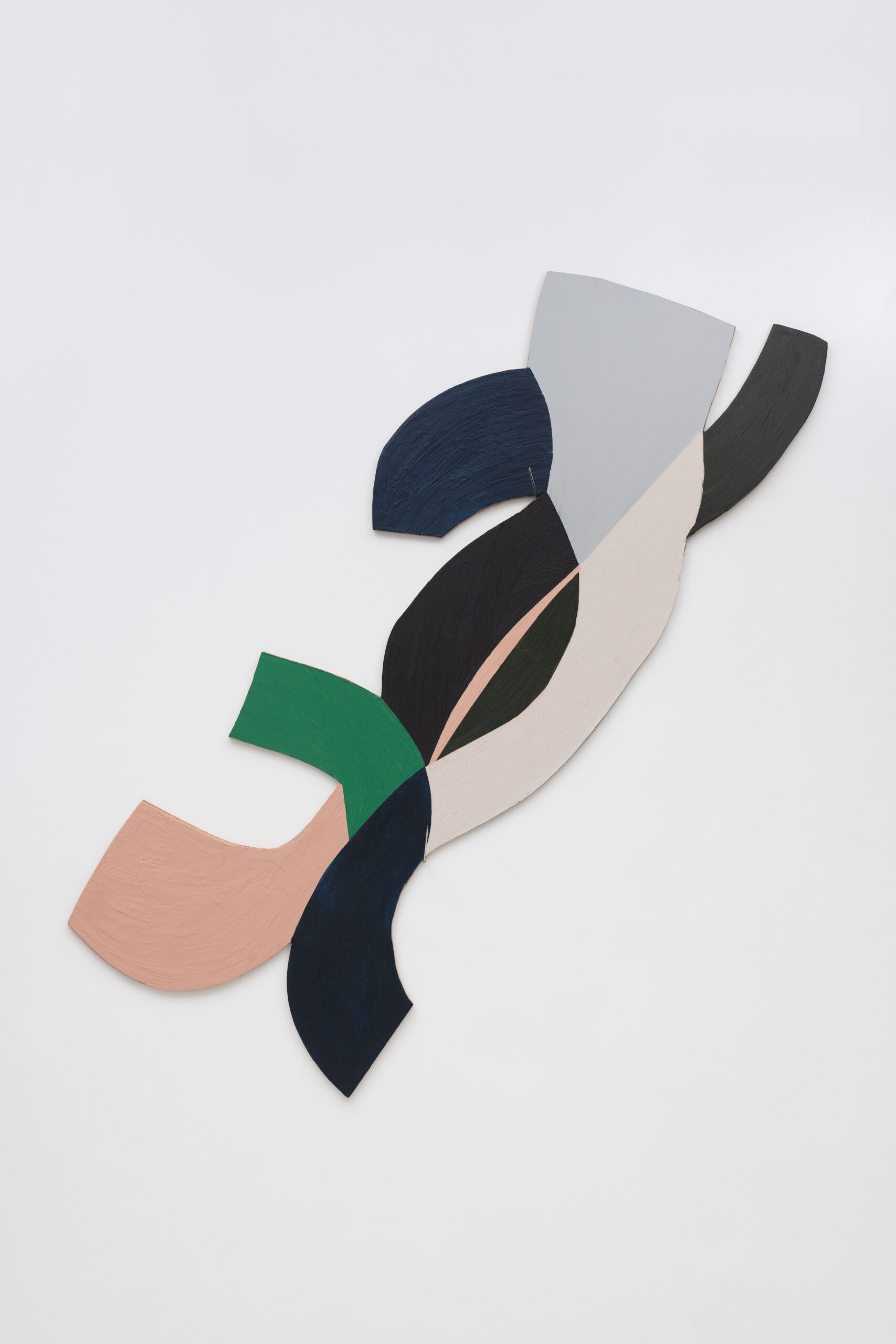
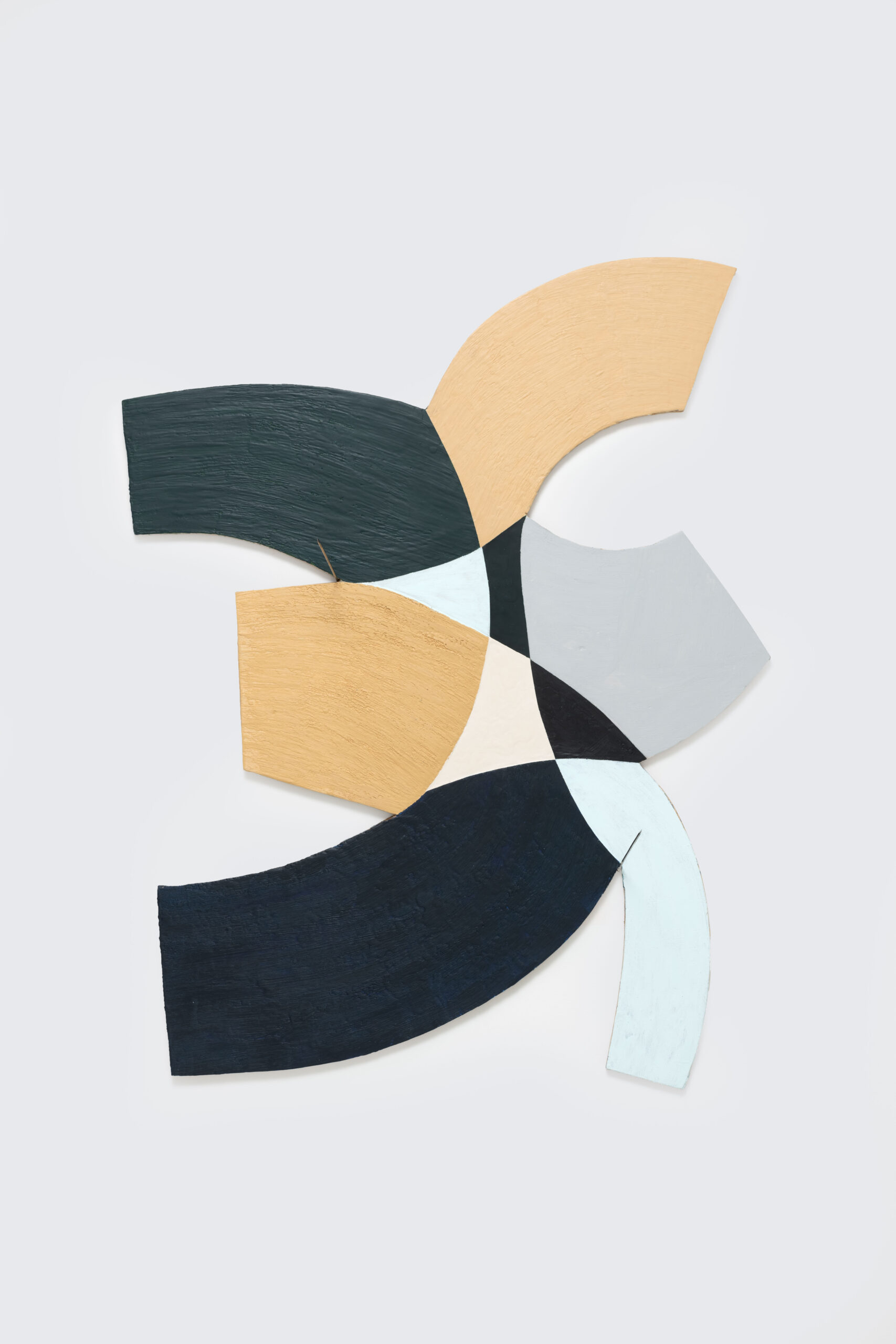
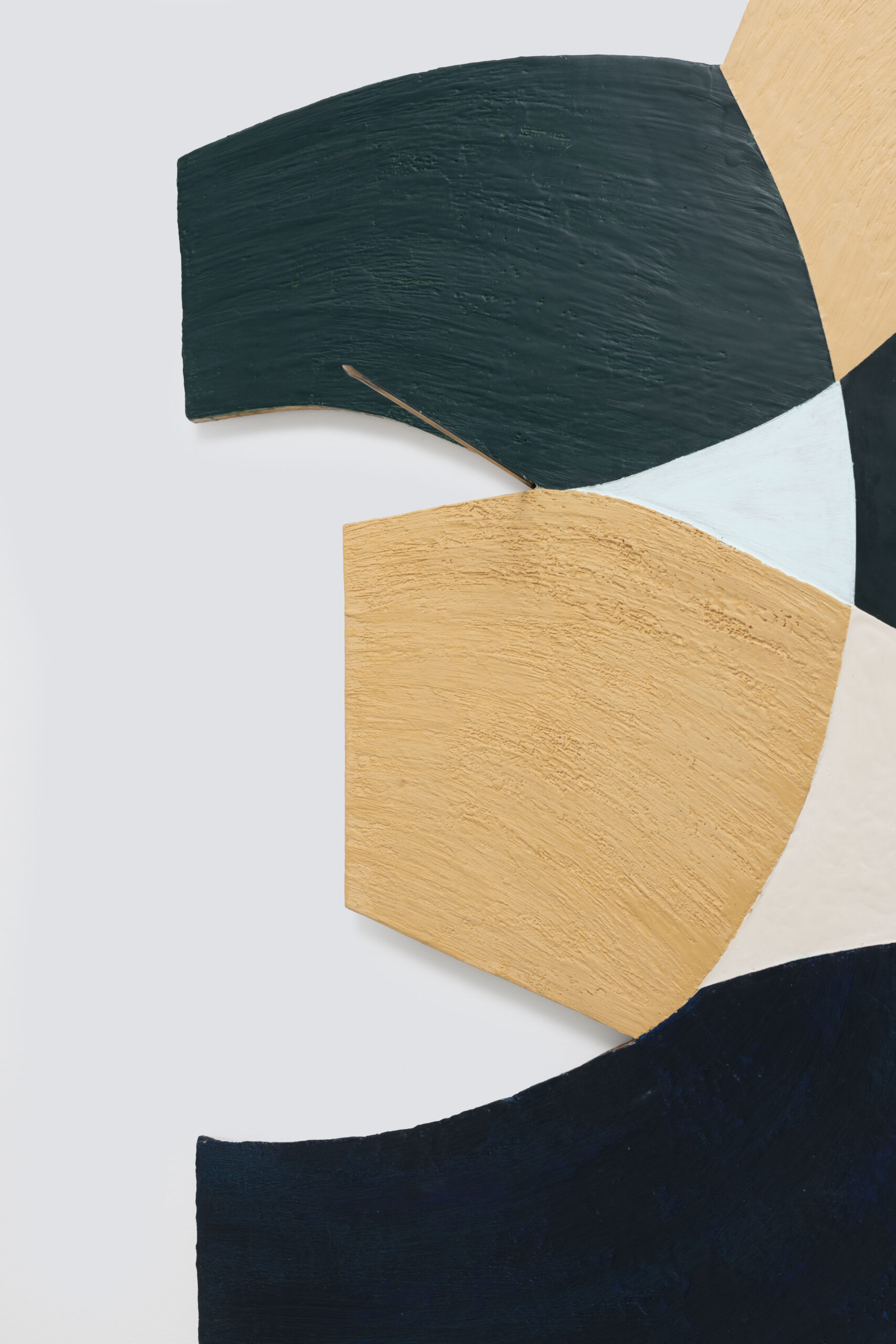
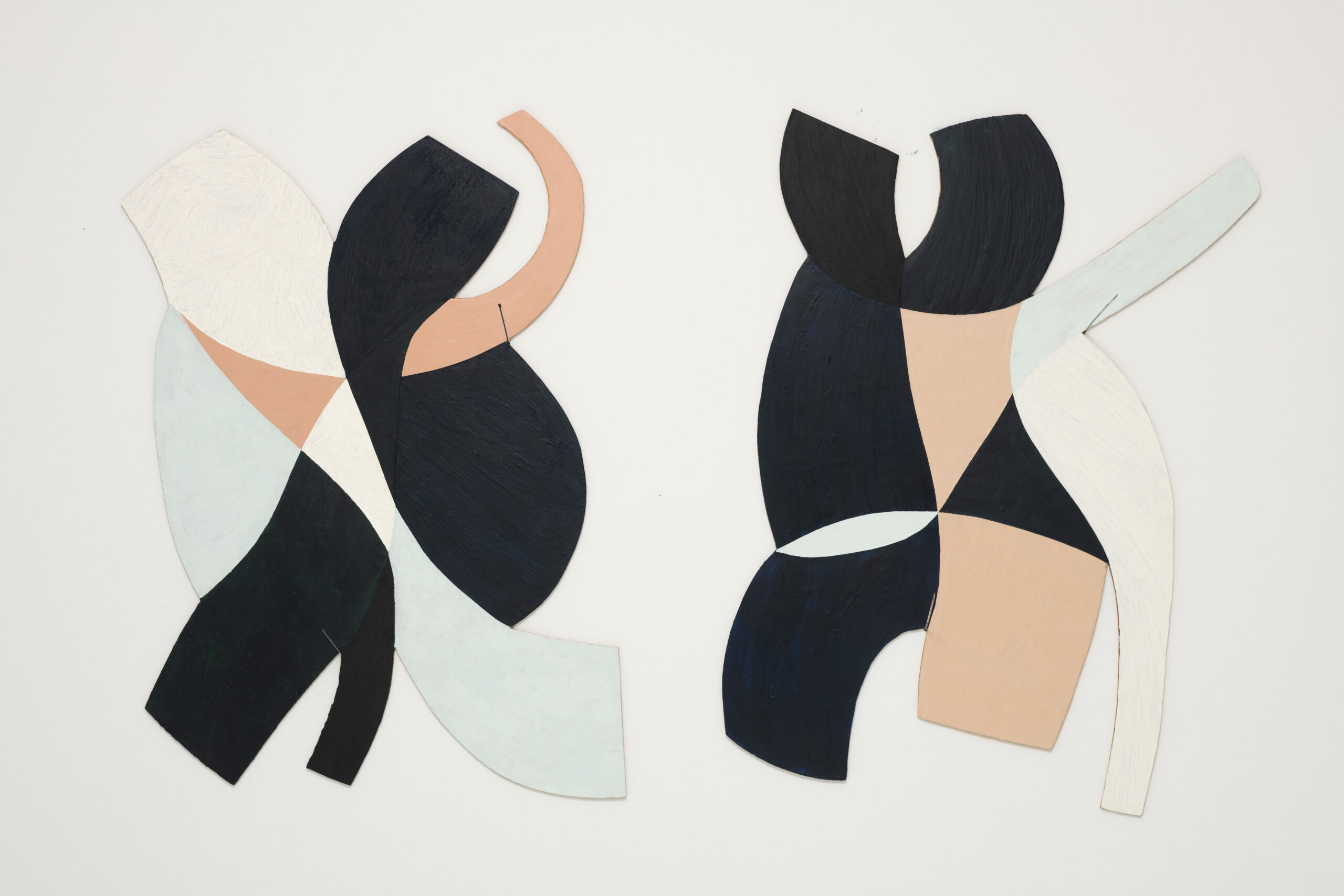
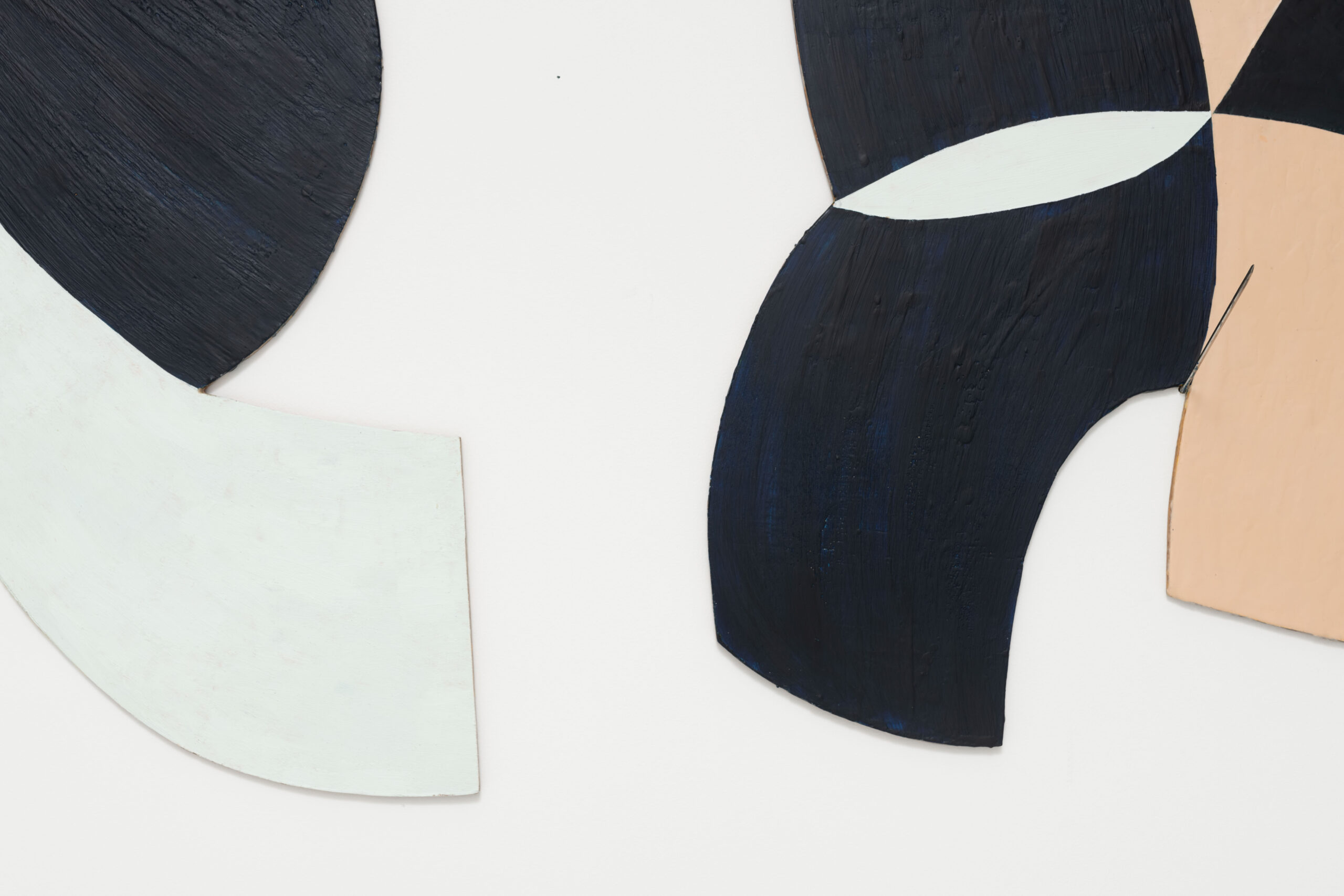
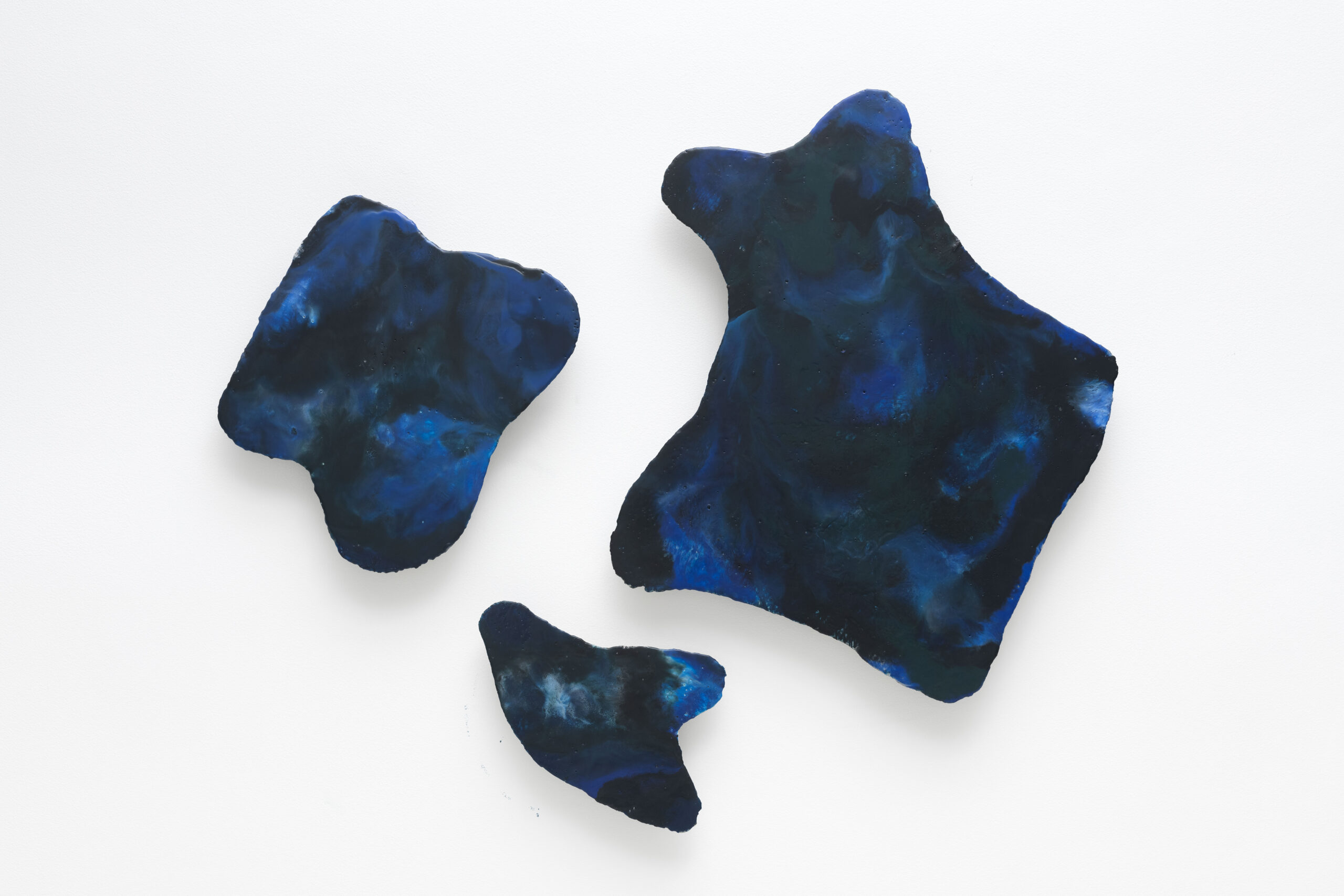
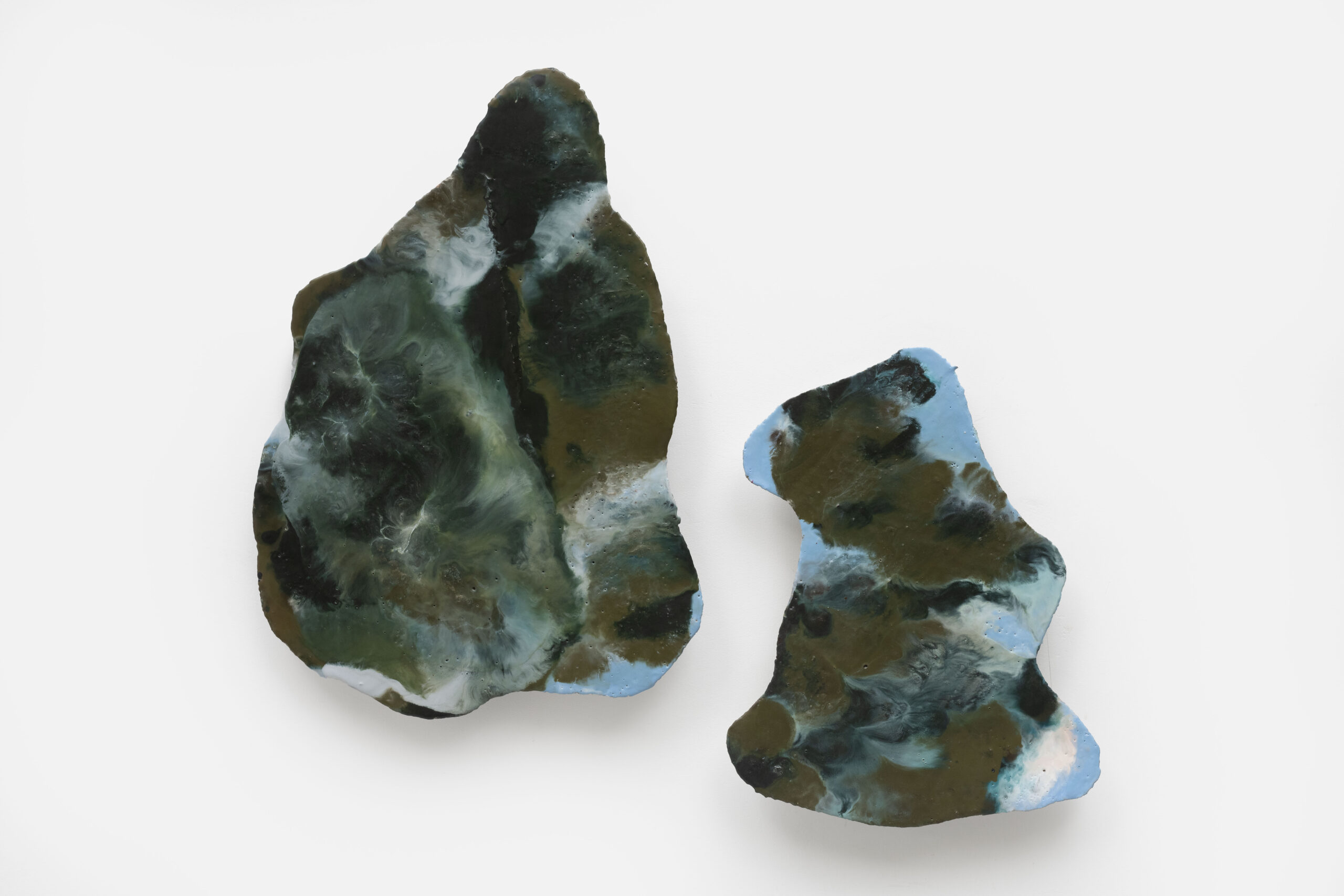
The third and final group of works is the result of an experiment in drawing and painting that cuts out the support and then makes a second cut, sectioning the colored areas of the pieces into quadrants. Produced in encaustic, oil paint stick, wood and steel, they are filled with blocks of color that change their shades and technique as they touch. Gilson uses cutting as a way of building edges to be intertwined in the experience of the stroke. Coated in color, they blur distinctions between the foreground and the background, between what enters and what surrounds. In large formats, the sheets of wood and paint envelop the forms, the pieces Os presentes, Os dançantes and As direções refuse the weight of their material reality and float in the air, enjoying the beauty of life and letting their edges flow freely.
In “Misterioso Laço”, Gilson affirms his desire to inhabit abstraction based on a broad and direct relationship with the world and its materials. He is part of a new generation of artists who seek to revisit Brazilian history and work with it according to an order of phenomenological experience of difference. Their practice guides new configurations of meaning that go beyond the mere critical exposition of social ills. Instead, they create propositions for artistic experimentation based on respect for ancestral knowledge and technologies, capable not only of re-enchanting our world, but also of creating new ones. In this way, the present proposed by names such as Goiás is not only a reconnection with a forgotten and subalternized past, but also a break with a linear historical orientation. It becomes a speculative present. In Plano’s words: “So much appreciated […] that the present is often just the wrapping, a fantasy that holds empty spaces devoid of soul”. These artists, in turn, glimpse the wrappings of a present that it is up to us to imagine and tear apart, in our eagerness to untie the complex and powerful bond that precedes the joy of opening new presents.
Lucas Albuquerque