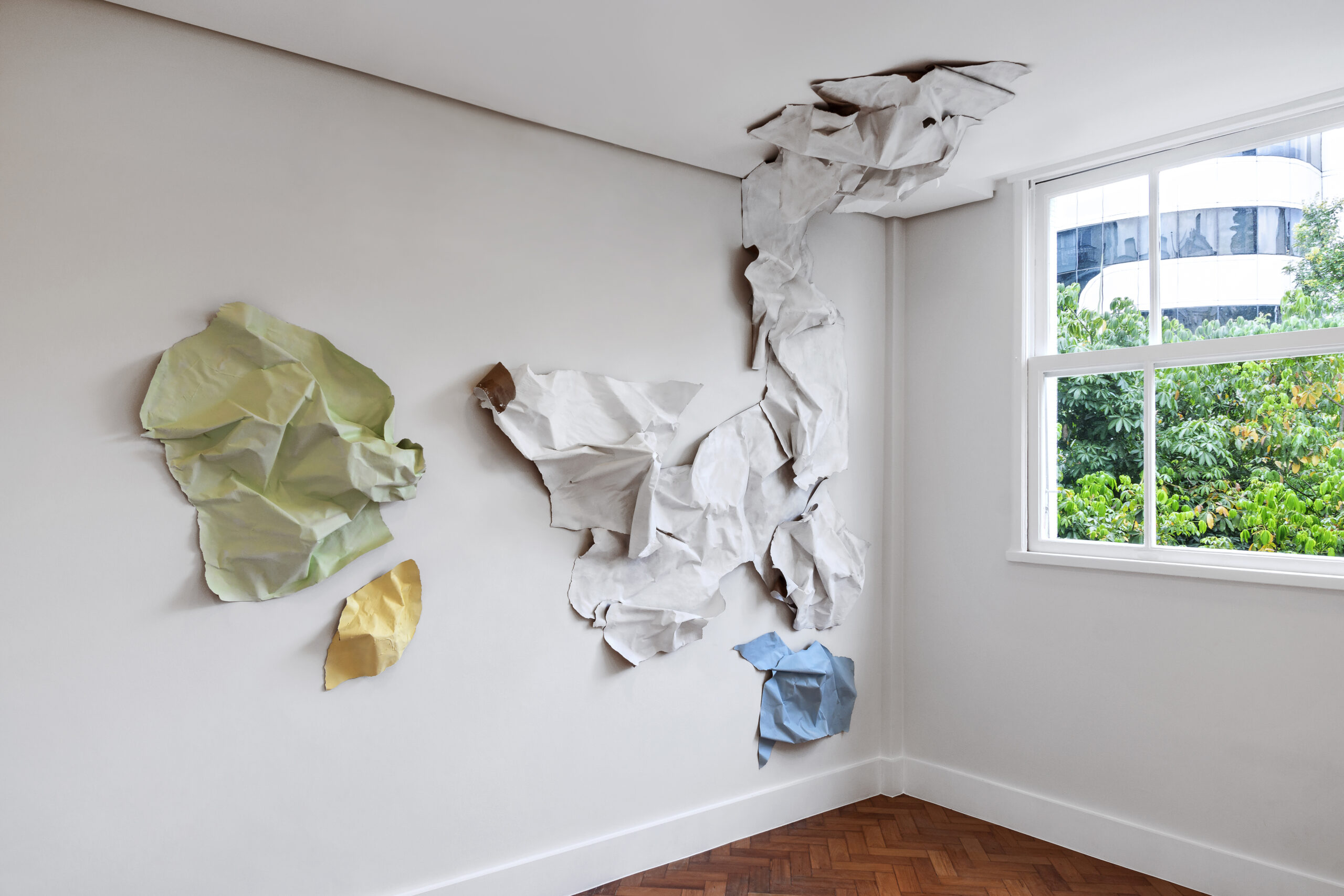
Submersive act II: Coadunar / Live odor
Ana Cláudia Almeida and Carla Santana
curated by Ulisses Carrilho
January 29, 2022 - February 25, 2022
Rio de Janeiro
It’s really good to be underwater
They mingle with the sound of the sea,
but they are and will always be what they are:
echoesof attempts at conversation
[Ricardo Aleixo]
An urgent re-evaluation of imperial and colonial violence, and an updating of both, that of the nation state – they differ from each other, but they combine an ethic that is based on the fragile idea, historically perpetuated, of the sovereignty of one form of life over others – has been reinventing not only the ways in which we plastically and conceptually produce images, ideas and experiences in the field of art, but also the ways in which we make sense of the world. Addressing these contours is not only about reinventing the portions of land and their geopolitical contours – a perverse face of the design is presented on every map – and the beings that live there, but also about perceiving how waters, oceans, rivers and seas have been and are territories of circulation and dispute.
This sad and worrying assessment could include the multiplication of deaths from drowning of refugees in the Mediterranean Sea, which doubled in 2021, in the midst of an international health crisis; the race to colonize space and the hope of discovering sources of drinking water that will make living conditions possible for the billionaires who have doubled their profits in this pandemic; the water crisis that is hurting Brazil, motivated by the naturalization of exploitation seen in the greed of the thermoelectric power plants that have devastated the lives of citizens and workers in the cities of Mariana and Brumadinho in recent years with exterminating waves of mud; the melting of the polar ice caps, which are a preview of a dystopian scenario that has already been experienced in science fiction films in white, patriarchal and greedy Hollywood; the lack of basic sanitation in the poor areas of the big urban centers and in the smaller-scale cities that spread across the interior of a Brazil that is neglected by the public machine; the presence of geosmin, a difficult name, which interrupts the water service in Rio de Janeiro and, when it still flows from our taps, it arrives turbid and smelly; the lack of food security and sovereignty, which attests to the perversity of a project of death carried out by the Brazilian state, not only by encouraging the arms trade, by maintaining violence, but also by the atrocious perversity of hunger and thirst, which are once again a major problem in the lives of the Brazilian people. Although this topic is ostensibly relevant to an understanding of the issues that plague contemporary life, I will take the liberty here of daring to take another path in this essay.
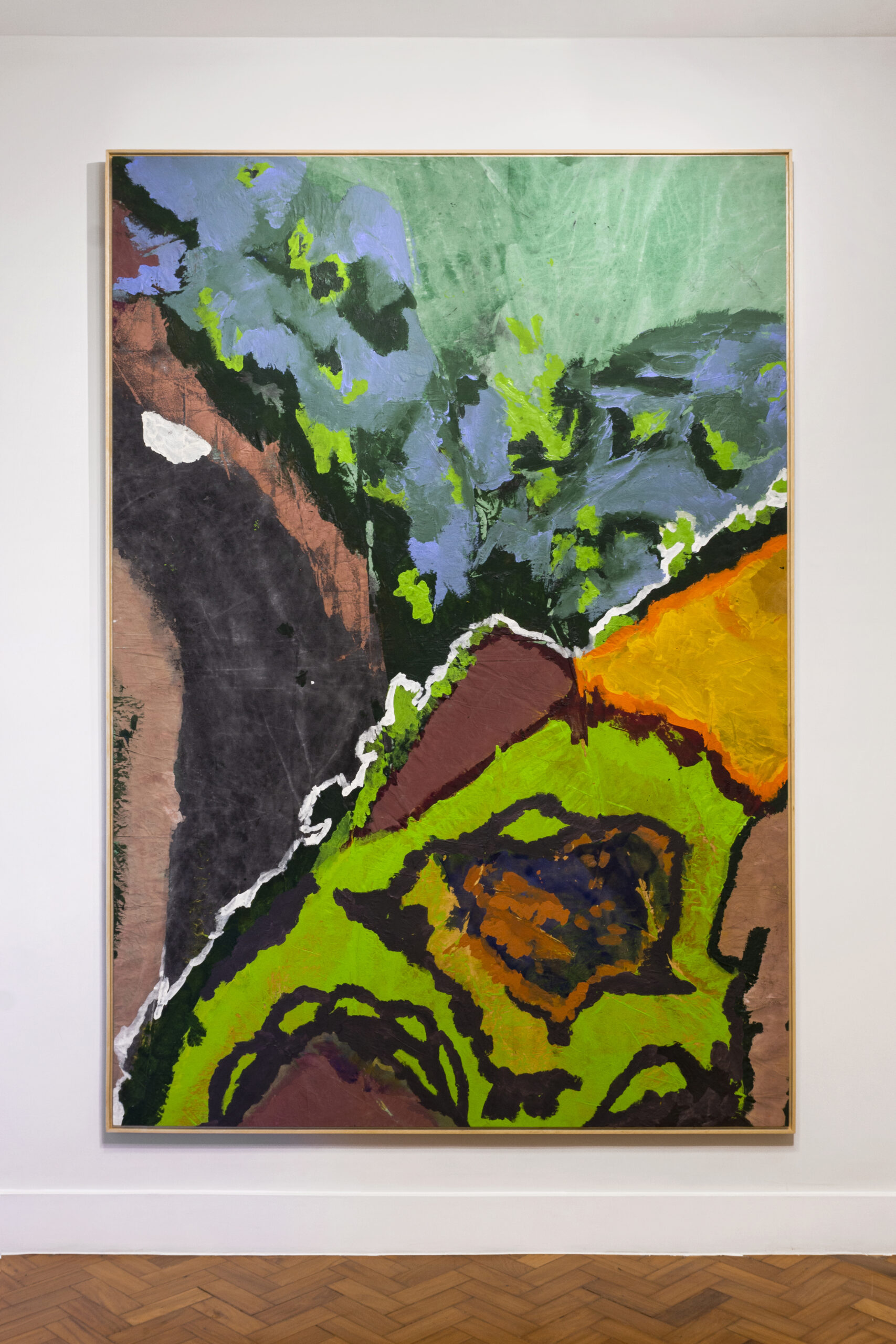
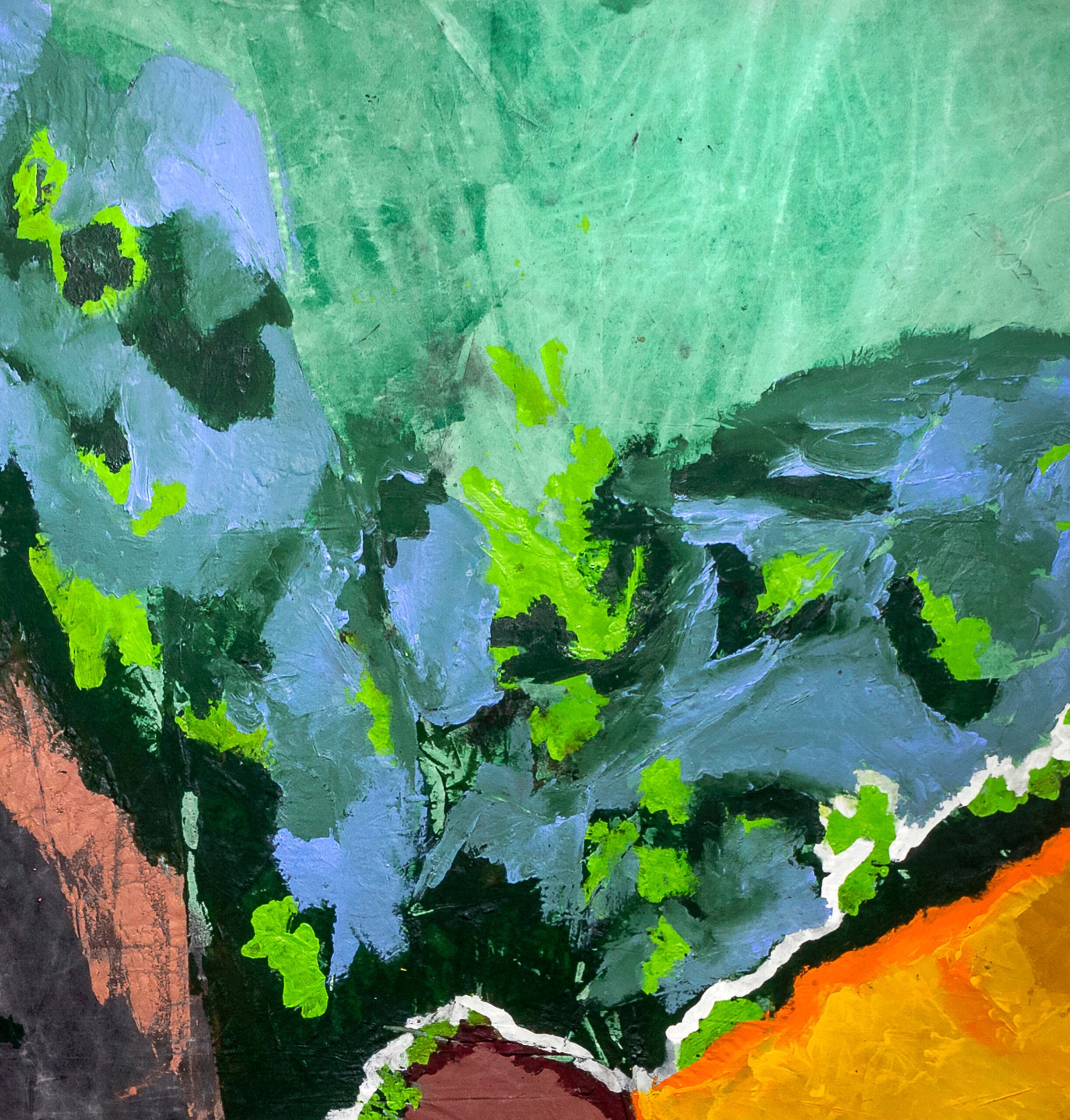
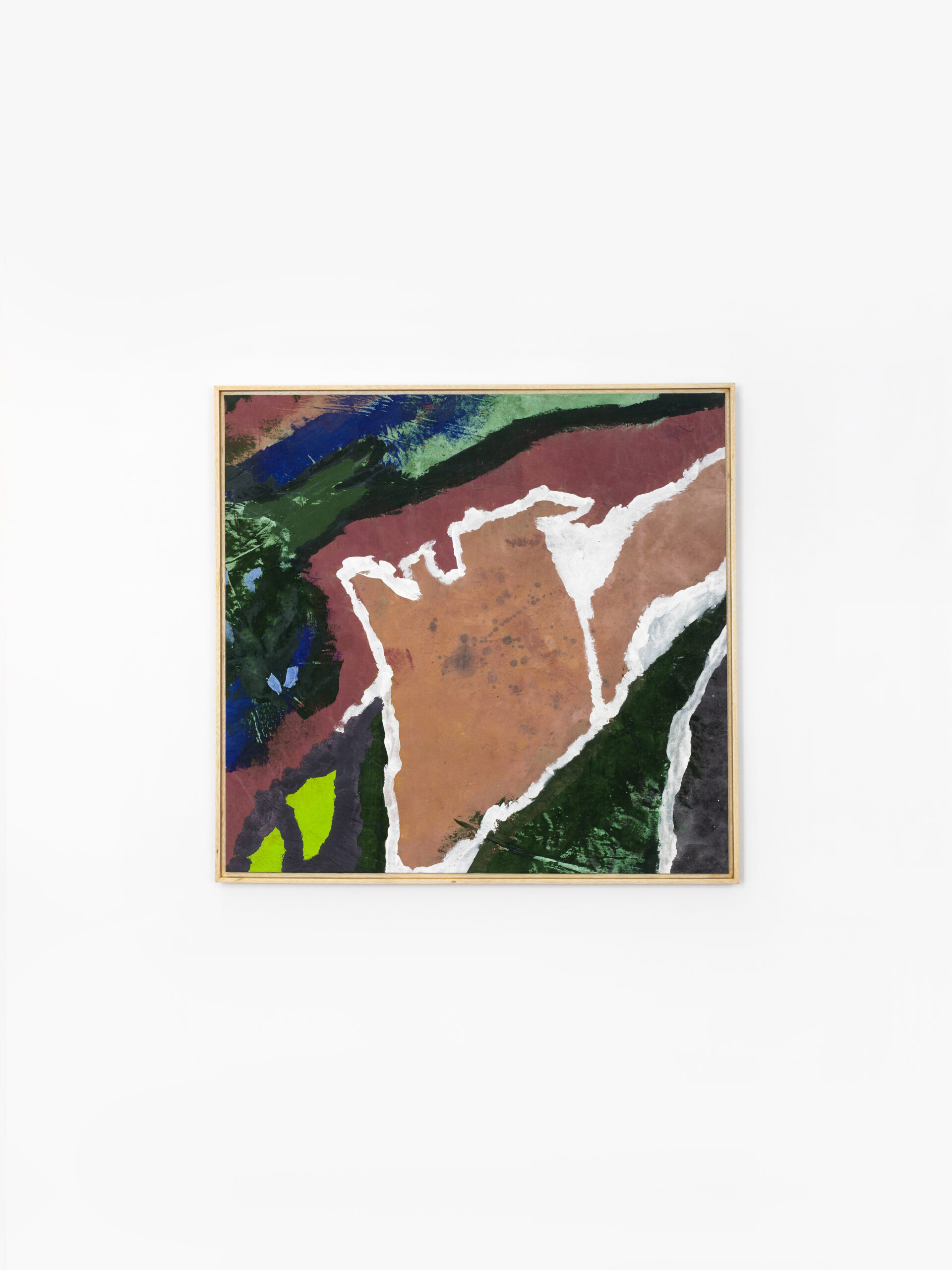
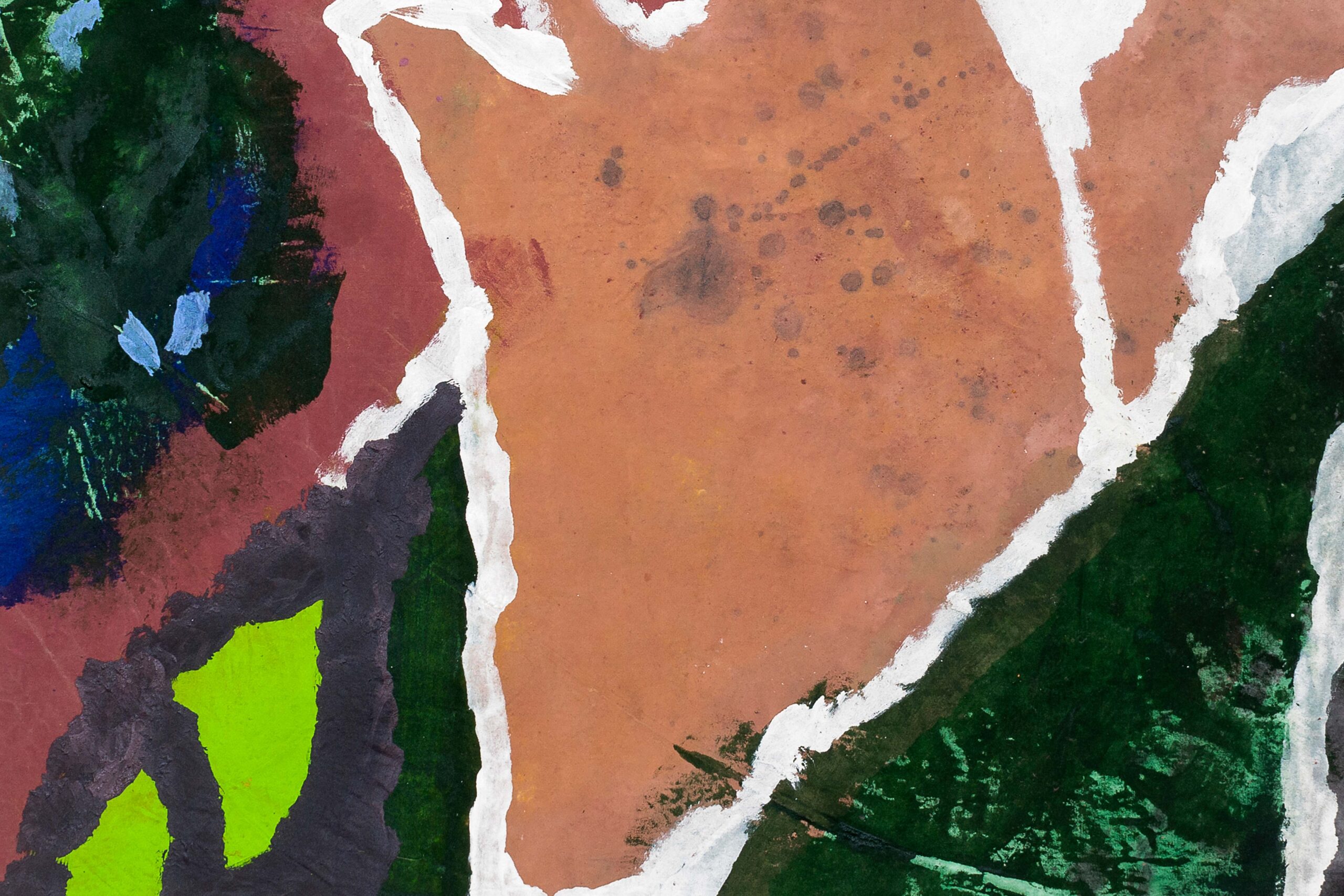
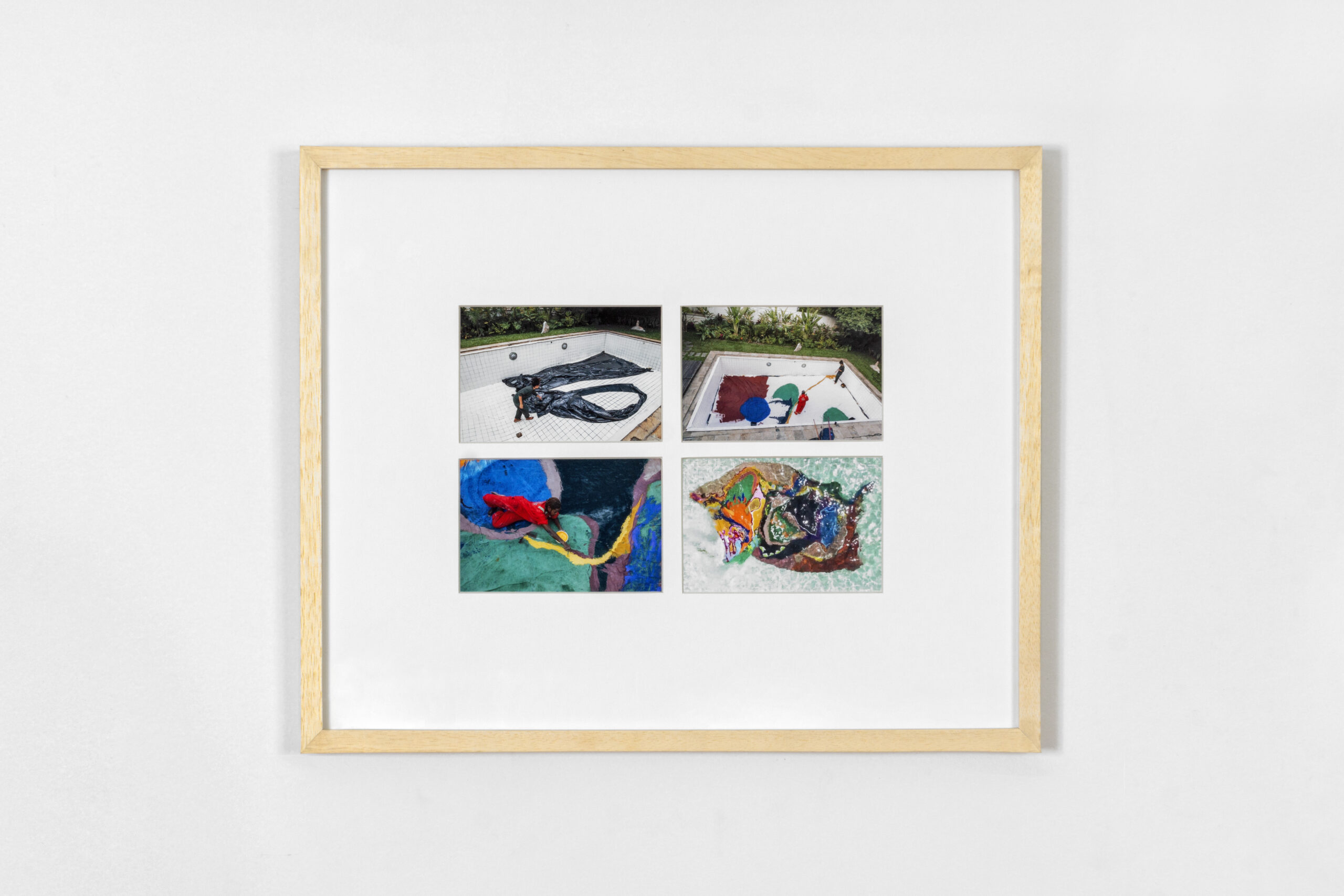
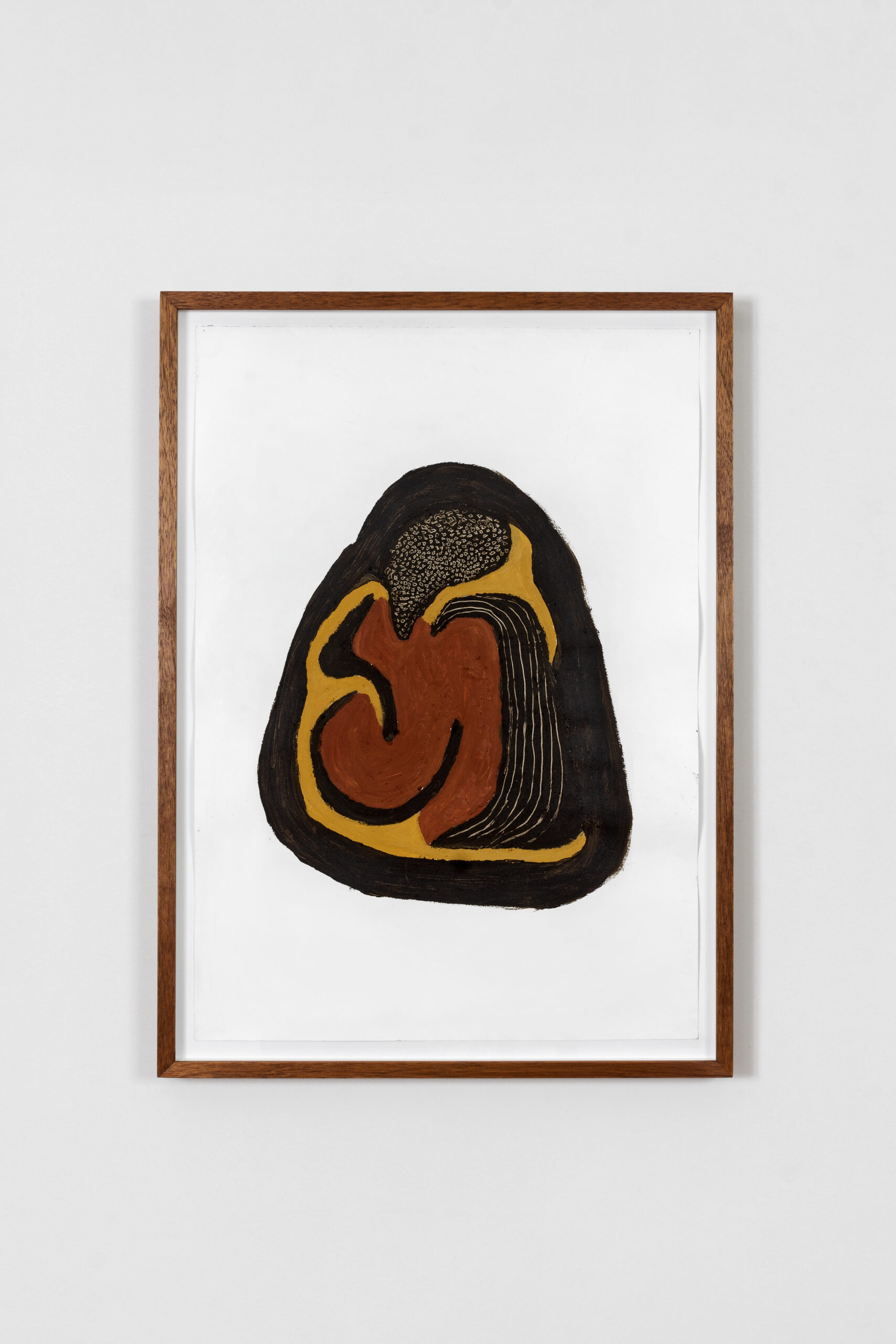
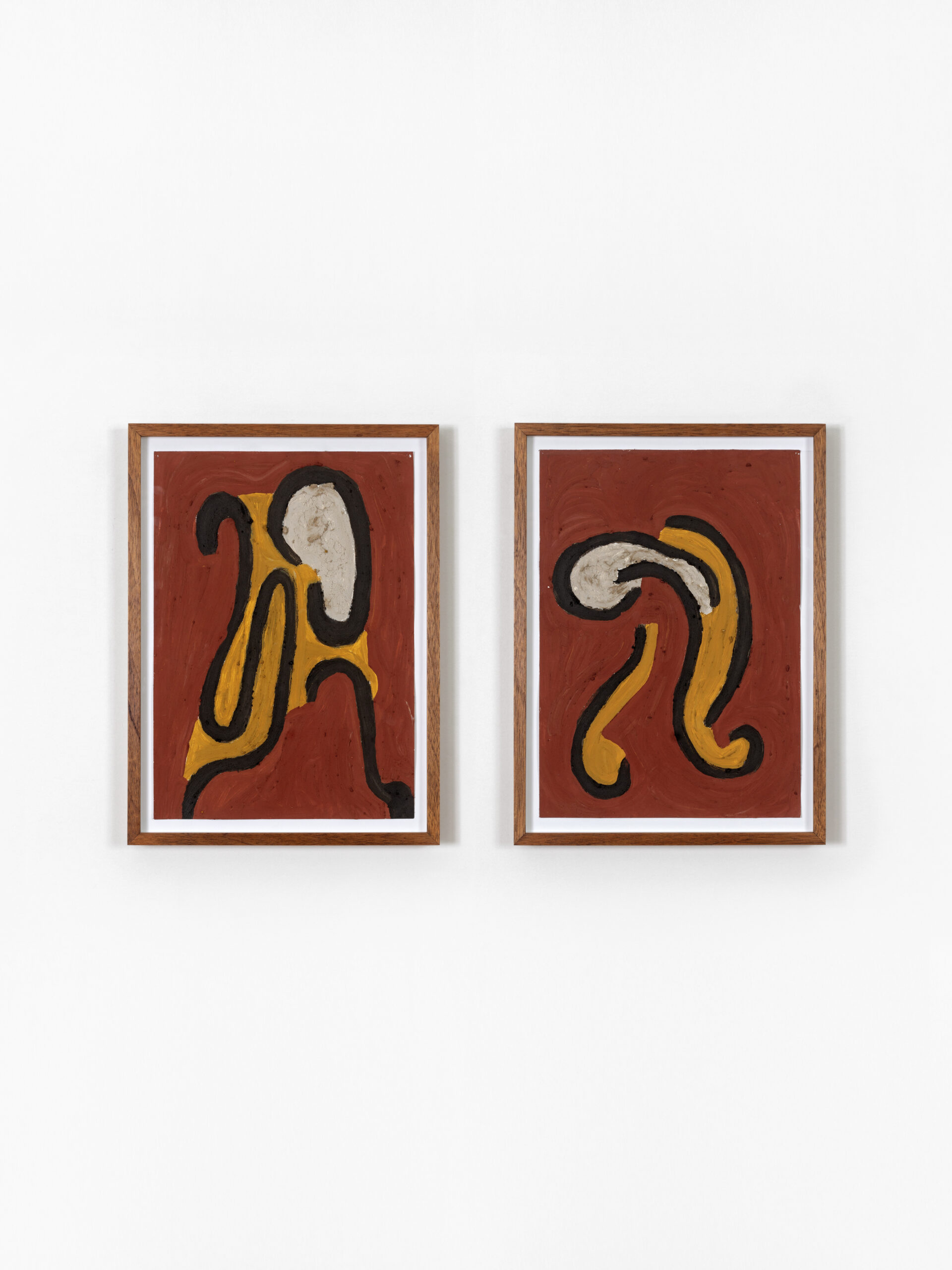
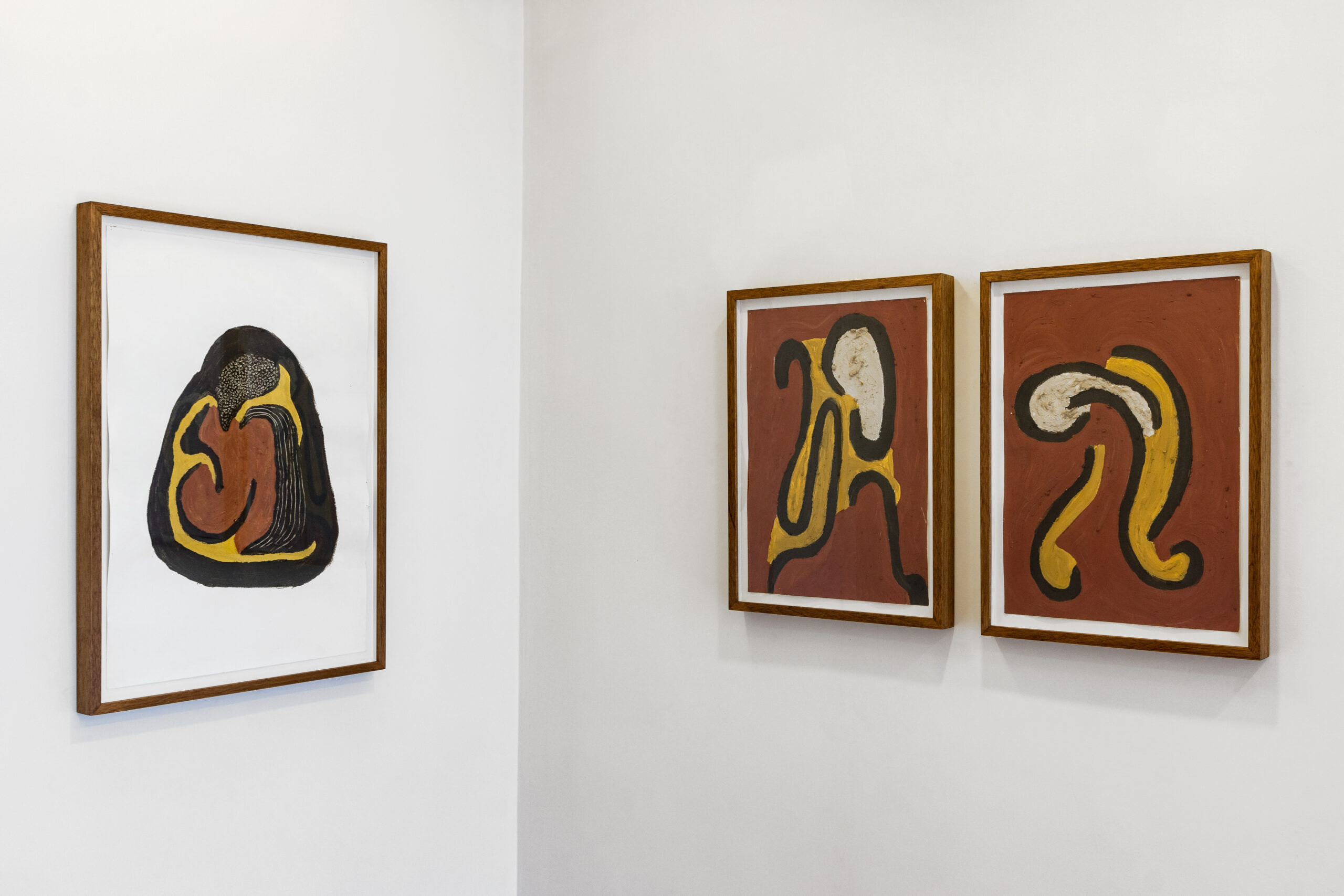
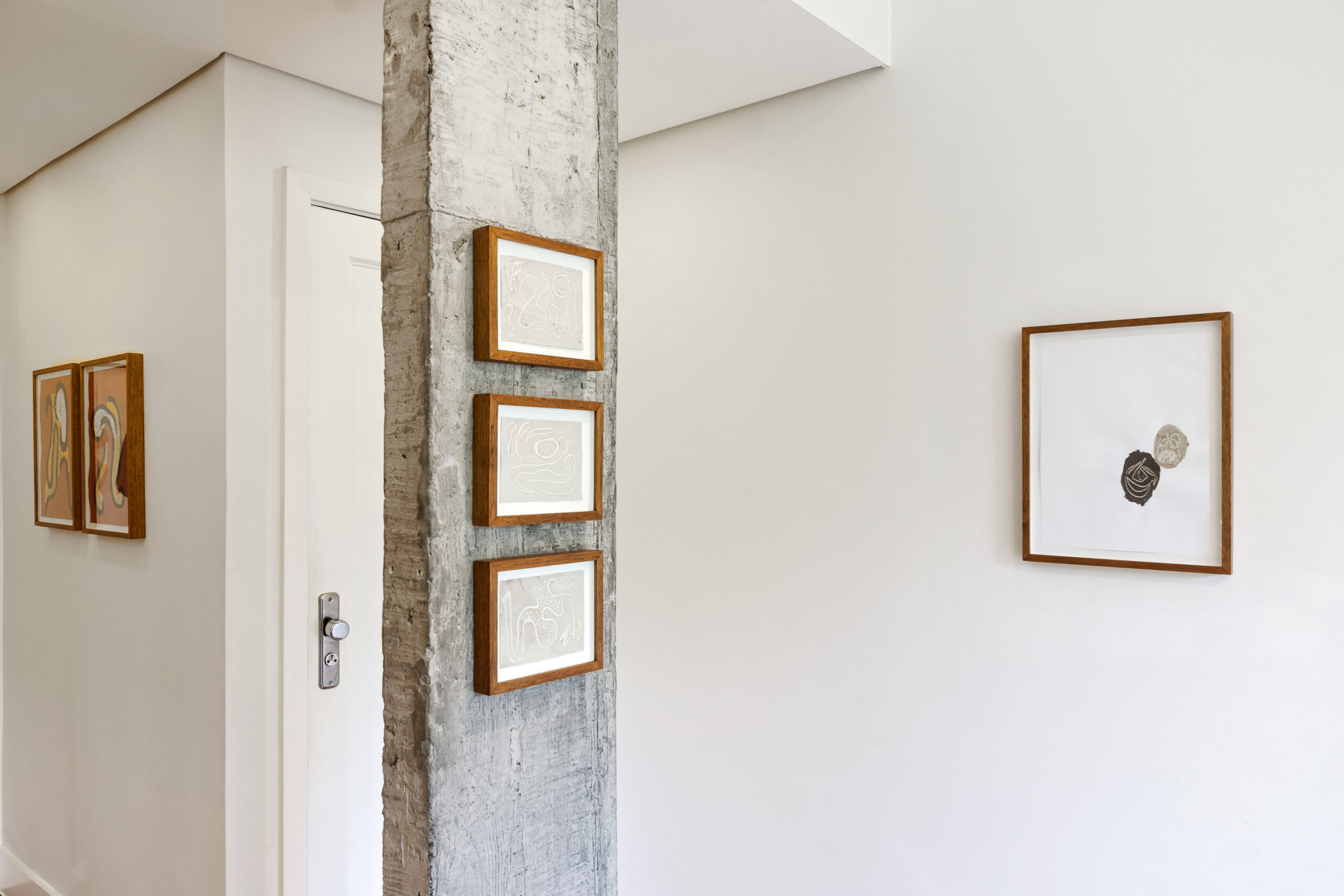
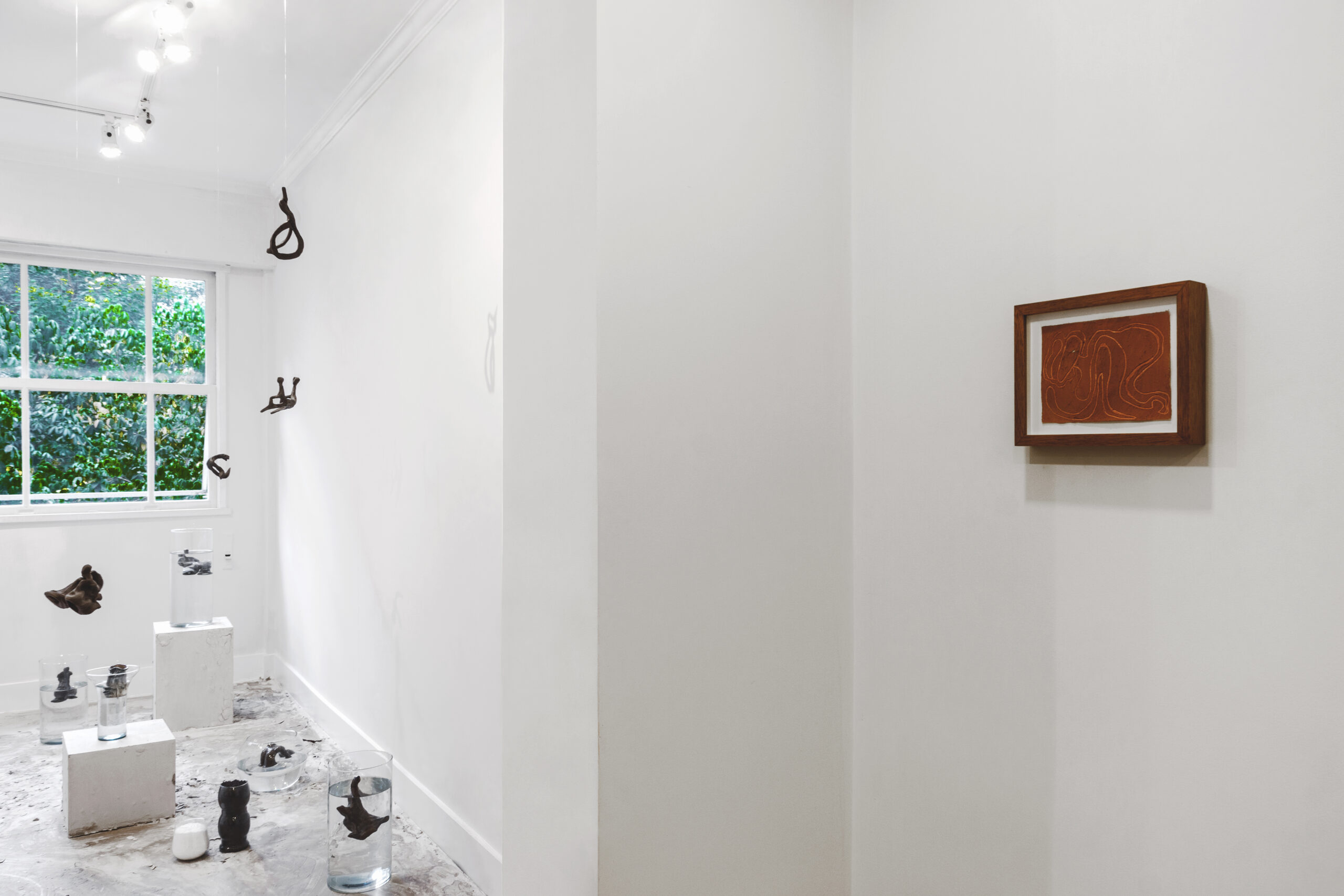
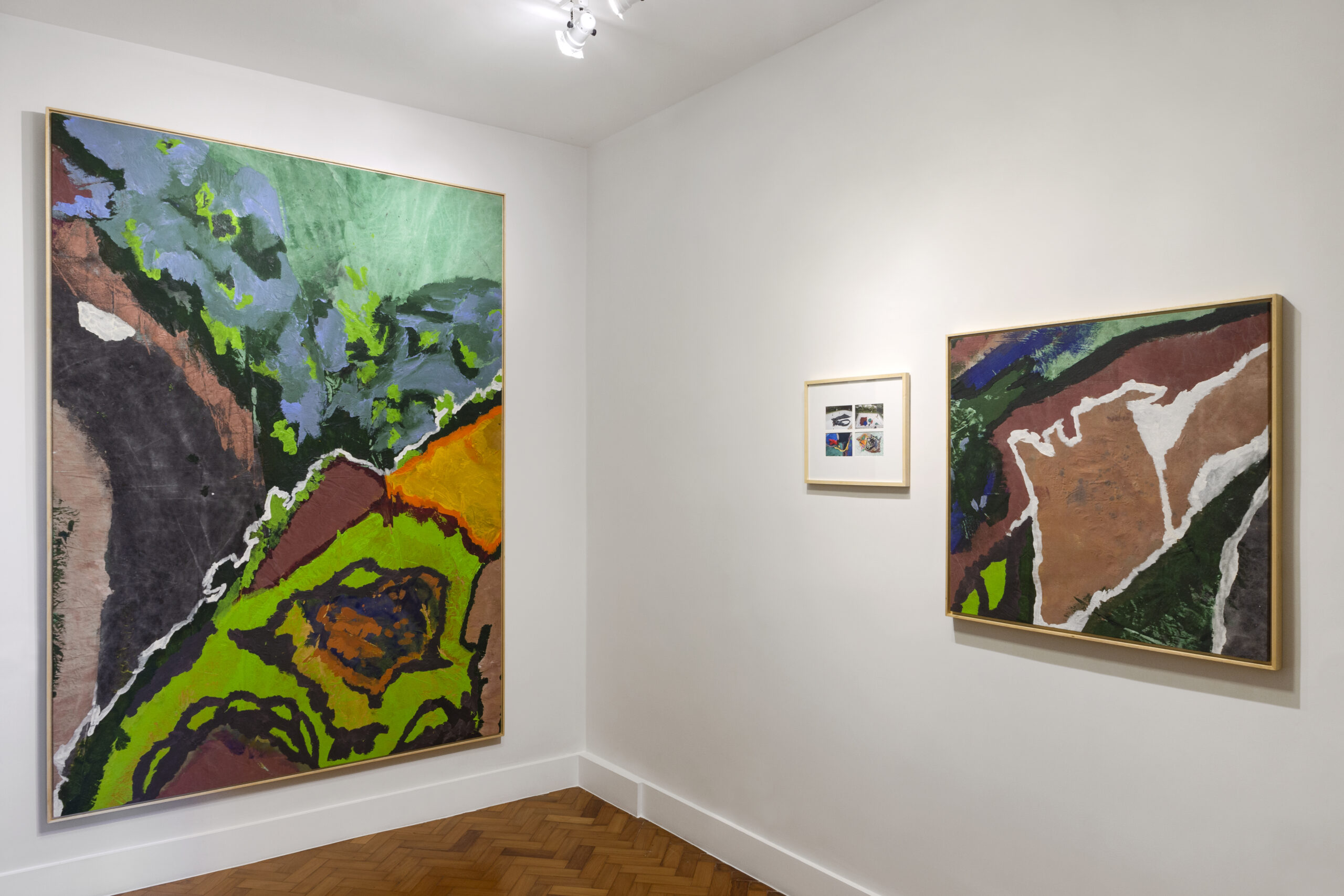
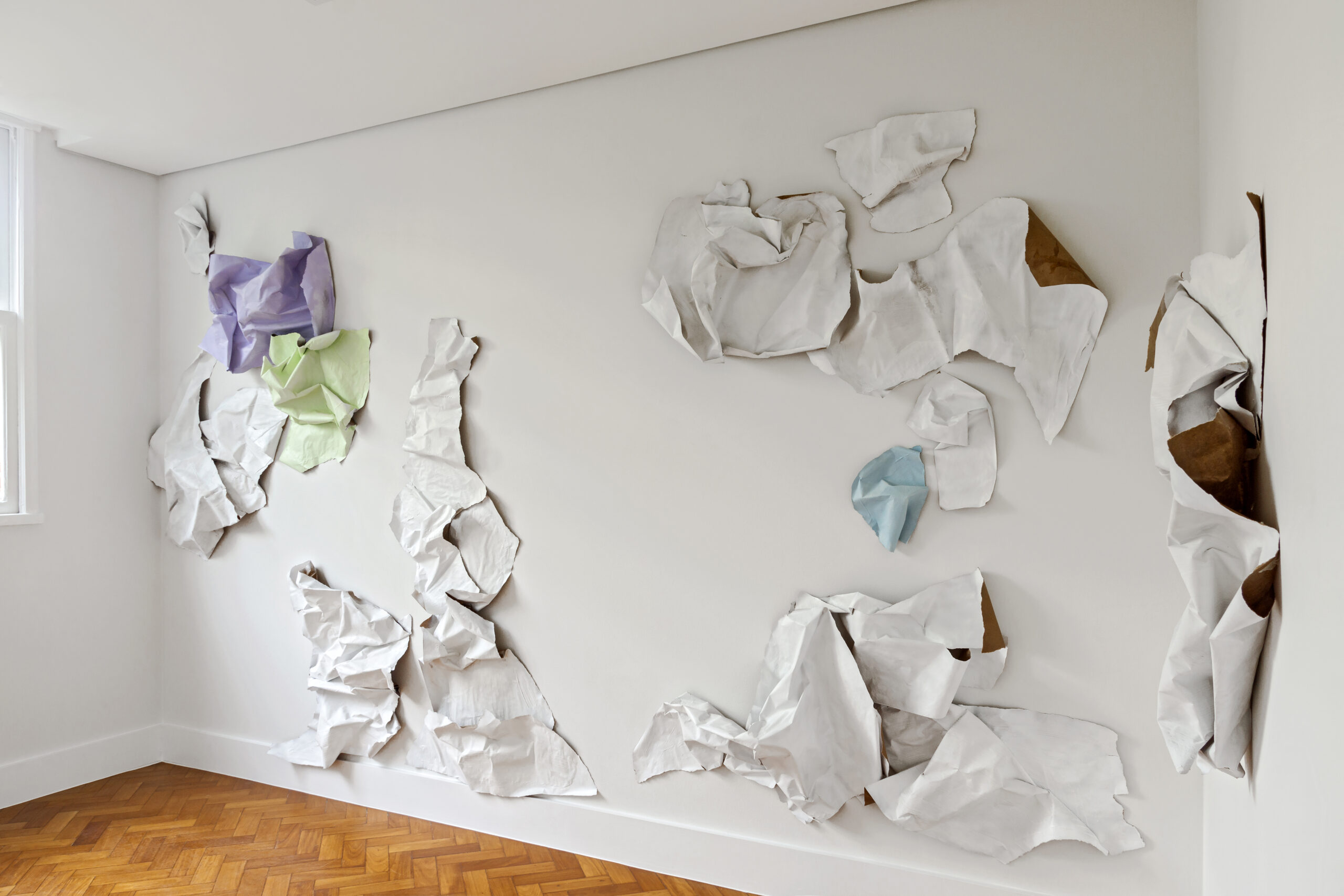
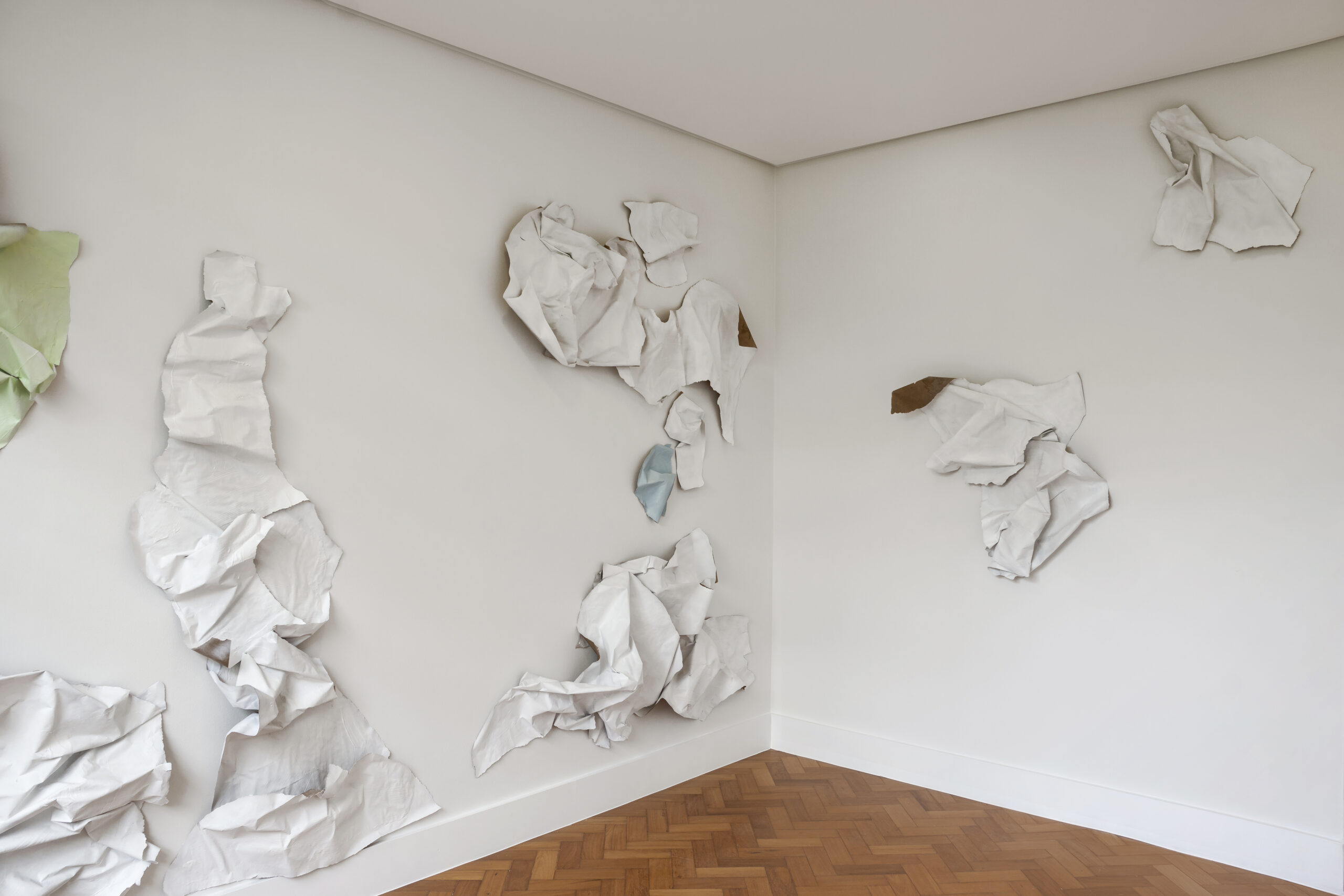
For now, let’s pay attention to the reflection of the water, an extremely important factor in understanding the works presented here: a first room that invests in the materiality, sometimes wet, sometimes dry – inconstant because it moves – of the clay by artist Carla Santana, a second installation room with the fluidity, now washed, of the colors that abound in paintings by artist Ana Cláudia Almeida and a third room, made up of paintings by both artists, in pairs. This third room is made up of canvases tensioned here on wooden chassis but which were once part of a large single composition. In its previous presentation, at the Auroras space in São Paulo, this painting was found as a single piece at the bottom of a swimming pool filled with water.
For now, I would like to take this memory as a device for the construction of this essay: it is from the memory of my relationship with these artists, of how I feel nourished by their poetic proposals and by the power of their work, that I will scrutinize some of the characteristics I would like to develop in this text. An approach to how the proposals presented here act as reflections of a wider body of work, of broader complexities, of poetics in involvement.
Victor Gorgulho
1. Of water, but also of earth, fire and air – of the gesture in Carla
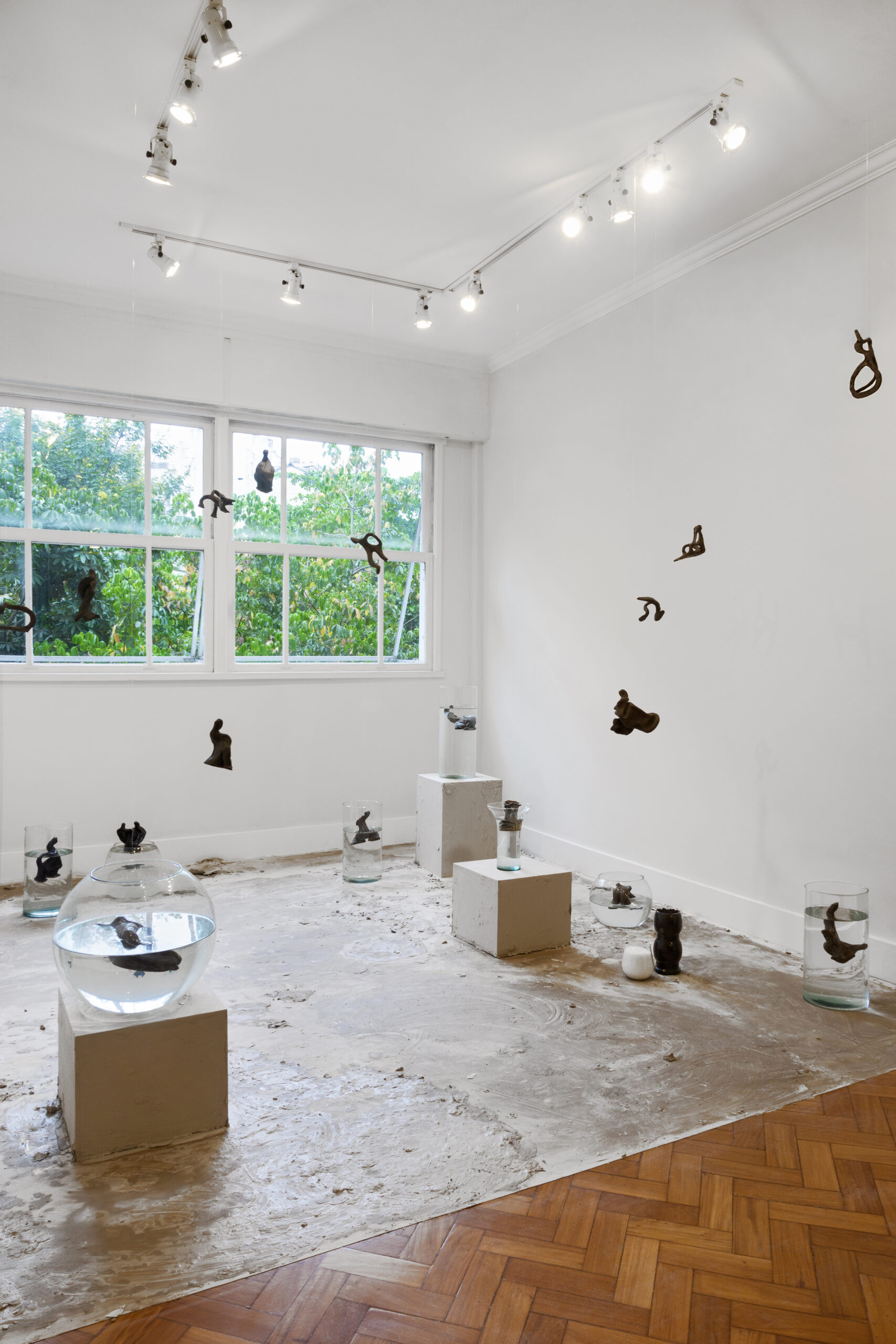
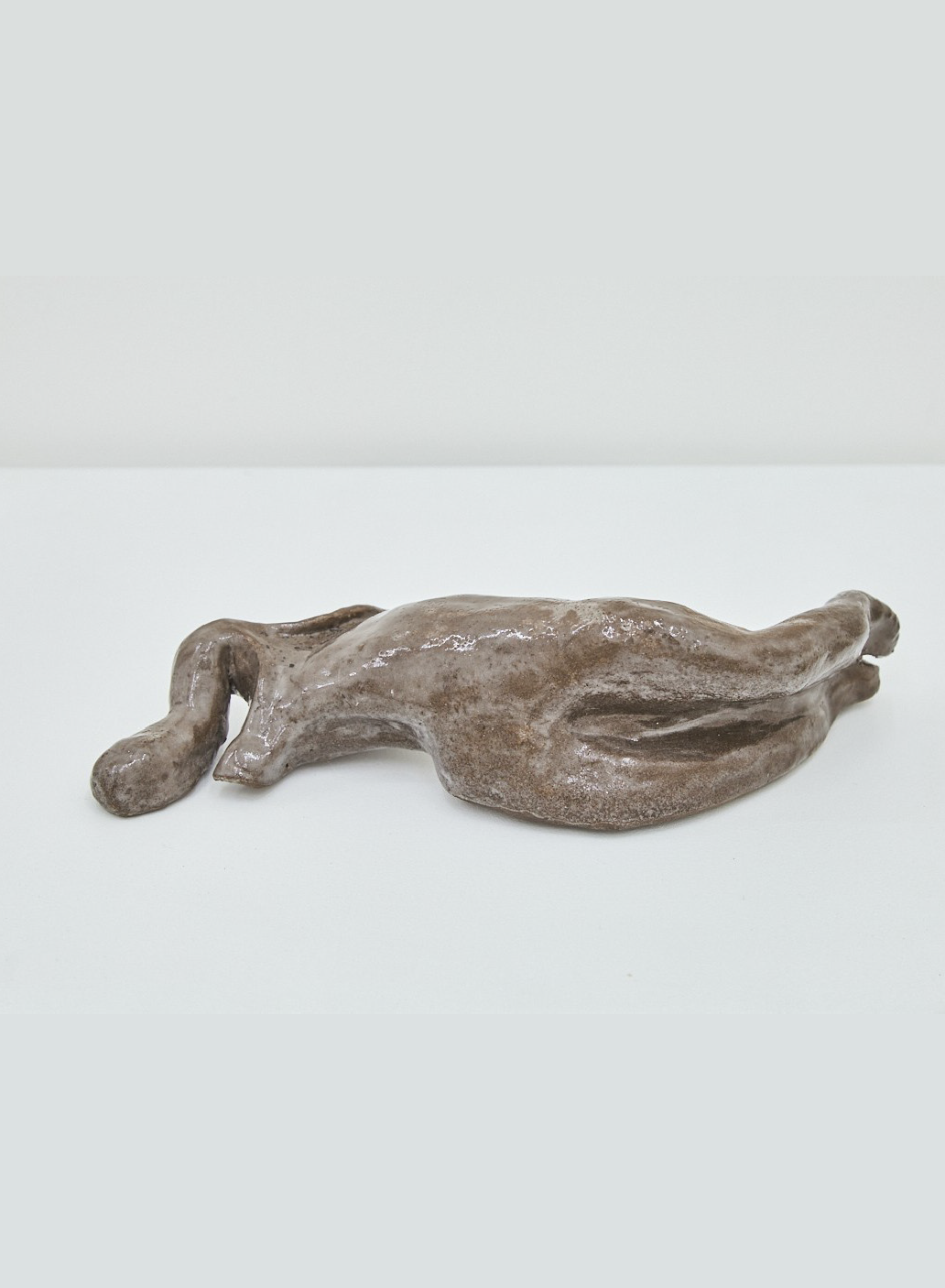
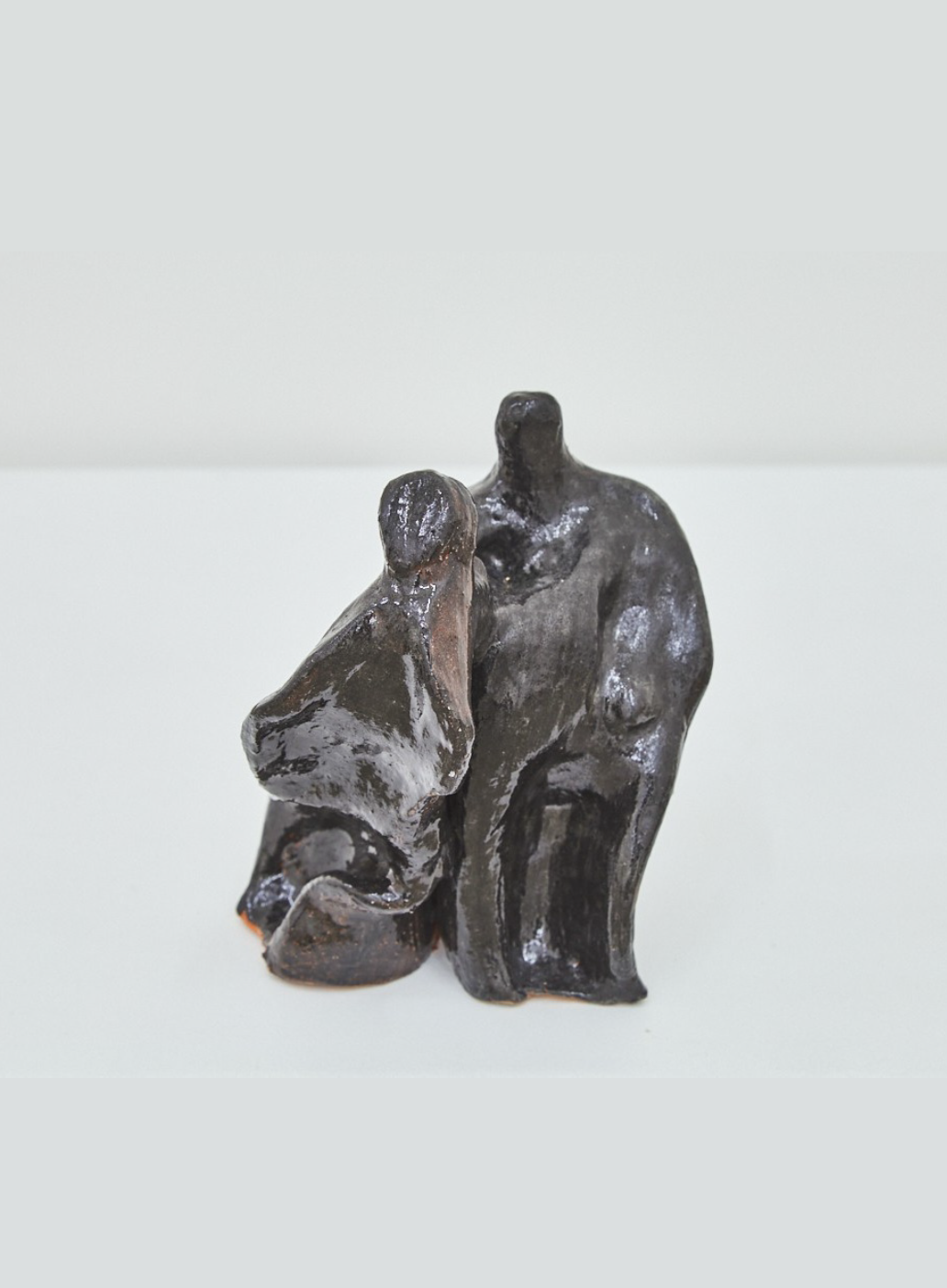
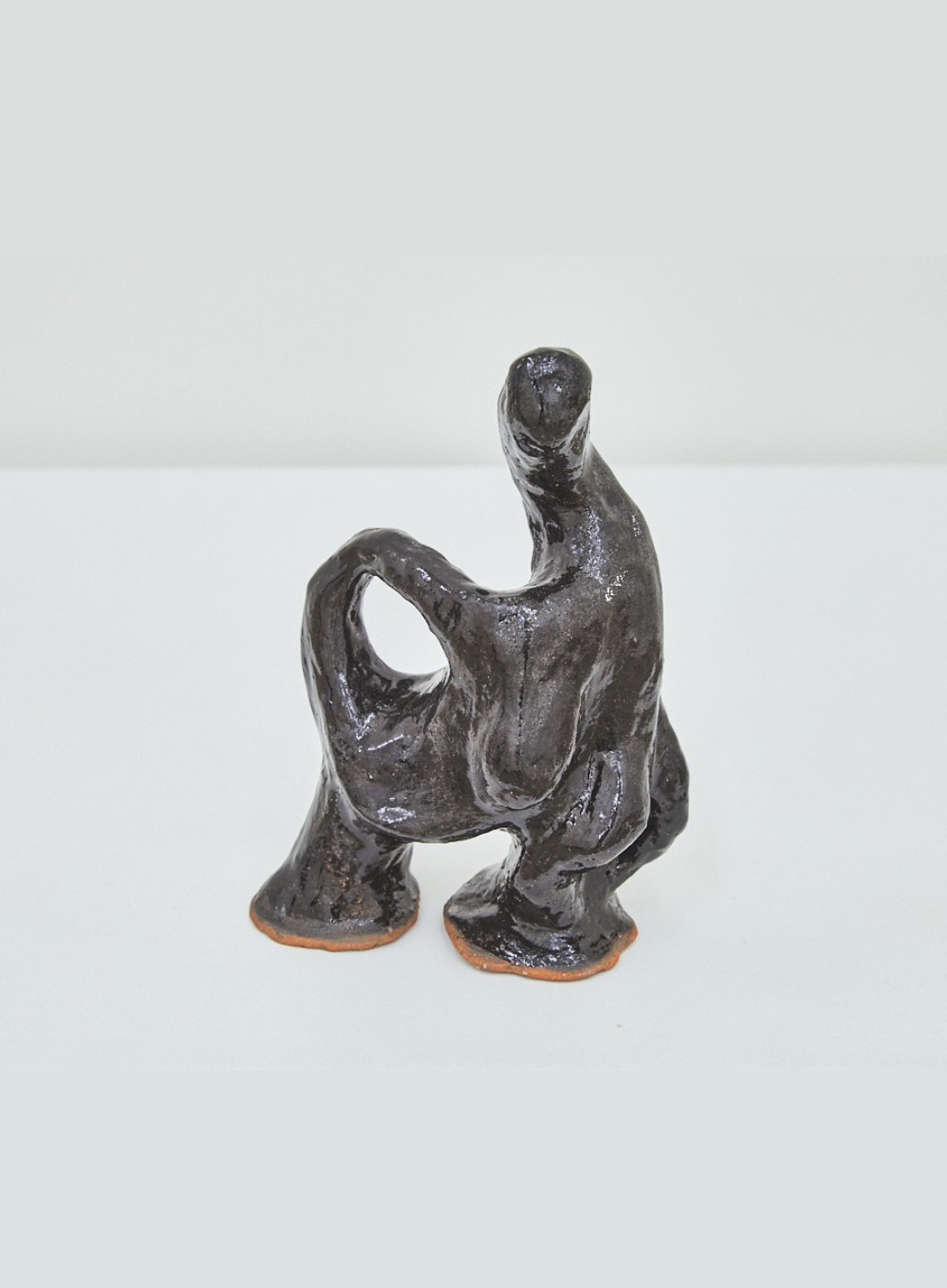
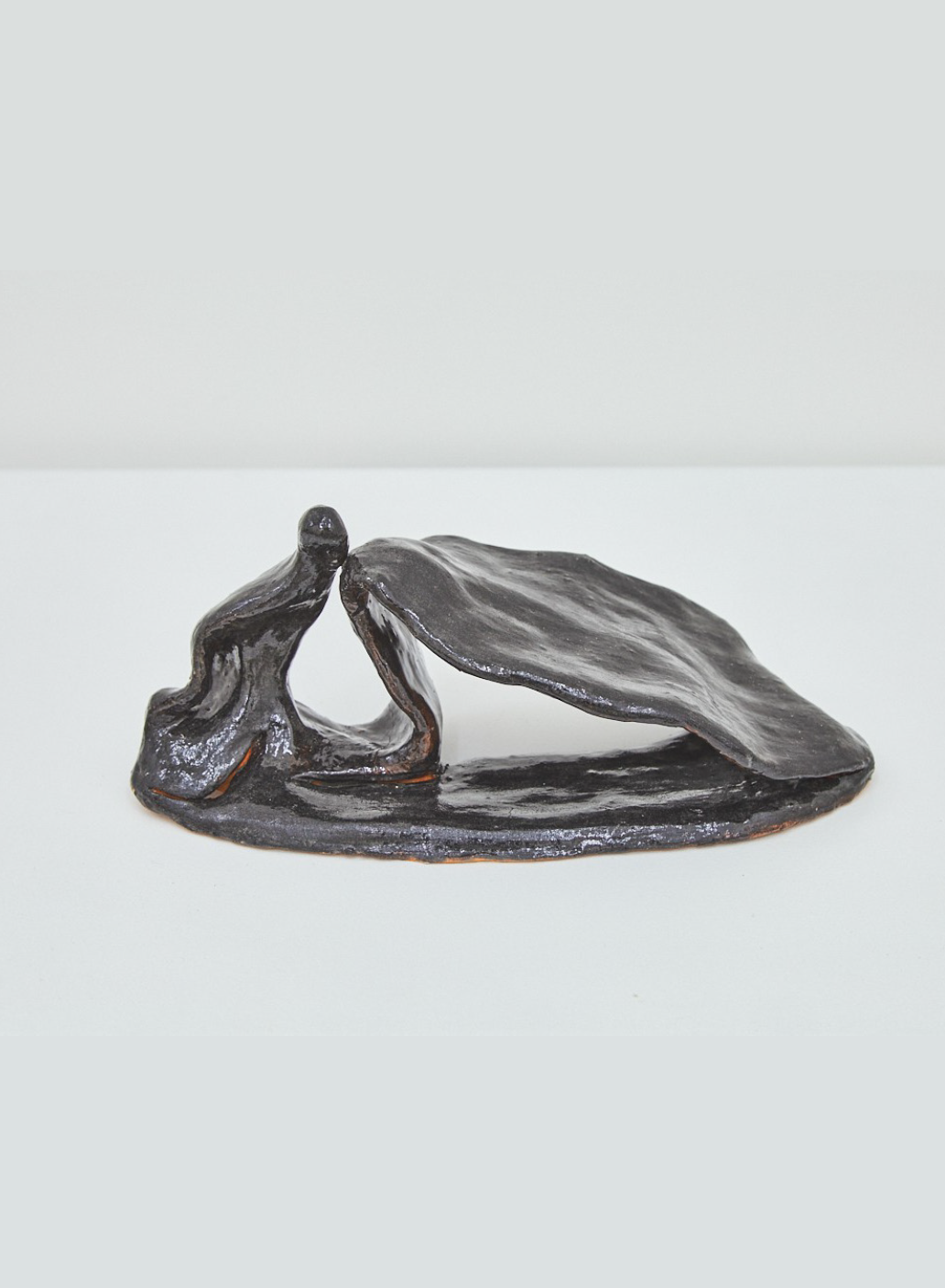
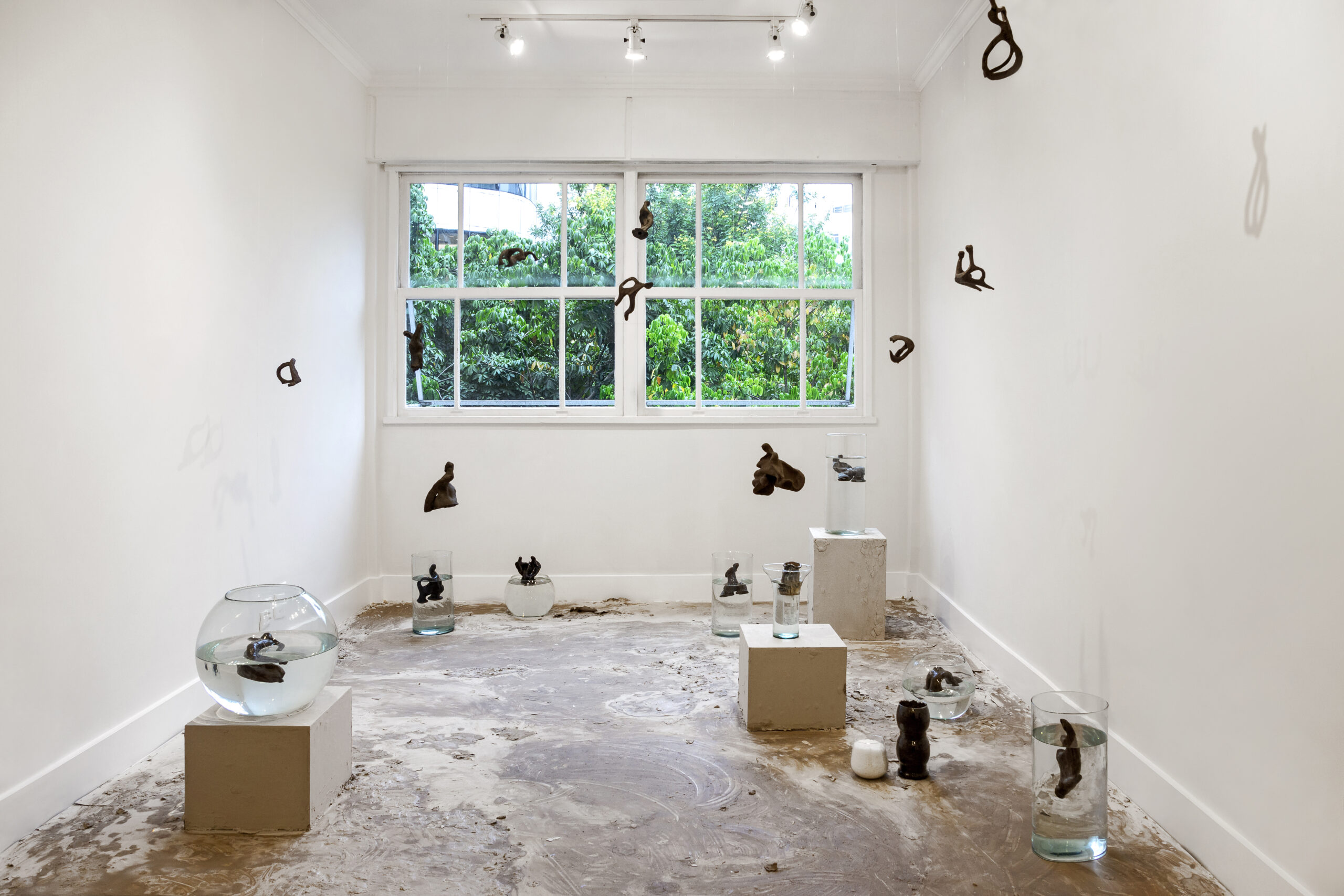
When we talk about the body, what are we talking about? When we talk about creation, what field are we looking at? As a visual artist, performer and actress, the body is multifaceted and complementary in the artist’s poetics. If we take her series “Processos Sociocirúrgicos” [2018] as a starting point, we could place it in a genealogy of works that invest in satirical representation through the body. It would be possible to read this work alongside others by artists such as Panmela Castro [Revanche, 2019], Renata Felinto [White face, Blond Hair, 2017] or even artists from other geographies and historical times, such as Howardena Pindell [Free, White and 21, 1980]. However, the body presented in Coadunar seems to refuse such approximations – even though they remain a pertinent reading key. It is the artist’s body, the one that promotes the gesture, but above all a sculptural body. The figures presented in the Coadunar sculptural ensemble – produced at different times in 2019, 2020, 2021 and 2022 – are the result of different gestures by Carla. This body, although powerful, doesn’t seem to understand itself as separate from a world and the forces that move it. I venture that this work is made in a kind of summons: of the earth that makes up the clay; of the fire that burns some of the pieces – others, on purpose, show clay in another state, another strength, also another fragility; of the water that takes on visible contours in the glass containers that the artist installs in the space; and in the lightness of the air that inscribes, along with time and from the body, cracks, paths and craquelados across the clay surface that takes up the exhibition space.
Carla Santana’s relationship with ceramics, clay and mud, however, cannot be summed up in this work: it is possible to unravel her works and see that in ‘Processos Sociocirúrgicos’ and ‘Coadunar’ such separations between the artist’s body and that of the sculpture are more evident, but in another part of her poetic universe, in her ‘Fardo’ and ‘Recôndita’ series, this body shows itself in a kind of desired symbiosis with matter. Such indications mean that we need to pay attention, to get closer to this production, which seems to deny easy understandings by taking the freedom of experimentation as one of the vectors of action.
For Coadunar, and some of his peer works, we could look at other bodies of work: those that invest in a gestural body, in full movement; a body that inscribes itself in matter rather than, like language, wanting to write with it. The figures presented here suggest an anthropozoomorphism that can also be perceived in the mythical figures of Maria Martins, in the kneading and molding of Celeida Tostes and Anna Maria Maiolino, in the earthy palettes of Solange Pessoa and Maria Lira Marques, just to name a few examples. These approximations are not presented here as an attempt at genealogy. Quite the opposite. They are echoes – reverberations of artists who seem, like Carla, to have realized that the same body that is produced by a world is the same body that, by deciding to make a shape with the energy used by the hands, is responsible for its urgent deformation.
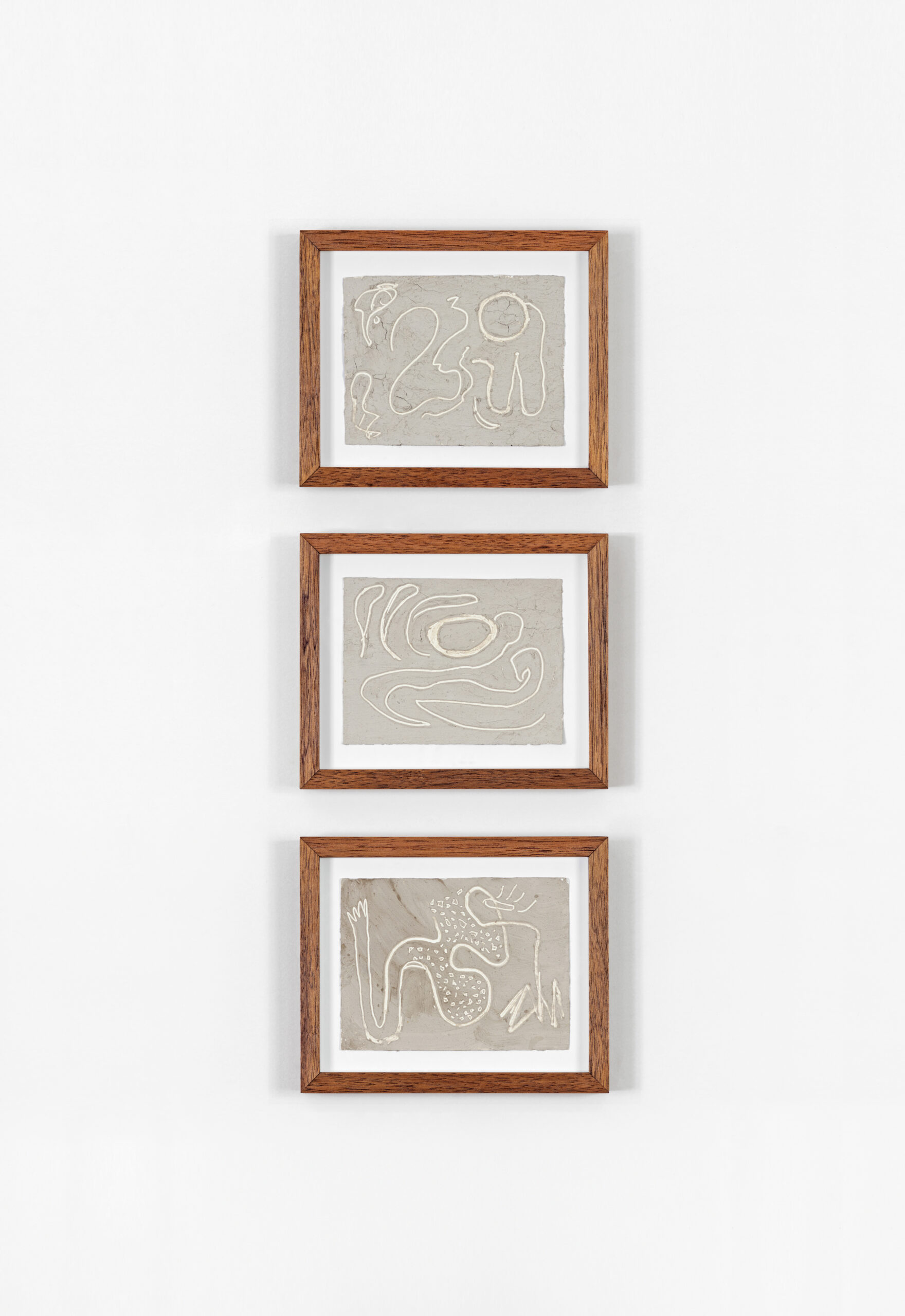
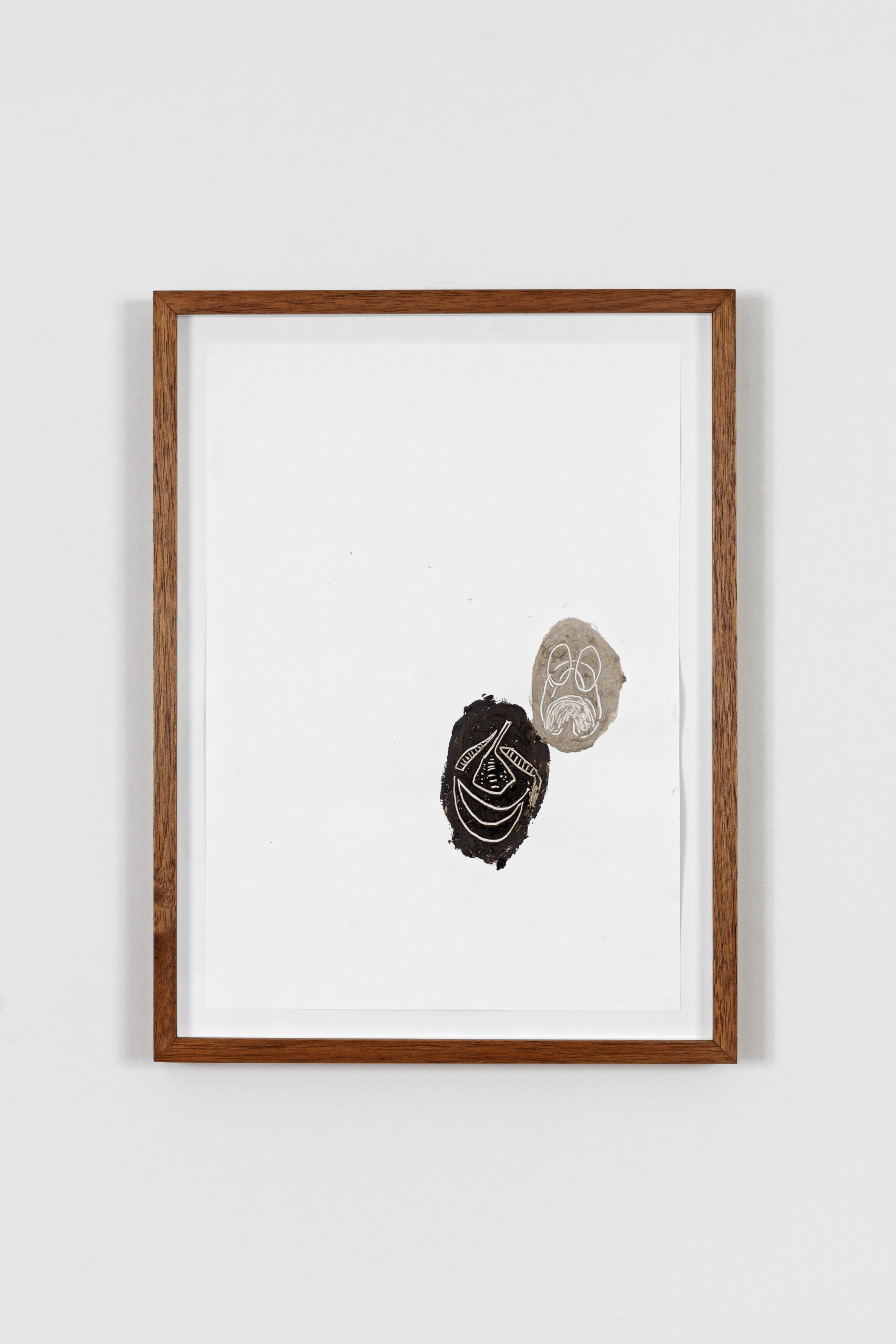
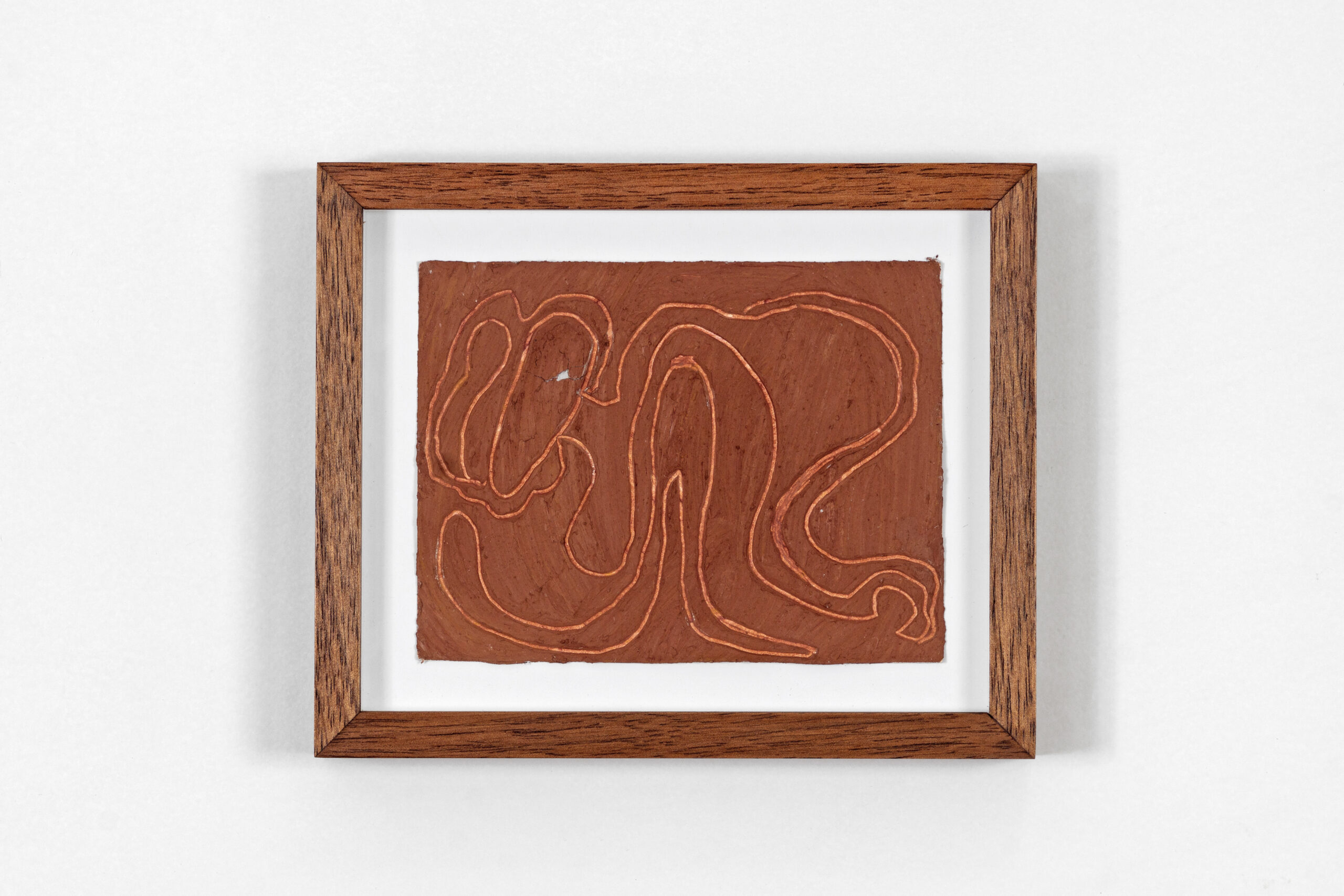
In the drawings and paintings that we see installed on the walls, the artist indirectly echoes other words, those of Francis Bacon, when he saw the paintings at the bottom of a cave in Spain: no modern artist would be able to surpass the greatness of the skill of those who, without the paradigm of representation and art history, inscribed their perceptions in and with the world. Inscribing on the surface, erasing, drawing from the furrows. Such images, those that go beyond the paradigm of representation, are great because they inscribe humanity in a frank relationship with other forms of life: the flight of birds, the encounter and escape with a moving bison or even the passionate illusion, sometimes fantastical, of the encounter between the thing and its own image. Whether at the bottom of a cave, immersed in or close to the wide mouth of a vase. The matter of the sculpture’s body accesses the tension of the body of the beholder, and precisely because of this, it can feel.
Victor Gorgulho
2. The lightness of what has strength – color and space in Ana
In Ana Cláudia Almeida’s ‘formal adventure’ – I take the pertinent words of the critic Clarissa Diniz as a starting point: “although we can talk about the colors, the stains or the texture of her painting, in order to approach it we must also use a repertoire that includes the body, touch and matter. In the same way, although her painting is made in and as space, we can also evoke time and its performativity to understand it, since everything that can be seen in it derives from an intense – and almost always long – process of transformation.”
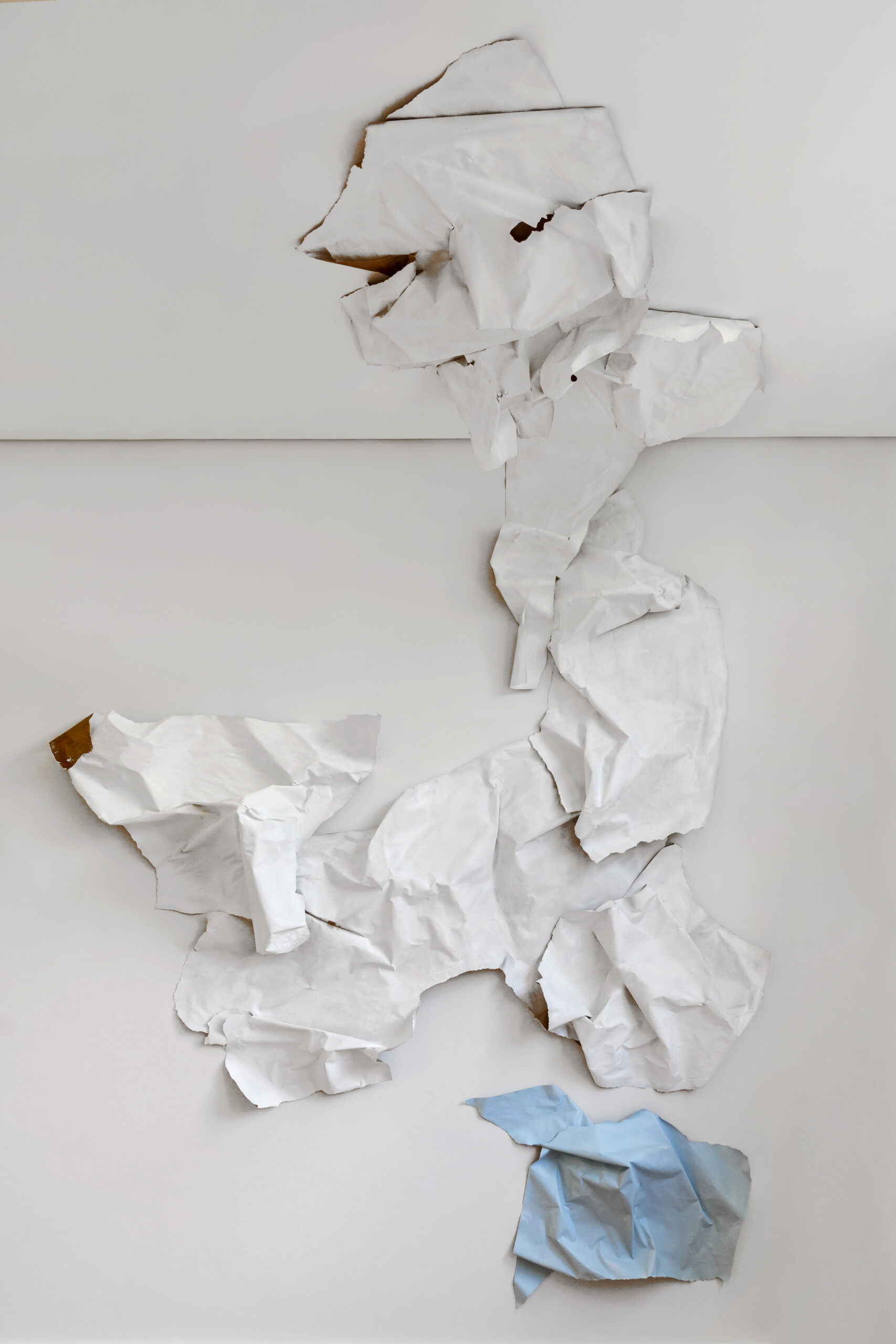
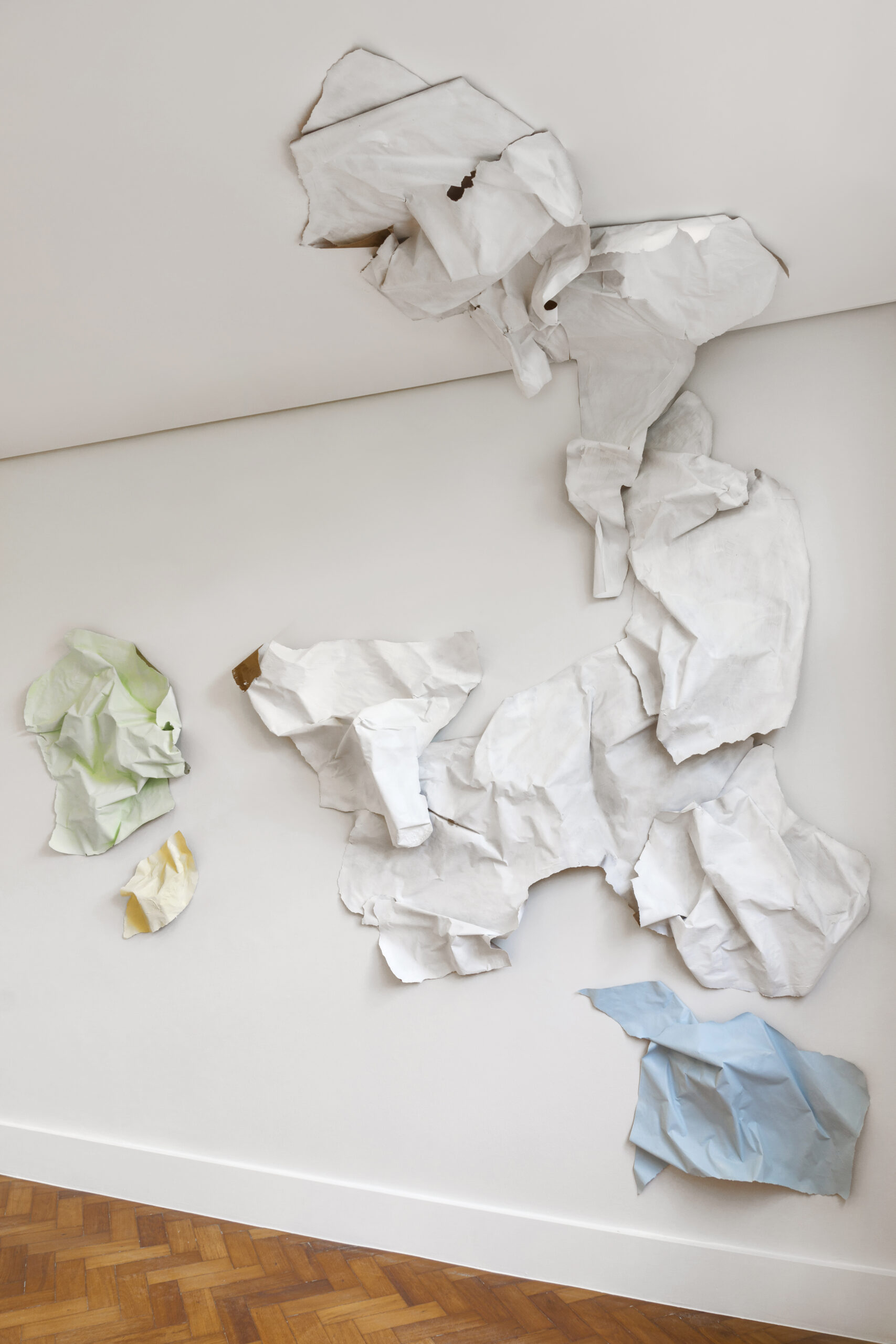
Ana Cláudia has been carrying out formal research of a stature that in the past, in a more obvious way, has had water and its presence in cities as a theme. In a fluid and subtle way, the artist has been appropriating the supposed freedom of abstraction more forcefully. Her forms seem less and less justified and the relationship, the friction, the topology, the relief and the clash with the surface sound more and more like a compelling reason for the artist to continue on her path of poetic research. The critic Diane Lima once made a precise and forceful point that I think is fundamental to pursuing the freedom with which the artist insists on placing herself in the world: “Ana Almeida is one of the exponents of a generation developing what we call new practices of self-determination: bodies in perspective that announce a world where they are no longer in a position of interdependence with the other, but exercise their anti-thematic yet critical singularities about their presence in the world”. That said, it seems to me that in these practices of self-determination, the transference of the body to matter that we see in the resinated, crumpled, molded and painted papers in “Odor Vivo” resonate with some procedures that can be understood precisely in the process of transformation elaborated by Diniz. Whether it’s the artist’s own poetics, or a possible reading of her gestures in the light of the artistic production of other exponents who seem, in their work, to have similar discomforts to those of the artist: a desire to establish spaces from the body.
“To work with matter is to shape reality without words,” said Ana Cláudia in an interview. In another statement, she said she wished that, with her work, people would feel “loose and comfortable”. If this is her wish, it is quite true that the artist takes an unobvious route to make it happen. In this installation presented here, we can see a correlation to what critic Paulo Venâncio Filho wrote earlier about the sculptural production of artist Iole de Freitas, who in the 1980s seems to have clearly decided to do: without abandoning, freeing herself from the surface plane to meet “a specific body technique, improvised, jazzy, similar, as it cannot fail to be, to the physical, if not even mental movement of dance – the perception of the body as a liberator of energy. (…) Without abandoning the plane, he sought to achieve the reality of weight, mass and volume; to make the plane absorb the plastic truth of the body, its non-representational contemporary presence.”
Although we know that this production does not propose any direct relationship with these series by Freitas, Ana Cláudia Almeida, like Iole, expresses multidirectional movements. It is impossible for those who insert their bodies into the space of the installation – perhaps another body – to find a single origin for these movements that make up the space, “Like crowds, without beginning, middle or end, this or that direction. Tense and at the same time at rest (…) they seem to suggest choreographies between individuality and collectivity, they bring to light a troubled sleep, bodily yearning”. If in the case of Iole de Freitas this movement is operated in the rigidity of the metal, the wires and the metallic tortuosity, in the case of Ana Claudia Almeida this yearning of the body is revealed to already exist in the artist’s work. These movements can be seen in the oil pastel hatches on the rough surface of the paper – anyone who fully trusts in the idea of the plane is mistaken. For the artist, the paper is a body full of reliefs where the color is about to take up residence – or not. “And they show how it is possible to support and build on the endless movement which, at first glance, is one of accumulation and disorder, of opposing forces that repel each other, pull away and unbalance.”
But I won’t dare keep quiet about color. Ana Cláudia Almeida, in taking water as a theme, has already expressed that it was not thought of, shown and made into an image without human presence. On the palette, colors from nature were juxtaposed with others, which the artist described as “toxic”. In this installation, we perceive a faded, washed-out, watered-down toxicity. Pastel tones or candy colors, for us, who perceive this space with our whole body – and not just our eye – are points of attention amidst the white that reveals, without excess, the darkened edges of the paper. The artist adds to this experience a suggestion of smell – a living odor. Of the five senses, this is the one that has been overlooked by art history. What sensations and senses have we ignored until now?
Victor Gorgulho