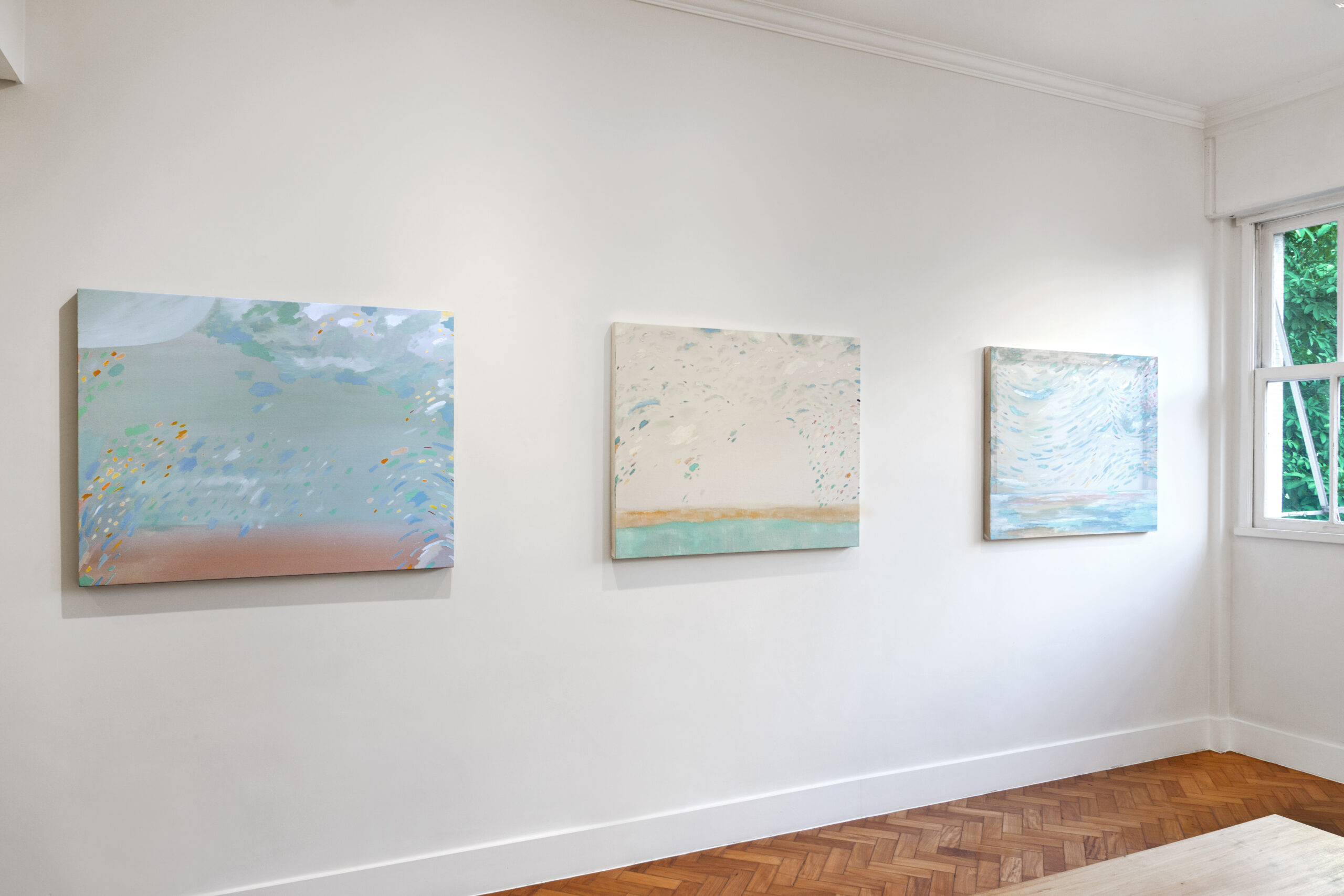
The sky, a cinema
Yasmin Guimarães
curated by Victor Gorgulho
July 07, 2022 - August 30, 2022
Rio de Janeiro
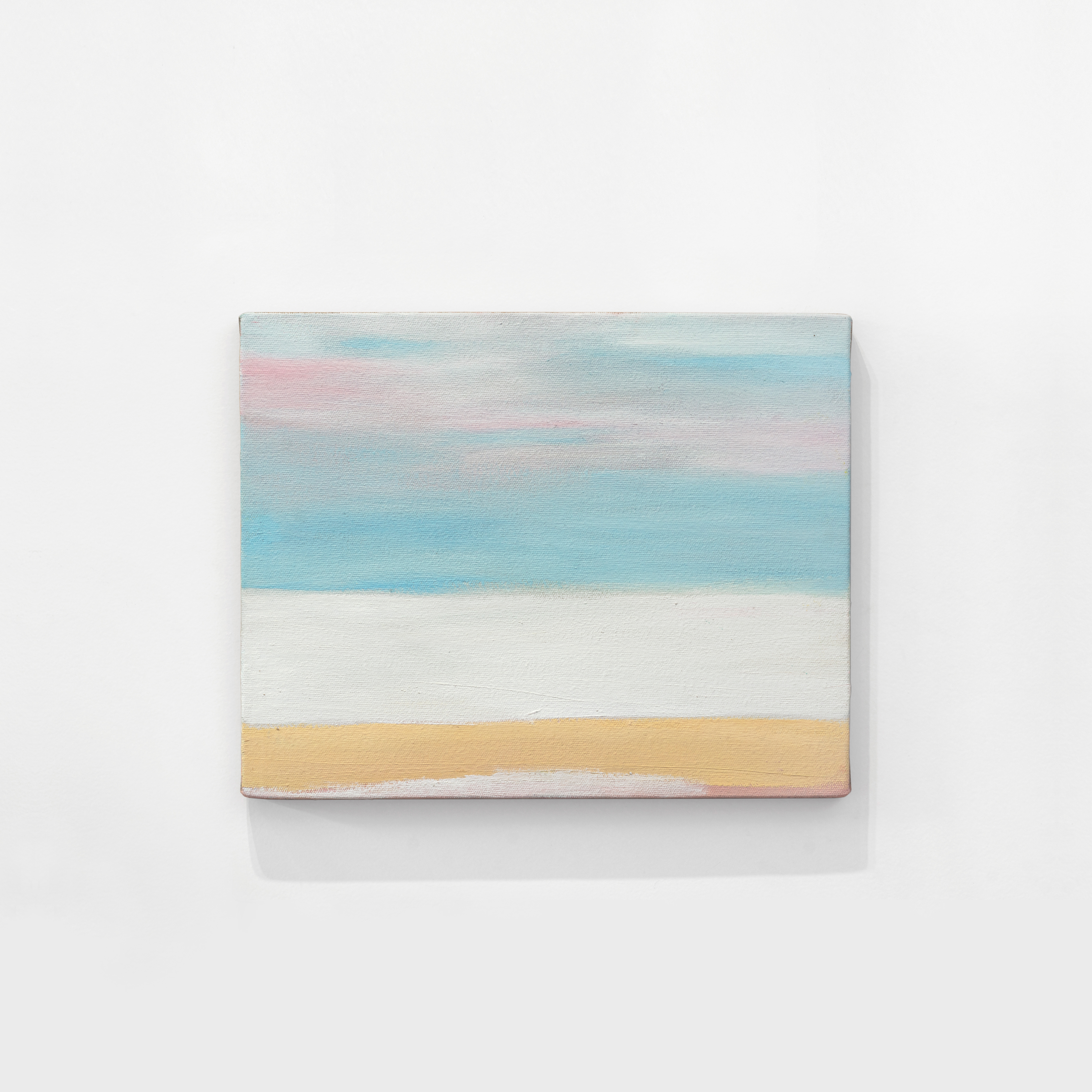
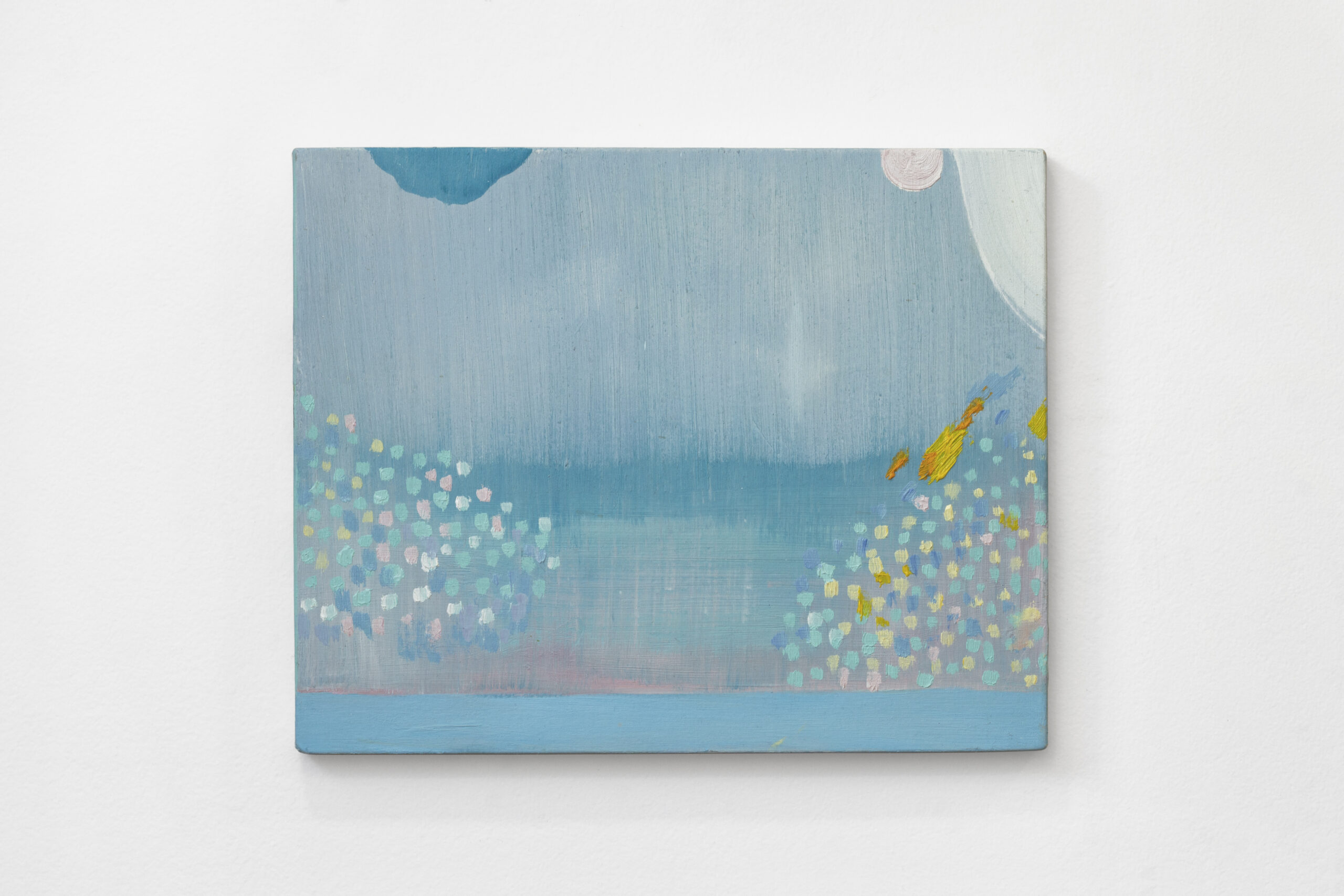
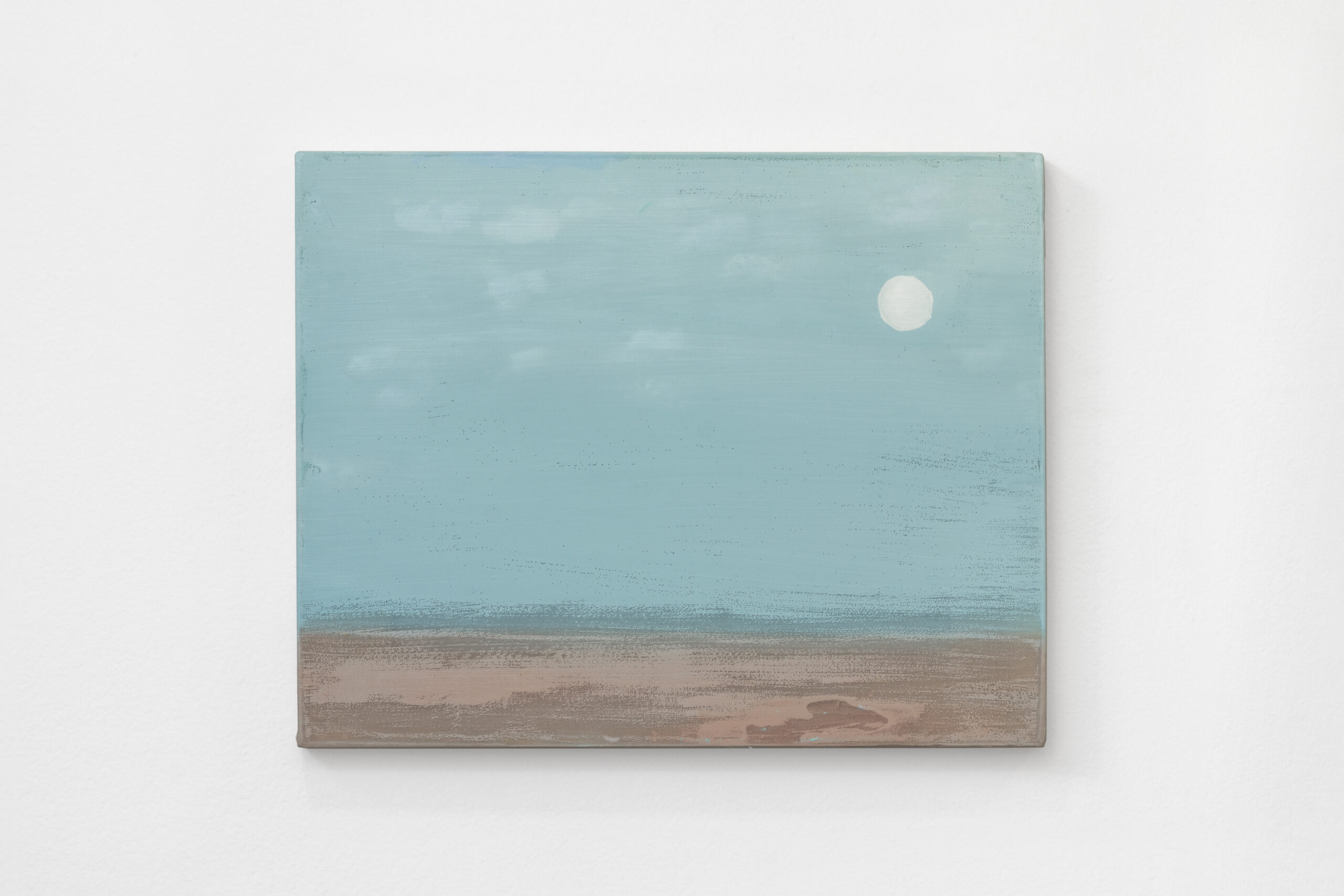
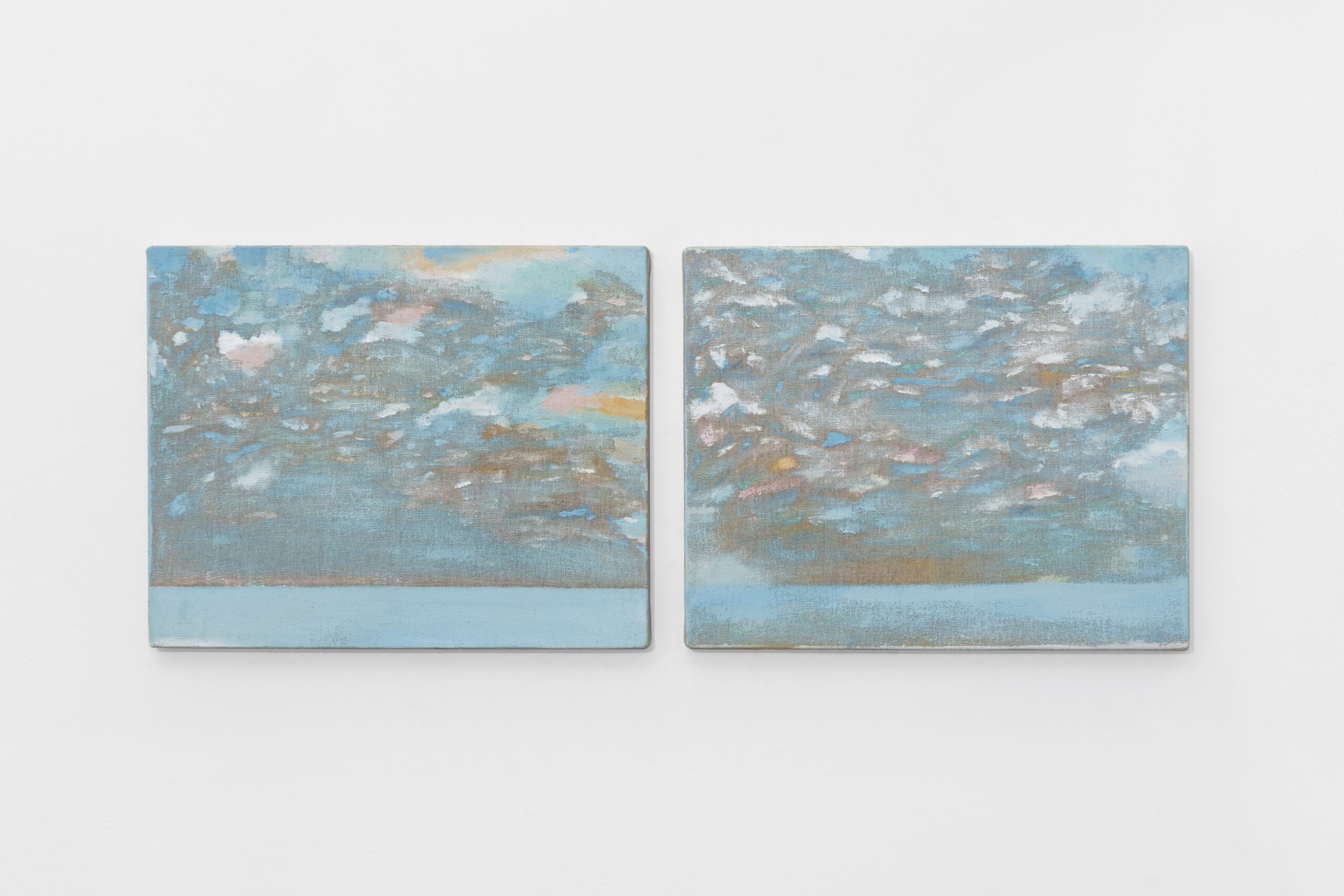
Blue, light blue, pool blue, cotton candy blue, beige, vanilla beige, white, gray, baby gray, lead gray, end sea, sand, ice, cloud, pink, baby pink, lipstick pink, yellow, mango yellow, green, flag-green, pool-green, lilac, violet, purple, dust-colored, cosmic dust-colored, star-blue, past-blue, future-blue, mist-blue, infinite-blue, sky-blue.
What is the sky if not an involuntary cinema of nature itself, tinting the horizon daily and tirelessly with an endless palette of colors?
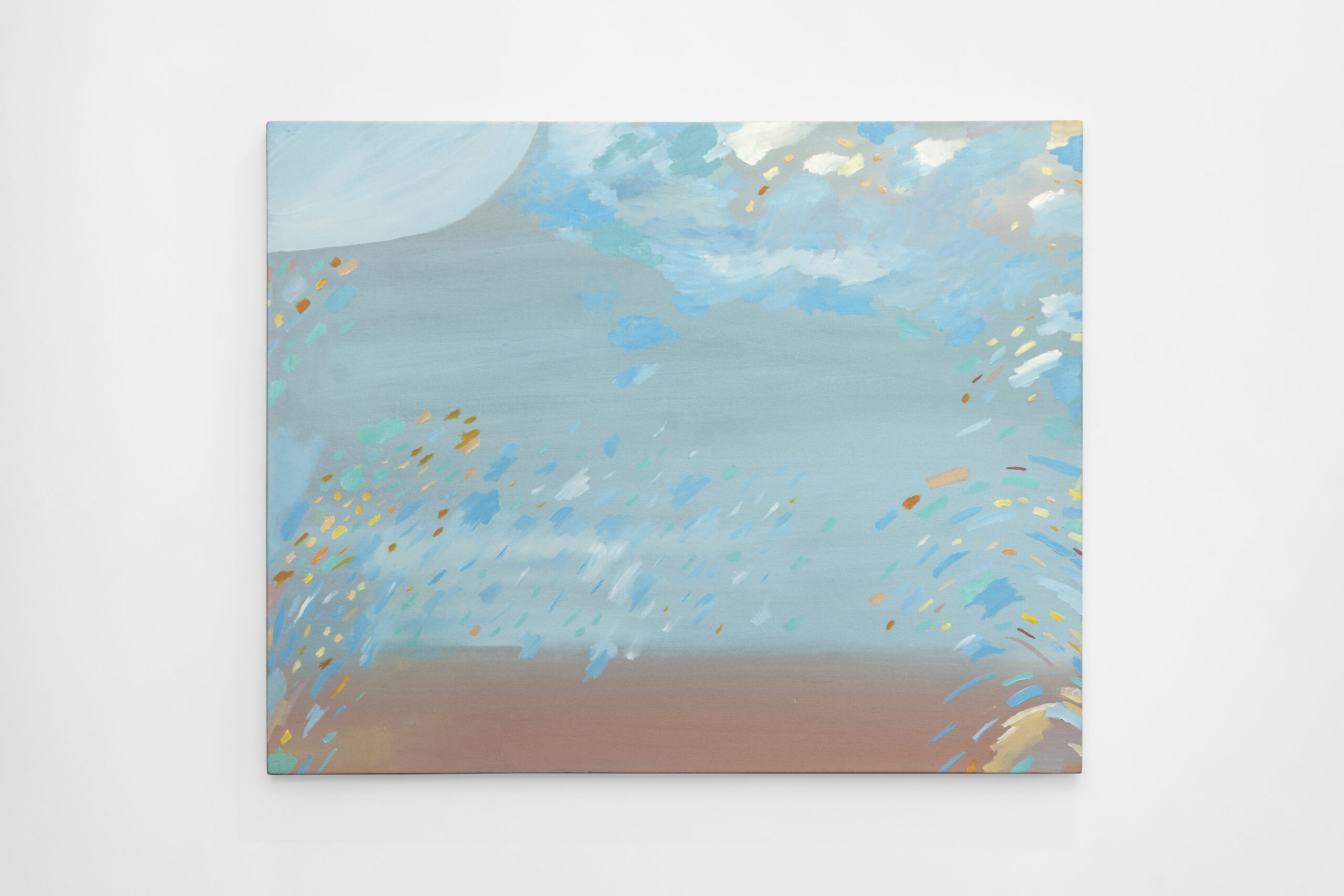
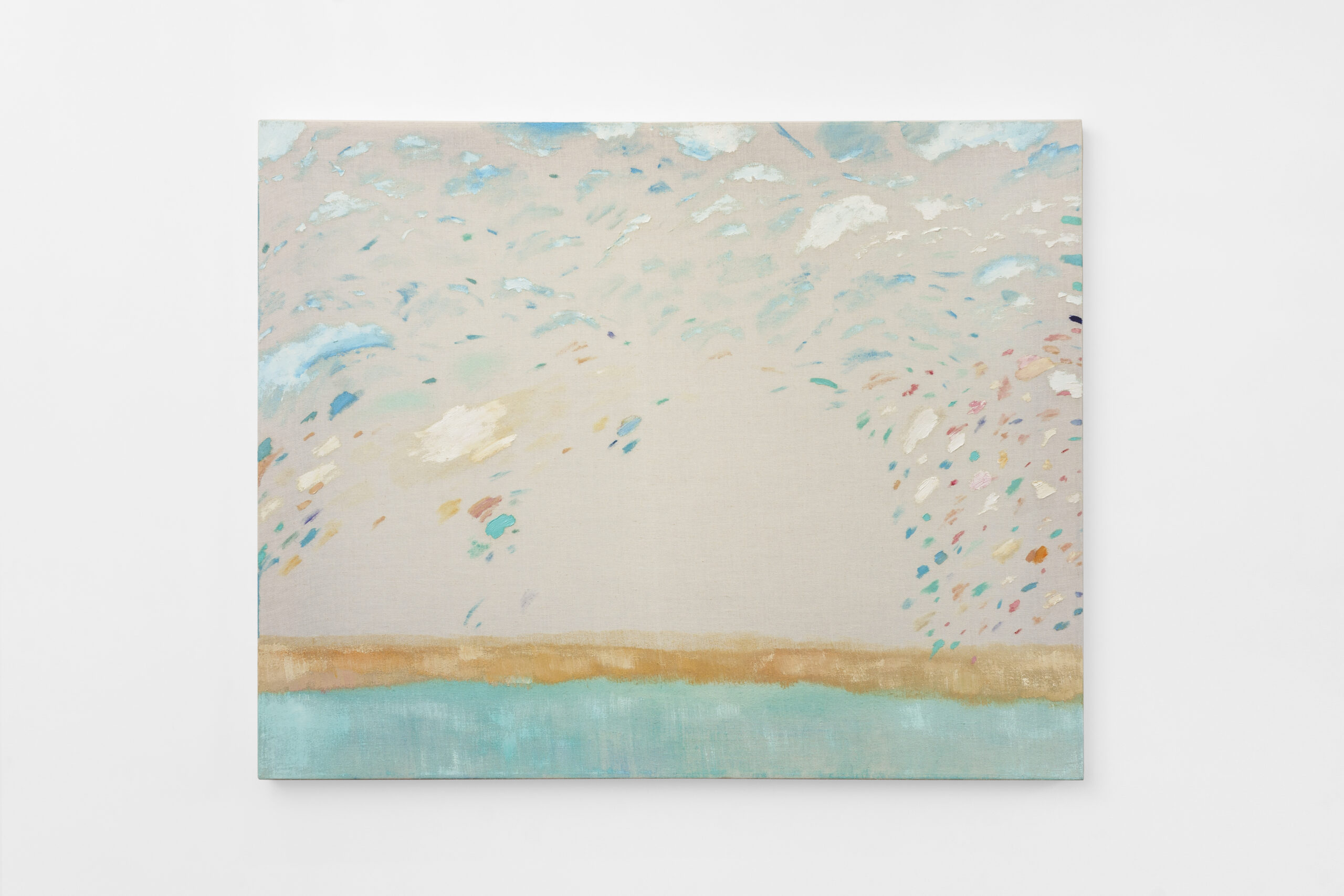
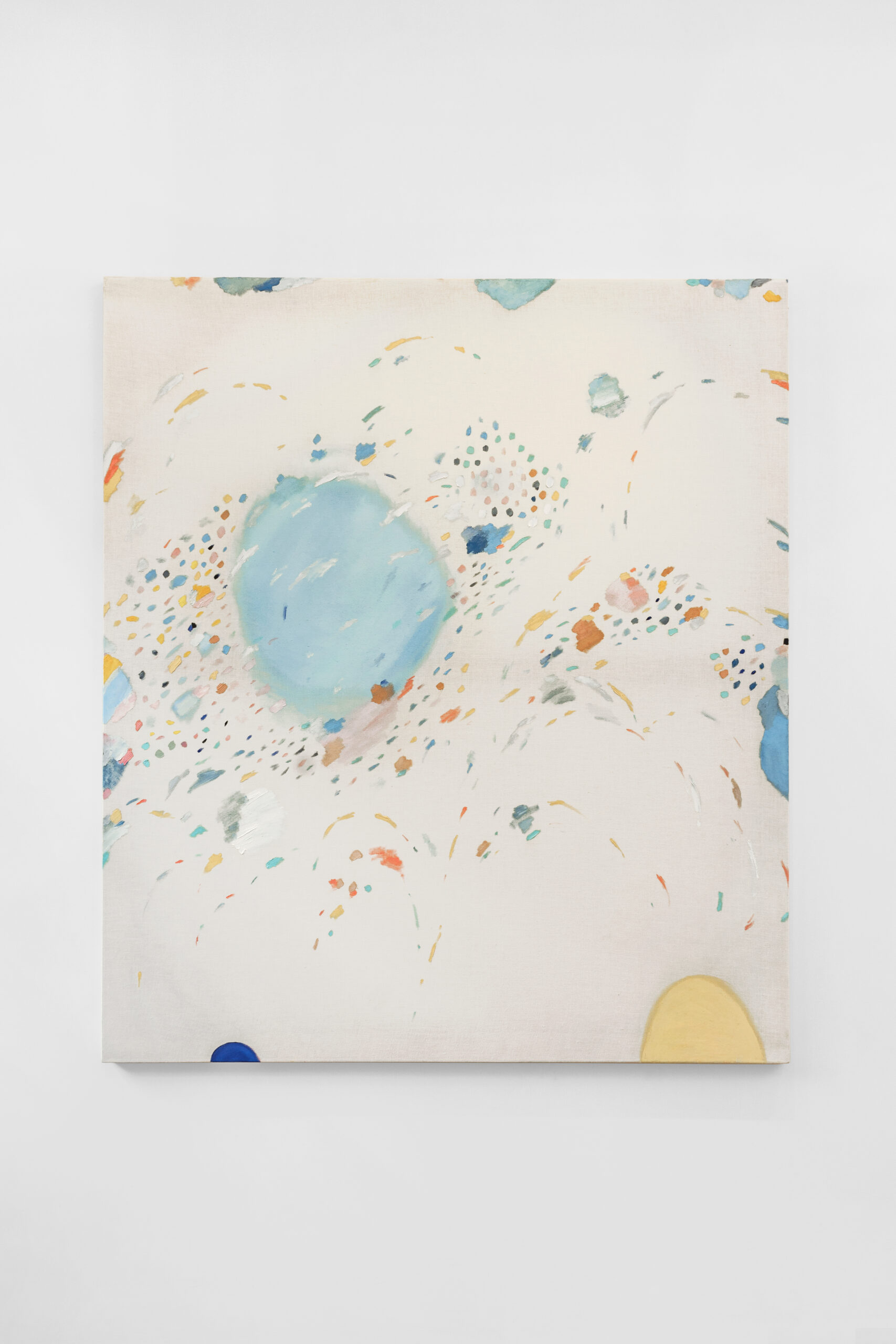
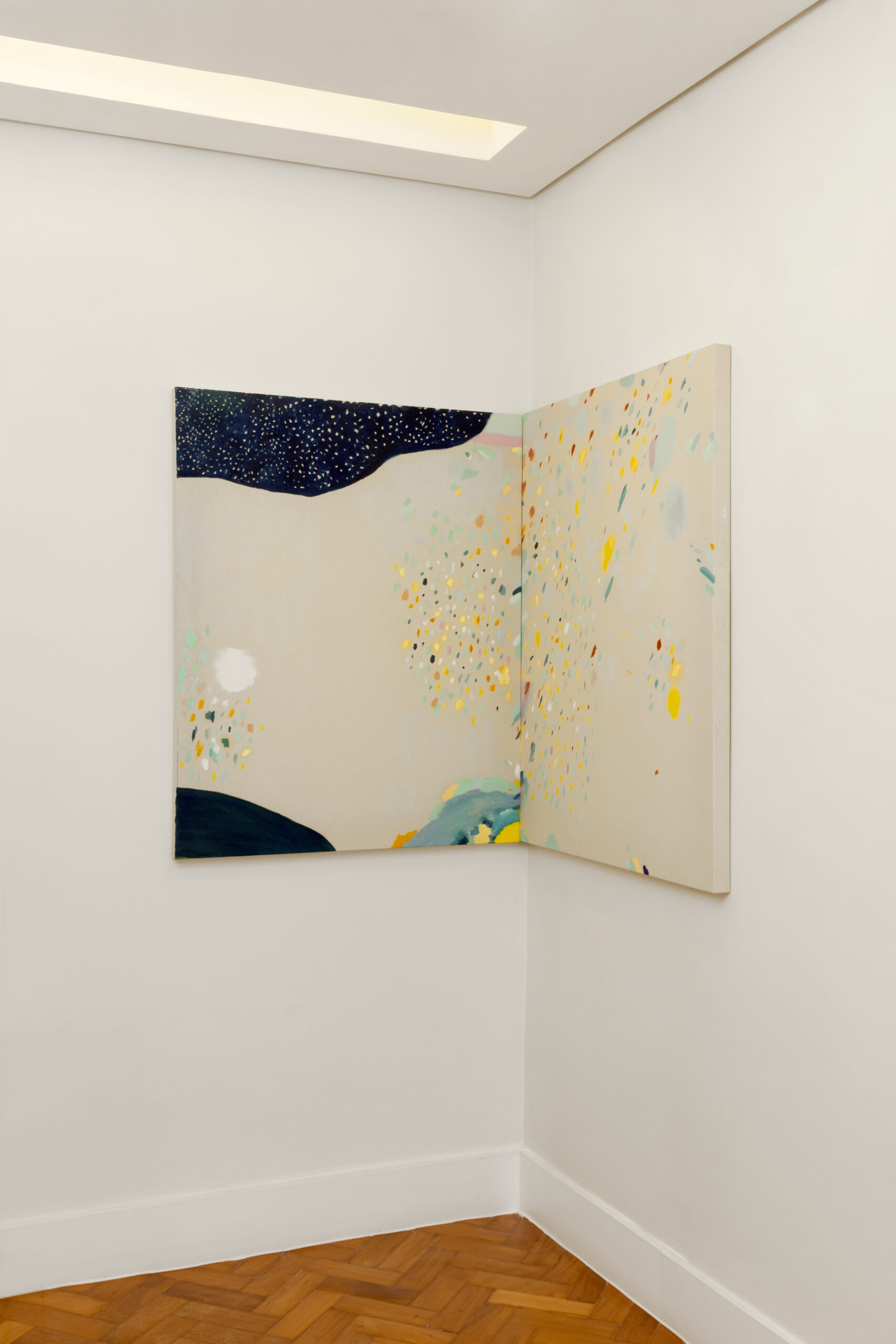
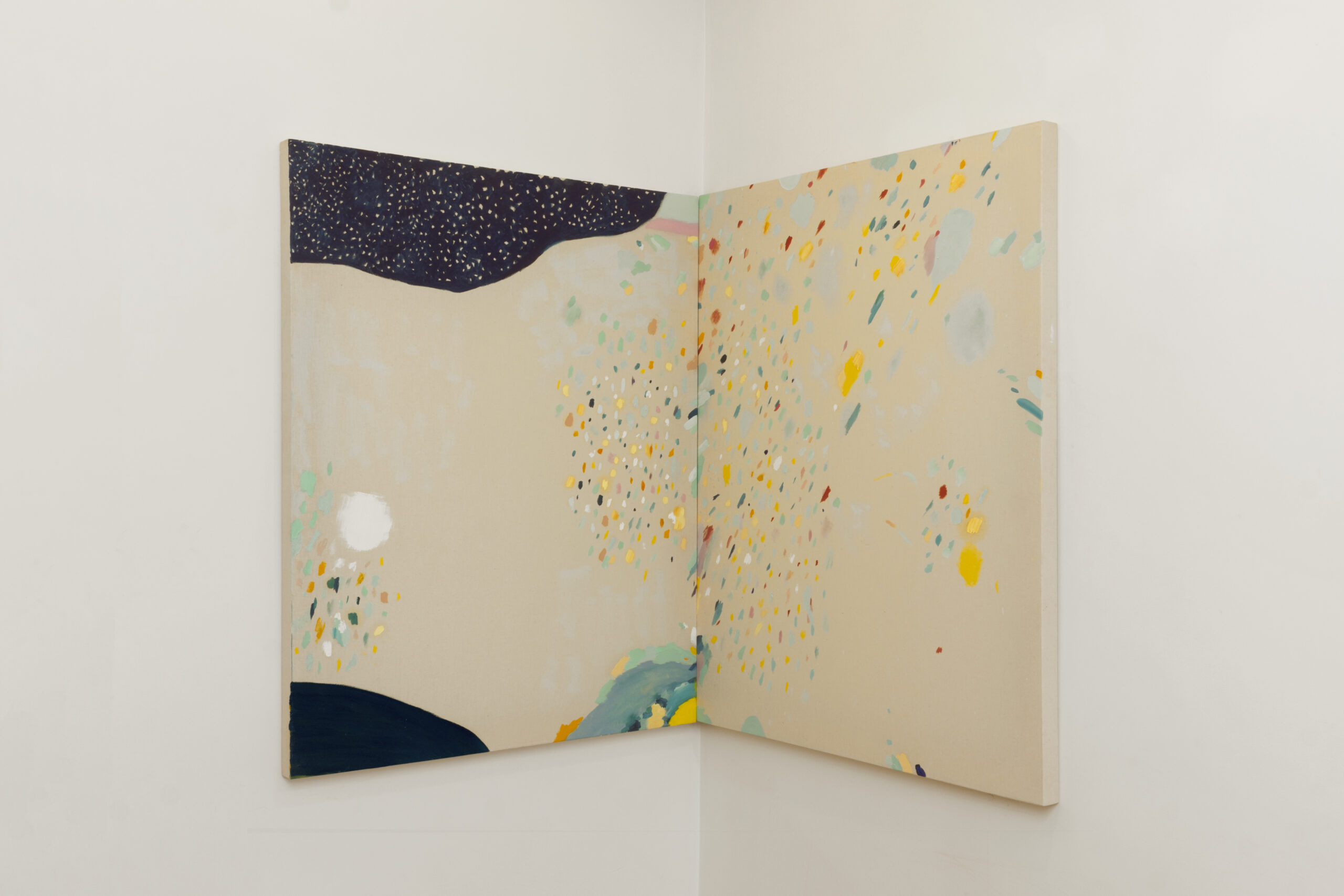
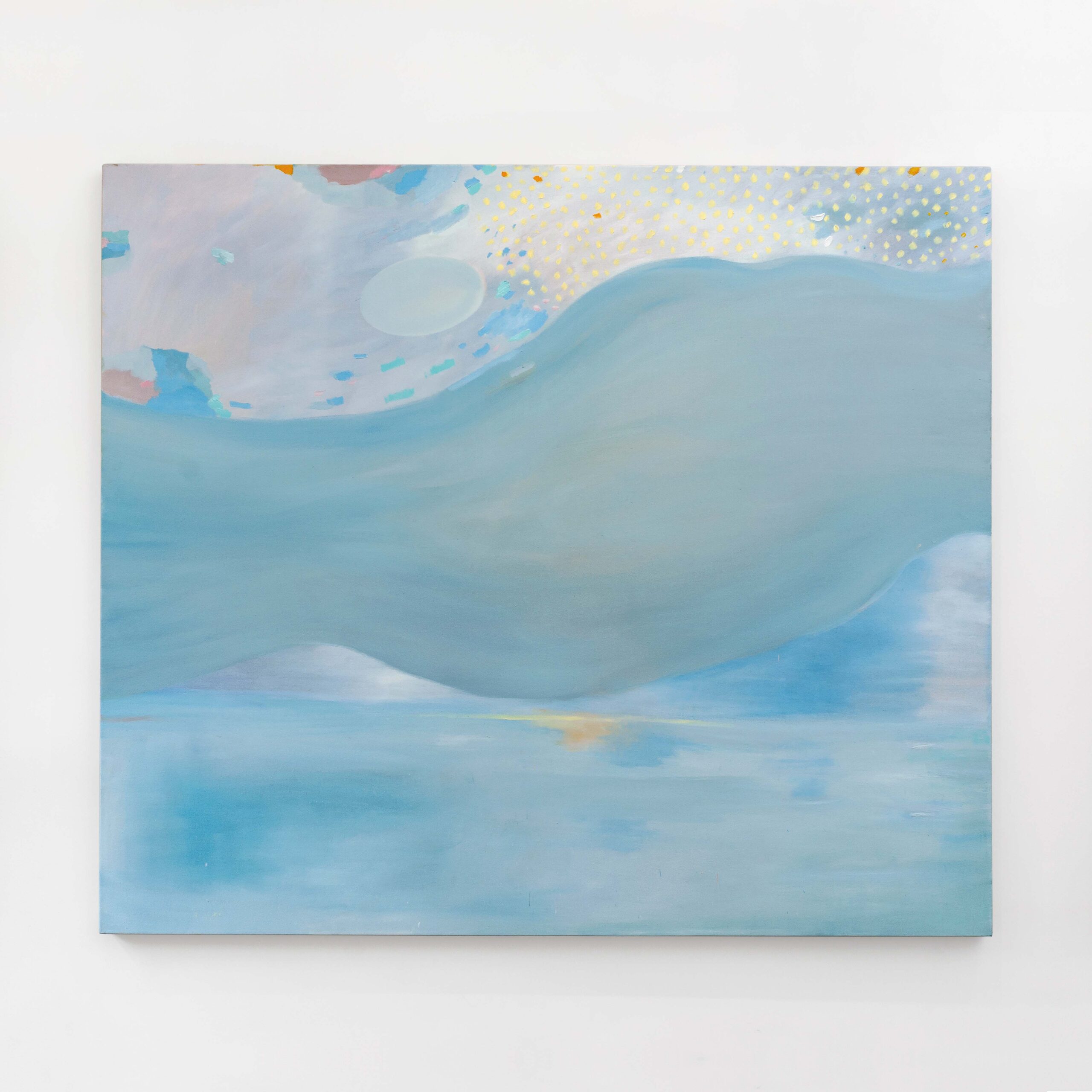
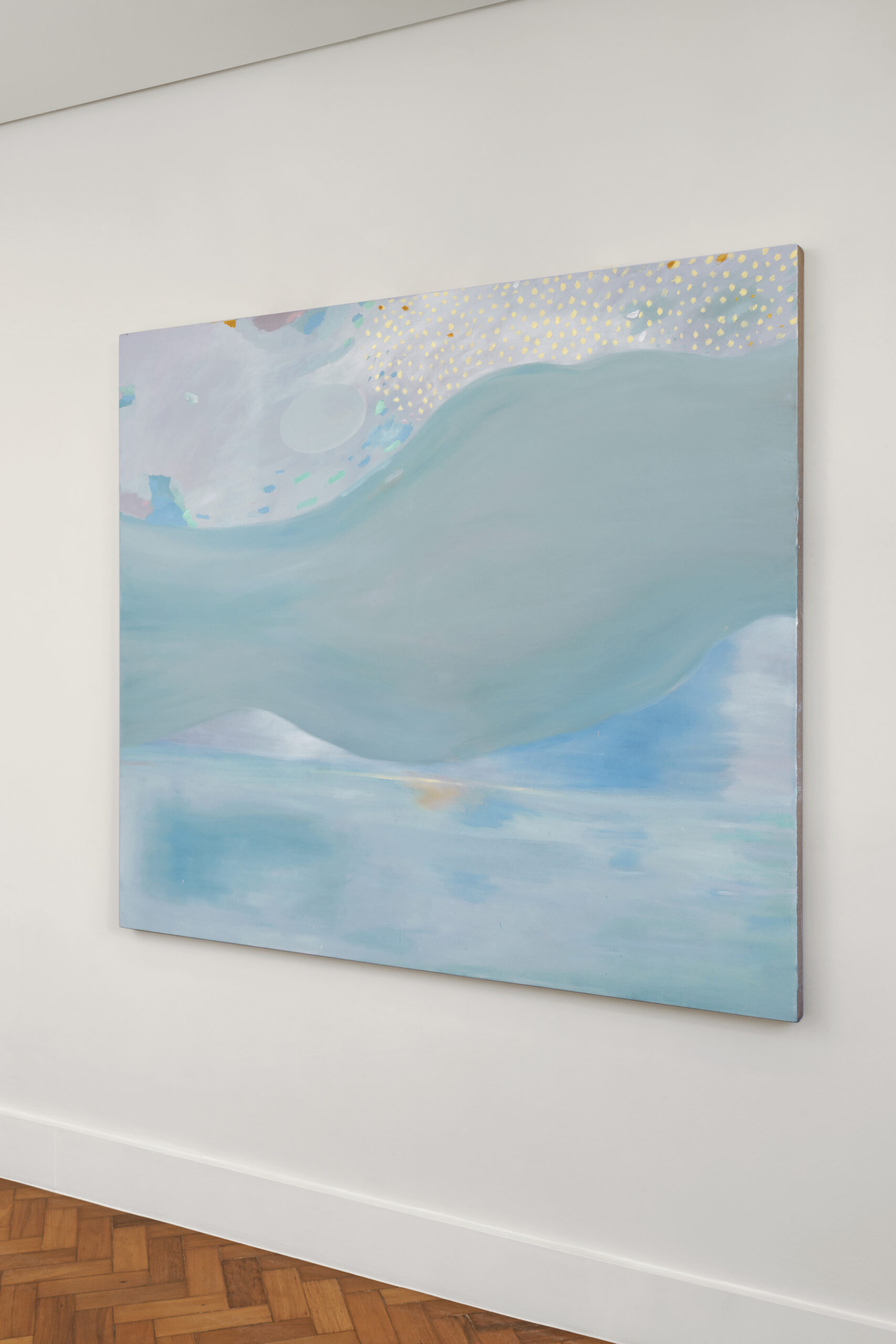
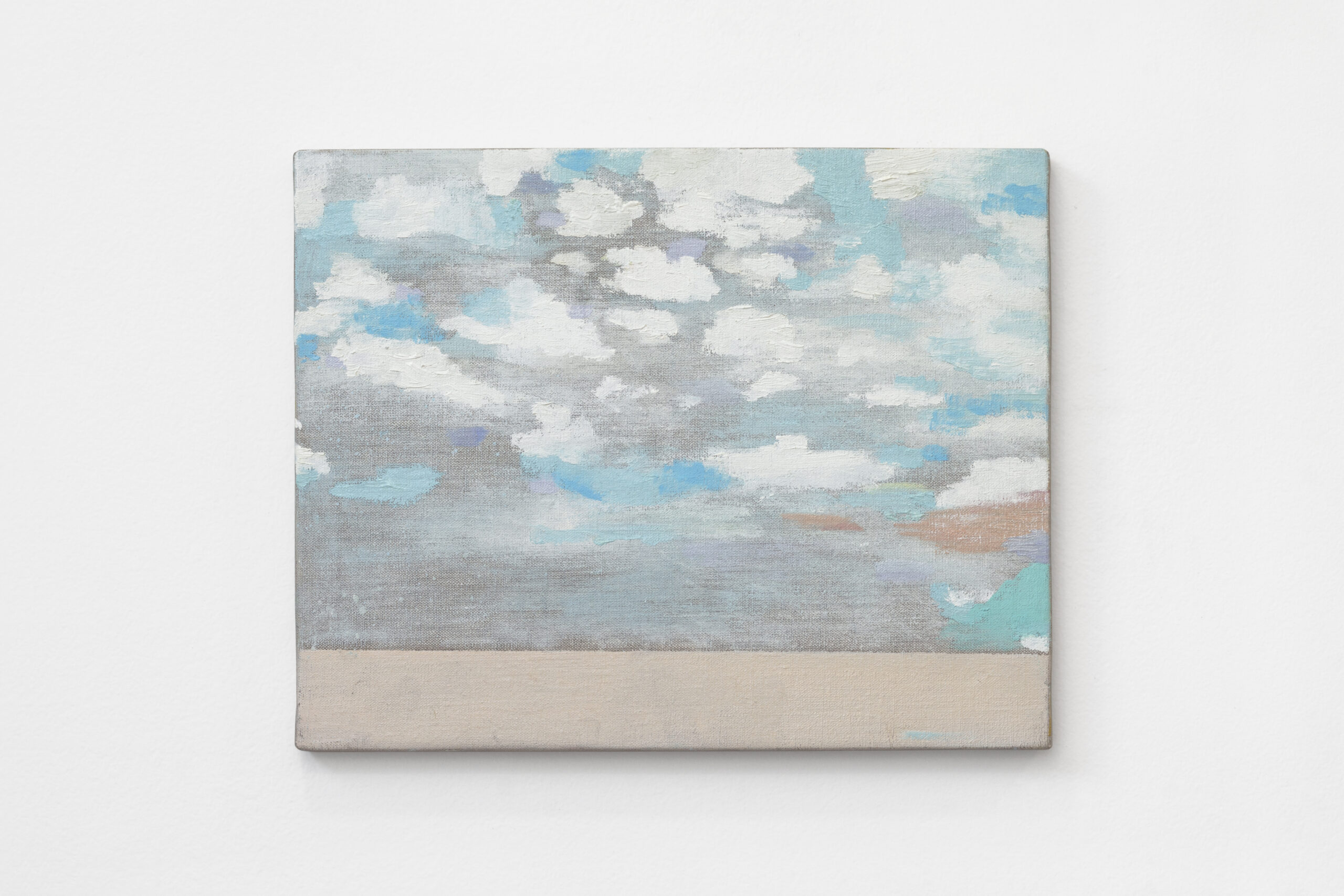
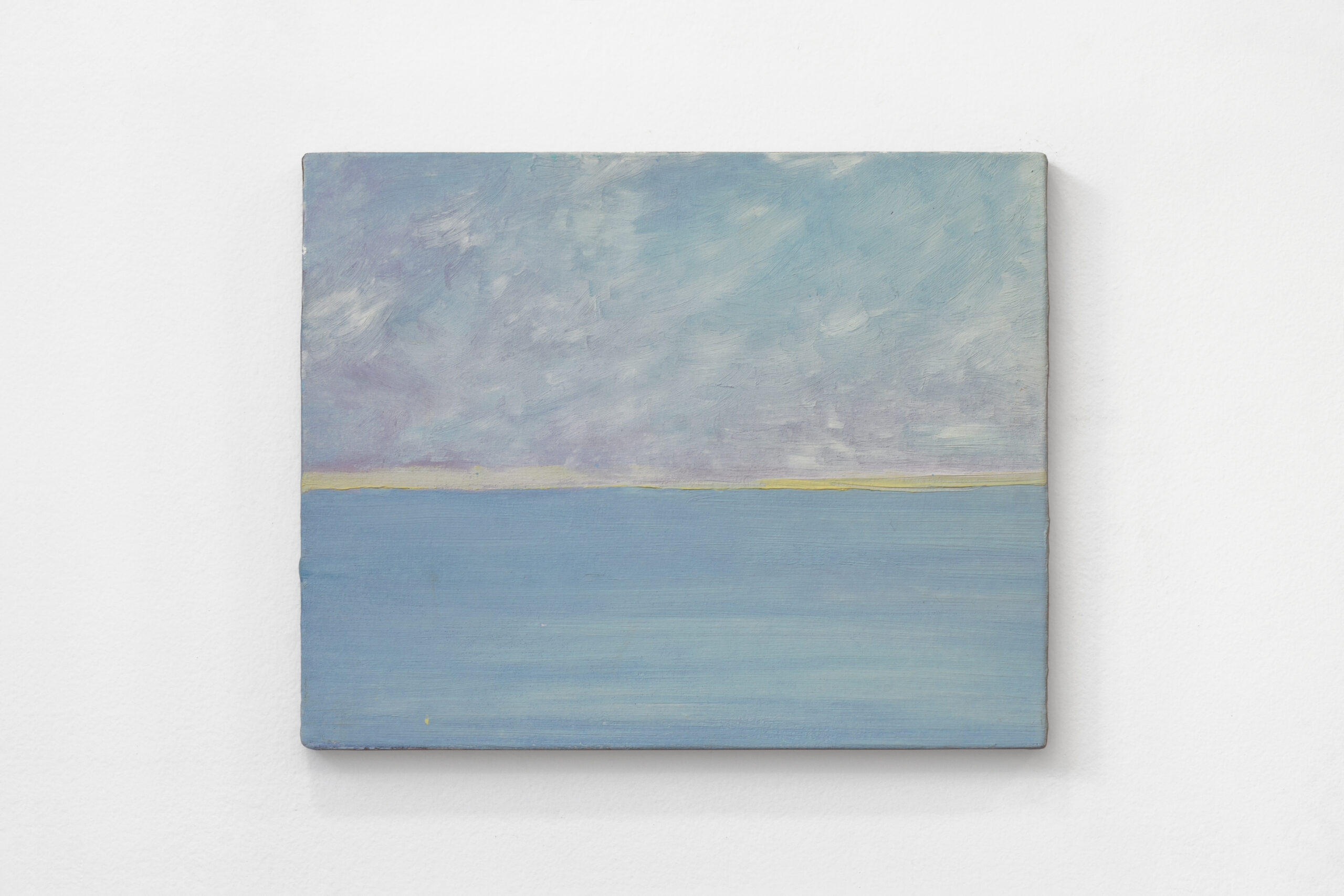
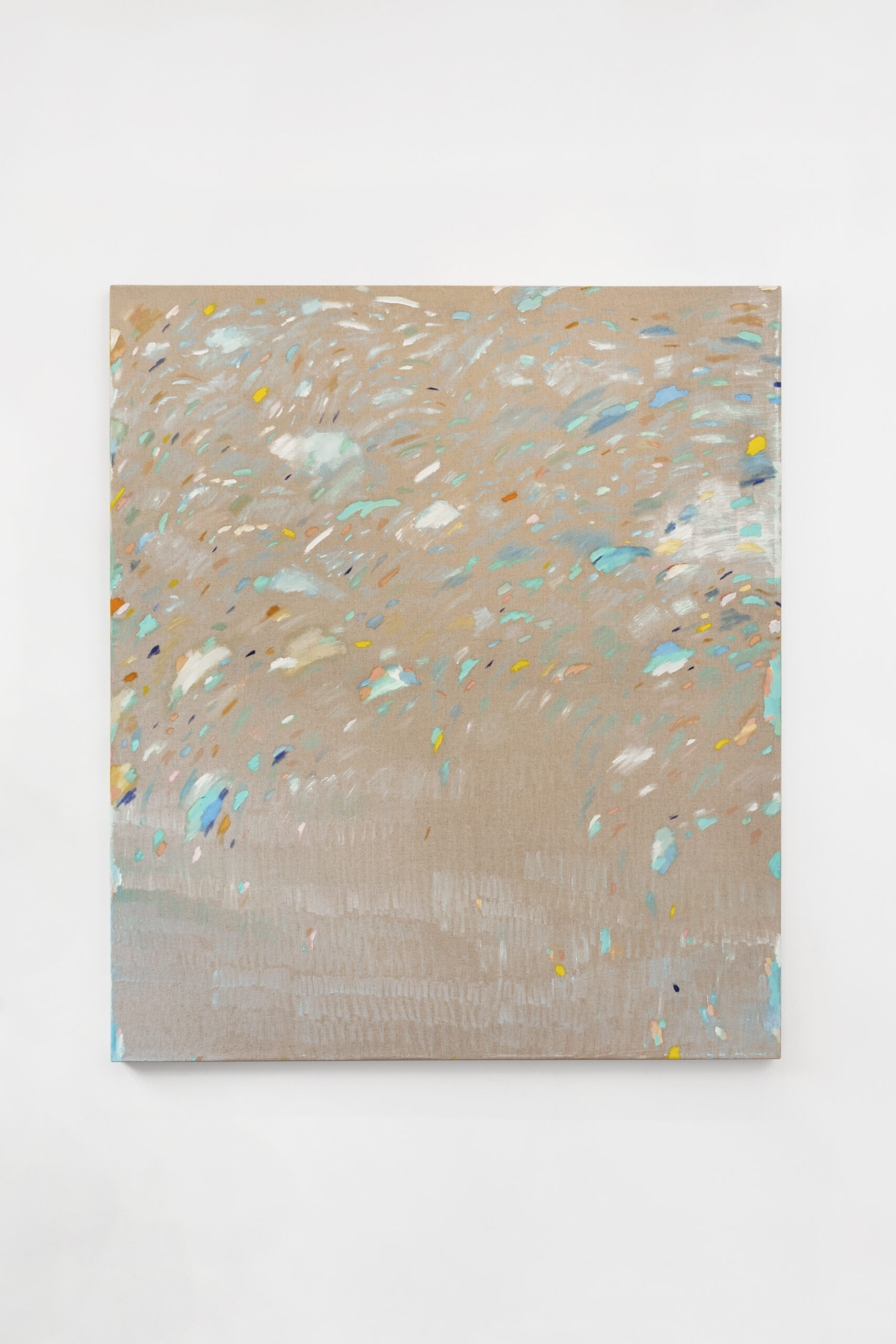
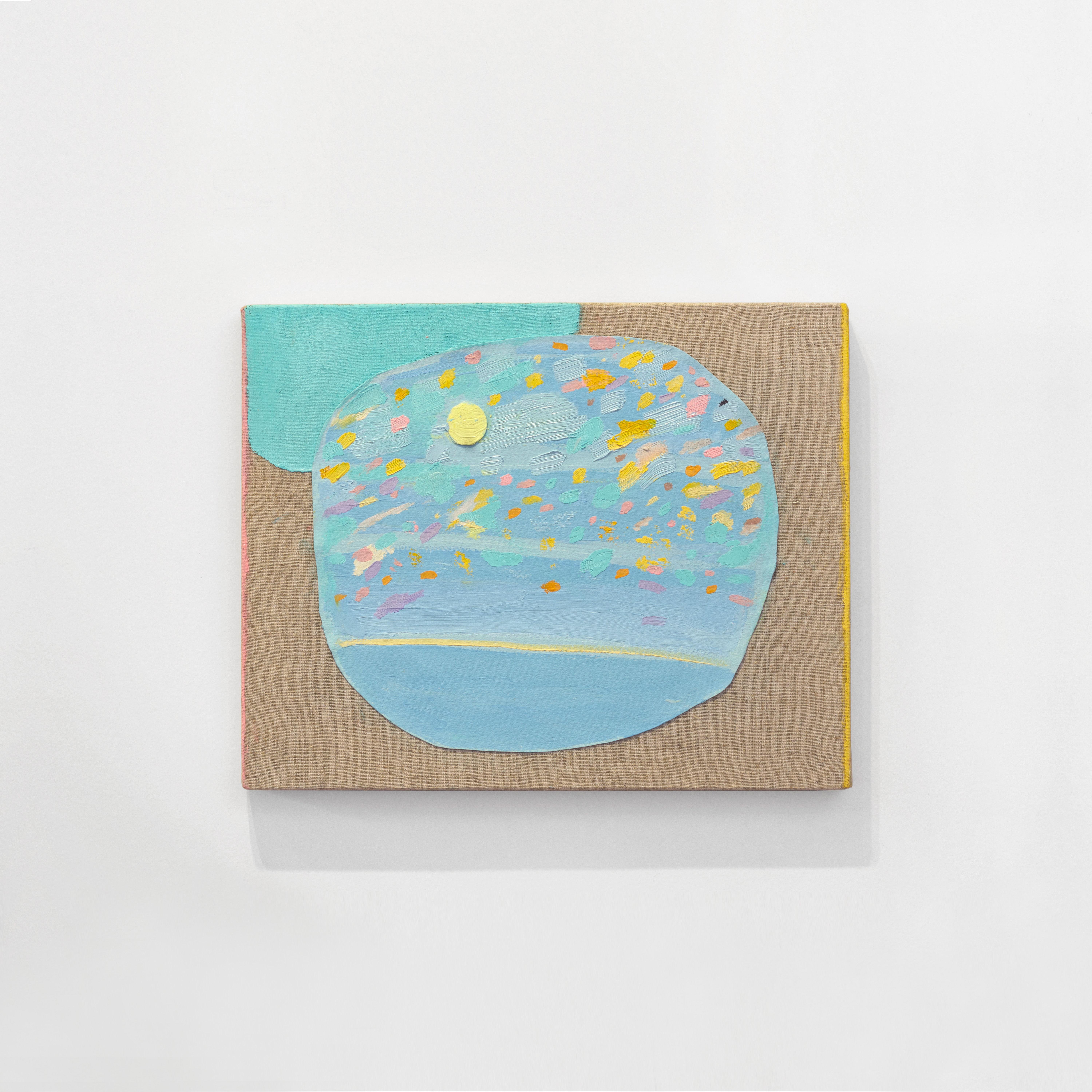
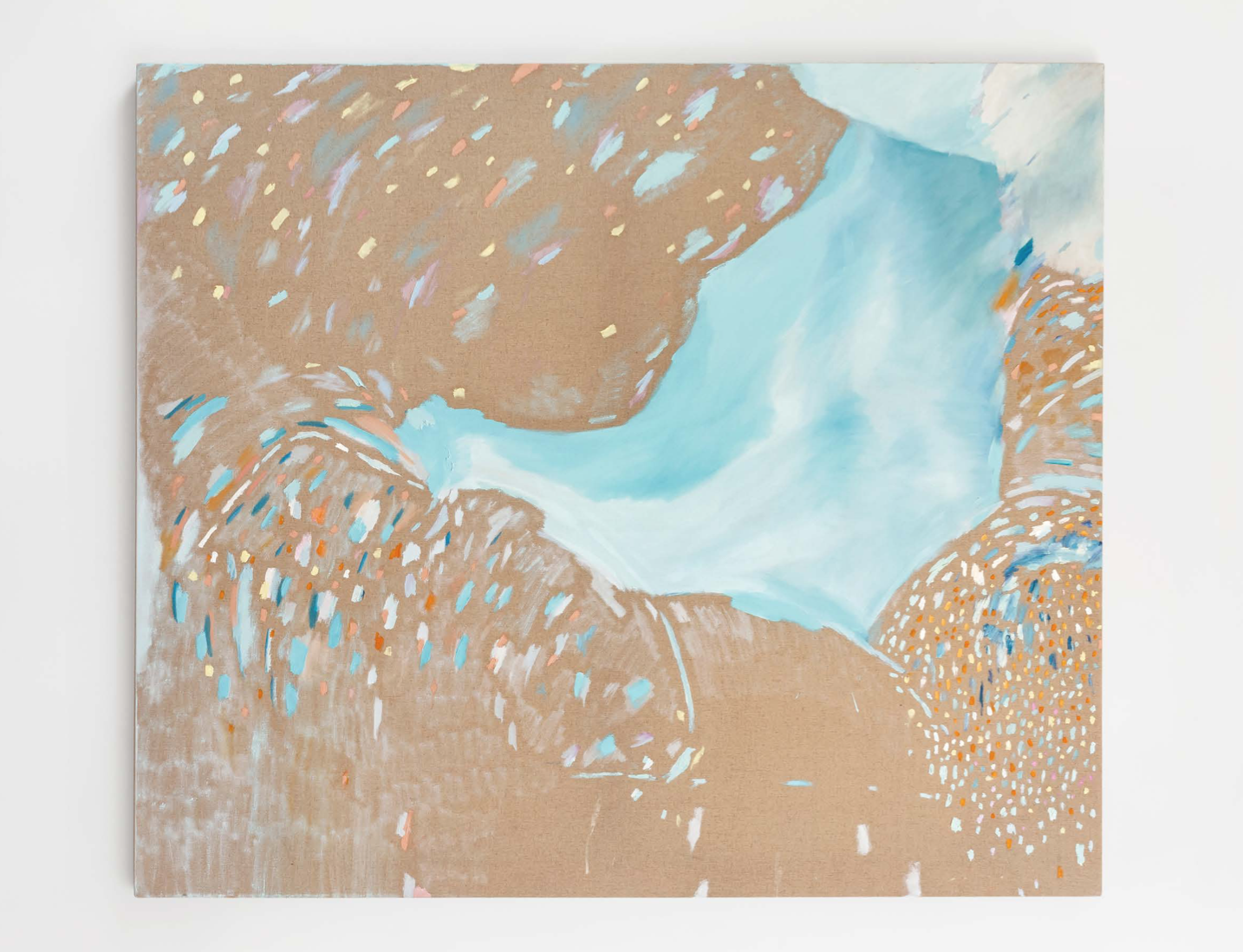
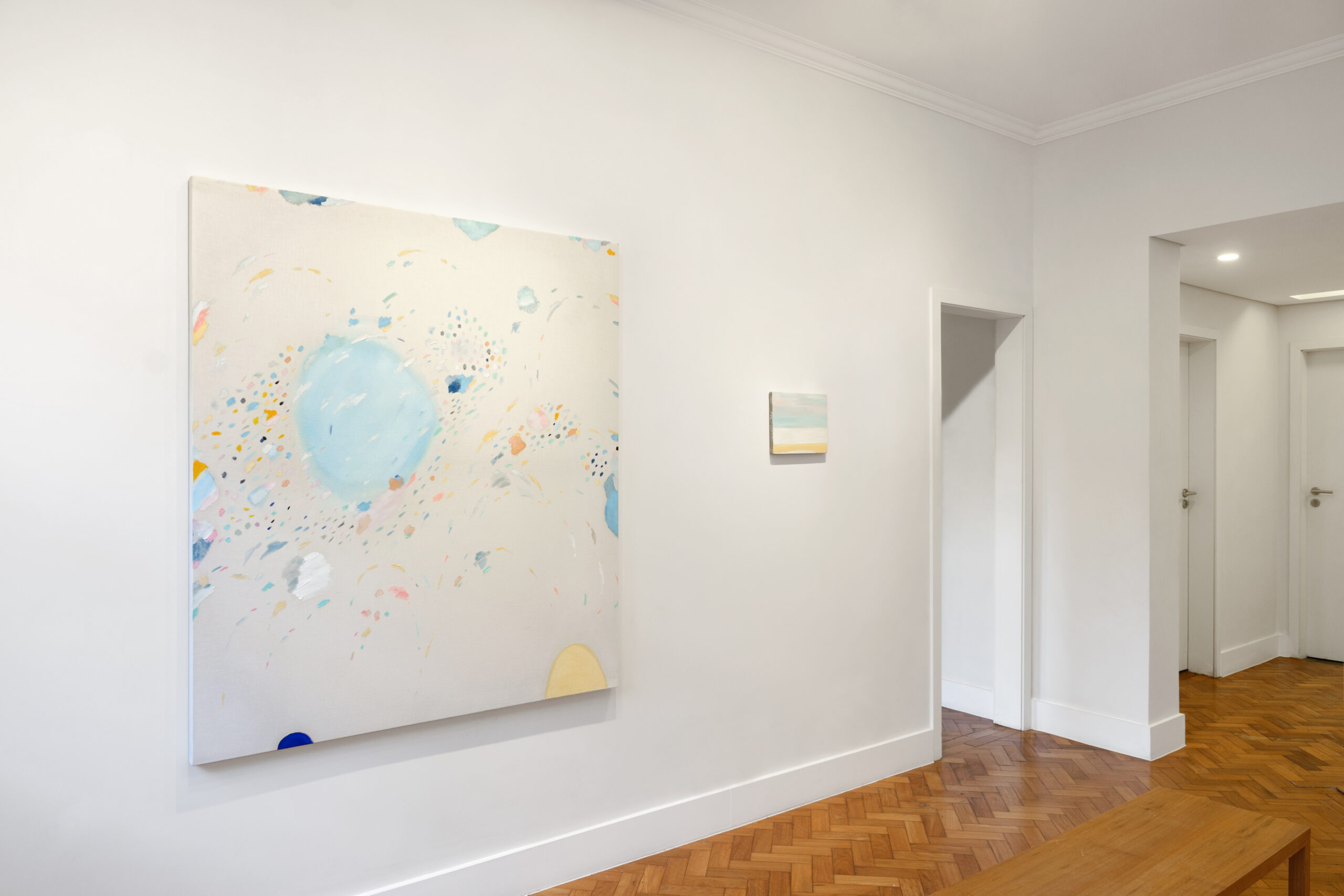
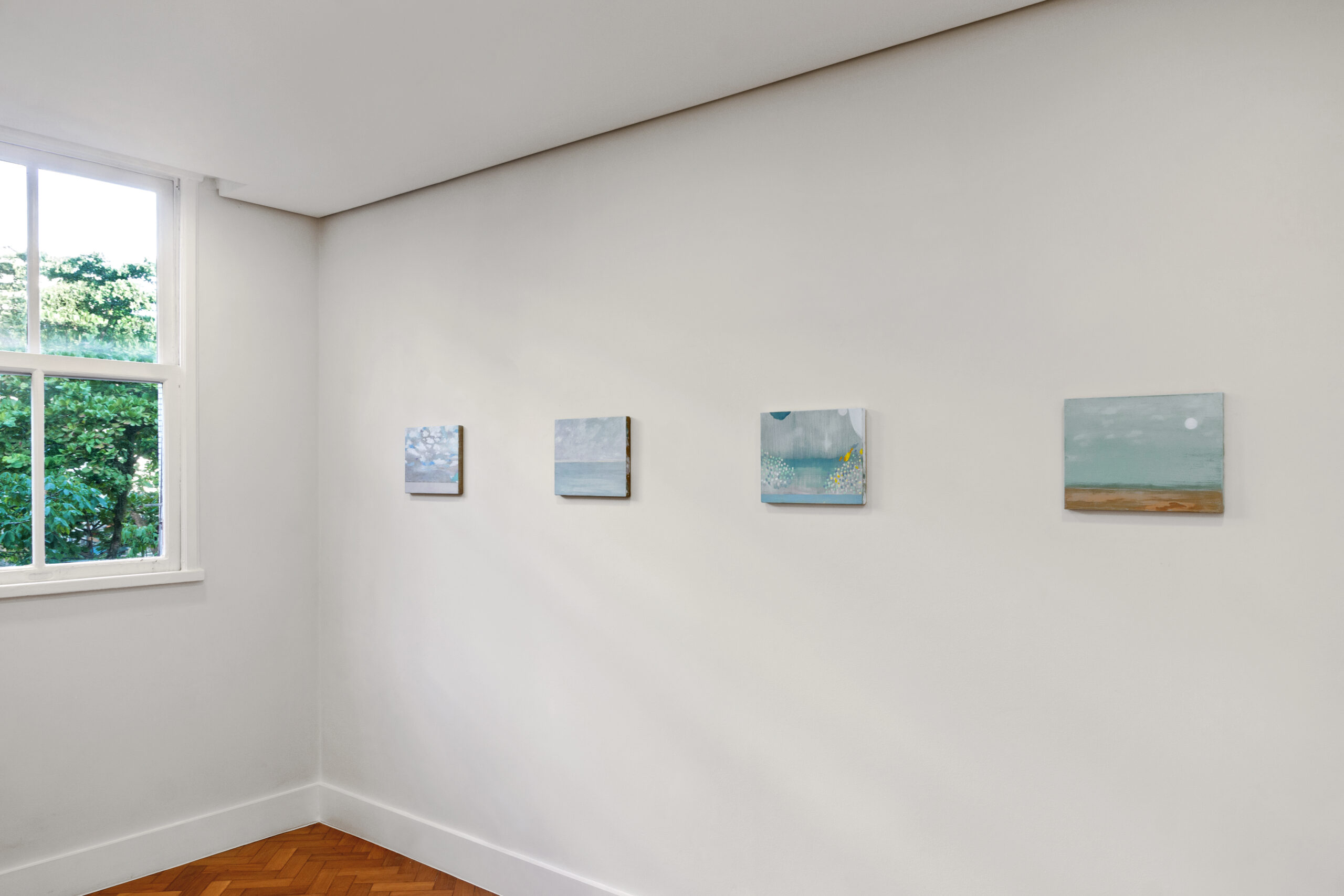
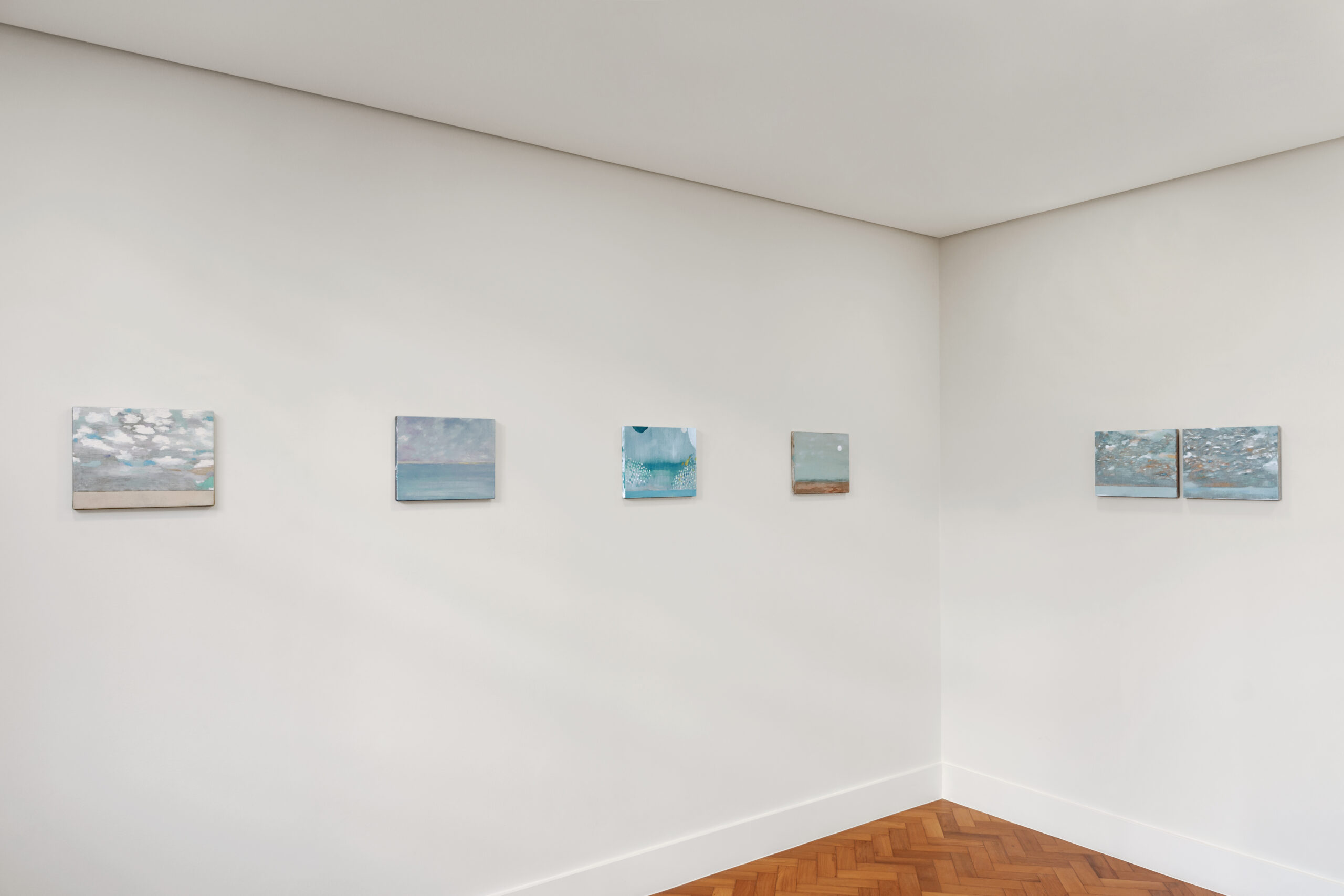
In her first solo exhibition at Quadra, Yasmin Guimarães presents a set of recent paintings that show a substantial deepening of her interest in landscape as the main theme of her pictorial production. On canvases of various formats, scales and materials, the artist weaves a unique approach to what we know is one of the most researched themes in the field of art over the last few centuries. Guimarães’ landscapes, however, claim such contemporaneity at first glance.
Starting from an approach to the landscape as a spectrum of her memory – and not as a referential product of images pre-conceived by smartphone cameras, for example – the artist conducts a studio practice marked by intensity and repetition, while simultaneously working on the different canvases that populate her studio. If the surface of the painting is a kind of receptacle for the emotional or psychic state of the person who dialogues with it, Guimarães transfers landscapes that evoke unsuspected typically human sensations onto her canvases. There is joy, hope, a certain melancholy, a sense of remembrance and nostalgia.
If the canvases are porous surfaces that absorb everything that passes through the artist during her technical work, they are also fractal mirrors that fire these multiple sensations back at the retinas of those who look at them, flooding them with hypnosis, enchantment and delight. In her practice, Yasmin sees the landscape as a kind of fabulous, poetic exercise, inviting the viewer of her works to take on the role of non-passive spectators, staring at them briefly in the exhibition space. Guimarães invites us, above all, to an experience of spectation closer to, let’s say, a more refined and slower regime of vision, typical of the field of cinema, perhaps.
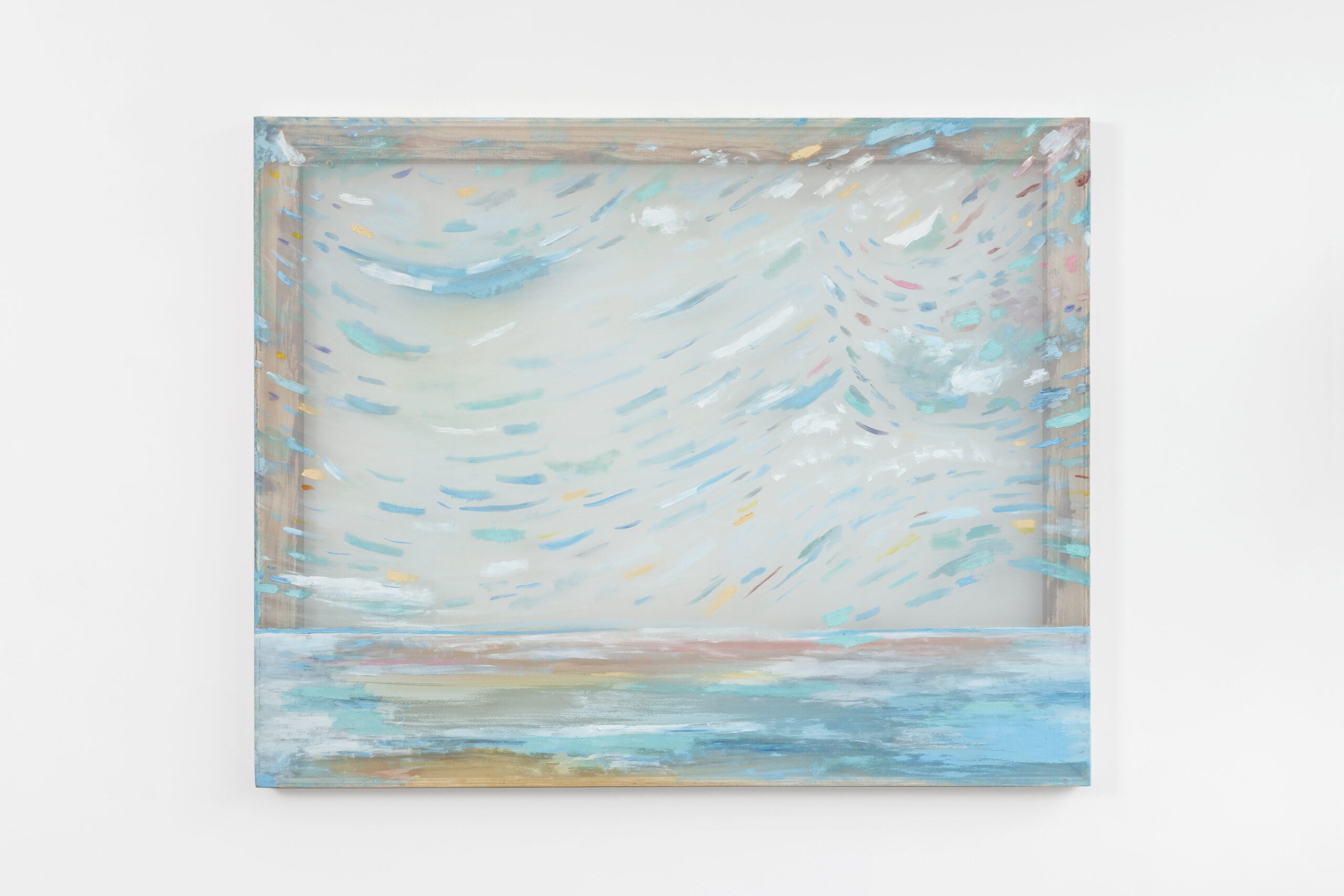
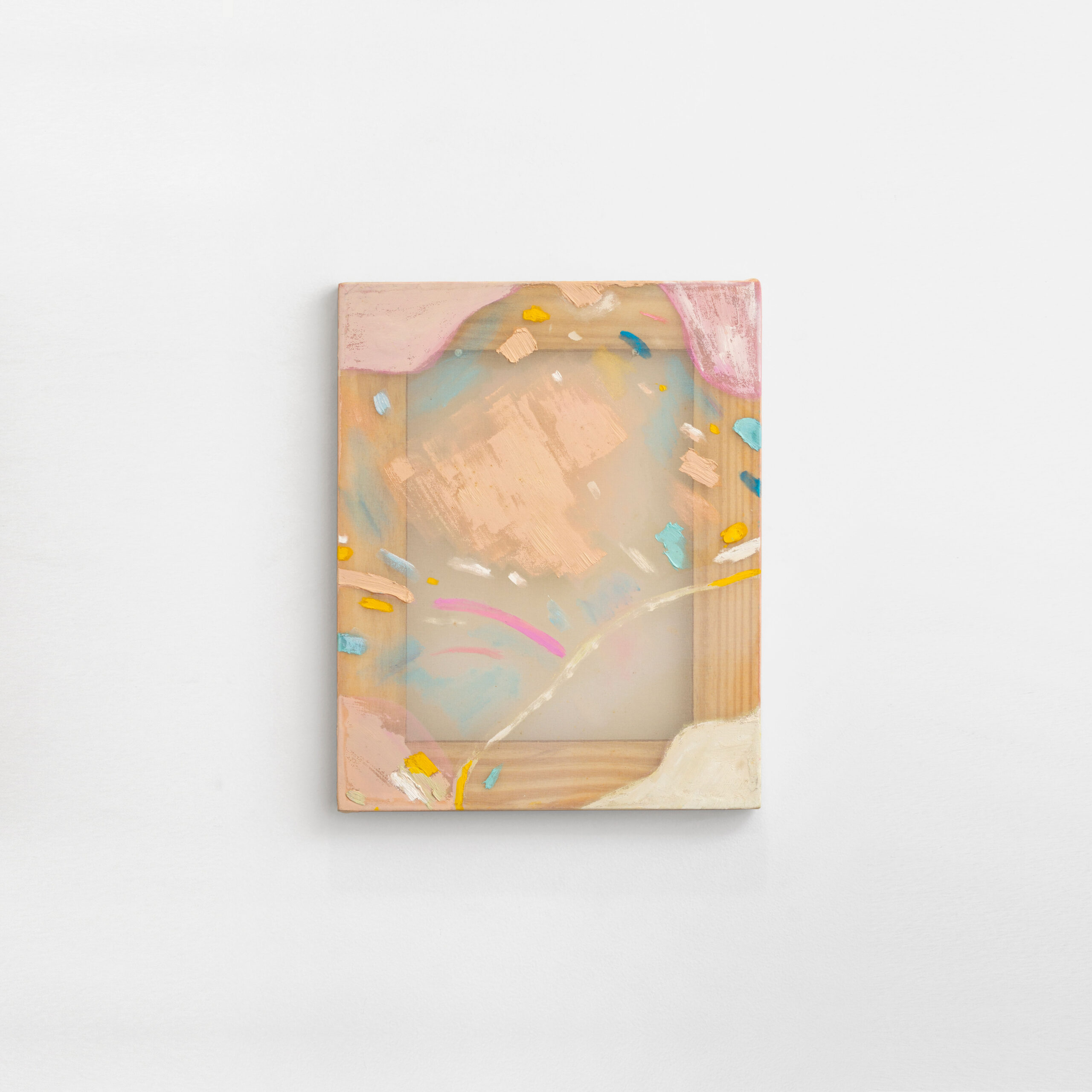
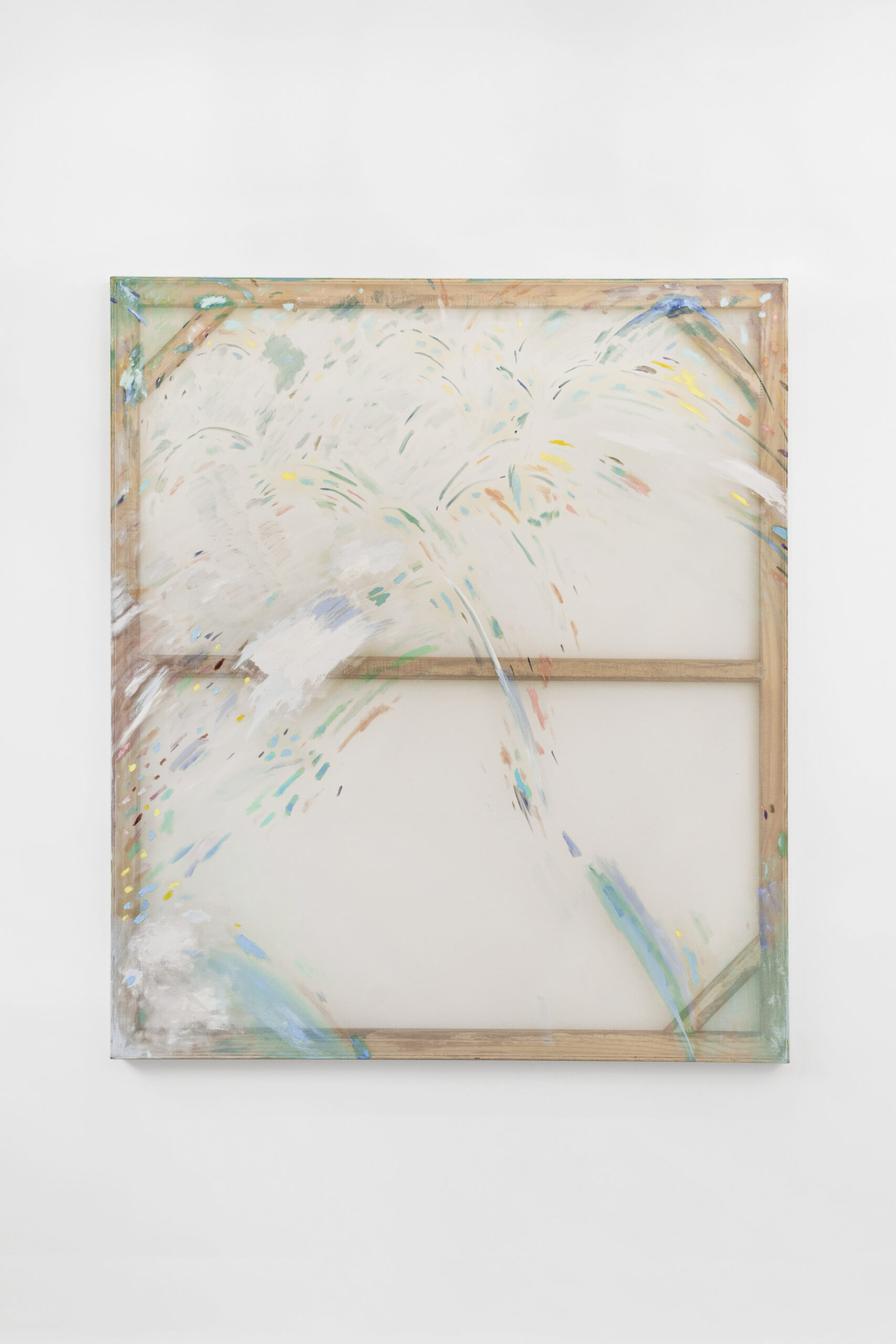
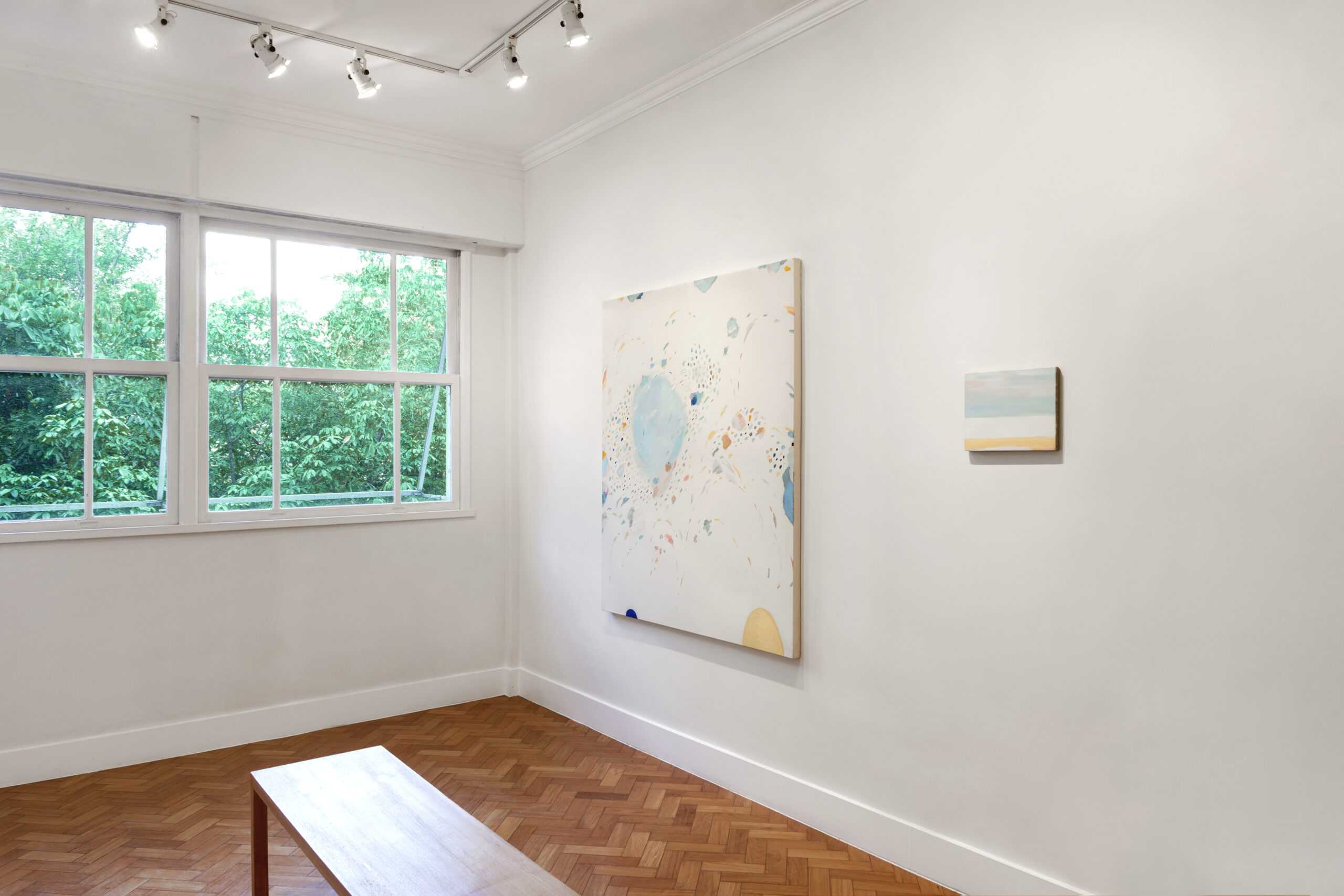
A common procedure in her previous paintings, here we see the use of an approximation of the gaze to unusual details and sections of this constituted landscape: a certain zoom-in operated by the artist’s own eye, placing us before not only the enlarged landscape of the horizon – the saturated and commonplace image with which we come across the *idea* of landscape in the most diverse fields of contemporary image. On the other hand, Guimarães presents us with landscapes woven from his peculiar gaze and use of oil paint. First by pouring it, albeit in a contained and highly precise manner, over the background of the canvas, and then by covering it up with brushstrokes, sometimes more robust and sometimes more delicate, which reveal true flashes, bursts, erasures, explosions and the like of a landscape that we can no longer identify by its whole, but by its parts.
The landscape thus becomes more subjective than mental. In the age of smartphone screens, cell phones, TV monitors, big screens, LEDS, technical, pixelated, digital and algorithmic images, Yasmin Guimarães prepares the ground for her painting as if she were wandering through the infinite landscape that is both before her eyes and in the depths of her mind and heart. The sky, a cinema, is, after all, a generous invitation from the artist for us to enter her visual universe by means that run counter to the frenetic visual and cognitive regime we live with today.
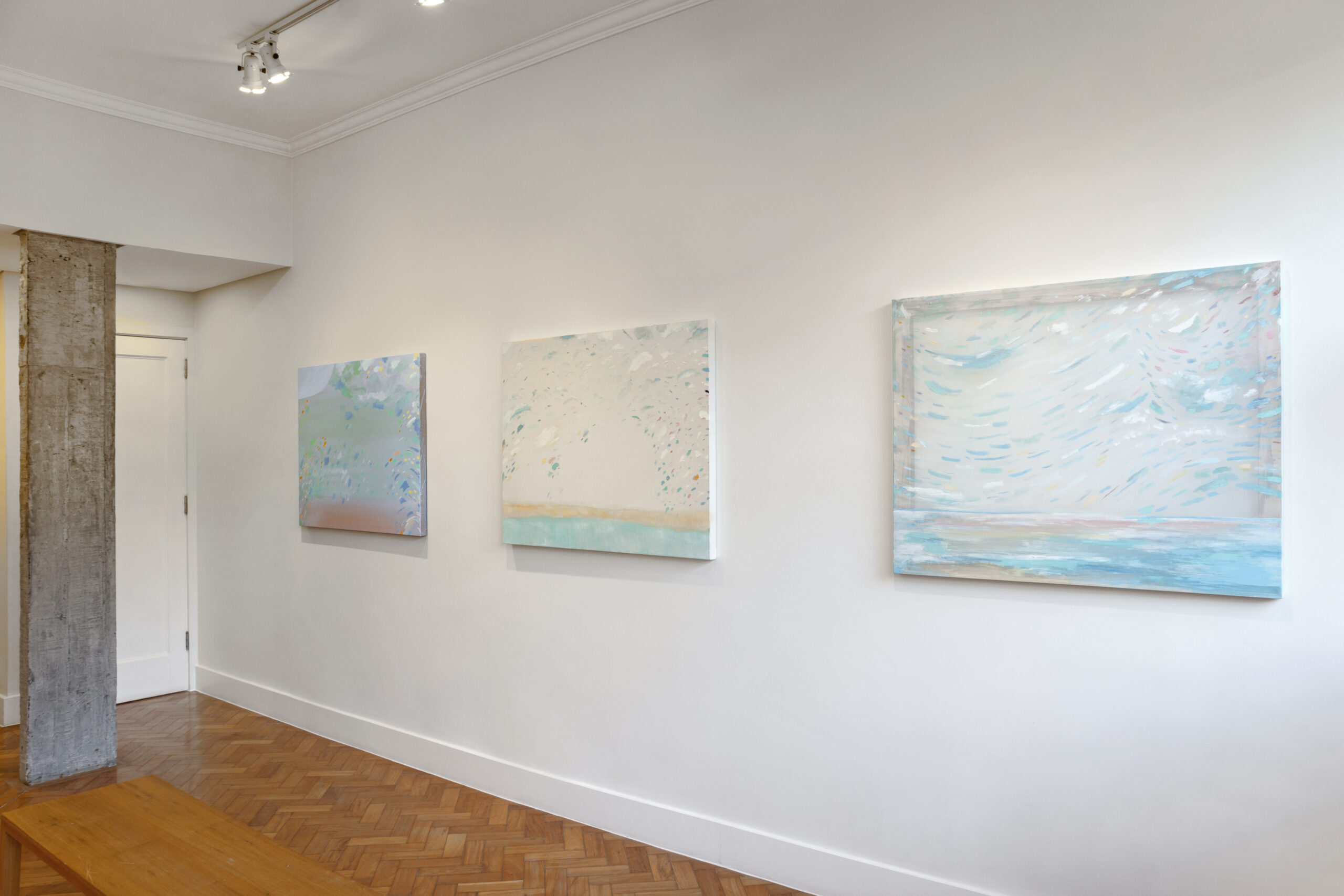
This is the invitation made by the wooden bench positioned in the center of the first room of the exhibition space. Guimarães wants us to linger, to let our eyes rest, forget, immerse themselves, get lost. Whether it’s in wide views or more cropped ones, whether it’s on the linen or on the translucent surface of the fabrics he uses, revealing the chassis of his canvases. Let’s allow ourselves to be hypnotized by this synesthetic experience. If tiredness is the most vile of contemporary life’s imperatives, our retinas (too) ask for rest and refuge, the sweet calm of resting on the canvases of images larger than life itself. Guimarães produces landscapes that are conceived as images no bigger than life itself – as technology is so keen to do today. His landscapes are the size of life itself, the life we experience on a daily basis, individually and collectively. The landscape we look at is the same for everyone. There’s a vanishing point, there’s a horizon, there’s a rest and there’s a turning. The movie doesn’t end and the viewer can stay as long as they like. The session is continuous and uninterrupted: from the studio to the gallery, from the artist’s intimacy to the public space.
Good movie!
Victor Gorgulho