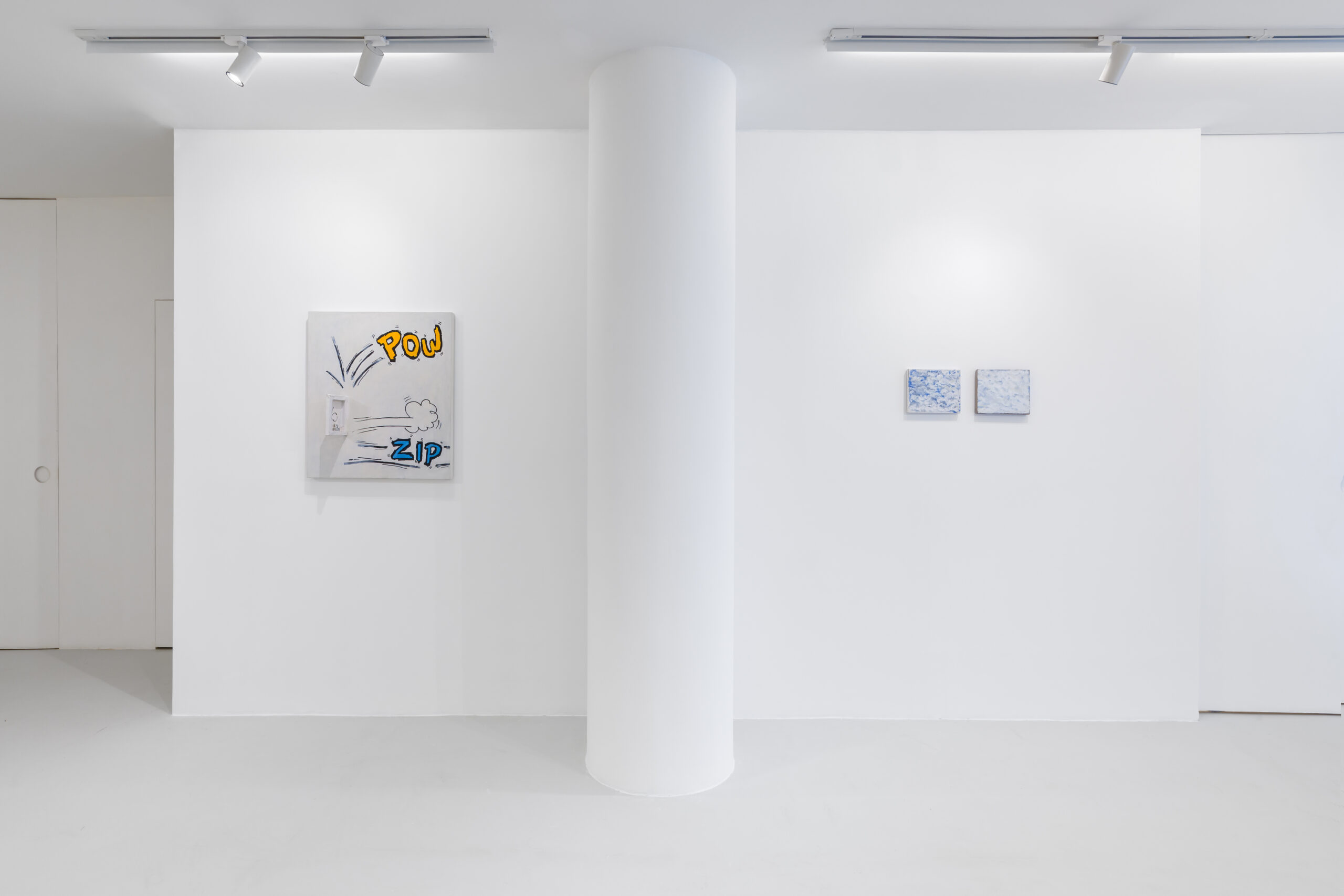
The return of luck
Thomaz Rocha
critical texts Ana Paula Lopes and Daniel Donato Ribeiro
October 21, 2023 - December 16, 2023
São Paulo
Lied to lie
Santo André, October 8th.
I still remember our conversations in the exhibition space. Between laughter and studying to finish my degree, there were anxieties and desires that we shared. I can’t forget your intervention in my editorial project on food, remember it? Can you believe I have this work? I opened it and there was an intense smell of oil paint mixed with pepper. You asked me at the time: “Ana, have you read Babette’s Feast? This book could help you with your work”. Well, Babette’s Feast has become one of my favorite books. The passage, near the end of the book, in which Babette is in the kitchen and says to her employers – “I’m a great artist, madams”1 – makes me think of you and your production, and reflects the issues we discussed in your home studio.
Between the paintings, paints, chessboard, beer, books and Pericles playing in the background, we discussed concepts and a system of art, in which his work is inserted and frayed. Thinking about what makes an object artistic and whether it is “aesthetic or cultural” is a discussion between “orders of mental causes, intentions and feelings”2, as Danto puts it. Which, by the way, I confess I’m still reflecting on the aesthetics surrounding the acrigel nail, and whether it’s art or not. Pericles was playing – I can’t remember what the song was – while we were investigating the transfiguration of ordinary objects, which changes the key to aesthetics. It would be the point of action, as Wittgenstein put it: “it is a bodily movement”3 that will generate – turn the key – a proposition. This aspect I intertwine with the encounter with the table on the street in Milan, leading to a propositional movement, juxtaposing the table with the pictorial.
In fact, what we’re talking about here is the gesture, that’s the point. The gesture betrays, “menti pra mentira”4 as the group Fundo de Quintal put it to music. It is the gesture that gives shape, transfers and gives light. This is broadening horizons, this is the principle of the Maieutics of Painting5. When Arthur Danto says: “[…] Duchamp’s Fountain went from a mere thing to a work of art because that particular urinal merited such impressive promotion, while other urinals obviously identical to it remained relegated to an ontologically degraded category. The theory still leaves open the problem of other indiscernible objects”6. I think I now understand the point made by you and Daniel7. The shift from an “ordinary” to an aesthetic state is a switch that bewilders the being, and leaves us confused, as when we walk through a simple exhibition space or with a gesture that leaves us in doubt as to how to behave. When, for example, food is placed on a table inside an exhibition space and we lose our bearings as to whether we should eat or not, as Thomaz said.
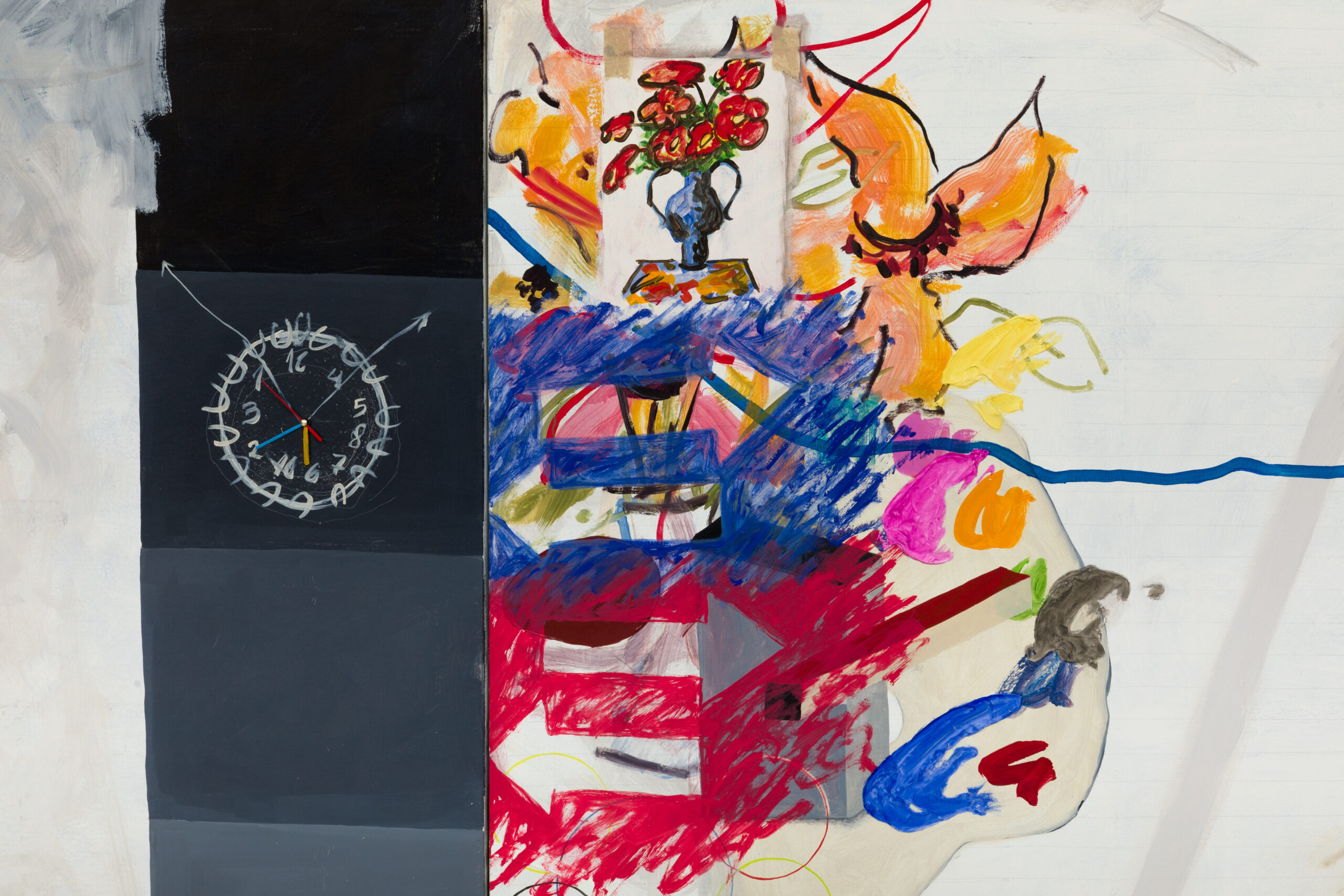
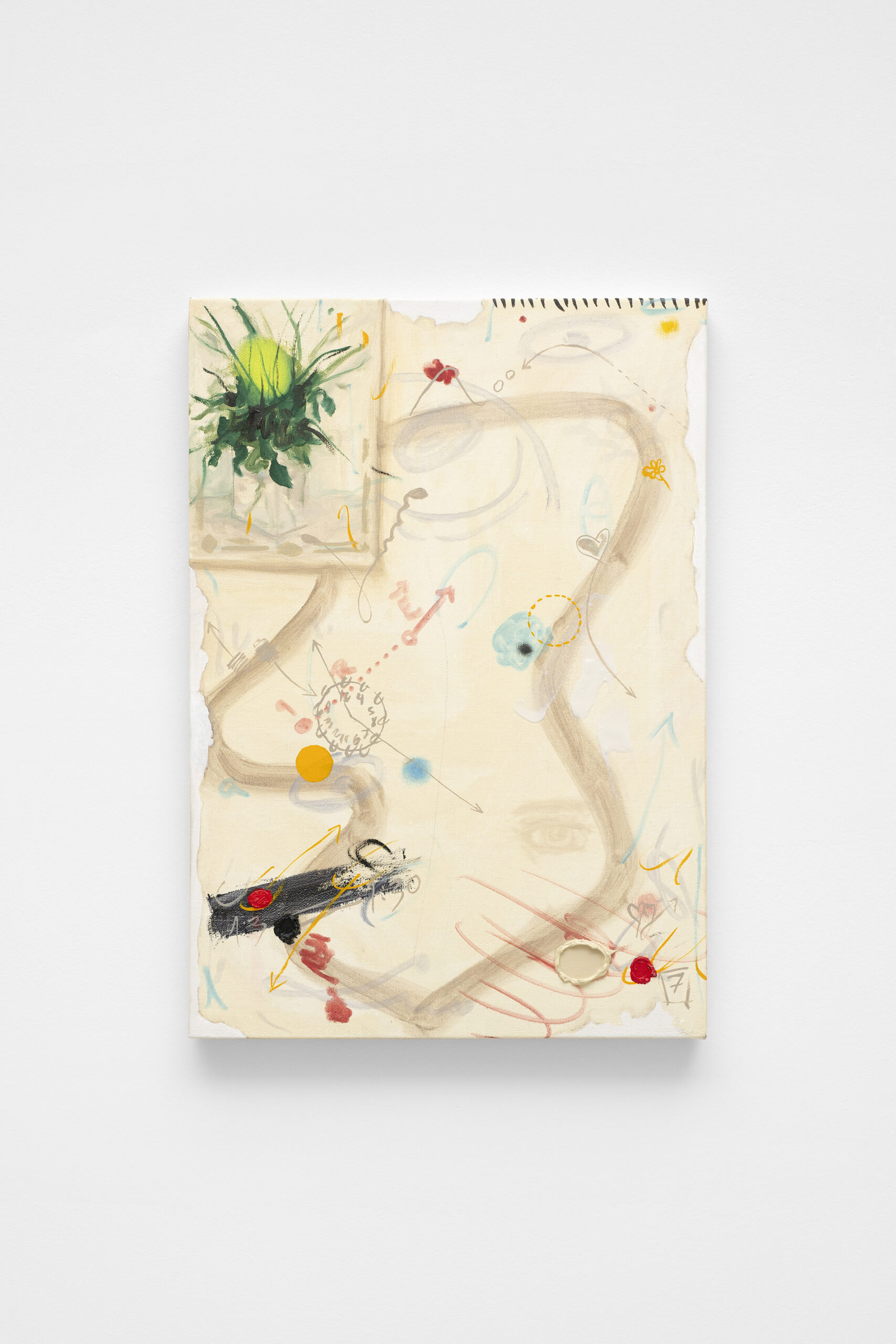
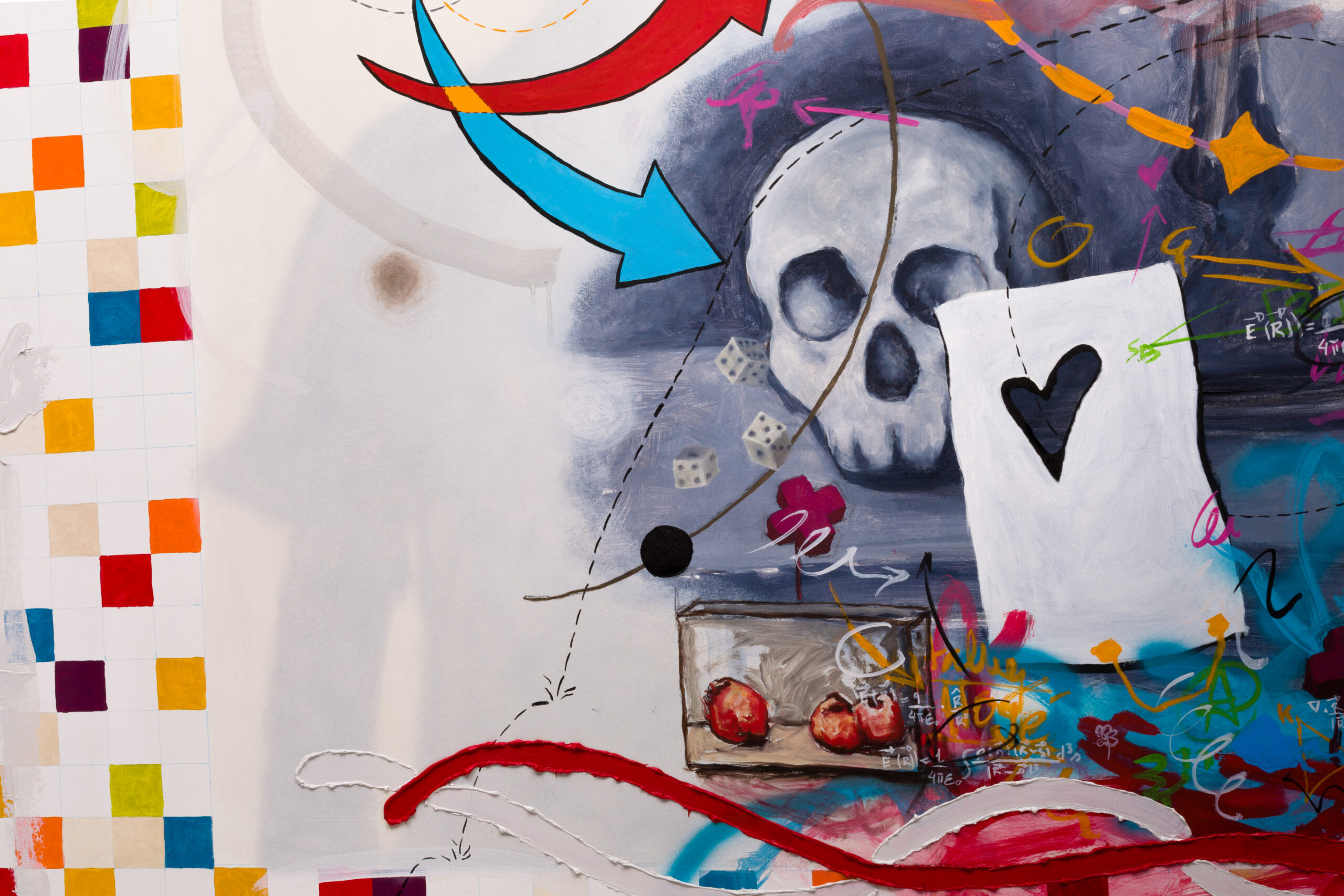
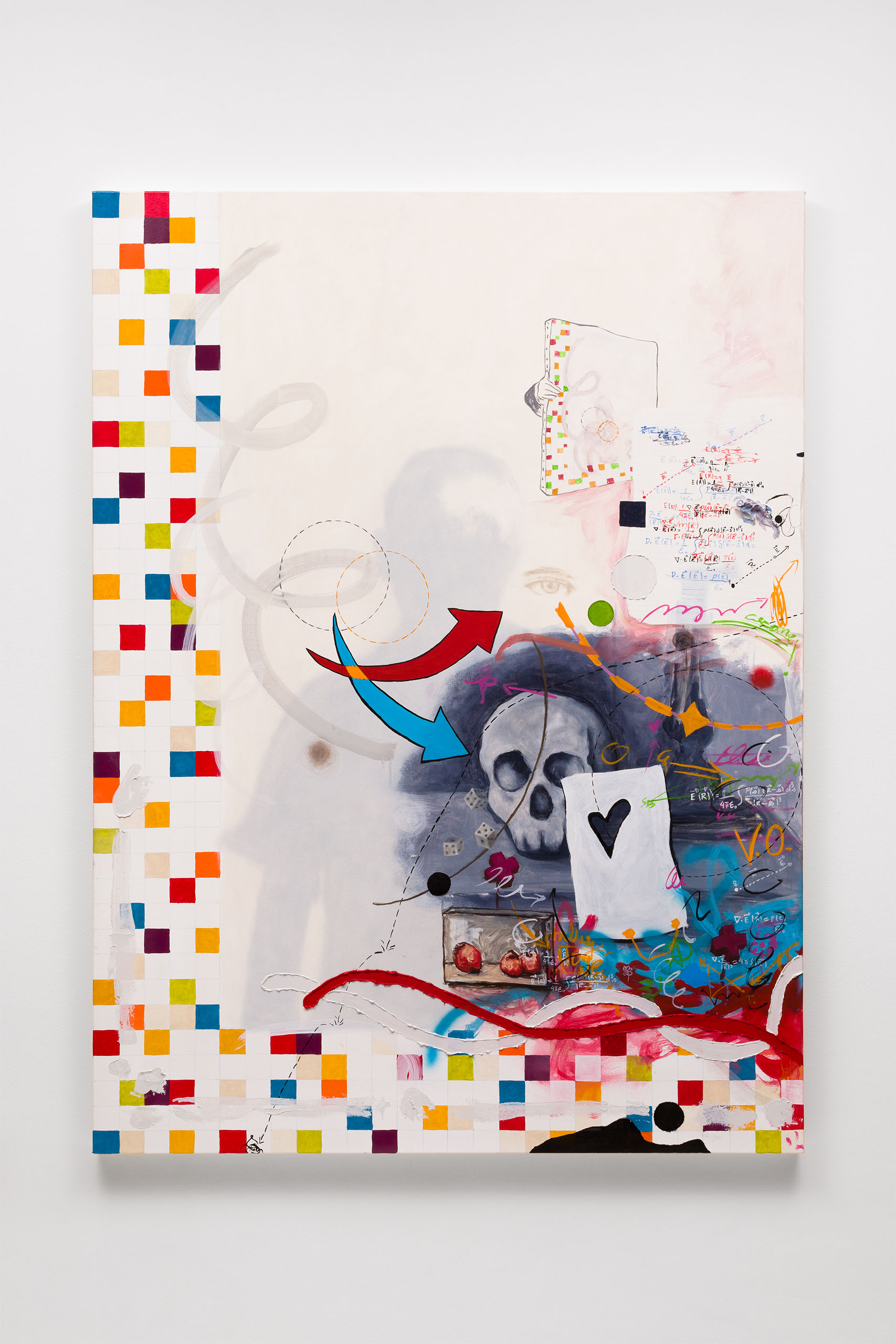
Your painting is an invoice that looks at a formal art history but, as you said ten years ago, “undoes it”. You, Rosa, paint on different sizes of canvas, from small to triptych, and the incredible thing is that you always return in some way to the smaller canvases. However, it seems that you already have a mastery of this size and need to throw yourself into the risk. Your pictoriality is dry without excess oil, where prints, colored dots, drawings, skulls, clocks and your own shadow explore spatiality. The paintings bring everyday life into the space, undoing the aura of painting and allowing us to notice times and moments, generating an intimate character by recovering and bringing us closer to a history of art and painters, whether European, North American or São Paulo painting itself, generating codes of its own, through a vital form of the everyday and jubilant.
Thomaz, I think I’m beginning to understand what a dream is. You once told me that before you eat that beautiful dream in the bakery window, it goes through a process. And this is the process of labor, which began with you ten years ago. It was “believing that dreaming is always necessary”8, as Racionais MC’s wrote, and in a course of persistence, where you “lied to lies” and statistics. And that, on the contrary, it’s not an incommunicable painting, but a maieutic9 that emerges particularities of the universe of painting and with family games, like the work of doing your mother’s nails, that something unique emerges. Well, my friend, that’s the gesture of the return of fortune and the sun underneath10
Ana Paula Lopes
1Blixen, Karen. Babette’s Feast. São Paulo: Cosac Naify. p. 29.
2Danto, Arthur C. The transfiguration of the commonplace. São Paulo: Cosac Naify, p. 34.
3ibid., p. 33.
4Fundo de Quintal Group. The return of luck.
5Reference to Thomaz Rosa’s final dissertation, Arte Mídia na dimensão do ensino e aprendizagem: Pintura e o nome incomunicável, presented at the State University of São Paulo – UNESP, 2014.
6Danto, Arthur C. The Transfiguration of the Commonplace. São Paulo: Cosac Naify. p. 39.
7The author refers to curator Daniel Donato Ribeiro.
8Racionais MC’s. Life is a challenge.
9The author refers to Thomaz Rosa’s final dissertation, Media Art in the dimension of teaching and learning: Painting and the incommunicable name, presented at the State University of São Paulo – UNESP, 2014.
10Ecclesiastes 1. Bible.
A throw of the dice will never abolish chance1
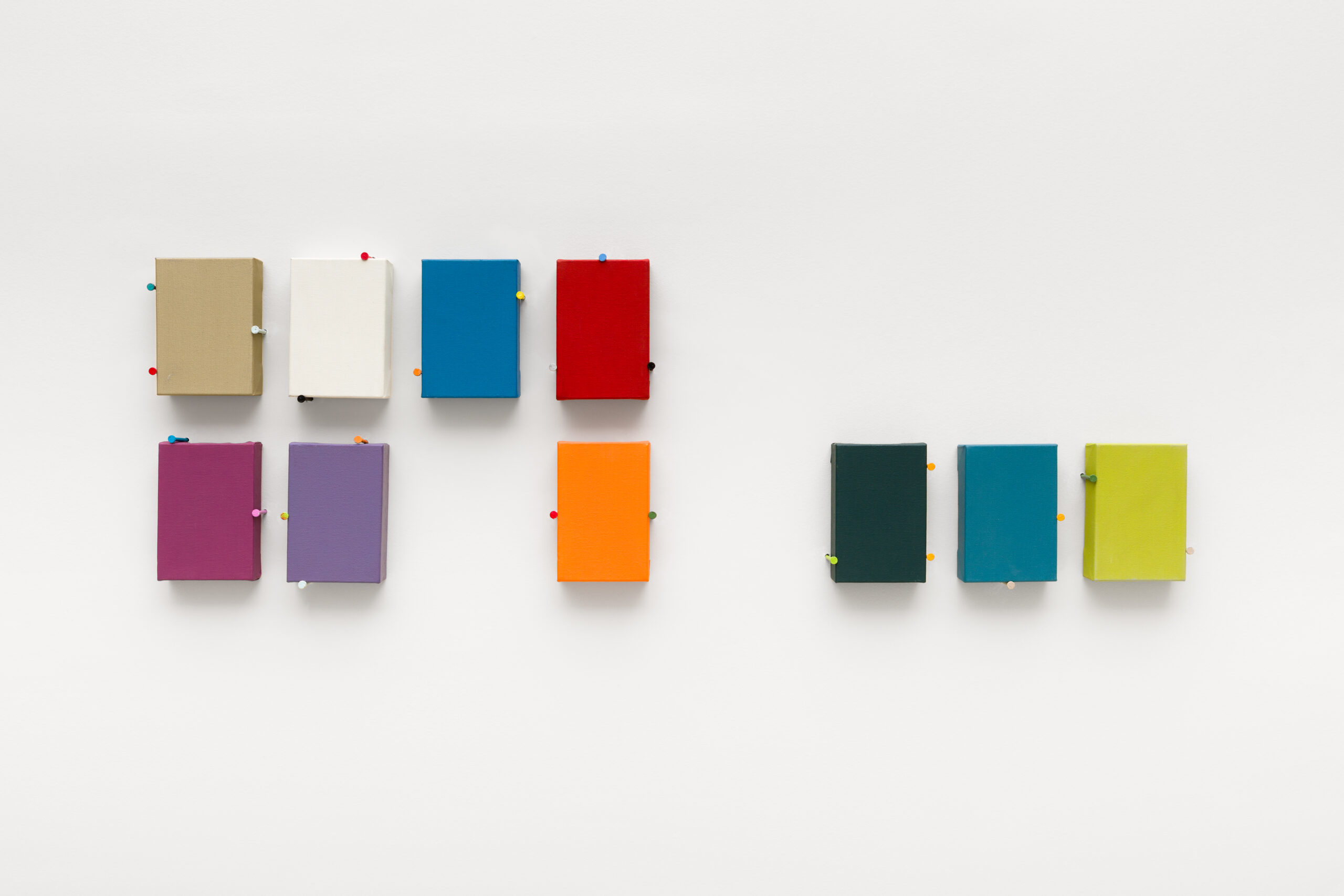
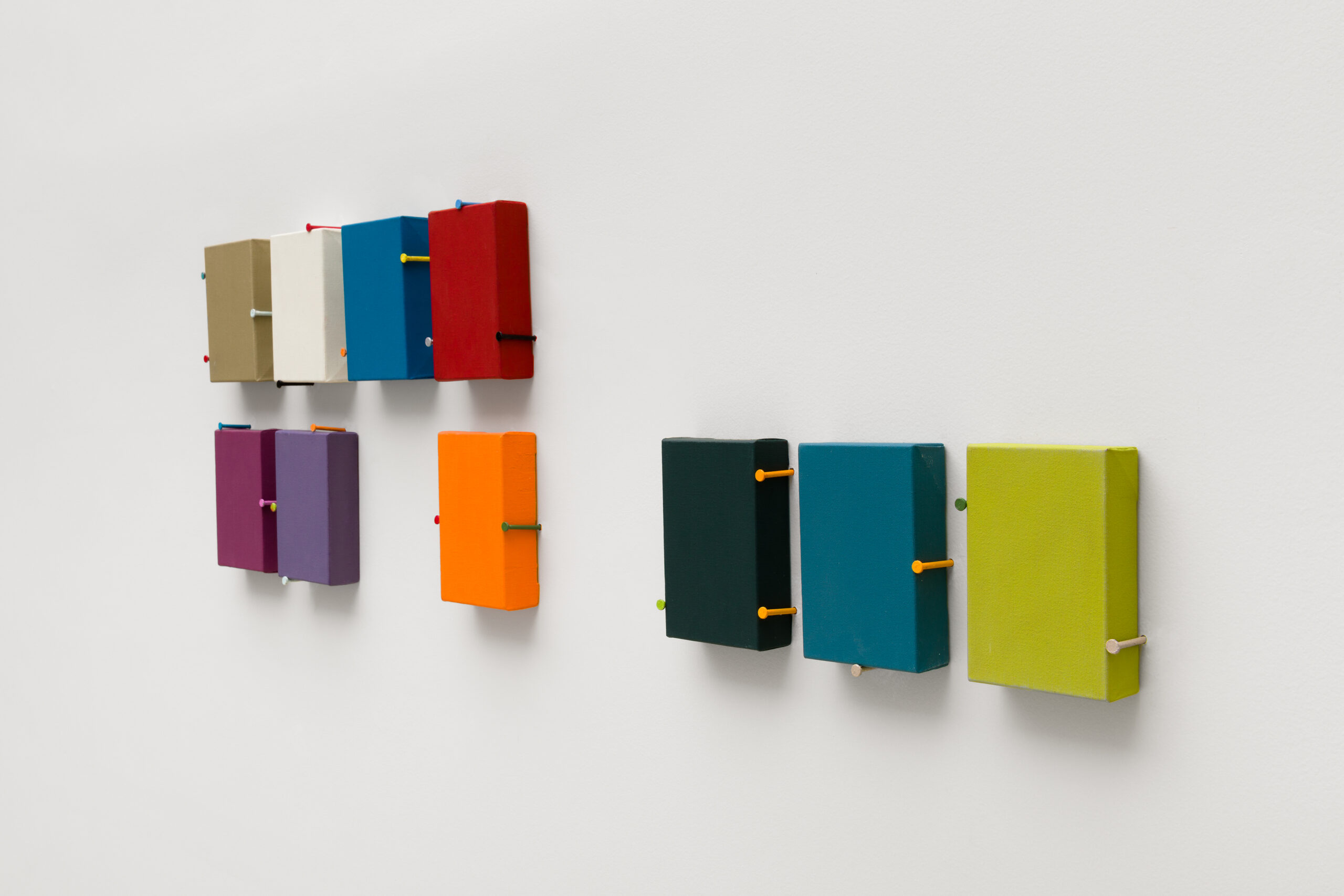
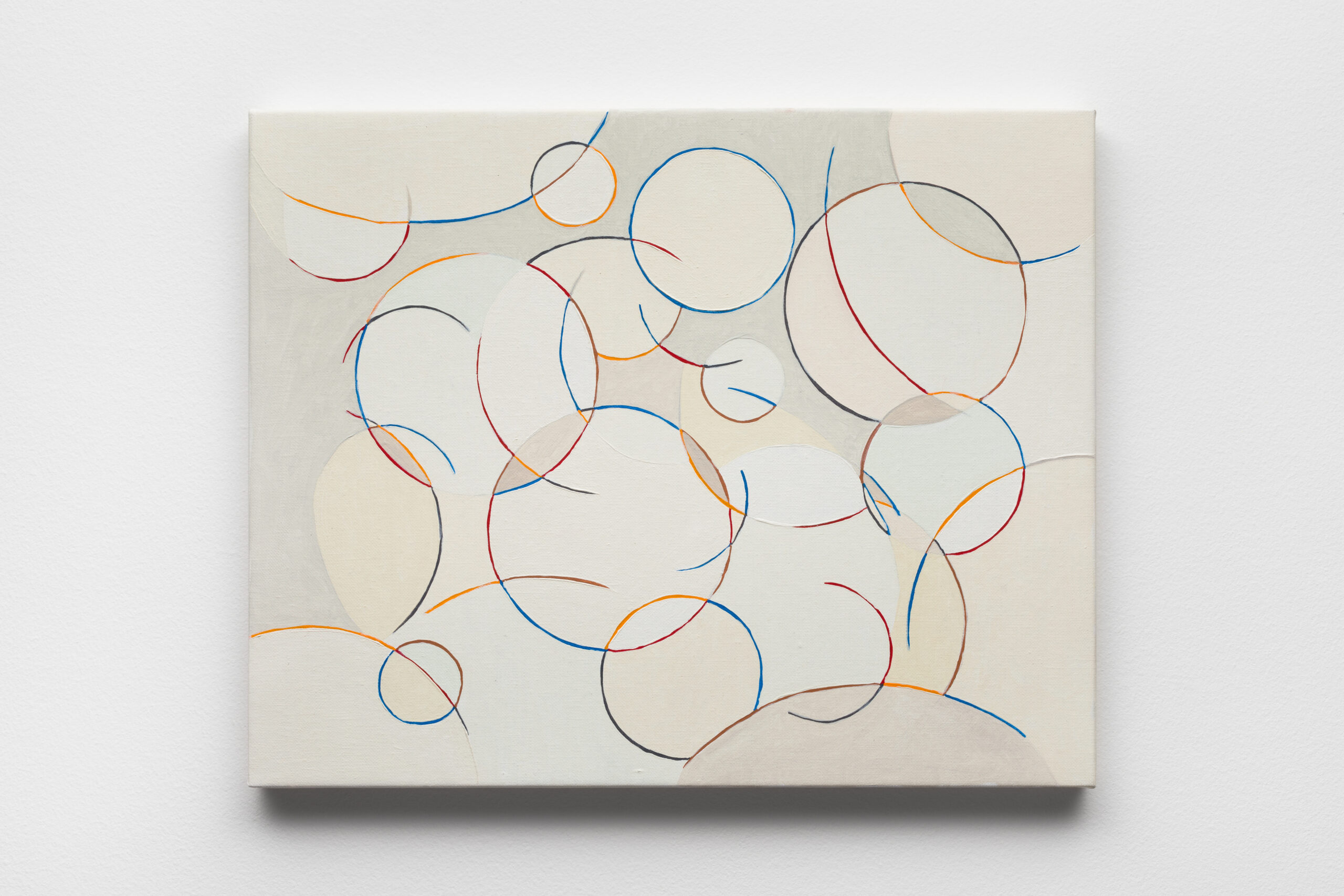
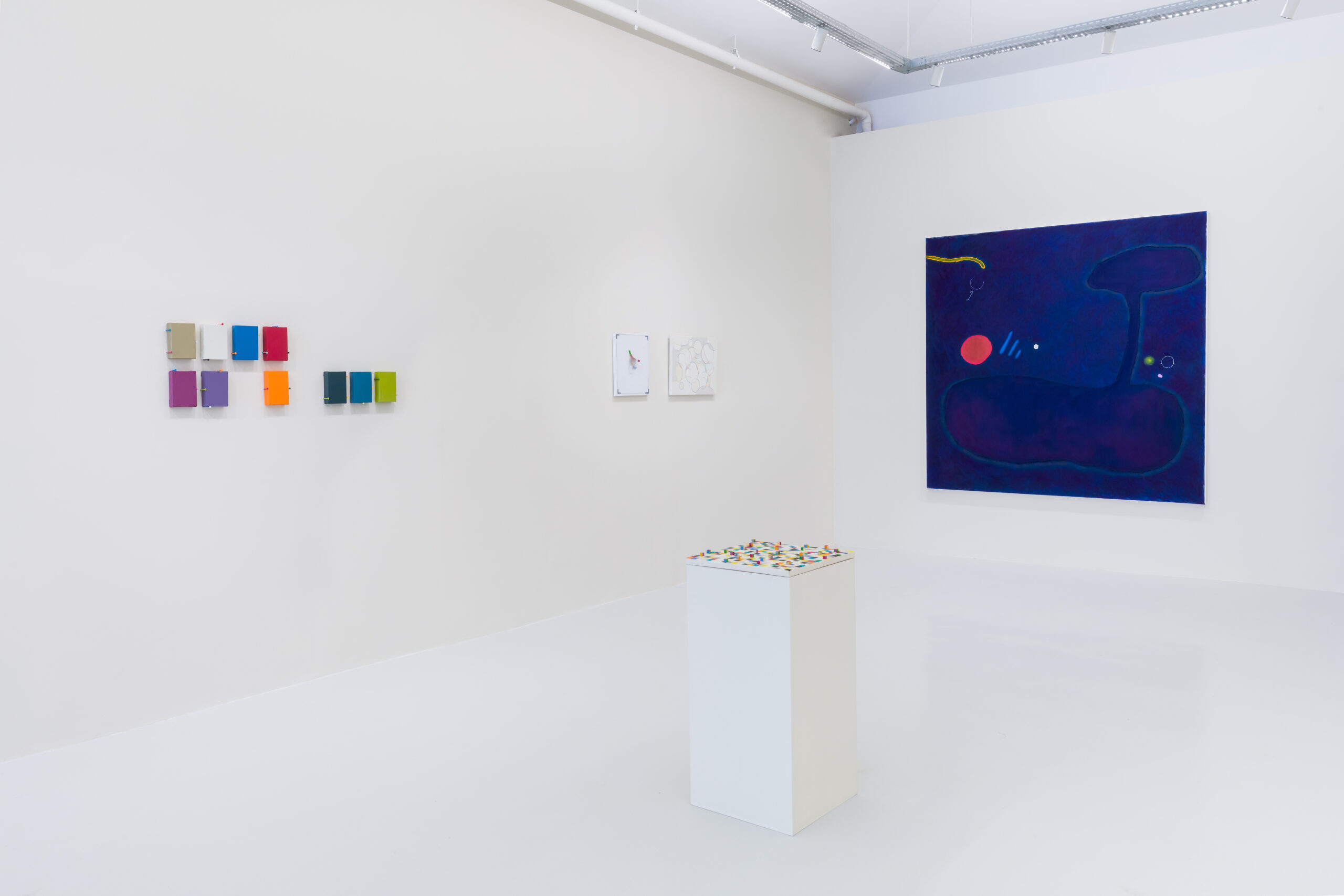
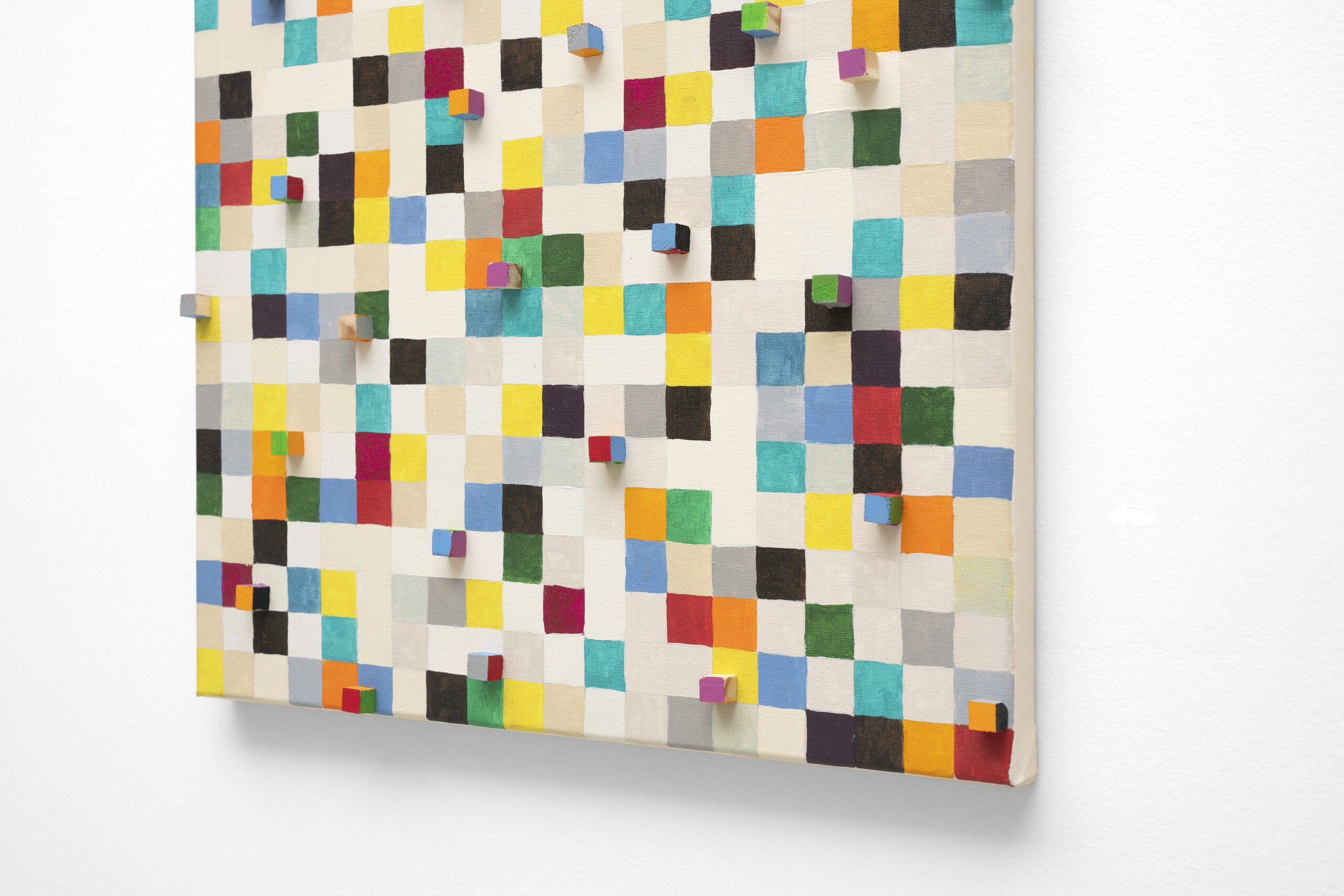
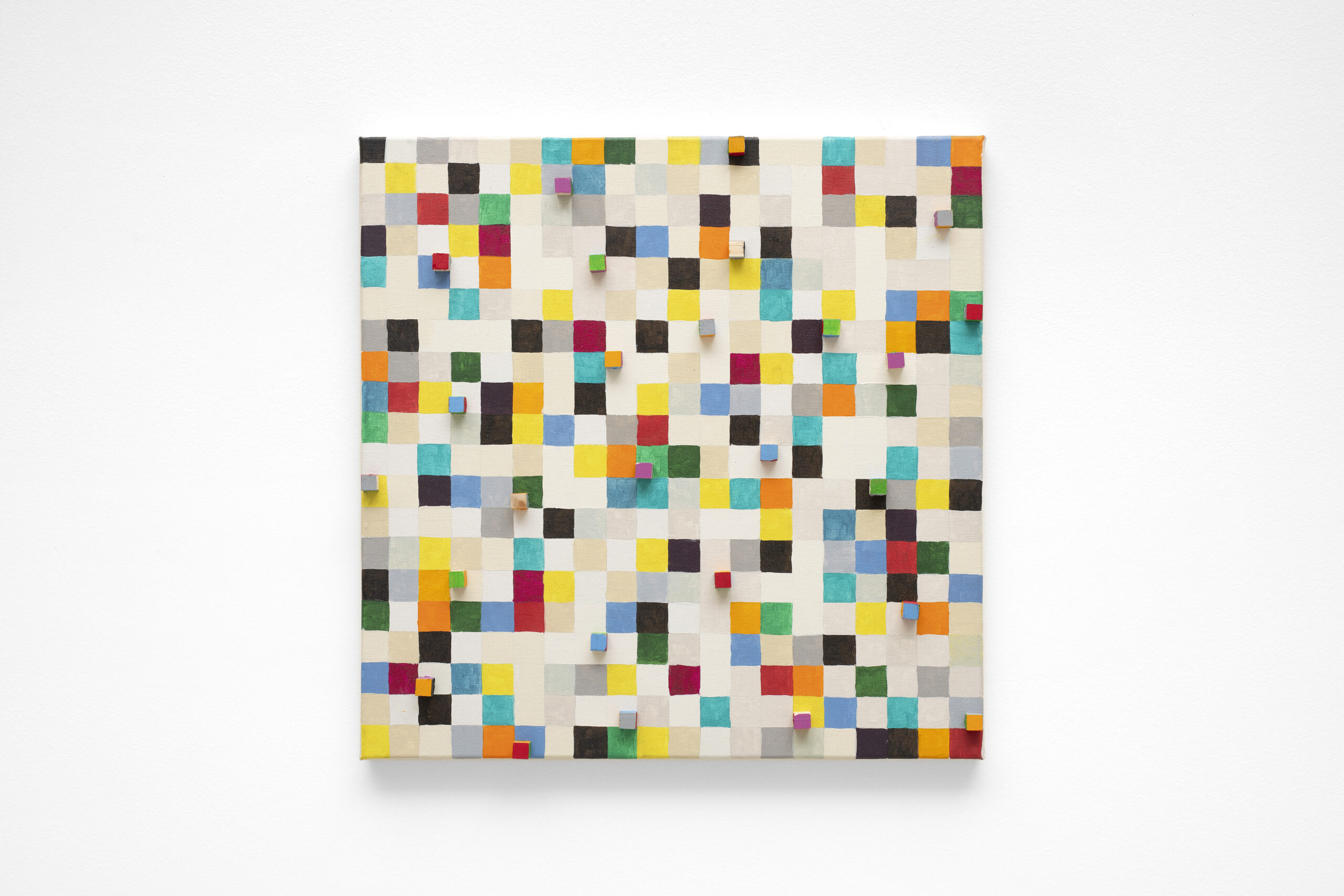
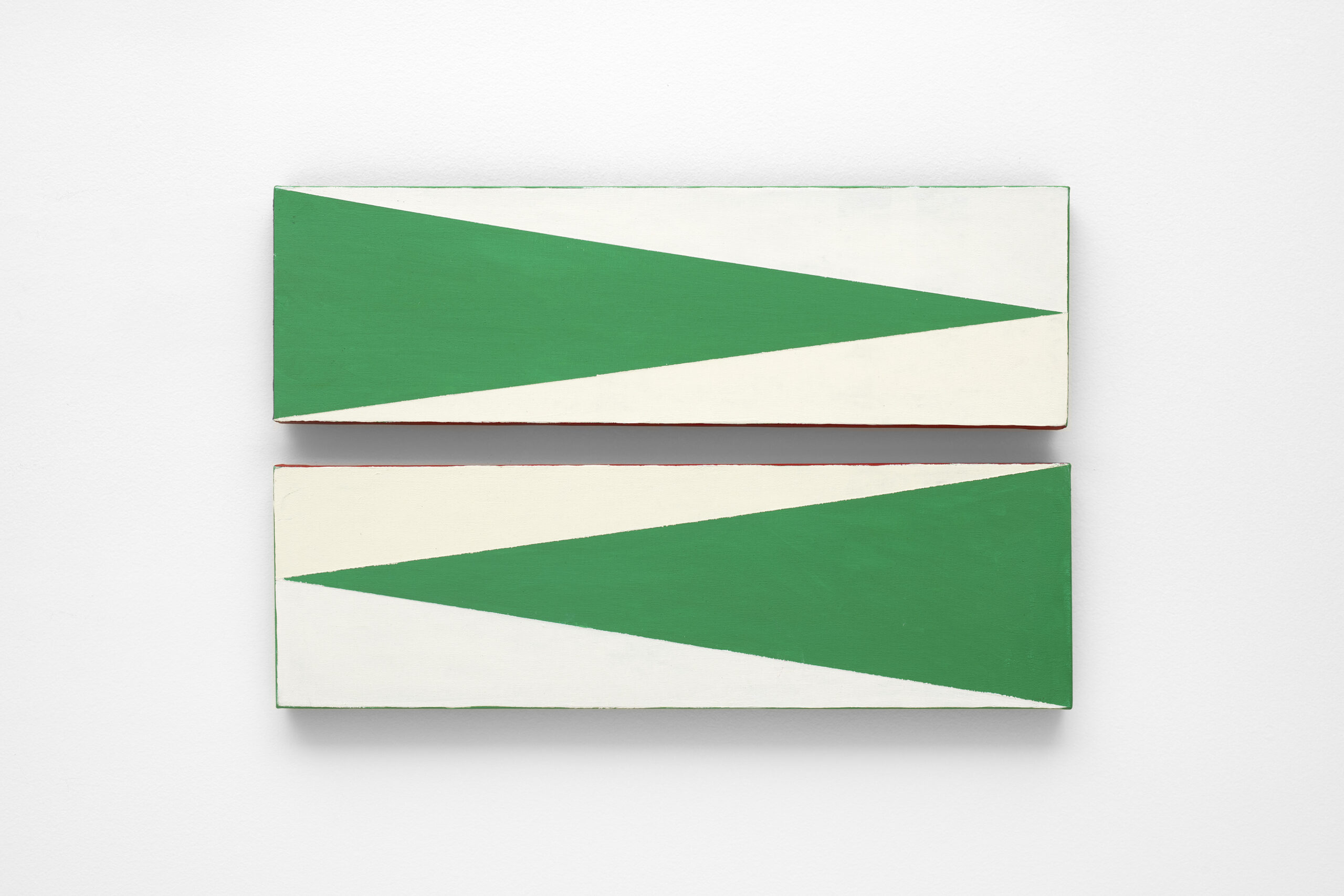
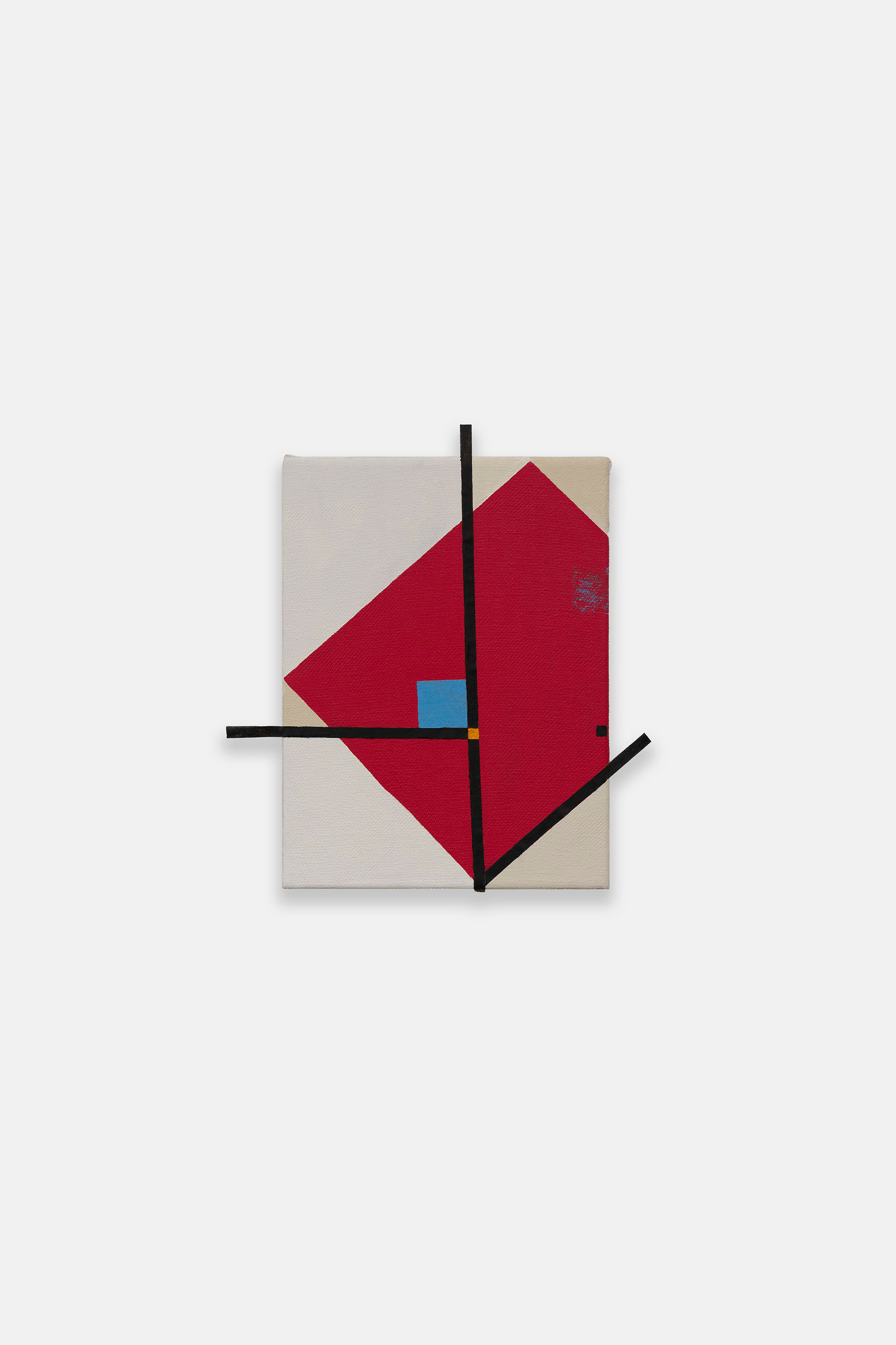
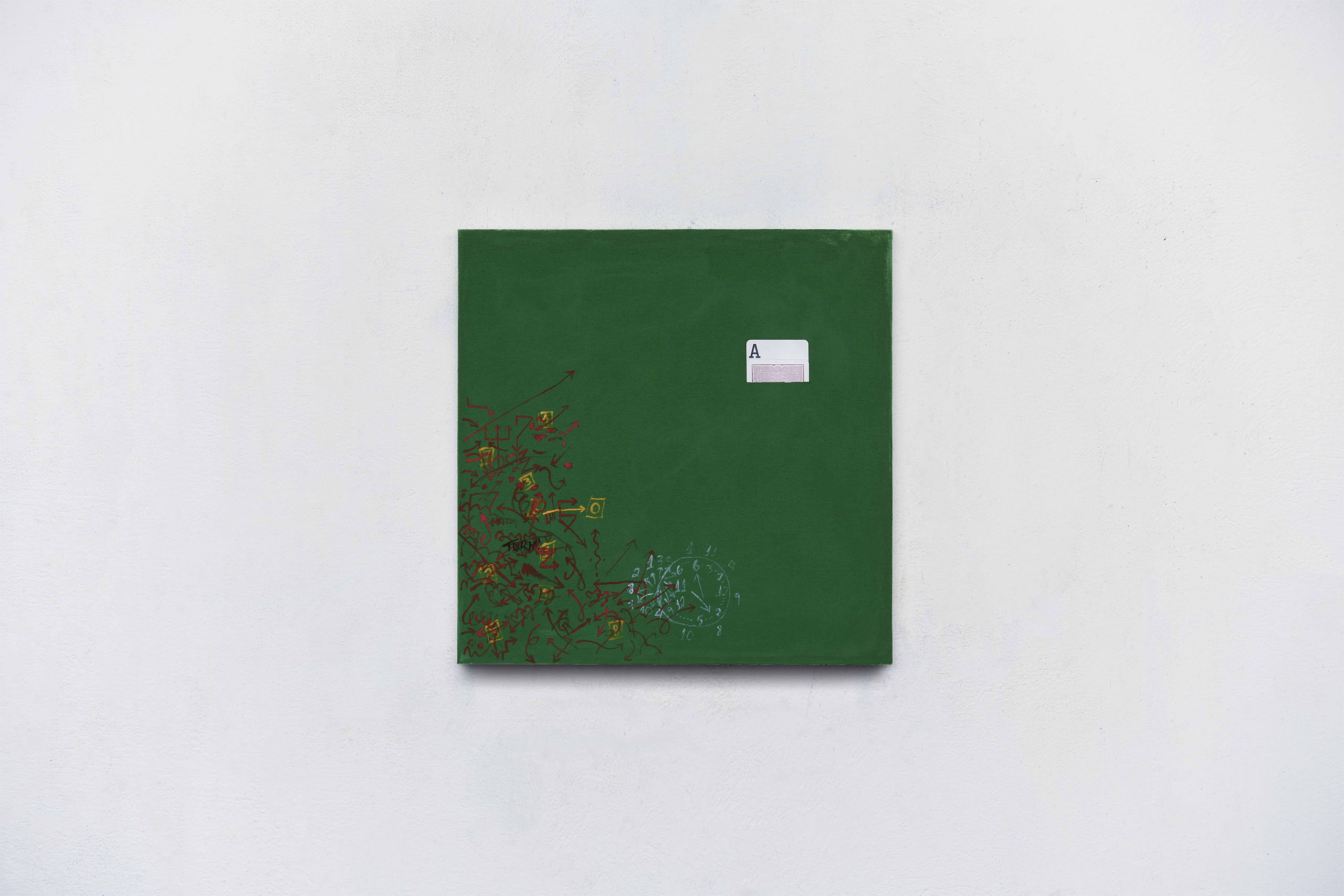
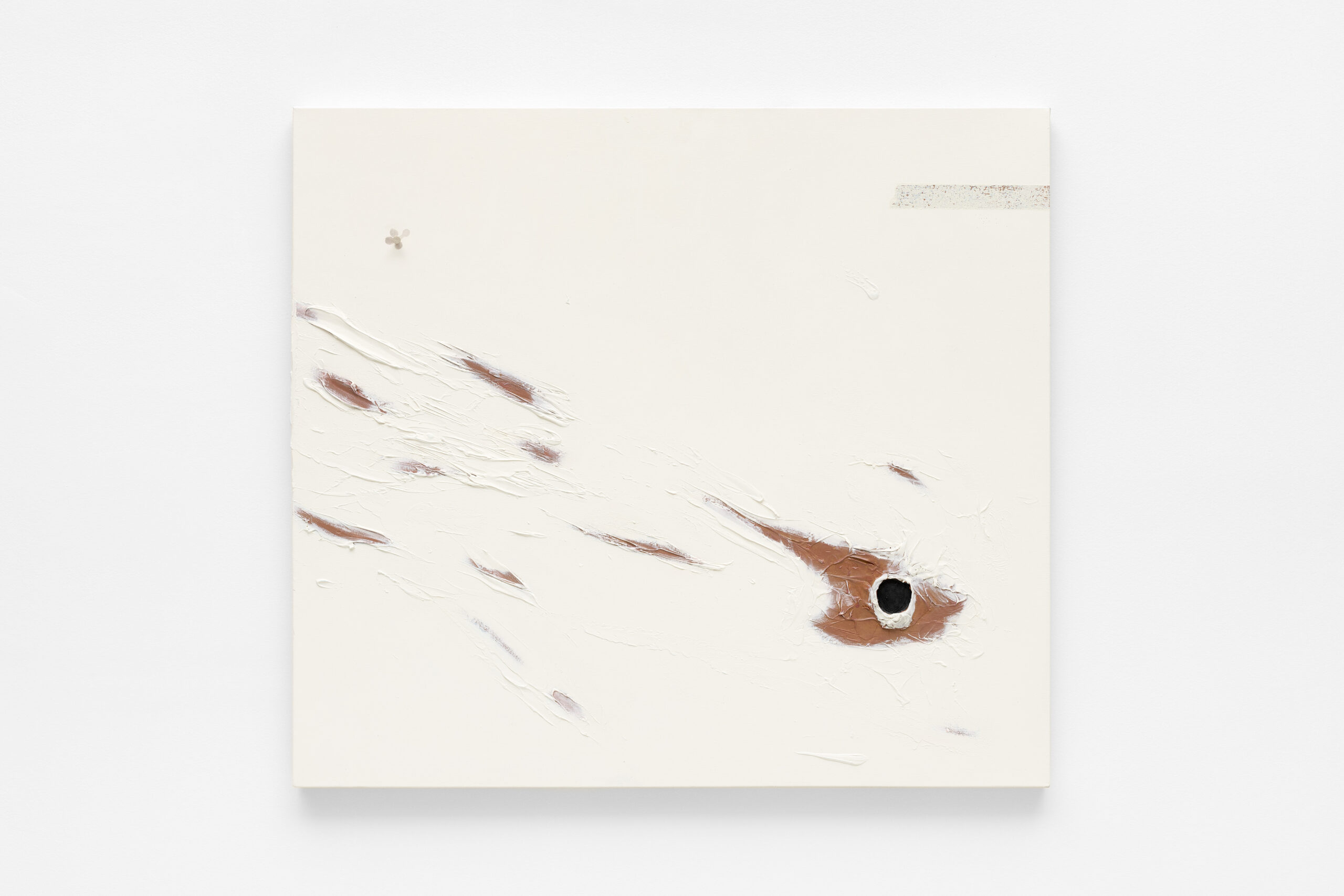
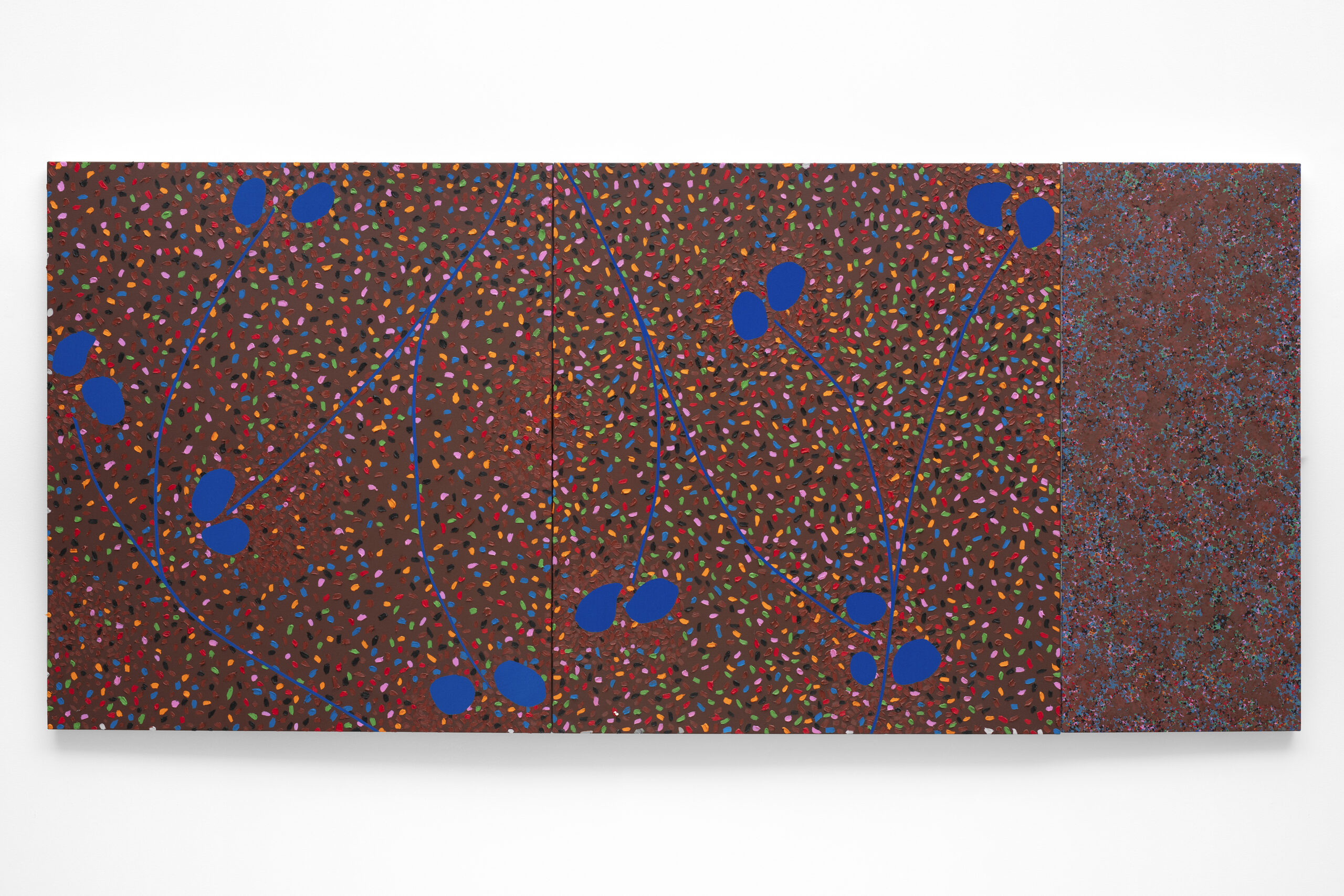
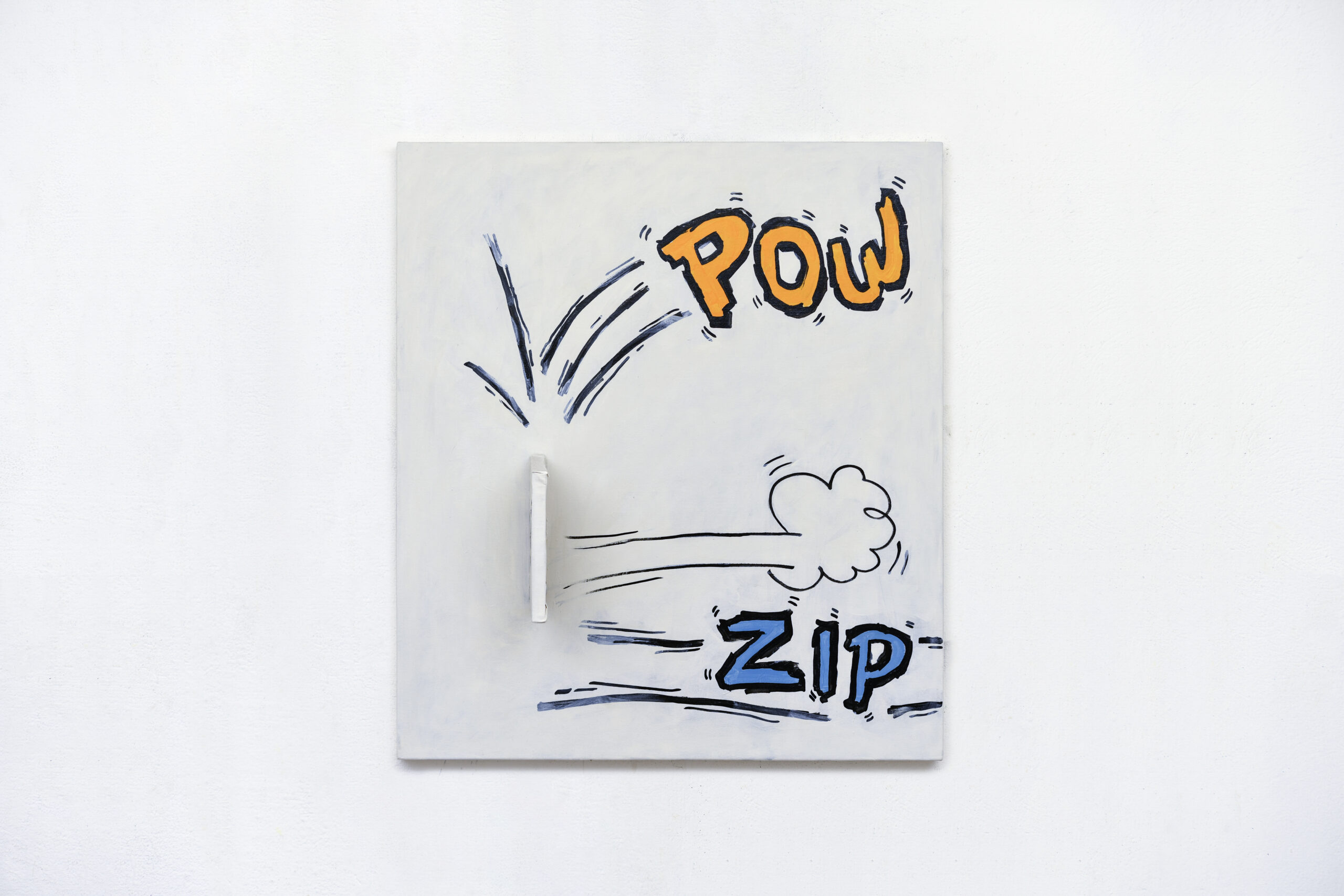
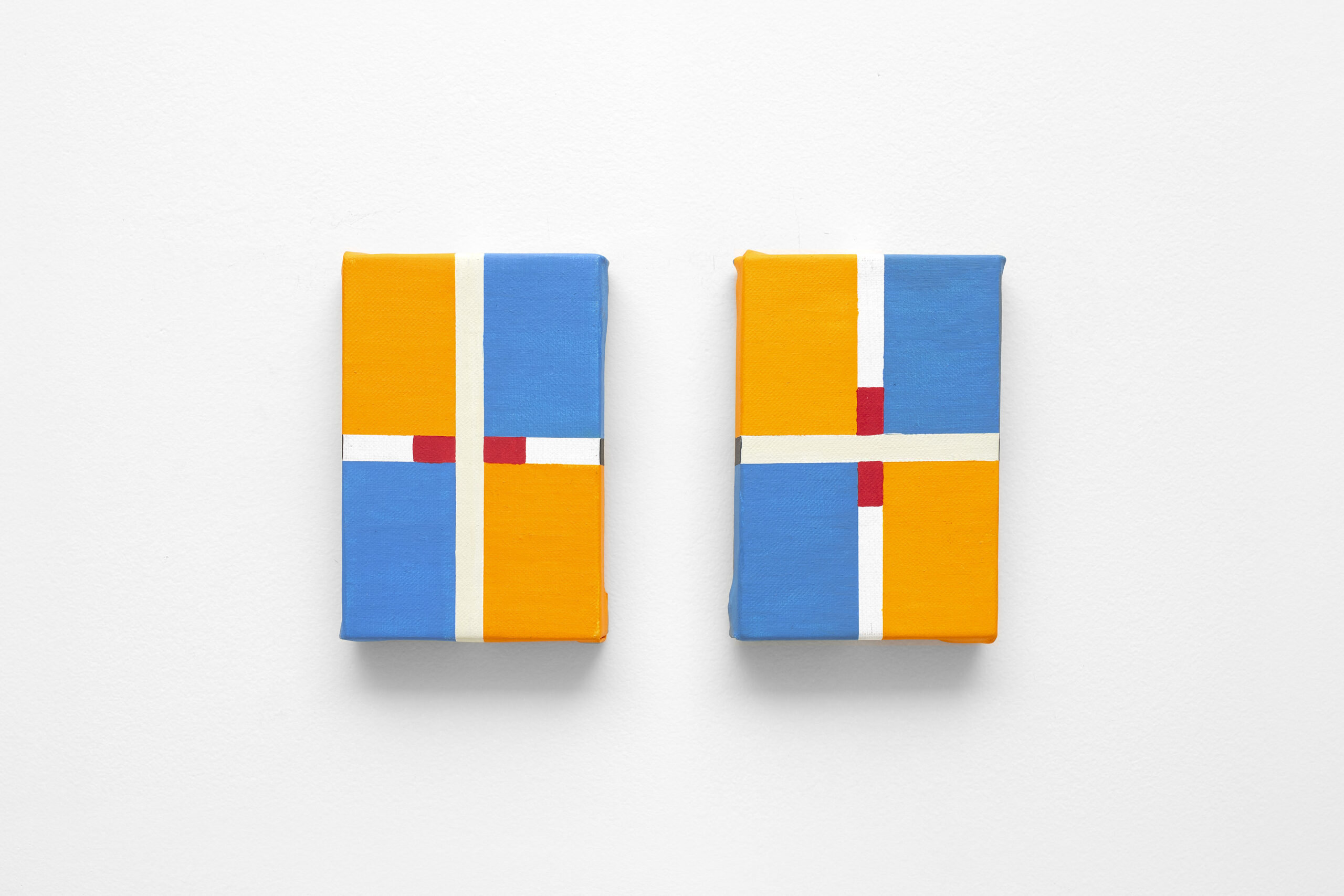
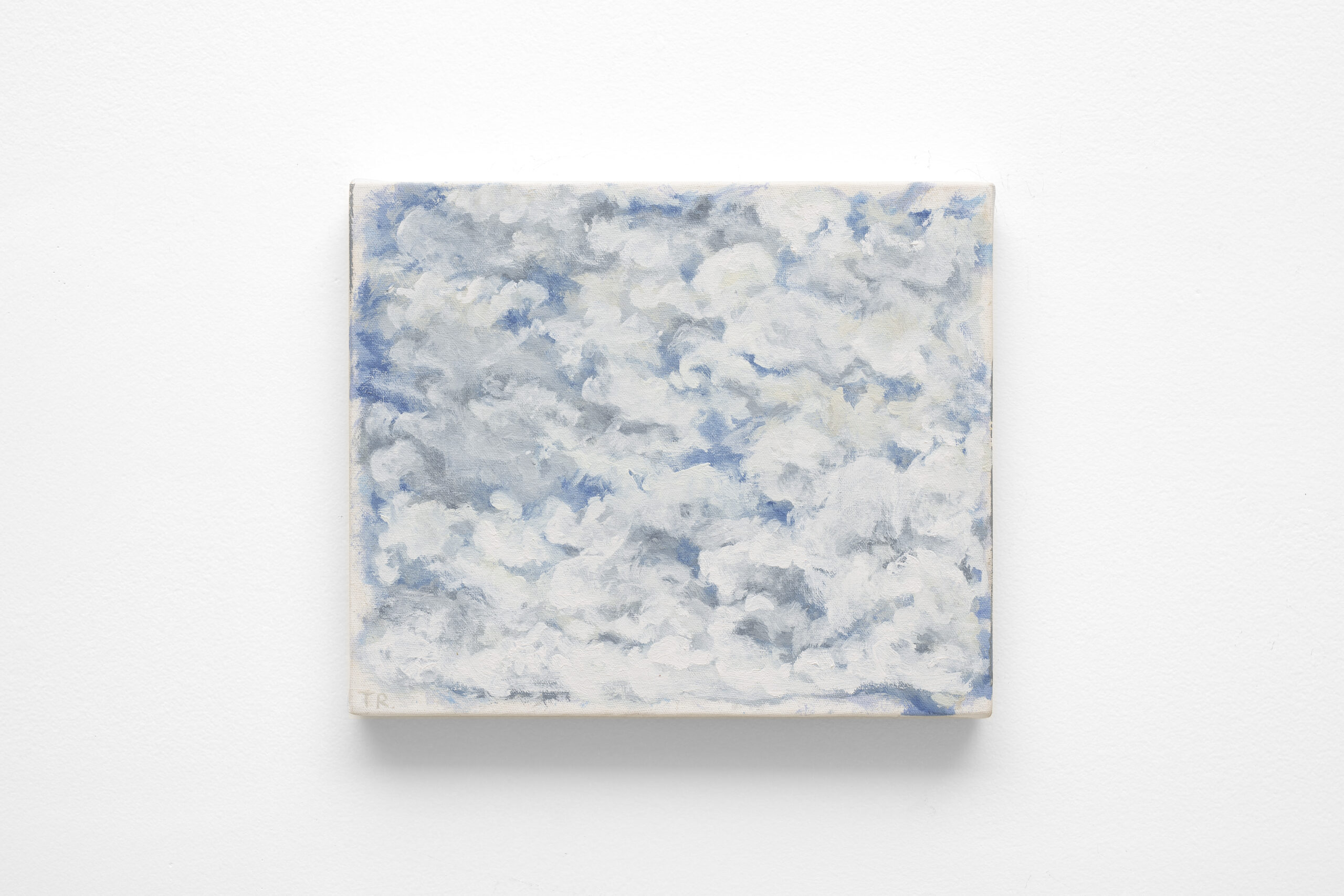
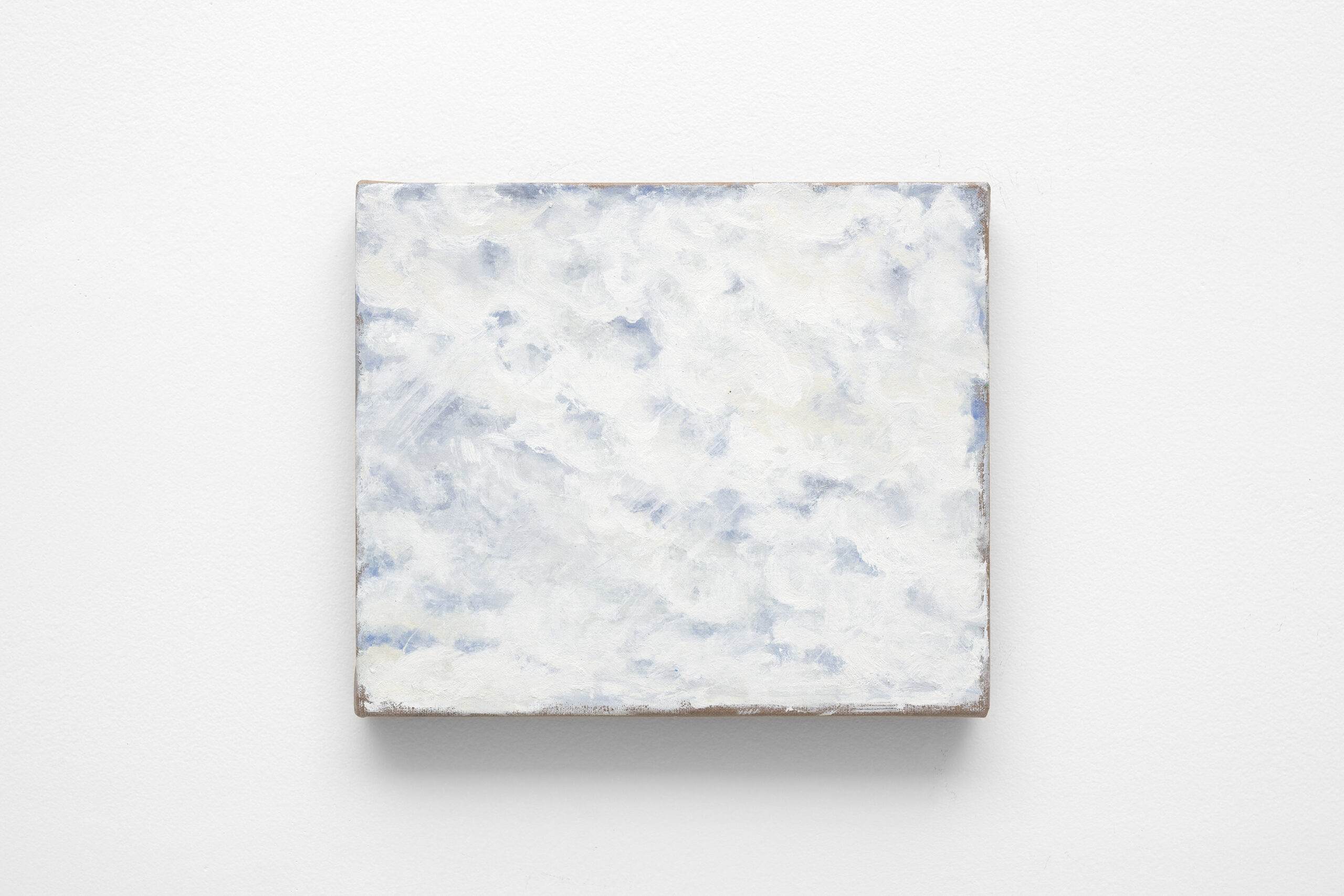
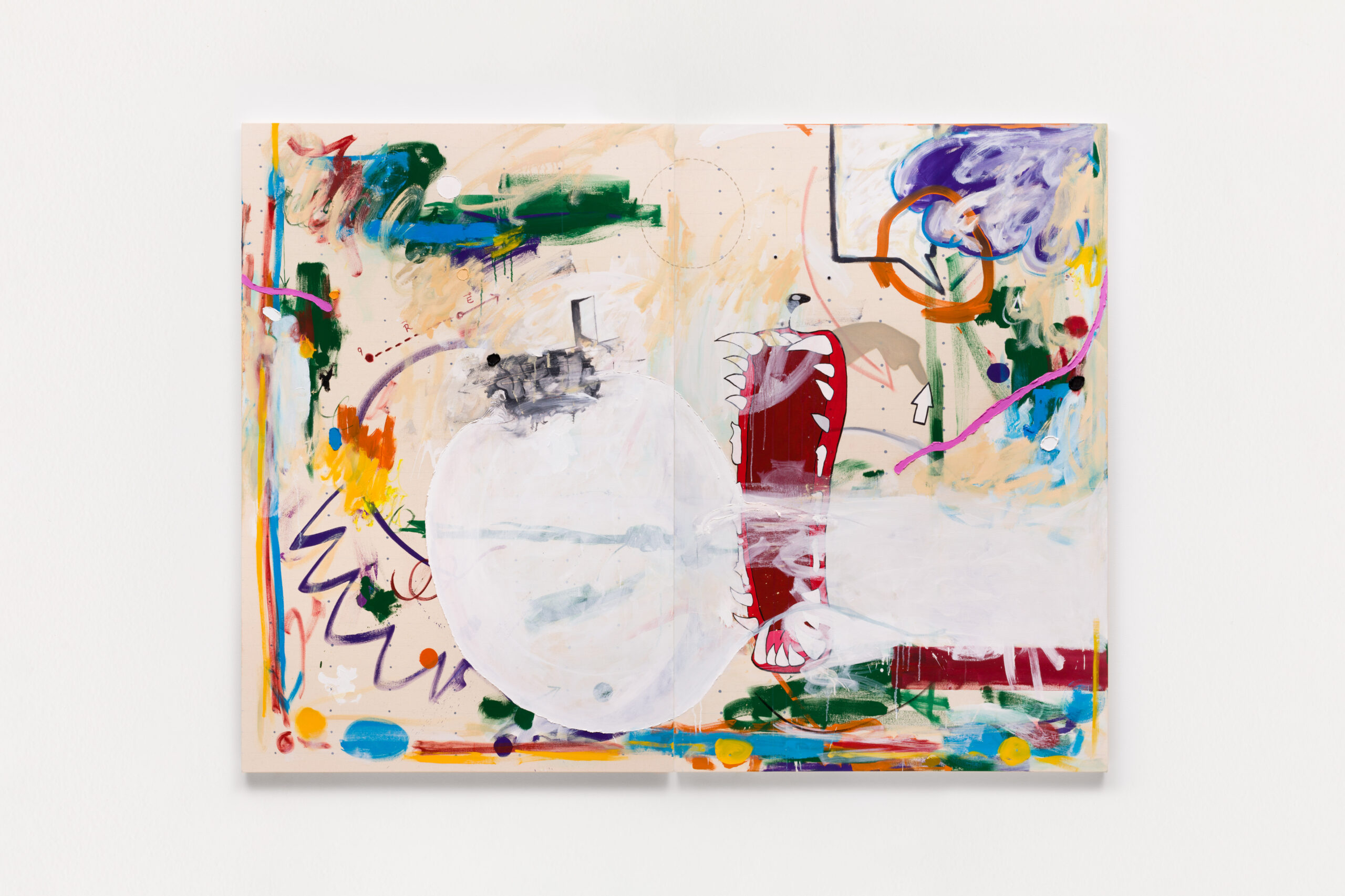
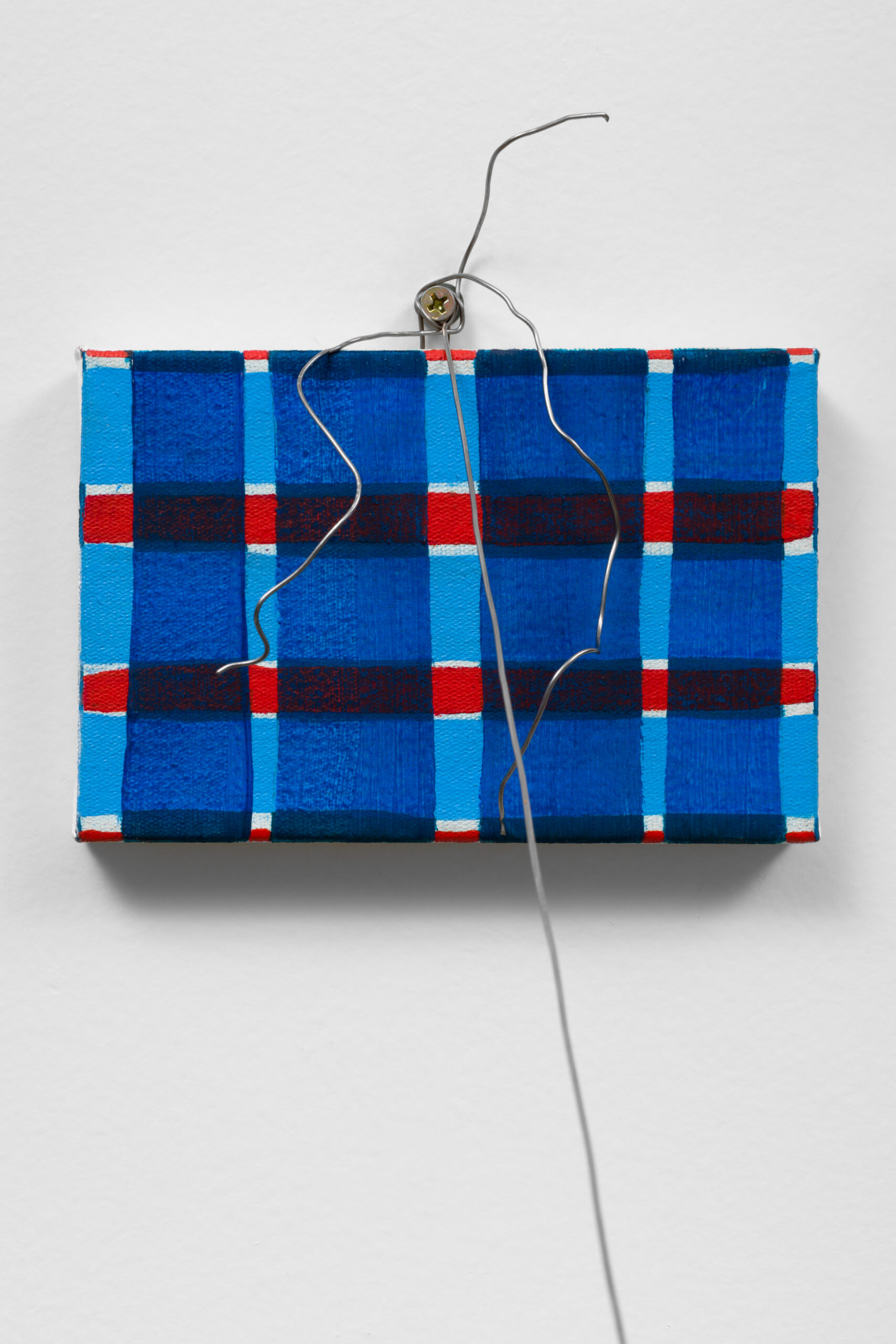
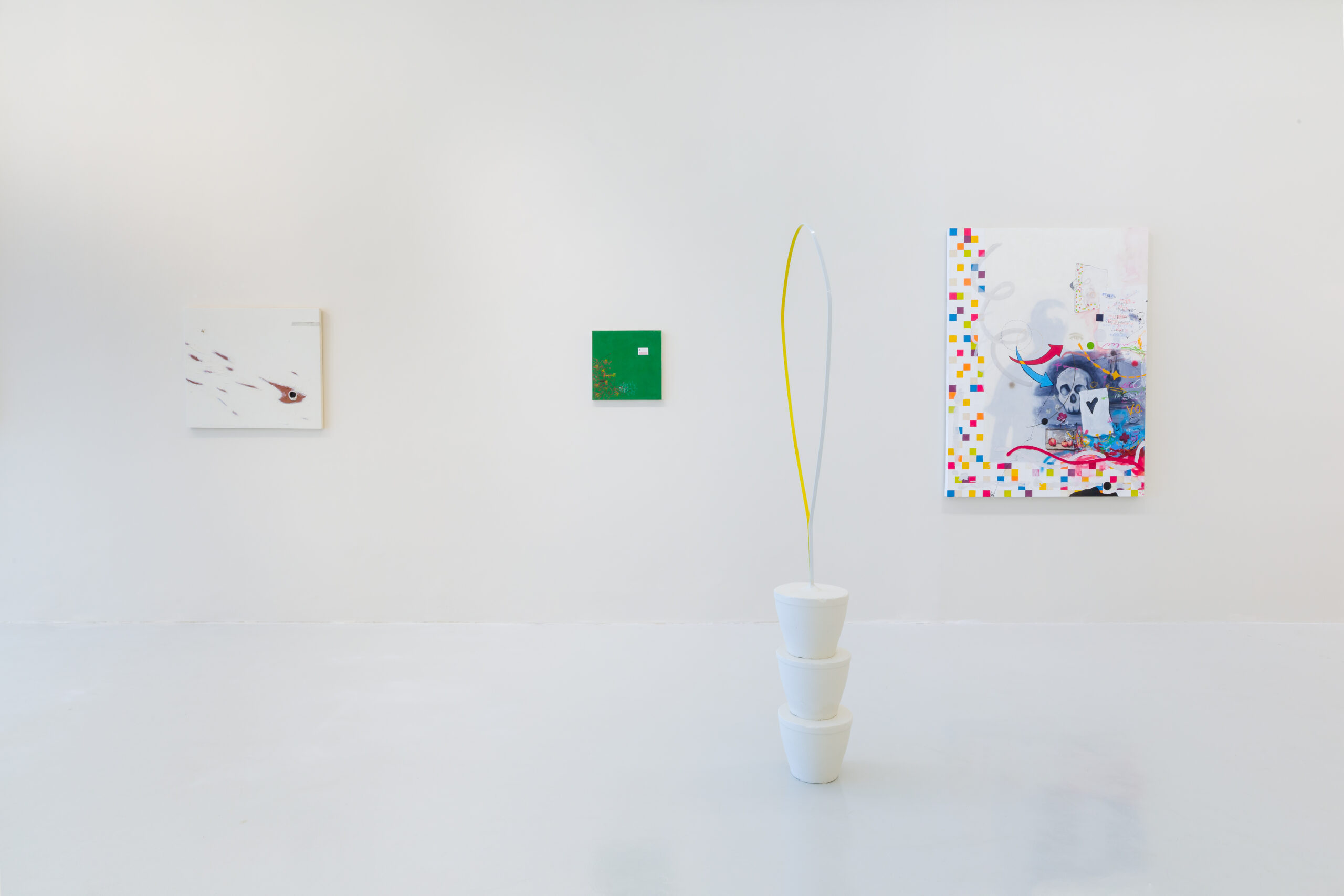
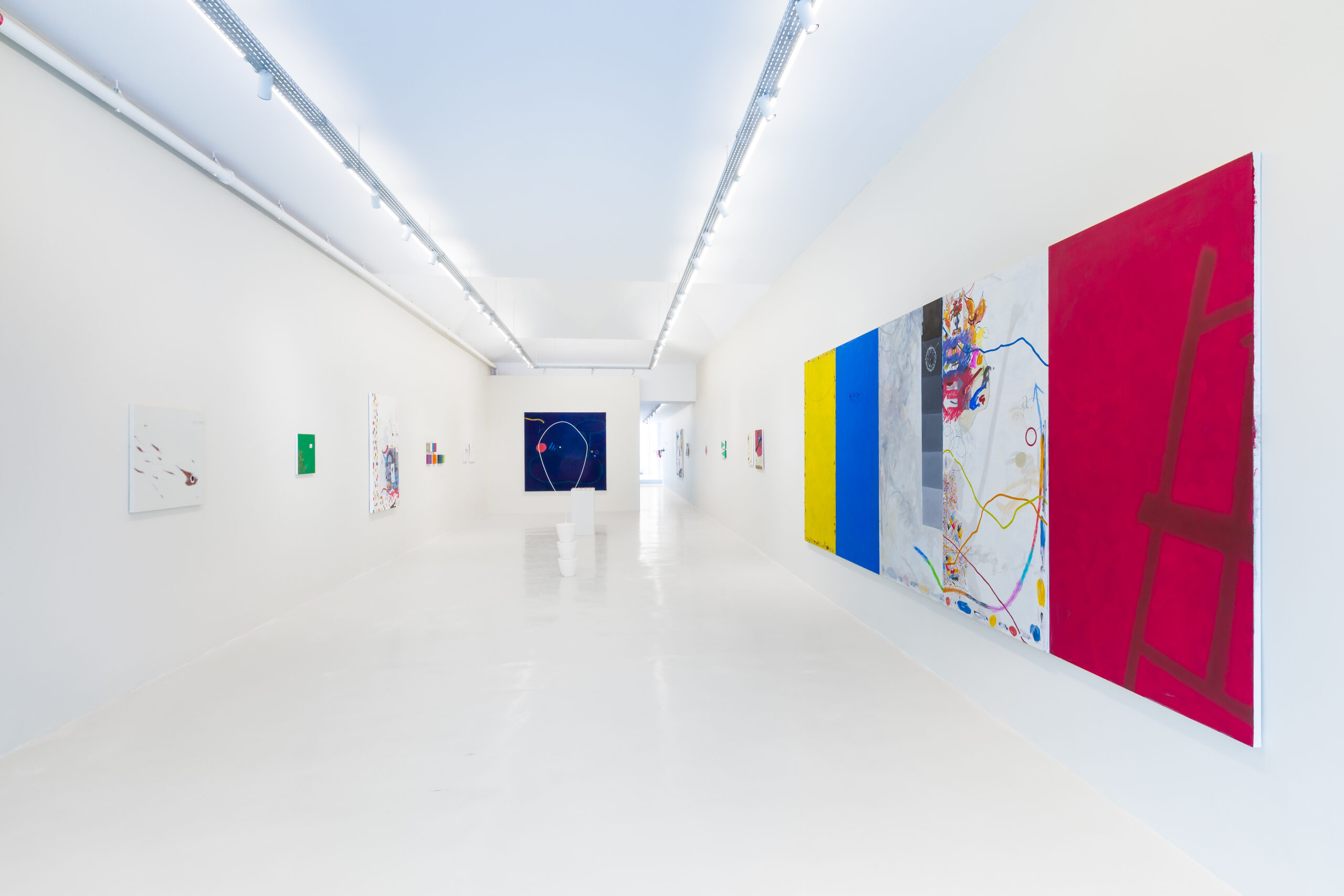
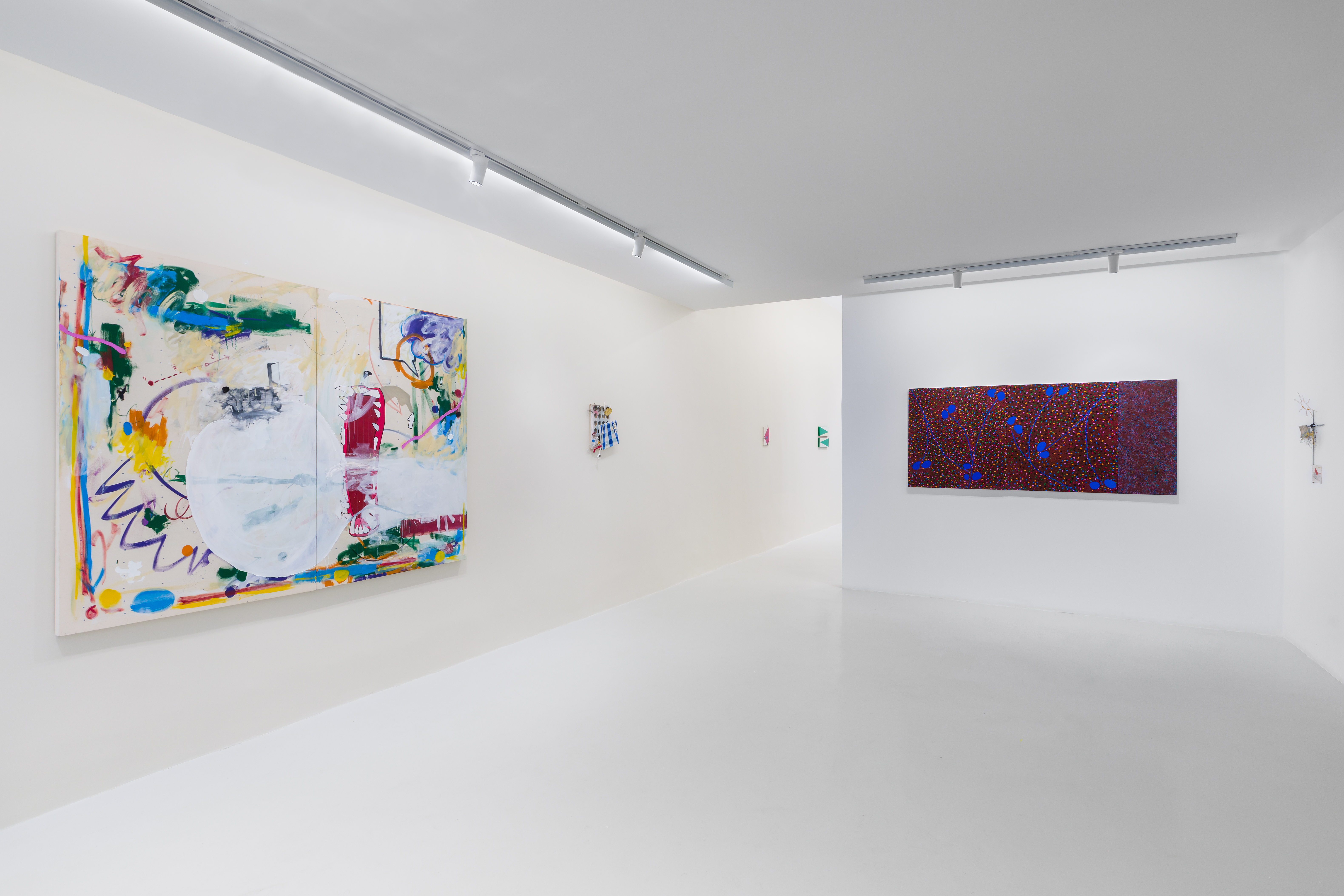
The evocation of signs and experiences from the history of painting is easily recognizable in Thomaz Rosa’s work. Images, forms and ways of painting are recovered from a repertoire of pop and modern art to serve as motivation for the colloquial part of the work. Then, what had been carefully chosen is rubbed away by conceptual gestures that are abrasive to the schemes: a grid alphabet of colors swells up on blocks of wood and is positioned like a board game (Golden Material, 2023), the vector indication of the movement of the arrows flows in permanently uncertain directions (Dropar, 2020) and geometric structures gradually break up into floating, soft lines (M#2, 2022, and, Something Suprematist, 2022).
In this way, the work moves on from the position of commentary or interpretation of tradition and abruptly asserts itself as the self-determination of an insubordinate doing. One of the main characteristics of the work is that it lies halfway between the scheme and the anecdote, the necessity of the structure and the contingency of events. There is nothing here comparable to the final resolution of a problem, in which the value of the unknown is discovered through its relationship to known terms. After all, the problem can only be solved if it is determined. It is because of the indeterminacy of the problem that chance, accident and error become intrinsic elements in Thomaz Rosa’s pictorial practice. But he only dares to do so after having achieved a vocabulary of techniques, signs and notations that is constantly cited.
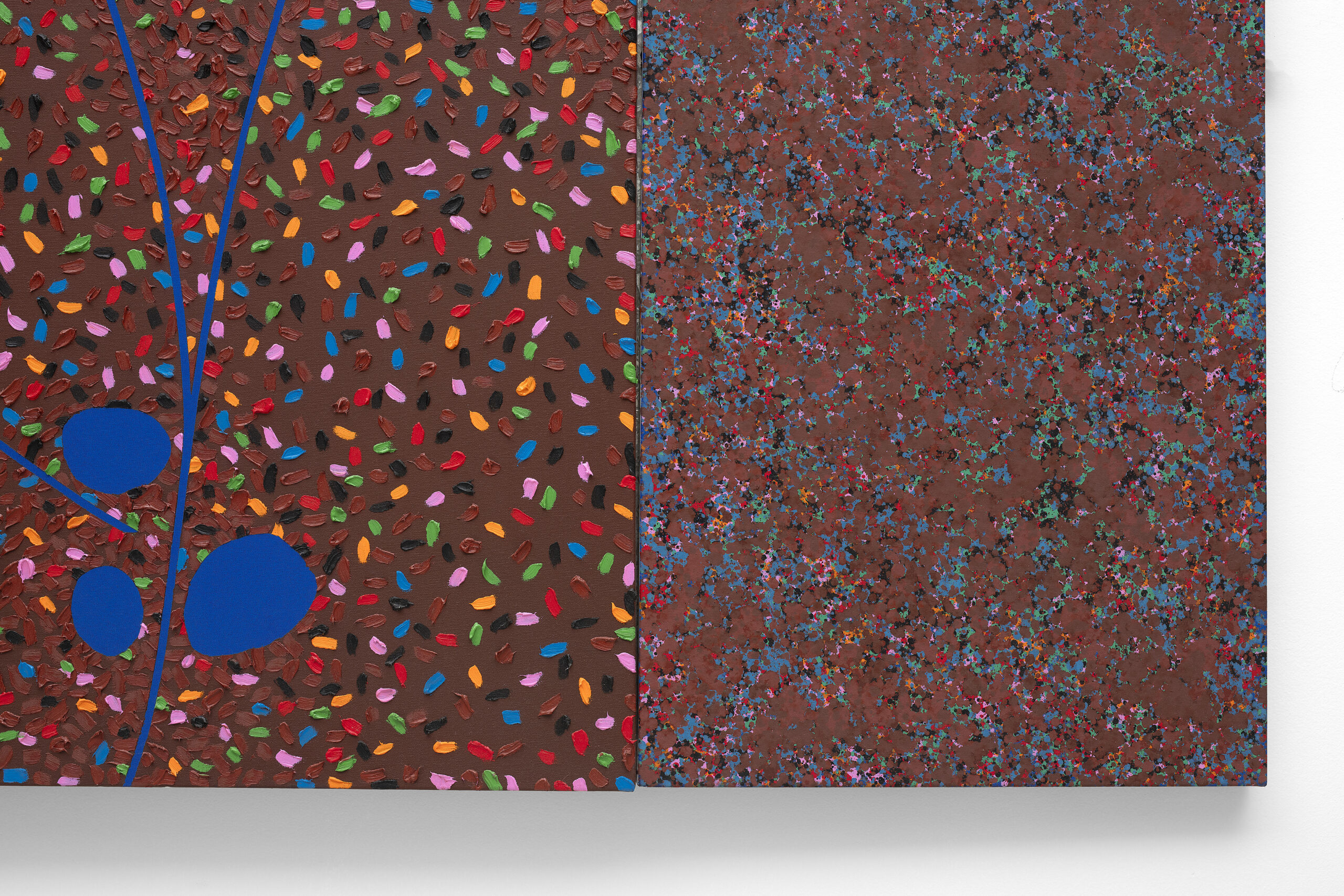
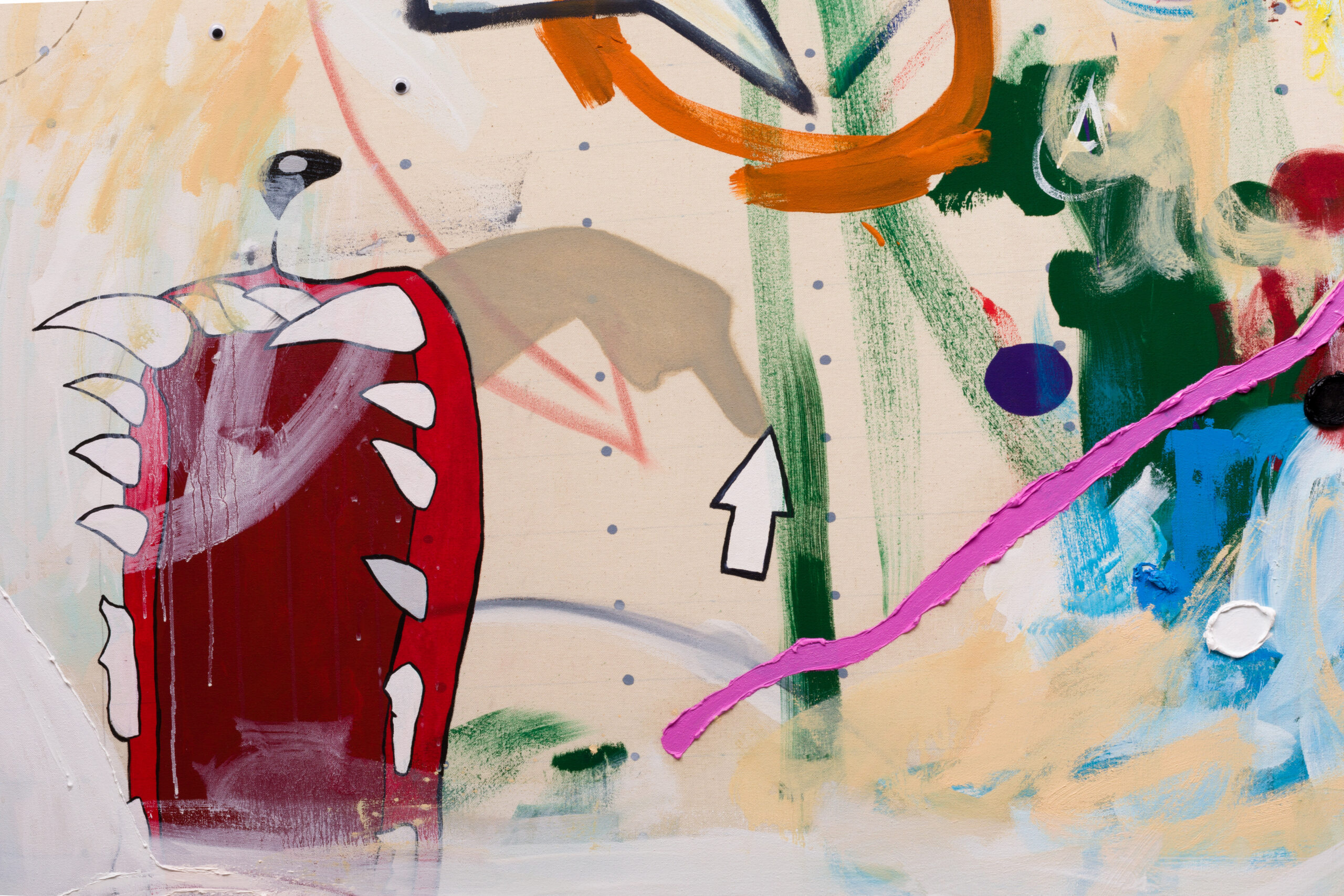
In view of this operation, the equations painted in oil don’t just appear as a record of a stream of consciousness. They are carefully chosen and figured as indications of a projectuality that is gradually fraying, becomes incomprehensible and finally loses its usefulness (Momento: Sobre o vermelho e o azul, 2017). Thus, they appear as traces of a project that tends towards reverie by incorporating imagination, memory and rational thought in the same procedure. The miscellany of images from the history of art and cartoons, as well as the pointillist brushstrokes, drippings, geometric patterns and figurations of impressionist intuition are part of this transgressive attitude, which happens through the dispersion and incongruity of the elements that pass into the painting. For this reason, the work allows the figures and images to be read in different ways. It is a prismatic composition, a kaleidoscope of all sorts of signs that, from near or far, seem to indicate a subtle latent thread. However, without totalizing statements or schematizations, the work prefers to remain vacillating in order to achieve the necessary detachment that brings out spontaneity. Thomaz Rosa’s painting takes place in these gestures of disagreements and jokes in relation to structures that seek to affirm a univocal meaning. In this way, they achieve an unstable final unity that resists being reduced to the sum of its parts.
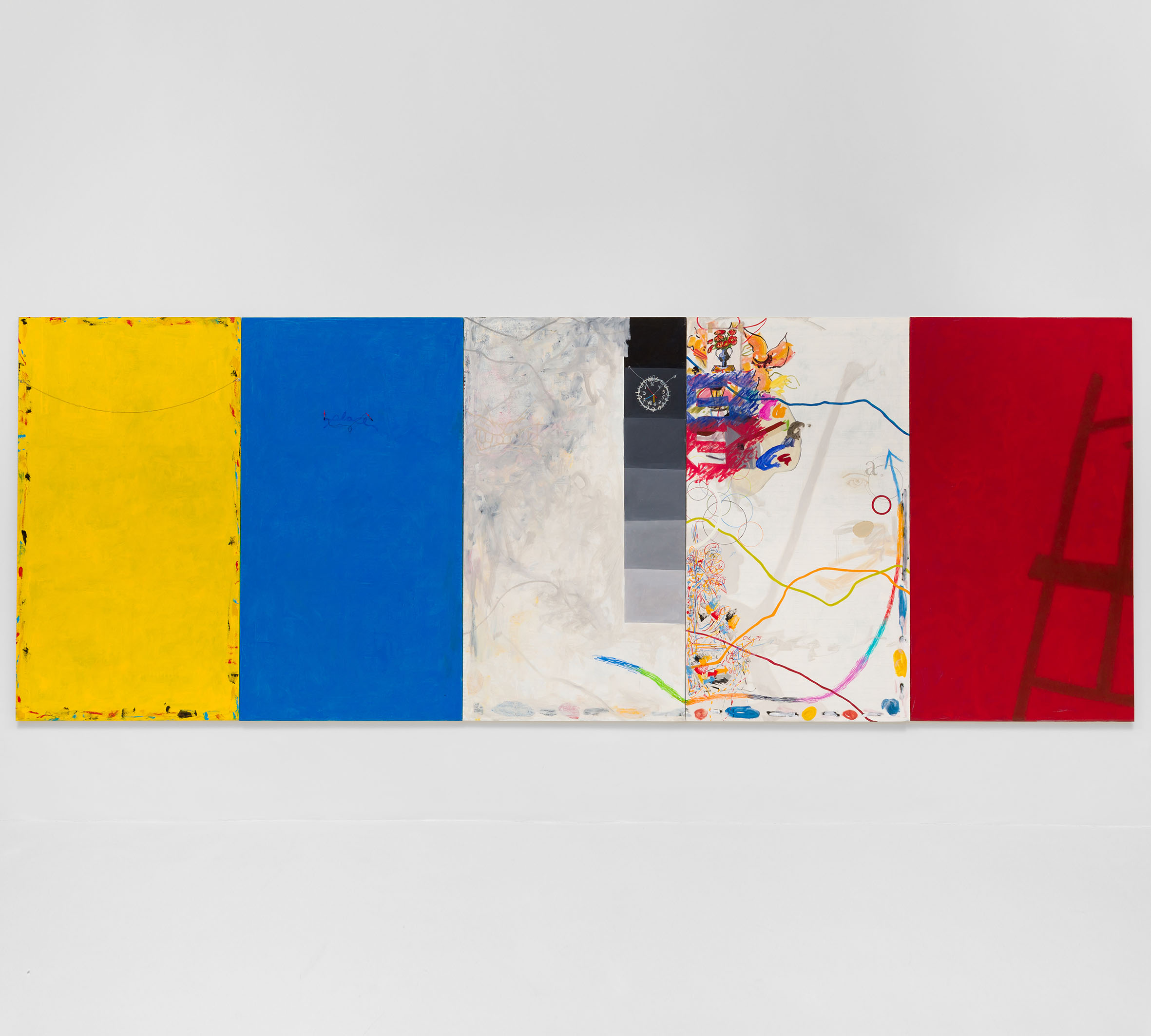
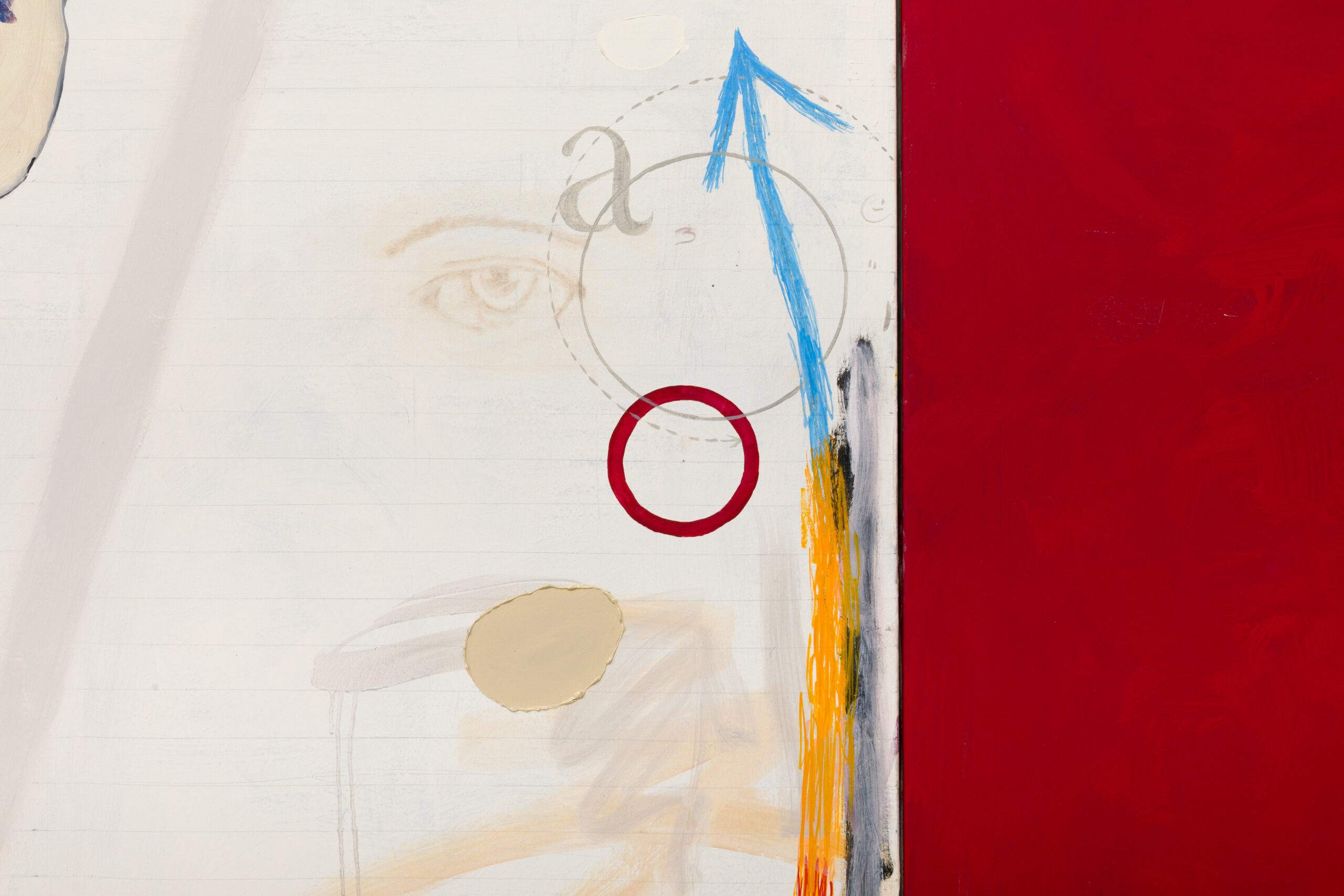
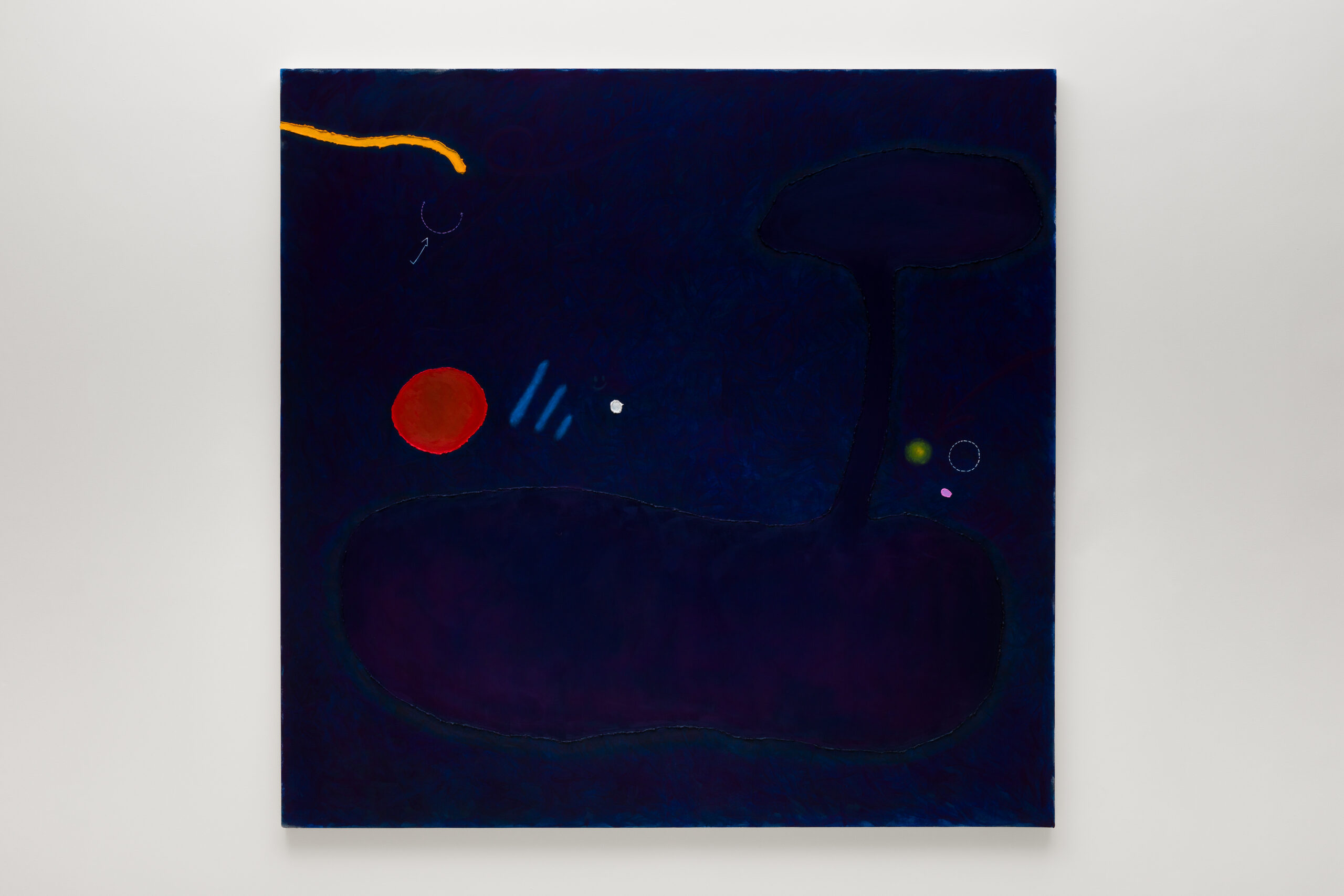
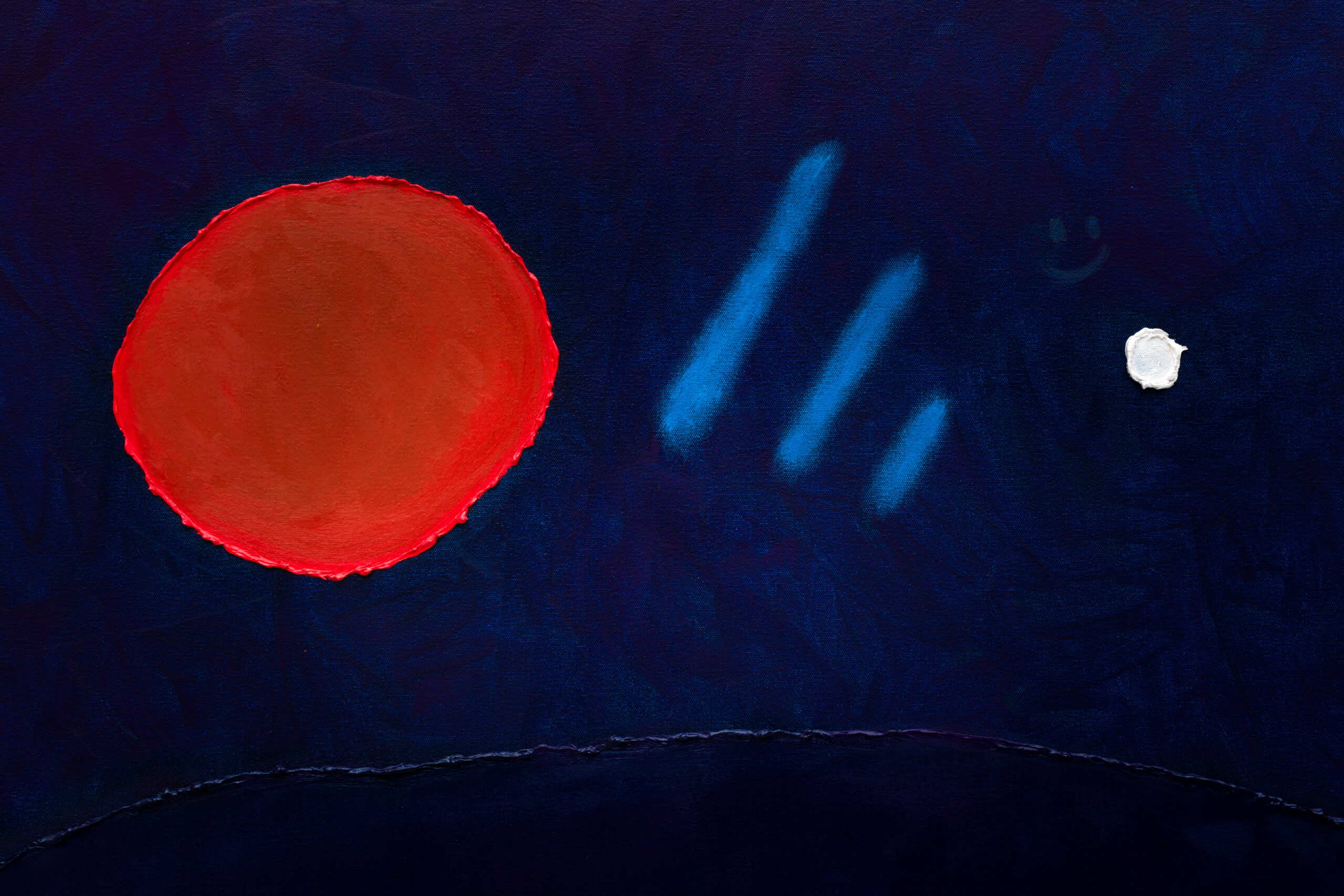
It’s an action-packed procedure that makes use of artifice. The shadows that appear in some of the paintings are produced in the studio, using a reflector that the artist uses to illuminate the works. They are not indications of the disappearance of a physical object or of an event that fades over time, but rather they are living spectres that animate the field of actions witnessed by the canvas as a disinterested spectator. The spatial projection of the shadows onto this surface alludes to the physical materiality of the plane and tests the kinetics of banal objects, such as mere nails, even those with symbolic value, such as the easel that is projected onto a red background (A volta da sorte, 2023).
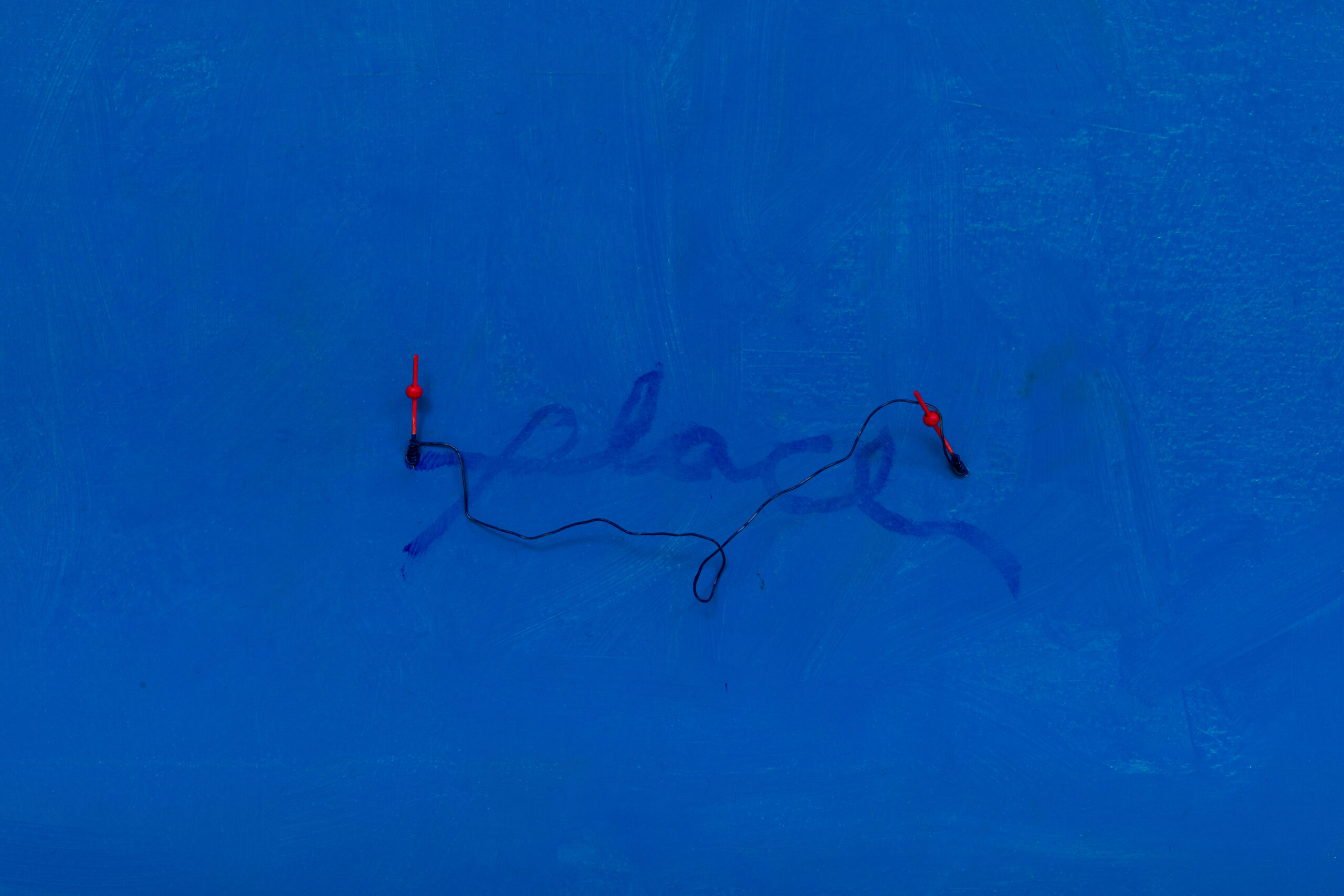
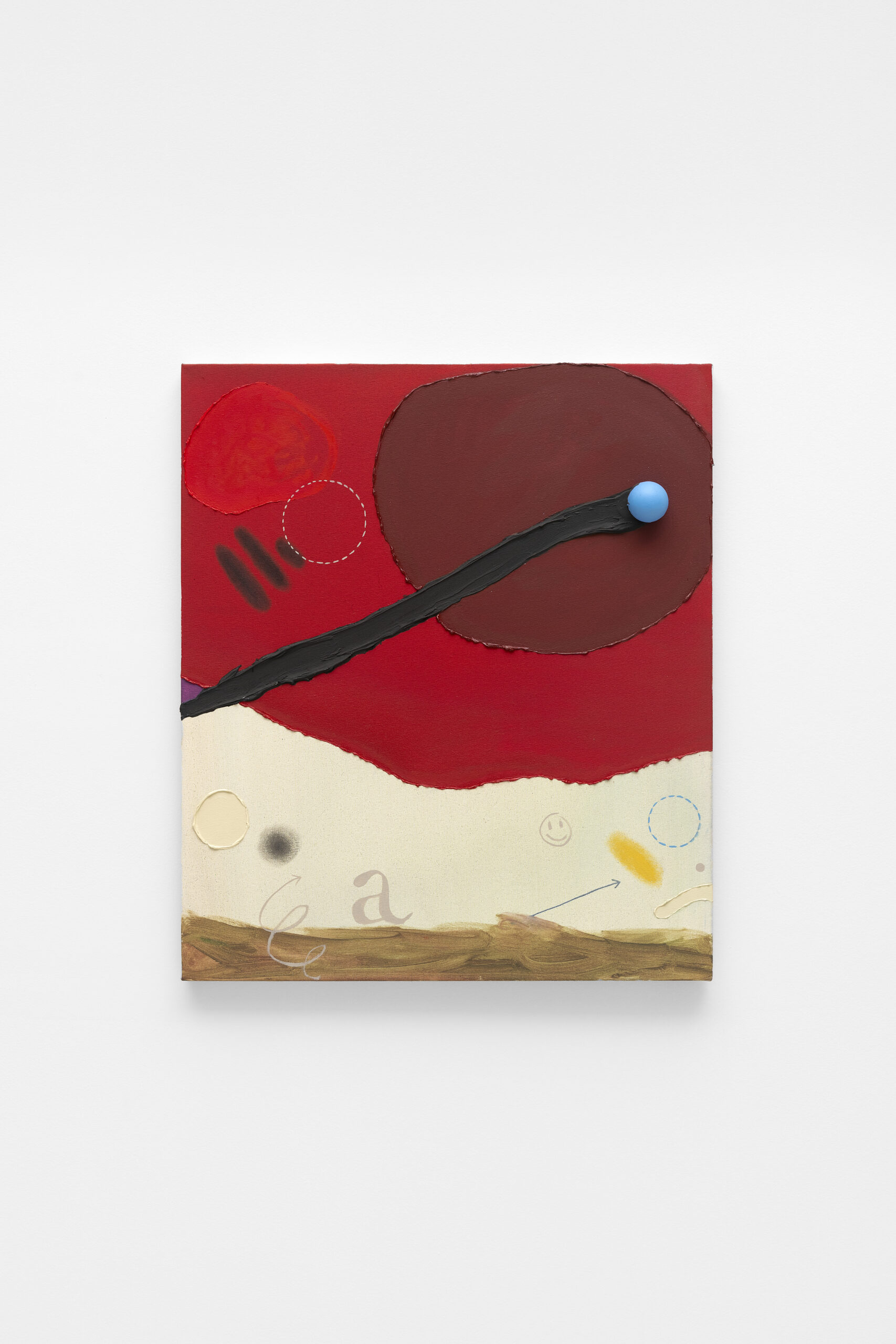
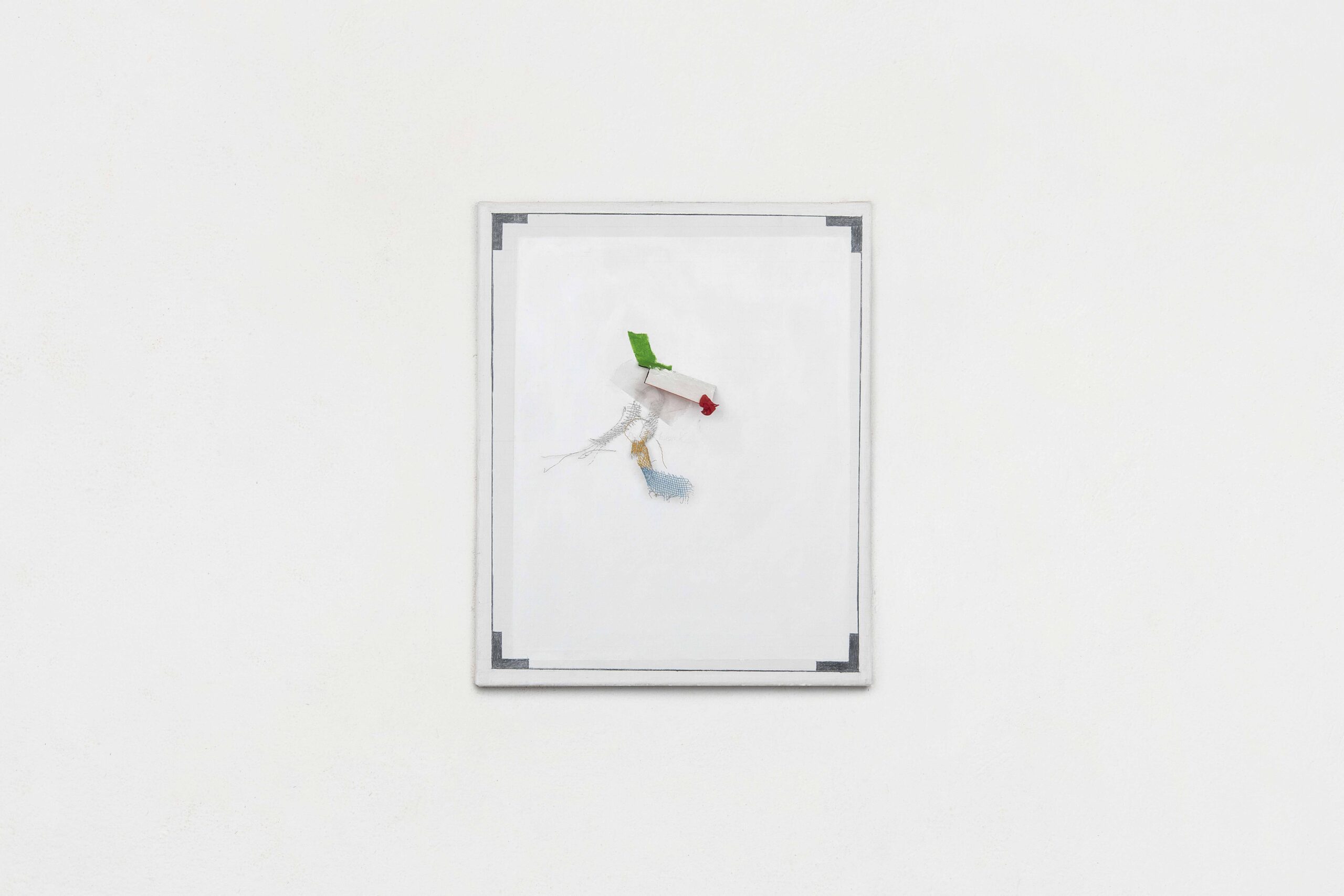
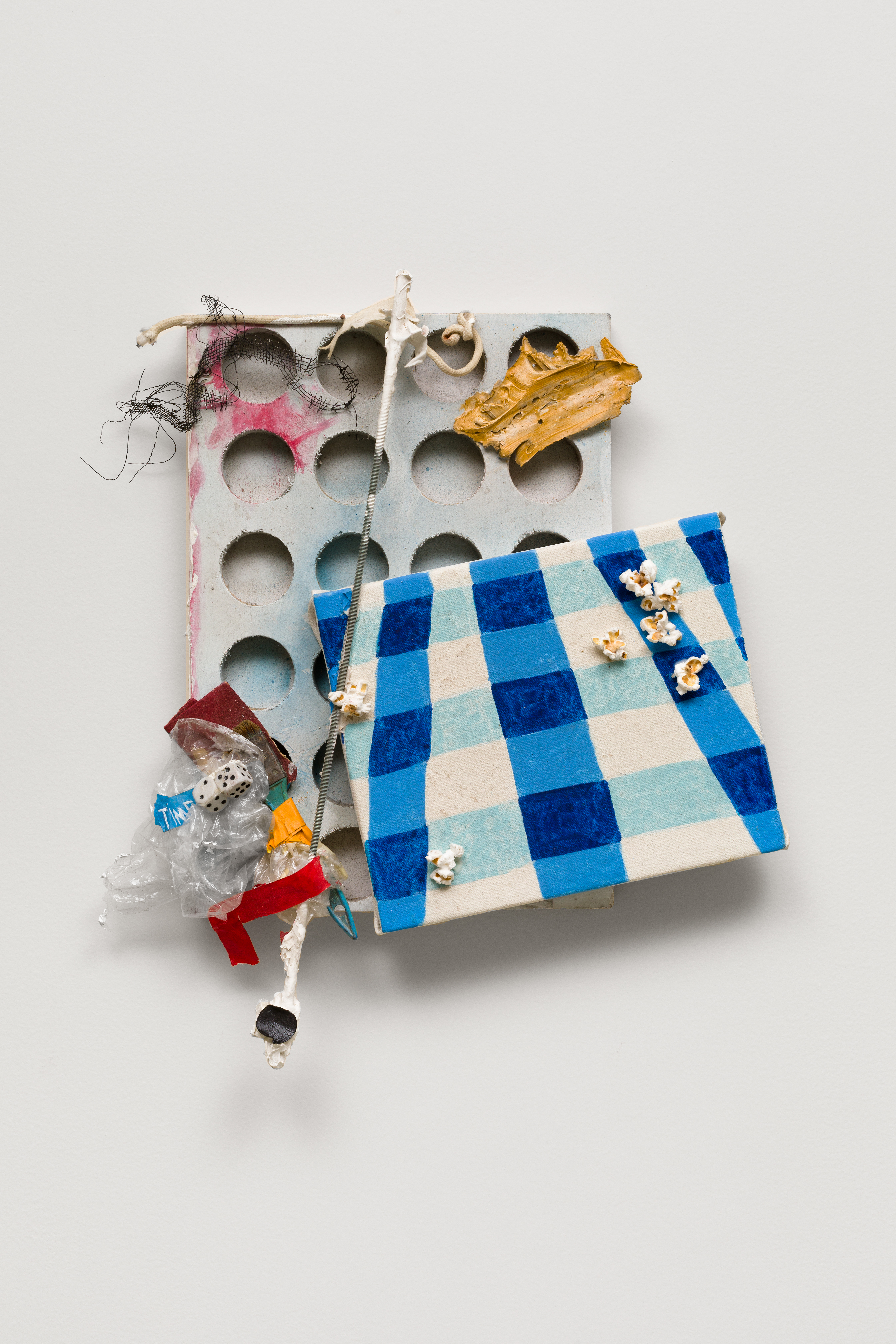
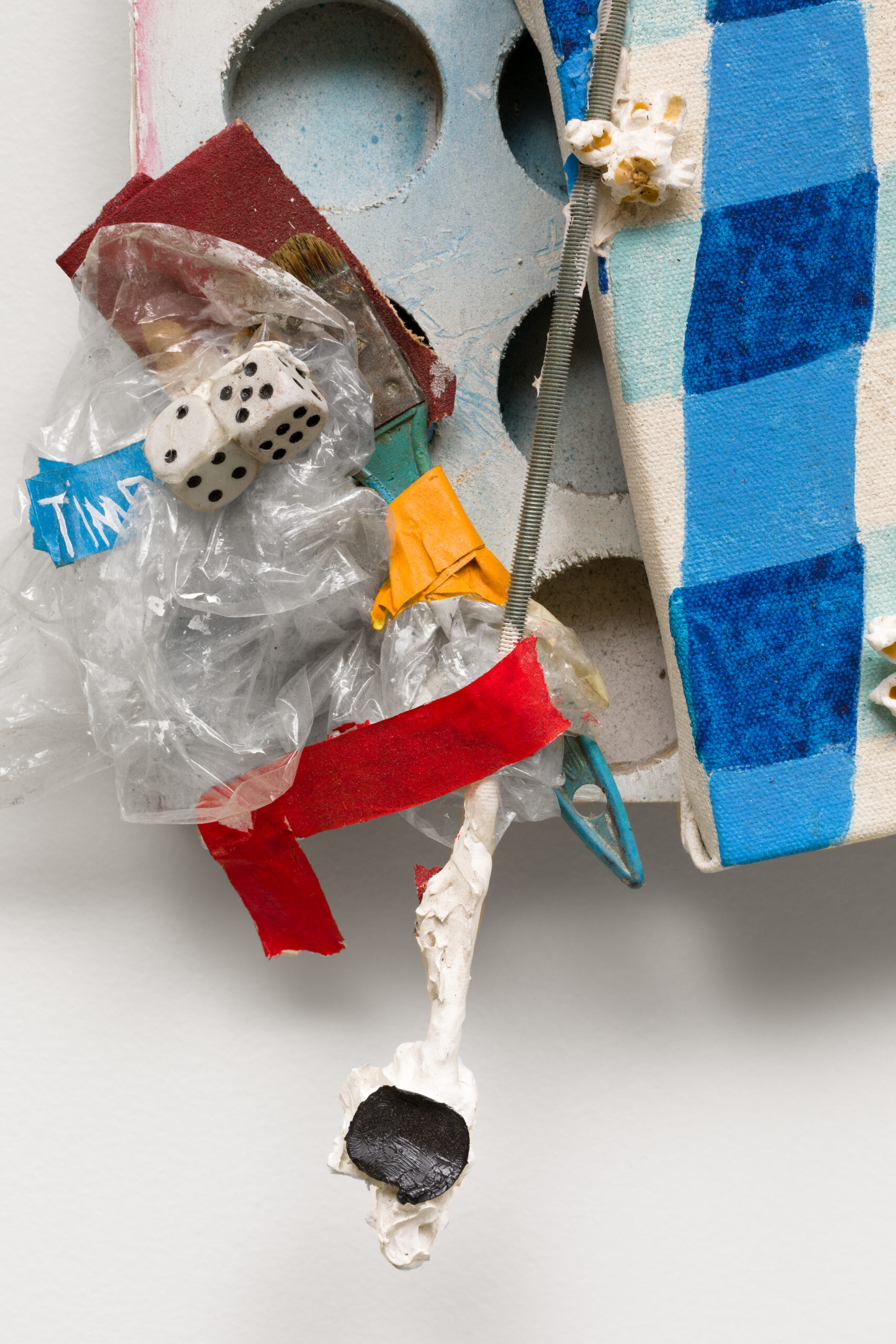
Like any material surface, the canvas allows all kinds of everyday objects to adhere to it: watches, museum bags, popcorn, cigarettes, plastic bags or colored crepe tape. It’s not just a question of bringing out the latent properties of these elements. They enter the reverie that creates equivalence between all kinds of things and whose effect is strident, like a gush of unsolicited information and images that therefore speak louder. On these screens, events constantly have their sensitive action maximized and inverted. Without heroism or any sternness, but rather with malice, everything that is light pretends to be dense; the thin, bulky; the light, heavy. A roll of the dice thus suggests a thunderous event (that’s what it is, 2020). Table tennis balls, on the other hand, gain weight and seem to force their way through the mass of acrylic resin painted black (The letter a, 2023).
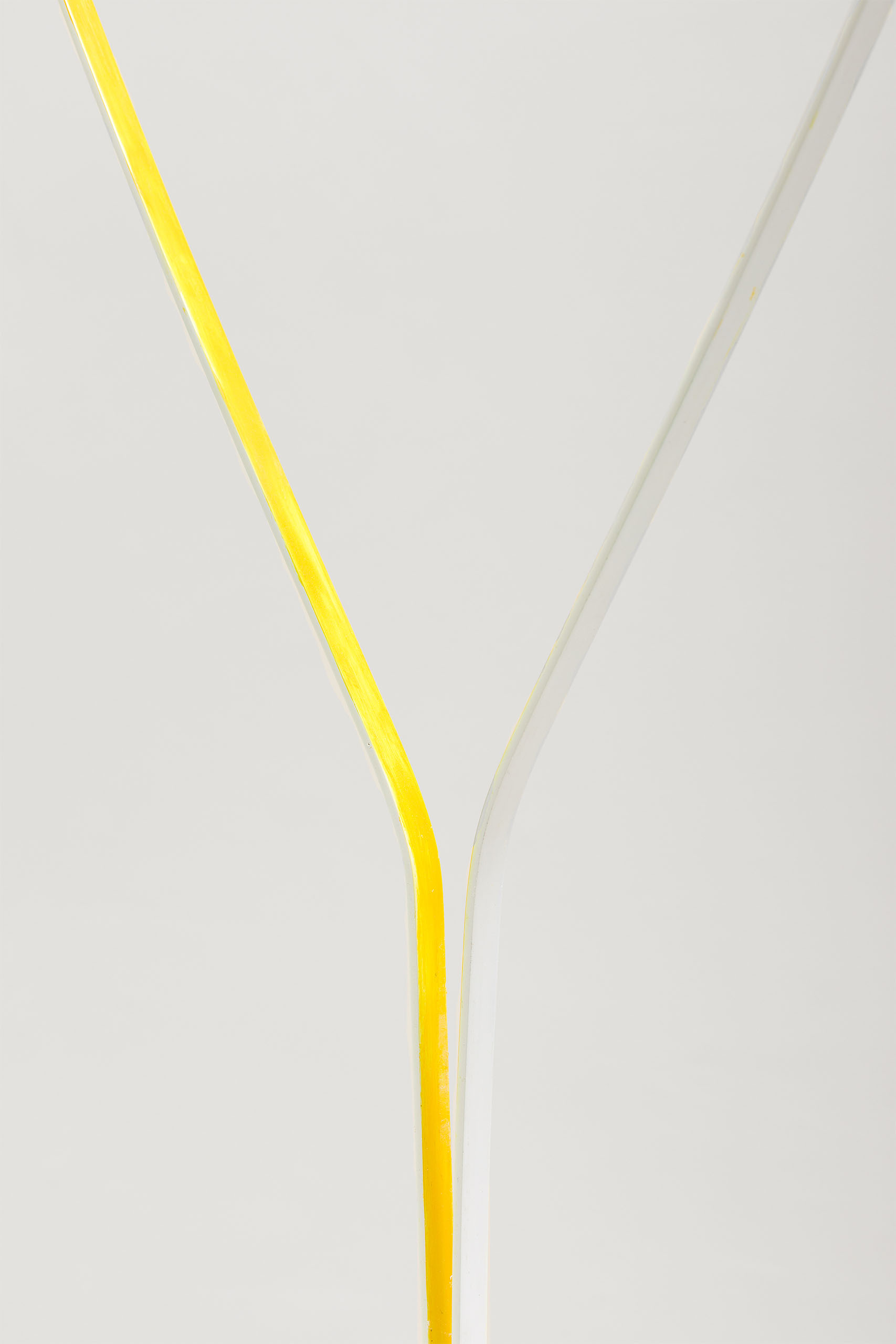
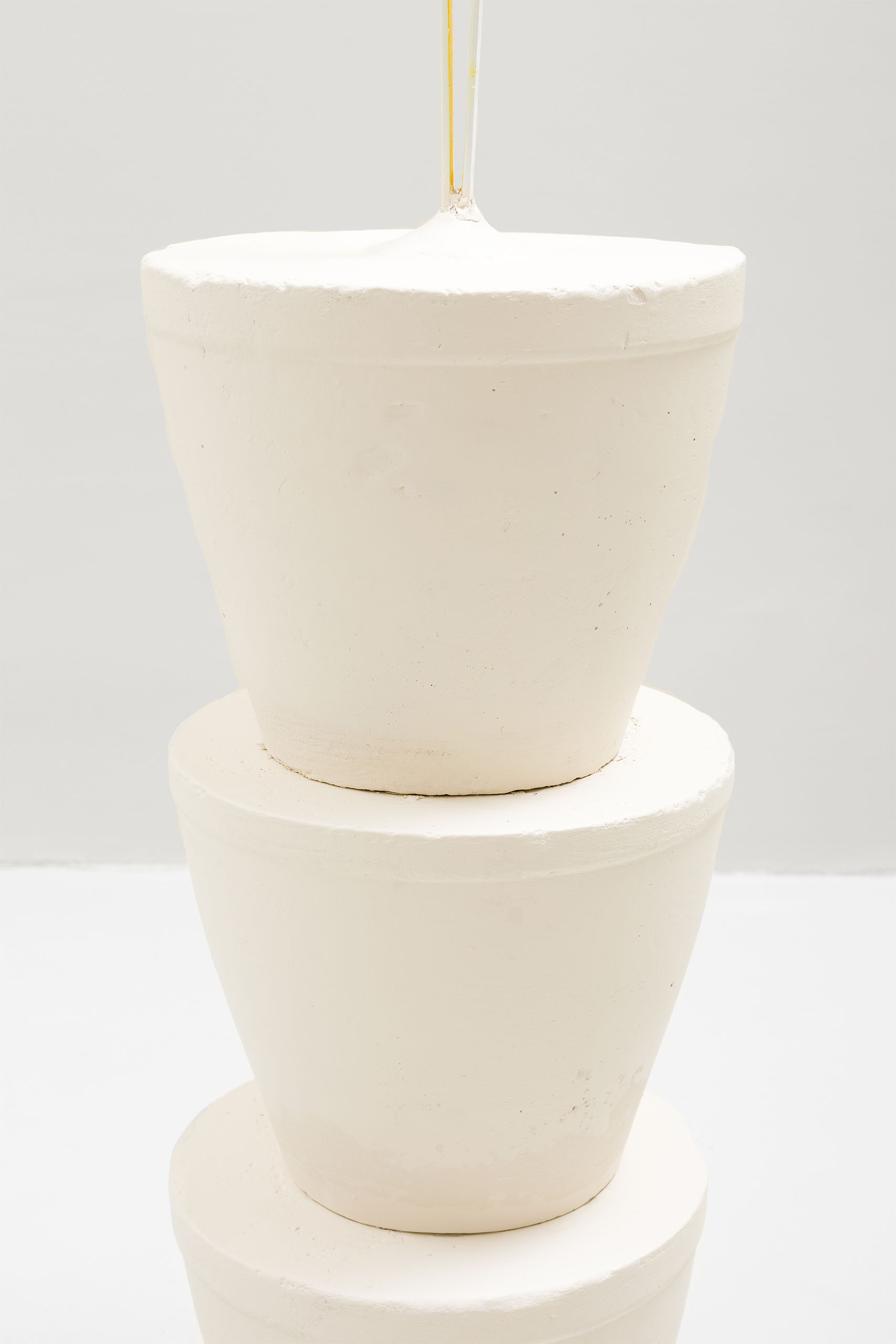
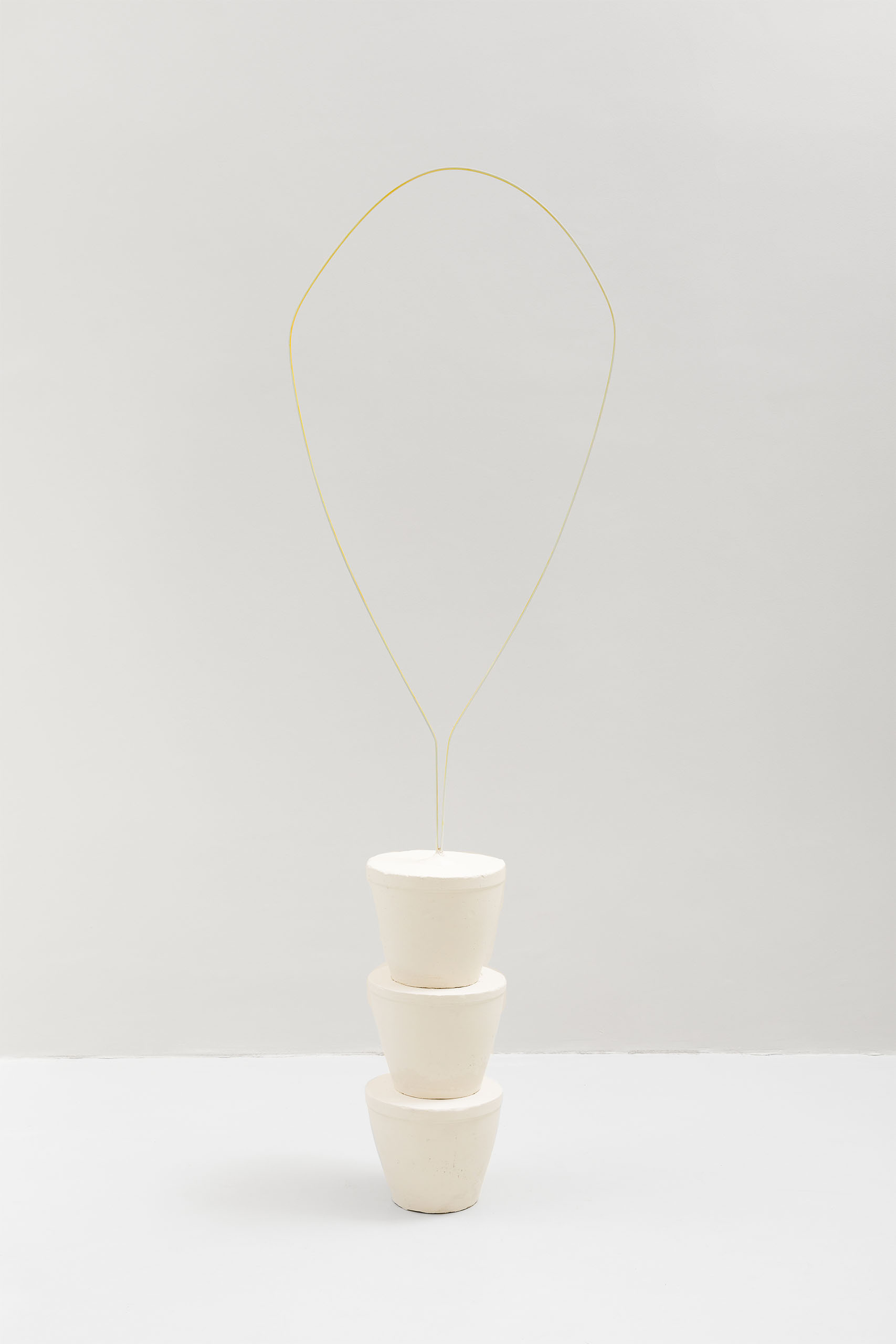
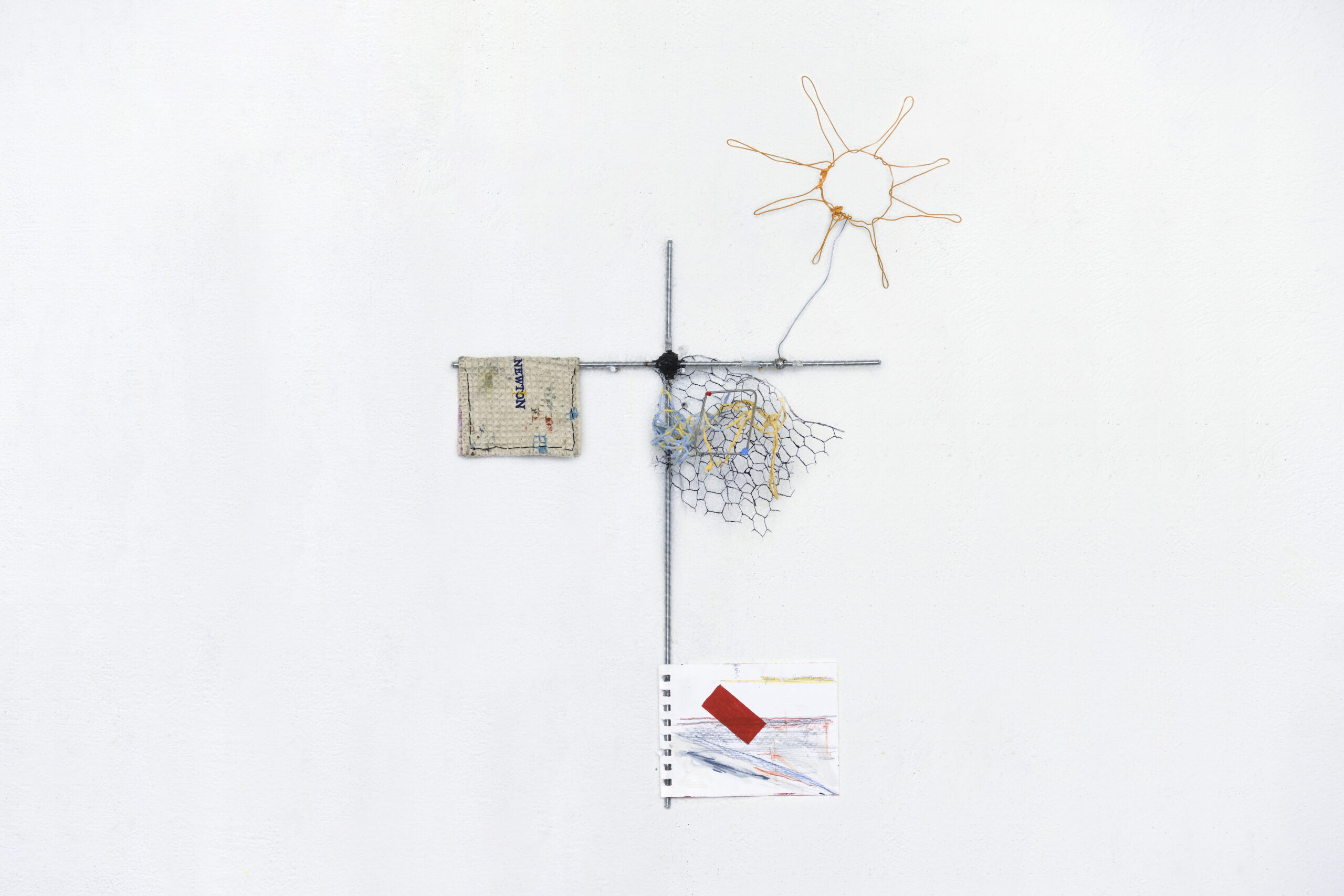
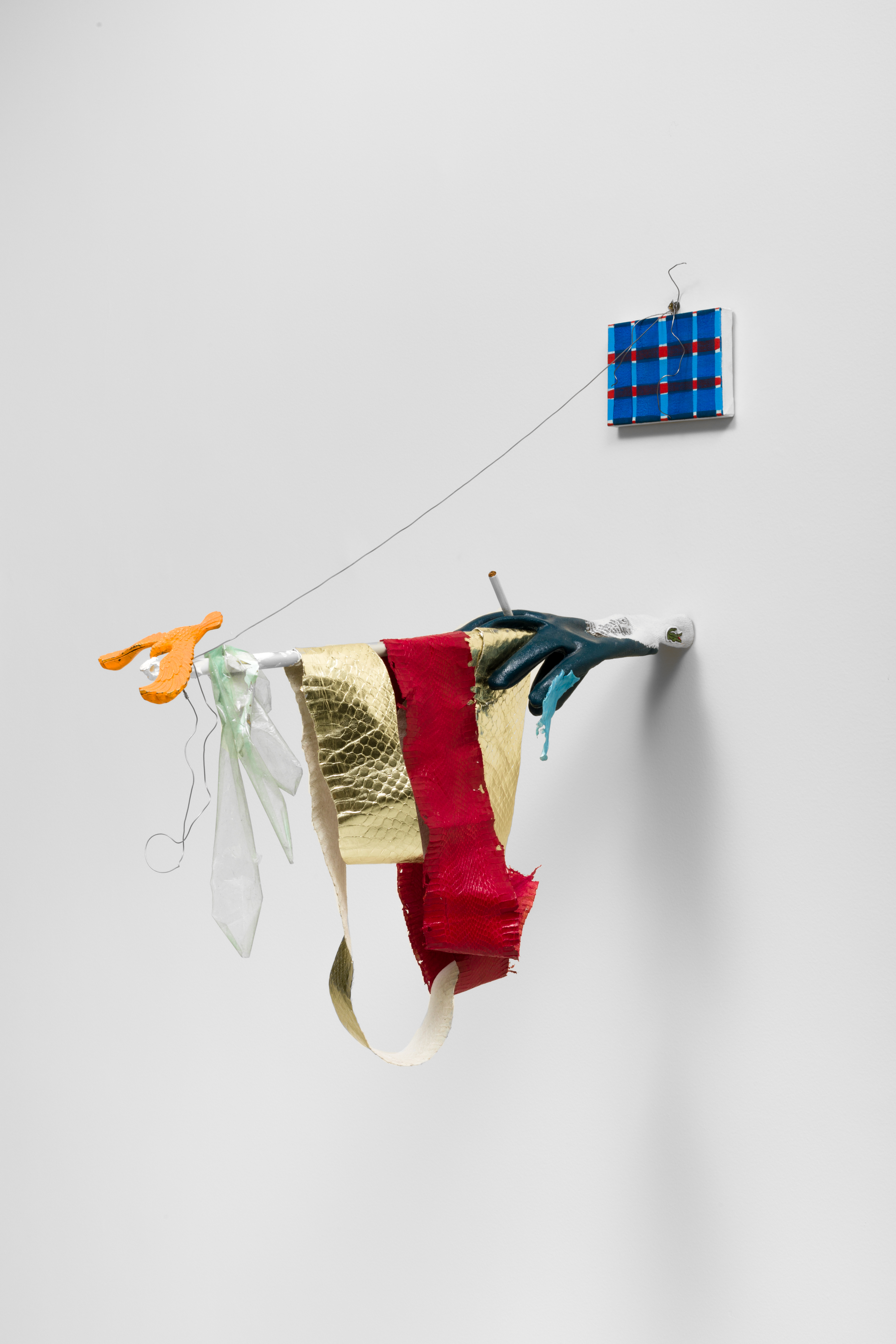
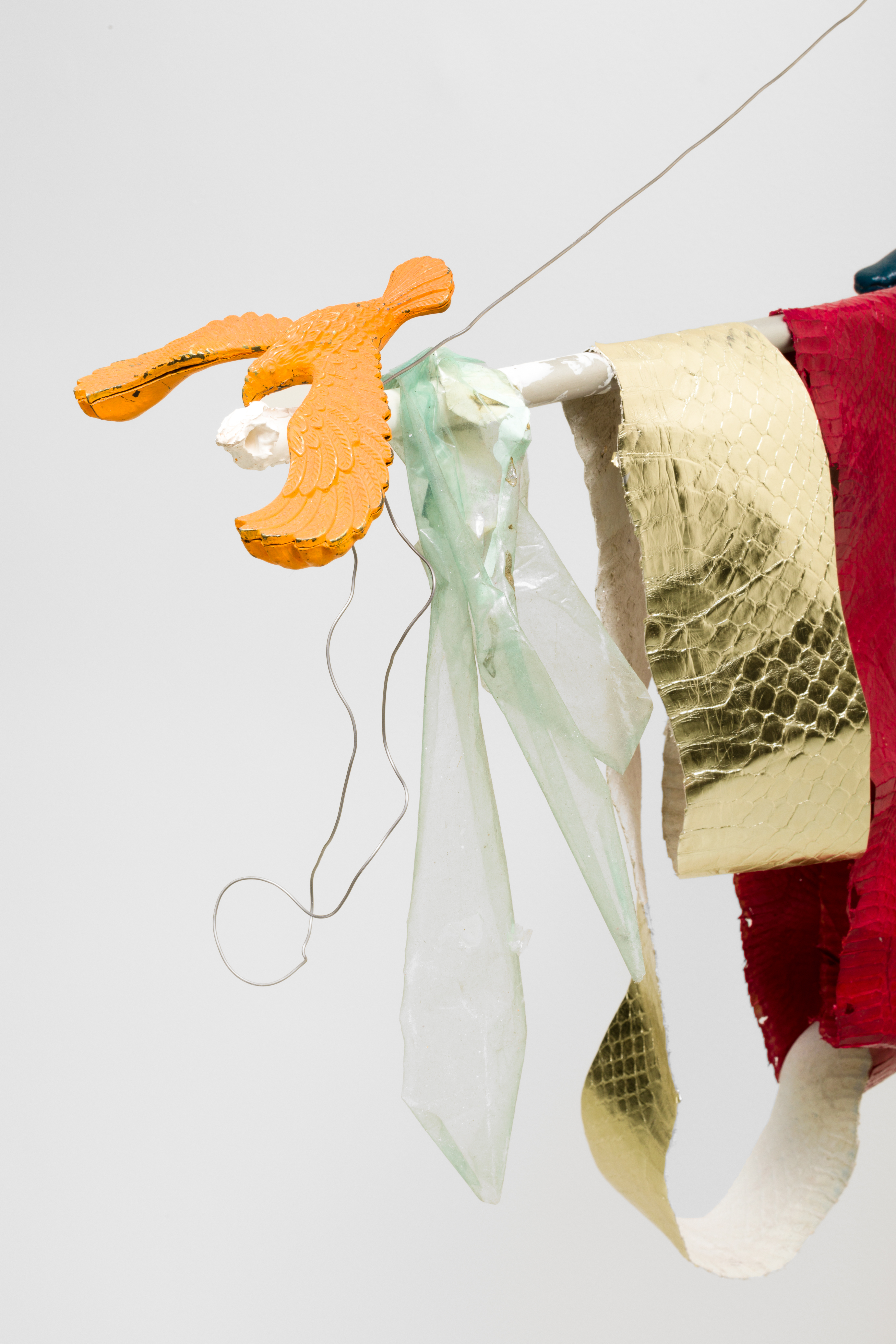
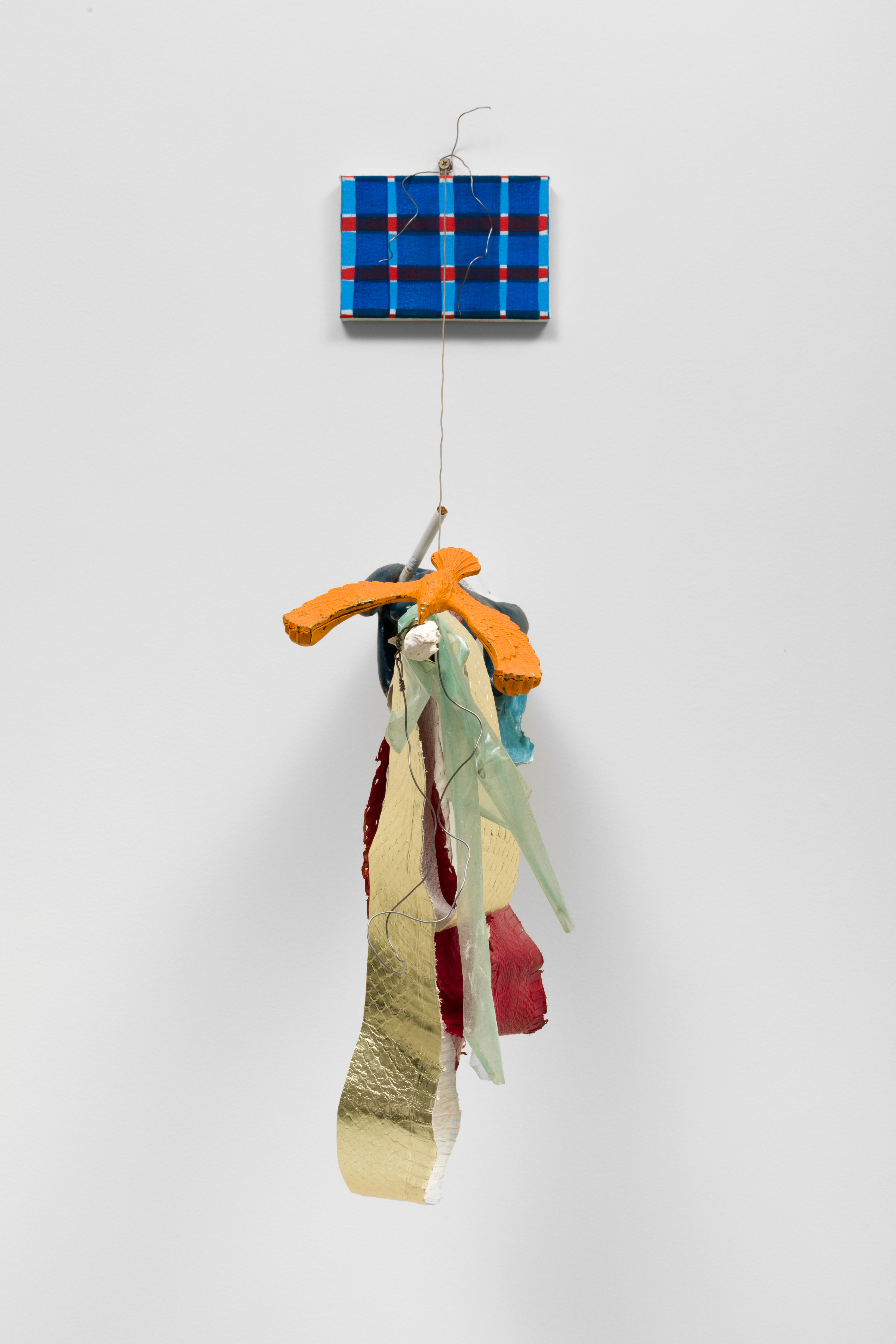
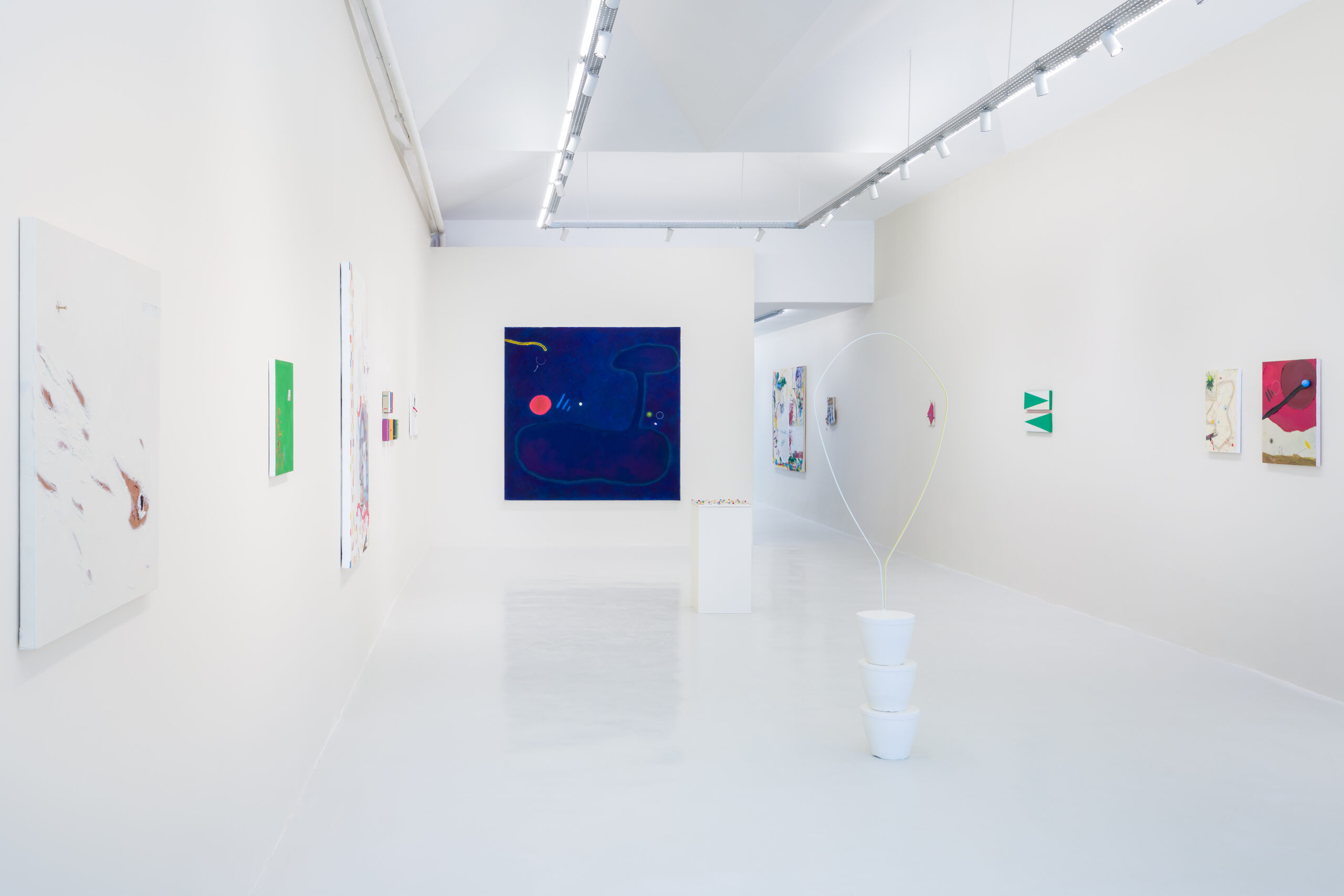
However, Rosa’s practice still leaves room for more orderly compositional works.(Composition with purple and blue, 2021). The sculptures, in some cases, proceed almost by inversion in relation to the operation of the paintings: descriptive title, restrained use of color, subtraction of volume and multiplication of the supporting mass (Three vases and an arch with a yellow interior, 2023). Yet another deviation from what could be a univocal meaning. In the artist’s wide-ranging pictorial and sculptural operations, it is a question of creating circumstances so that contingency can emerge precisely in a throw of the dice.
Daniel Donato Ribeiro