Navel of desire
Matheus Chiaratti
curated by Julie Dumont
April 24, 2019 - May 24, 2019
Rio de Janeiro
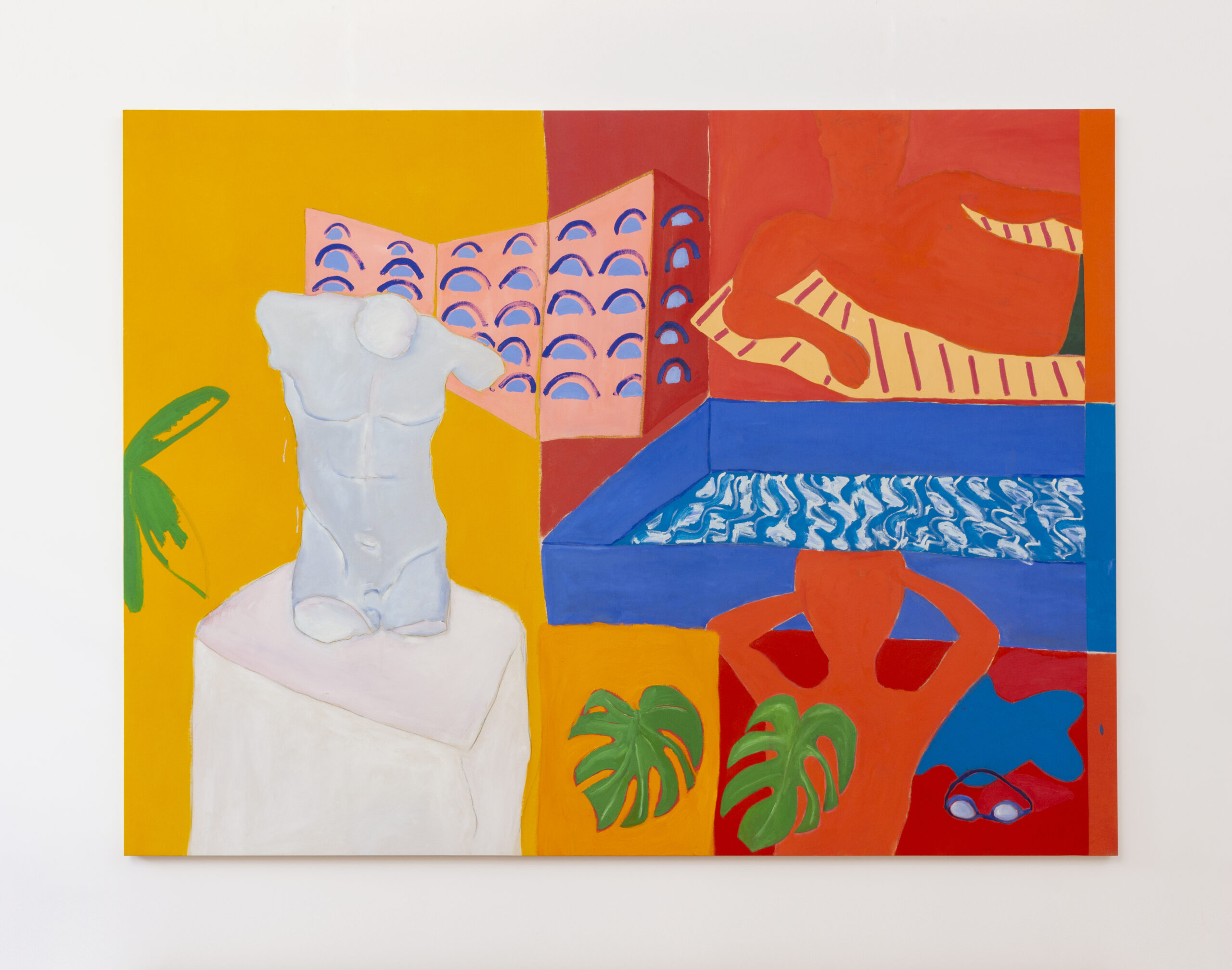
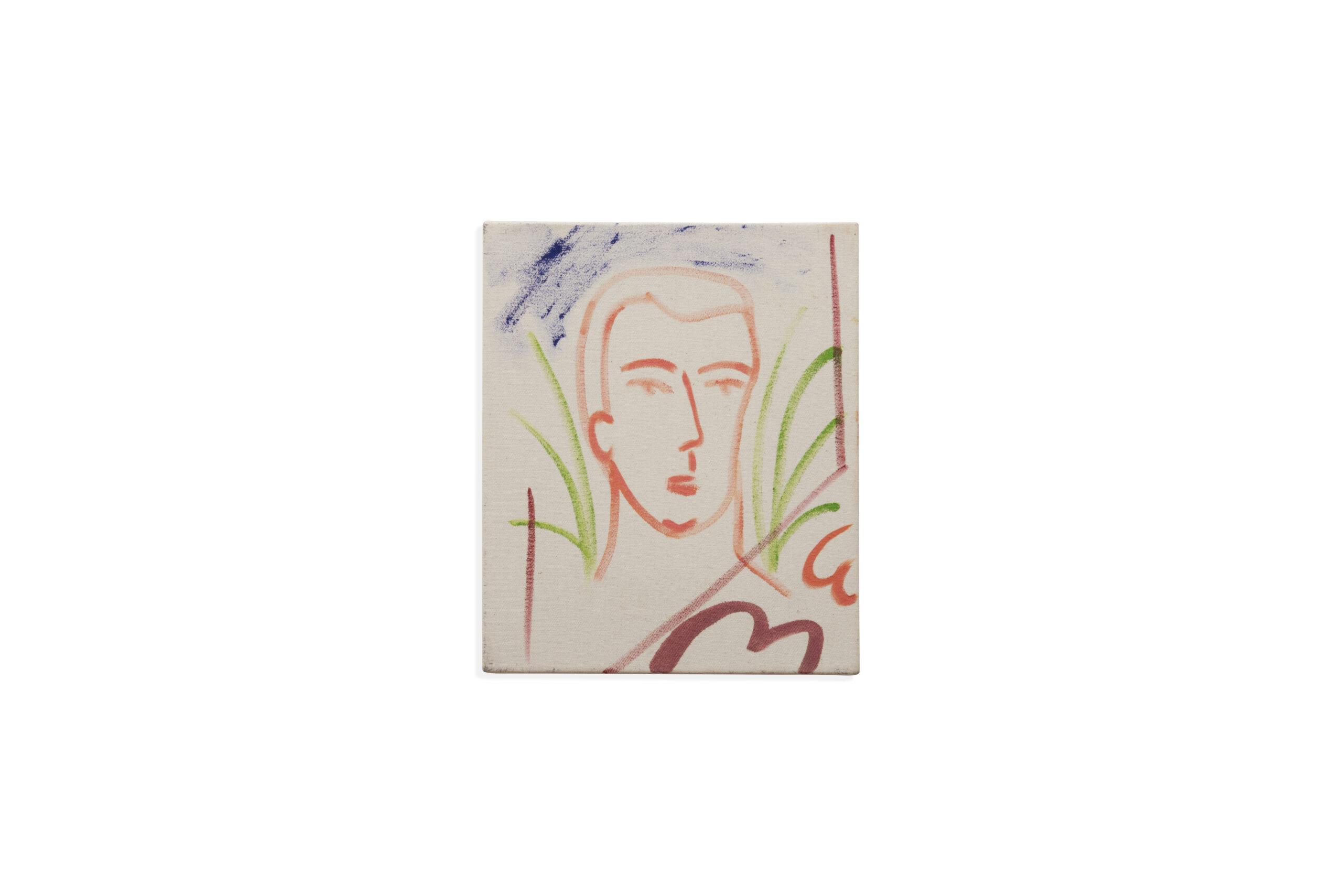
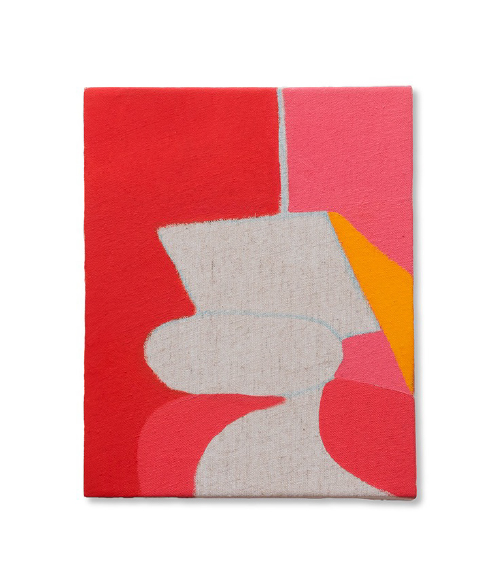
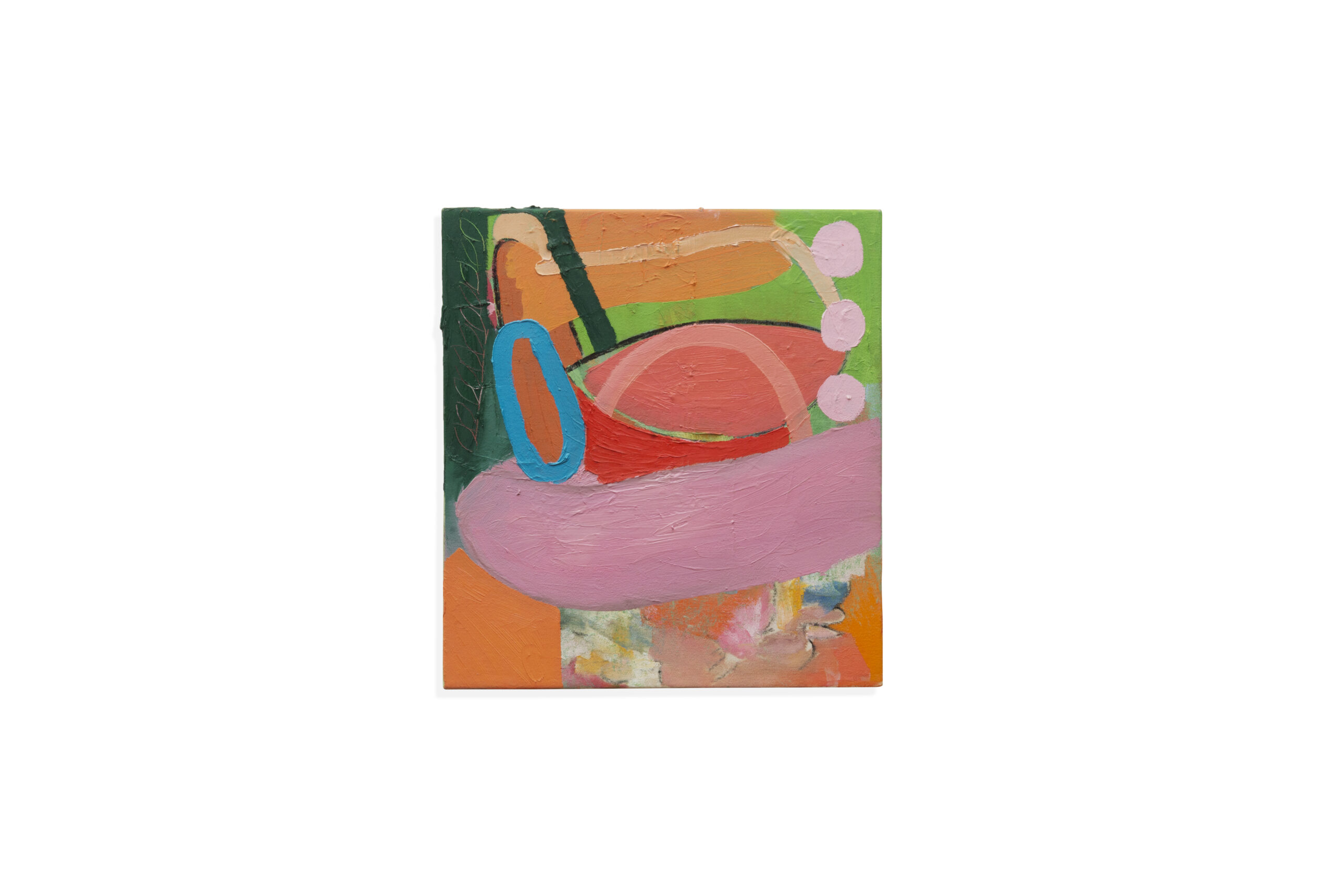
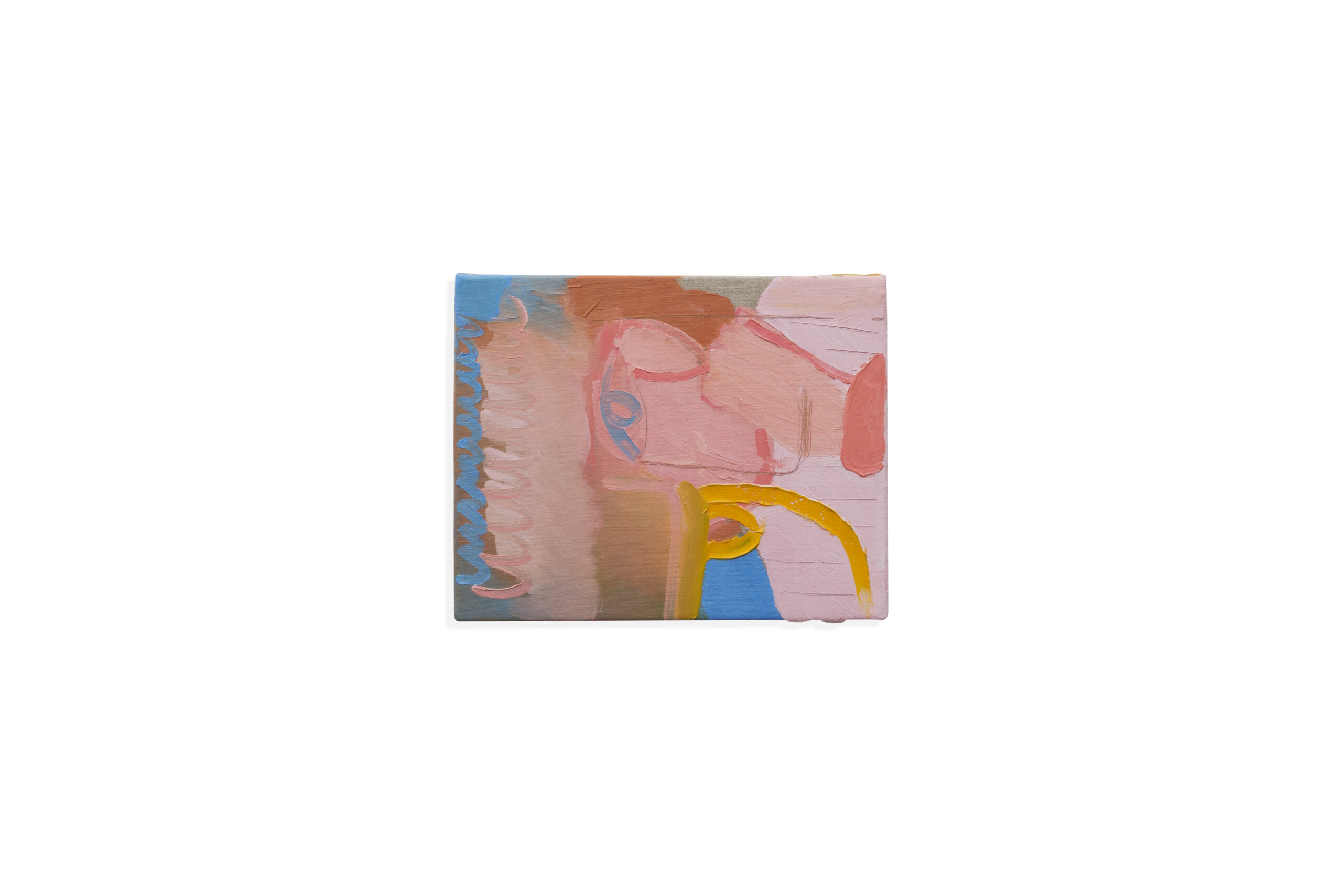
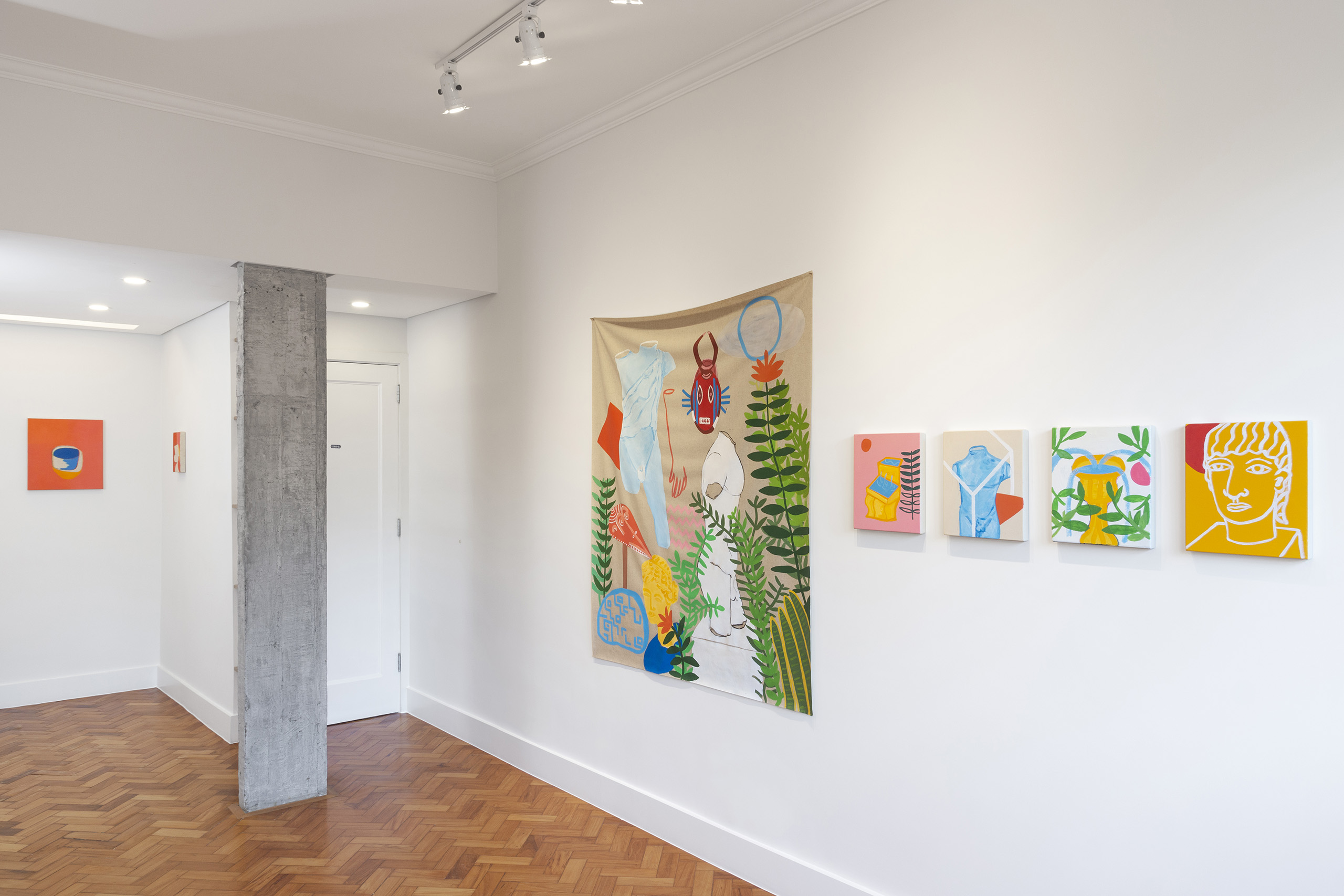
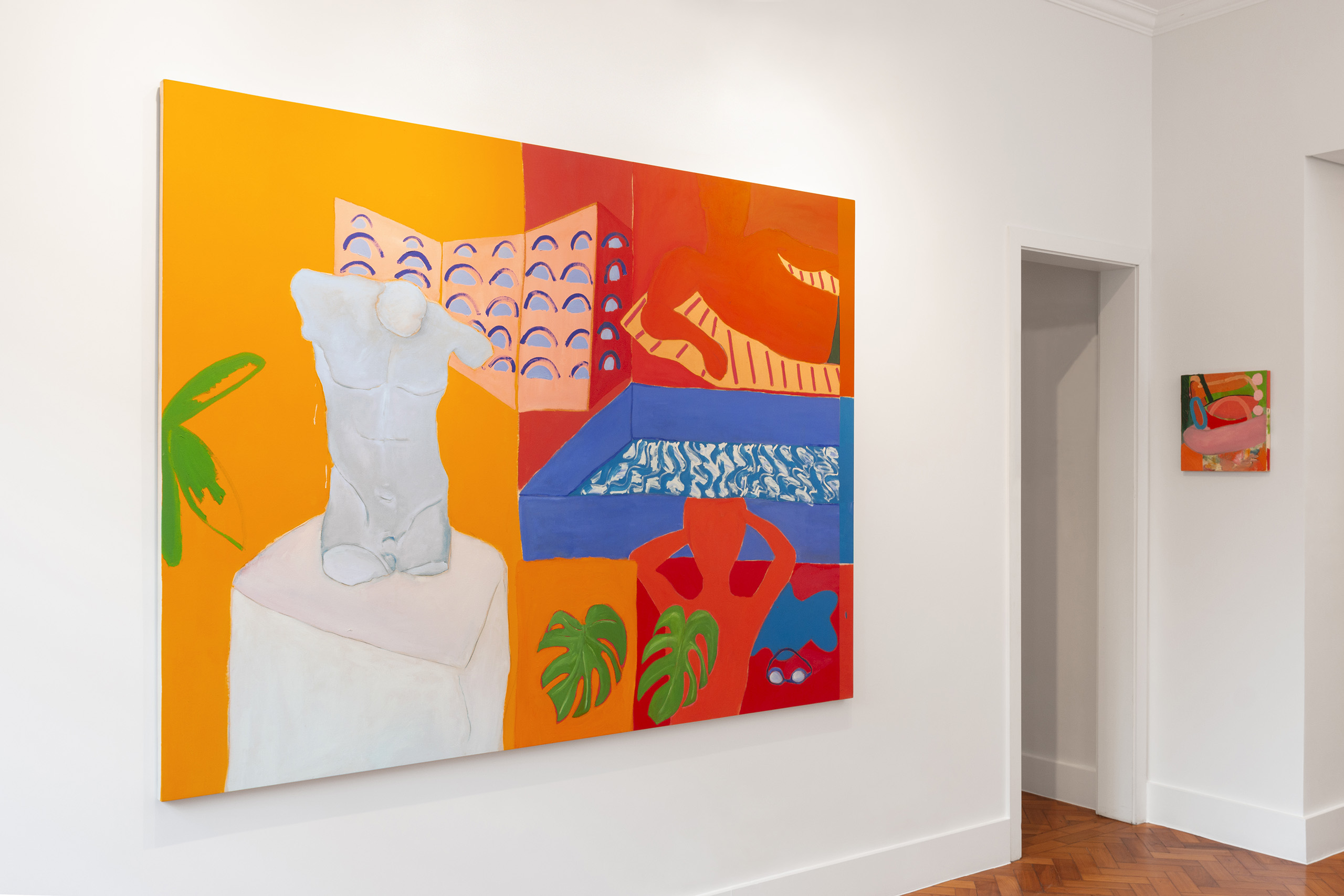
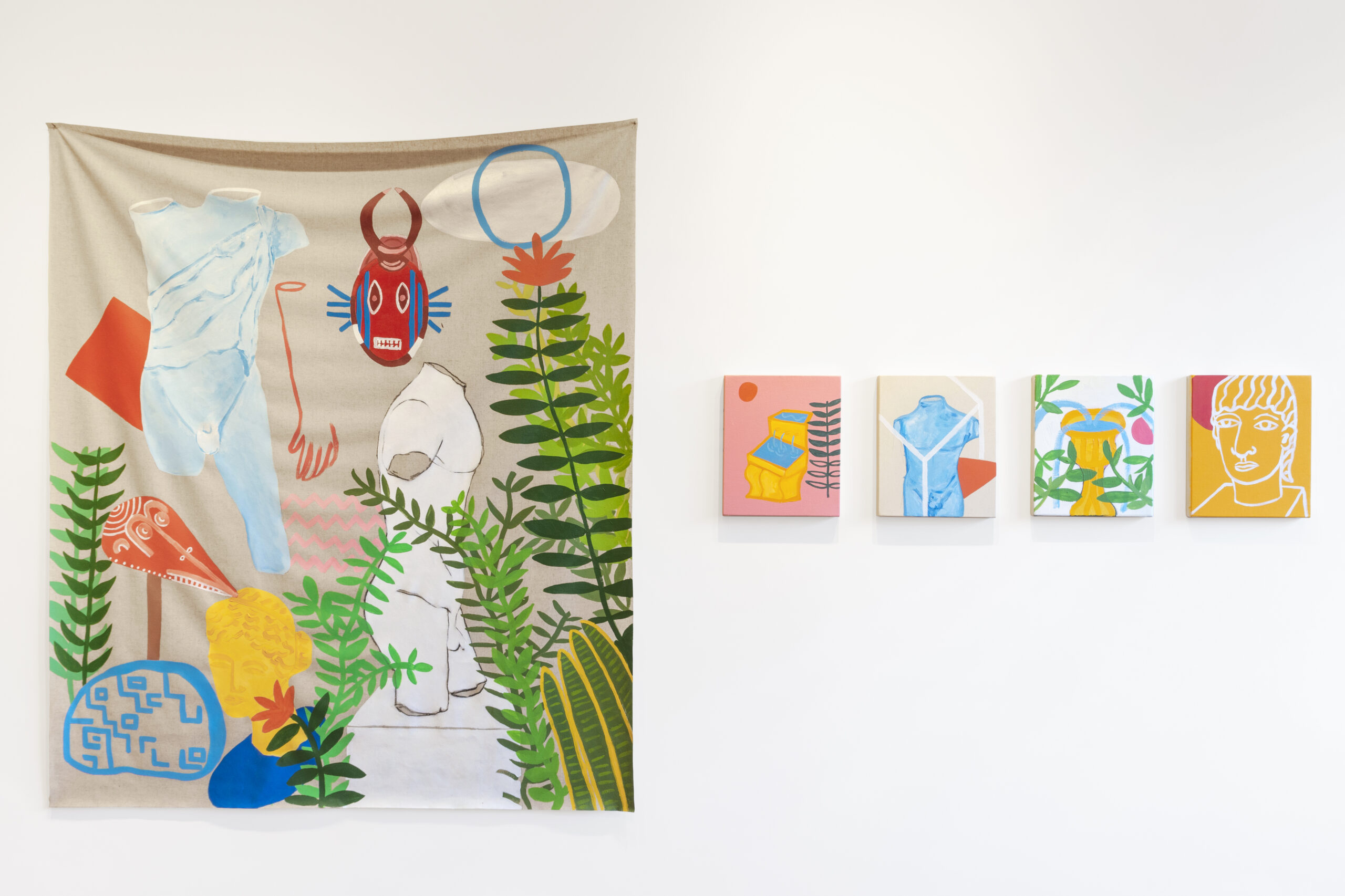
Broken, fickle and fragile loves, expressive and veiled desires; memories of bodies, moments and journeys, of country and religious Brazil, its decorations and processions coexist alongside references from literature, art history and contemporary art and merge in Matheus Chiaratti’s pictorial field.
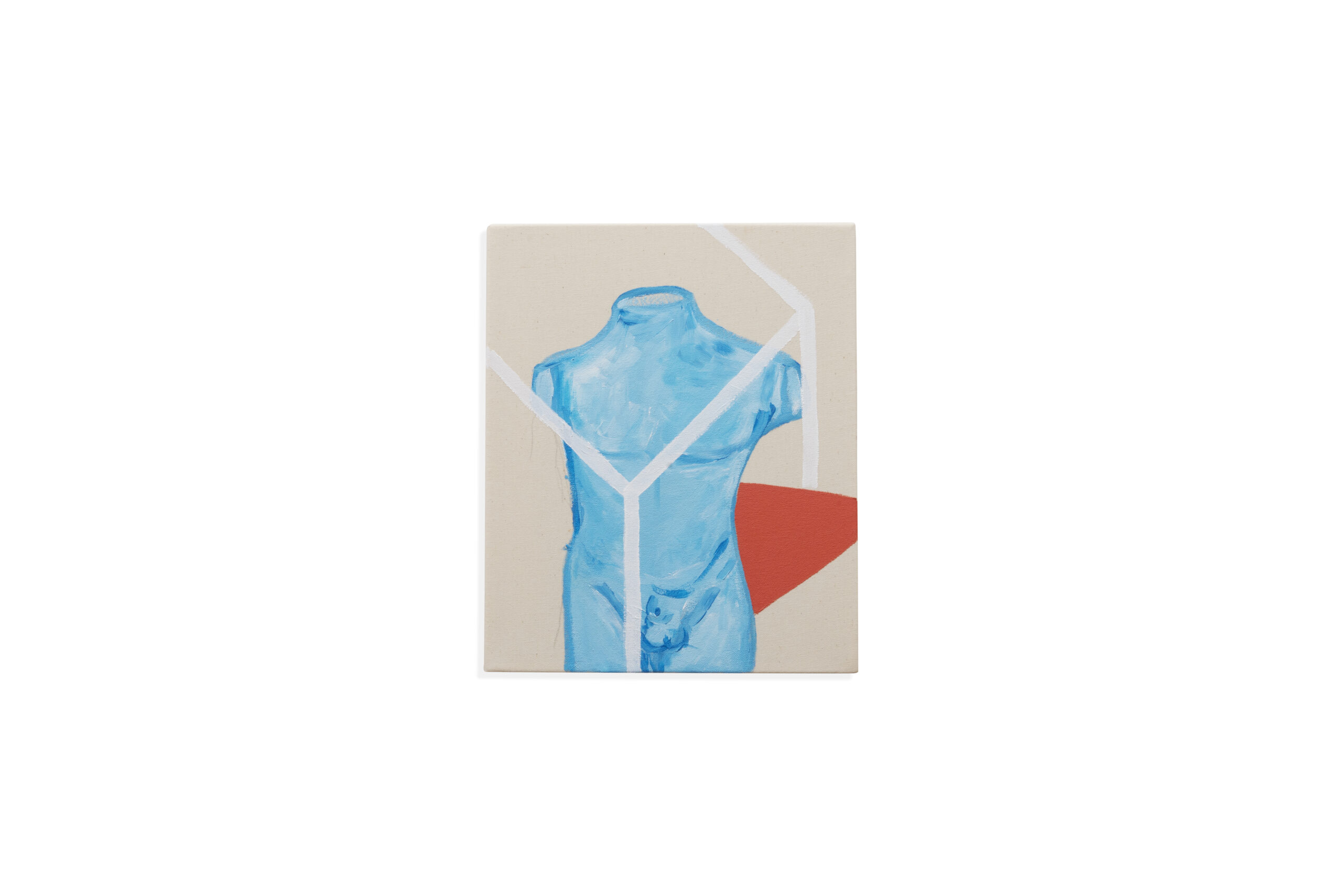
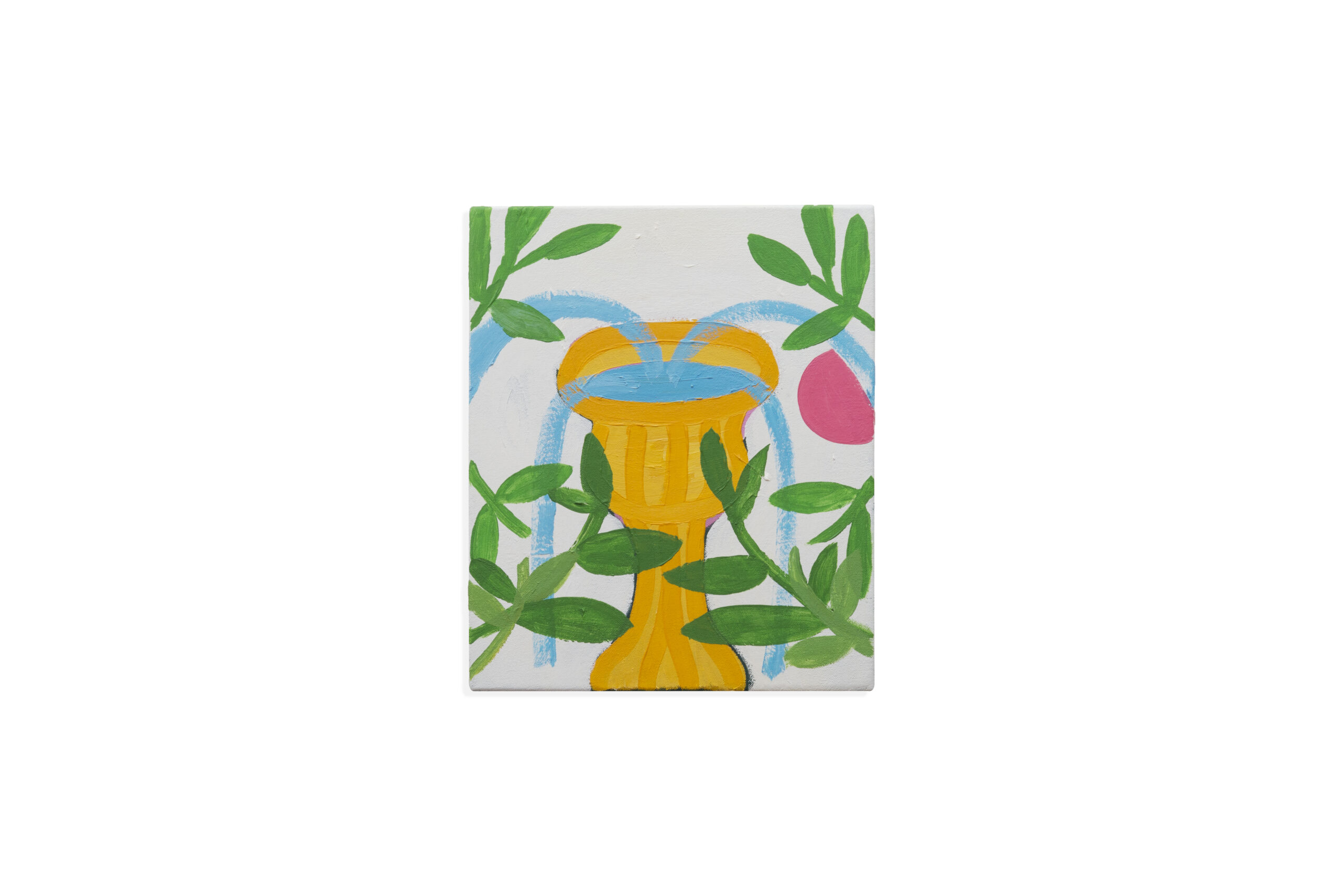
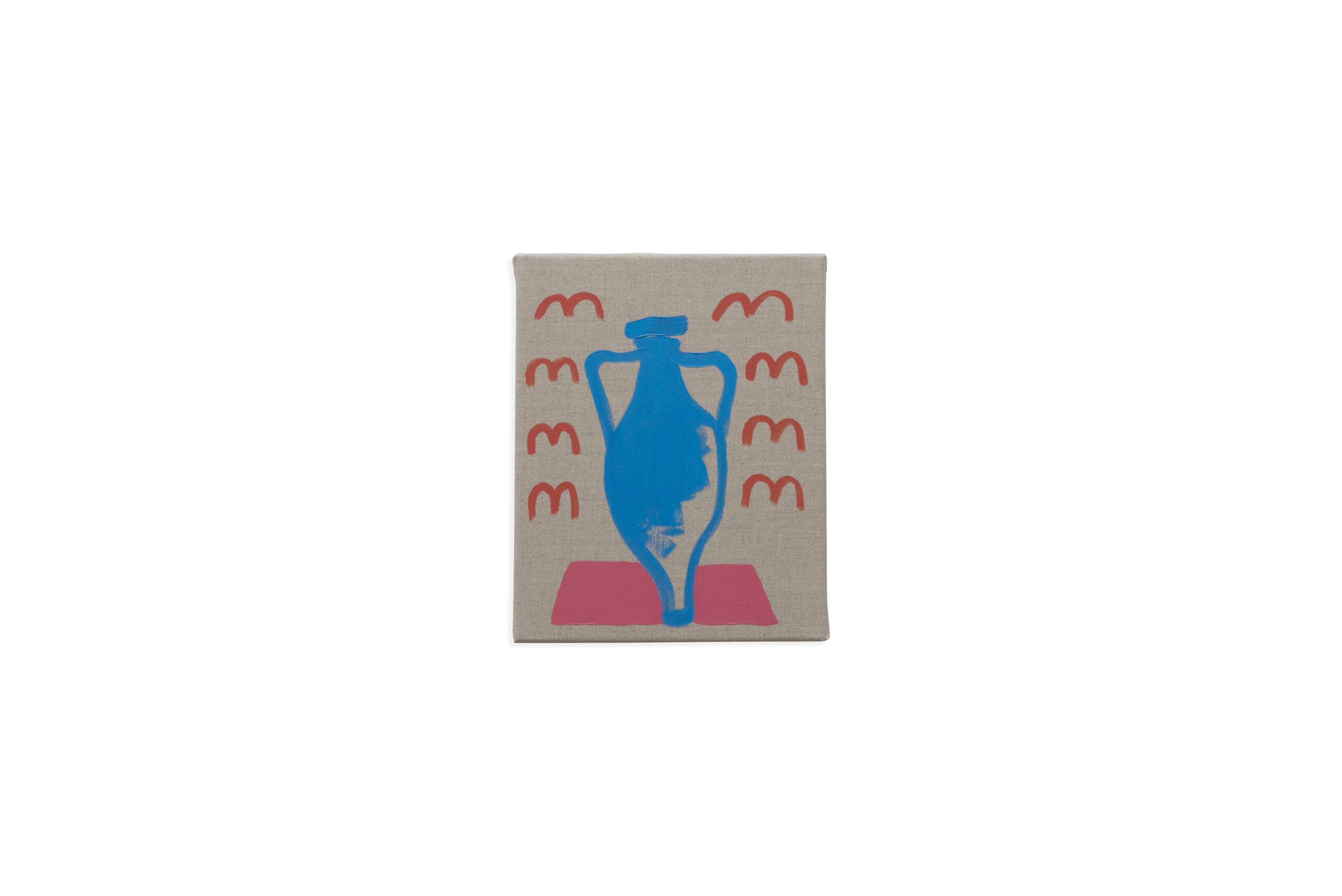
Umbigo do Desejo, the artist’s first solo exhibition in Brazil, takes the form of free subjective constructions, experiences and memories turned into ciphered images, reinventing, between abstraction and figuration, stories within history.
The articulation of elements in the form of a rebus evokes a technical, almost cinematic construction of the image. The proposal makes it possible to capture and reveal a greater essence of what the eye can capture, thus dialoguing with the concepts developed by Walter Benjamin about photography and cinema, which perhaps not by chance were the artist’s training and focus before he dedicated himself to painting.
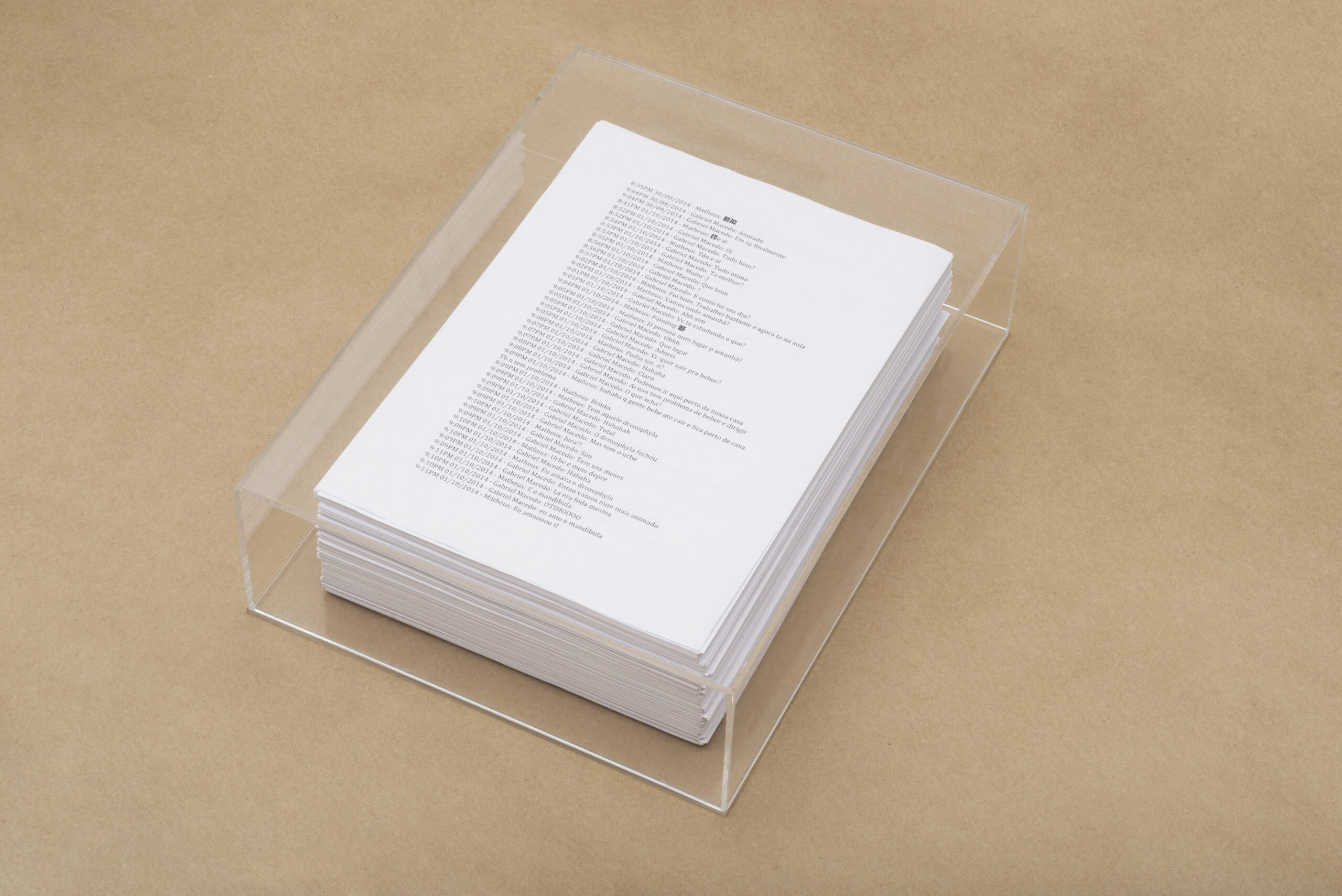
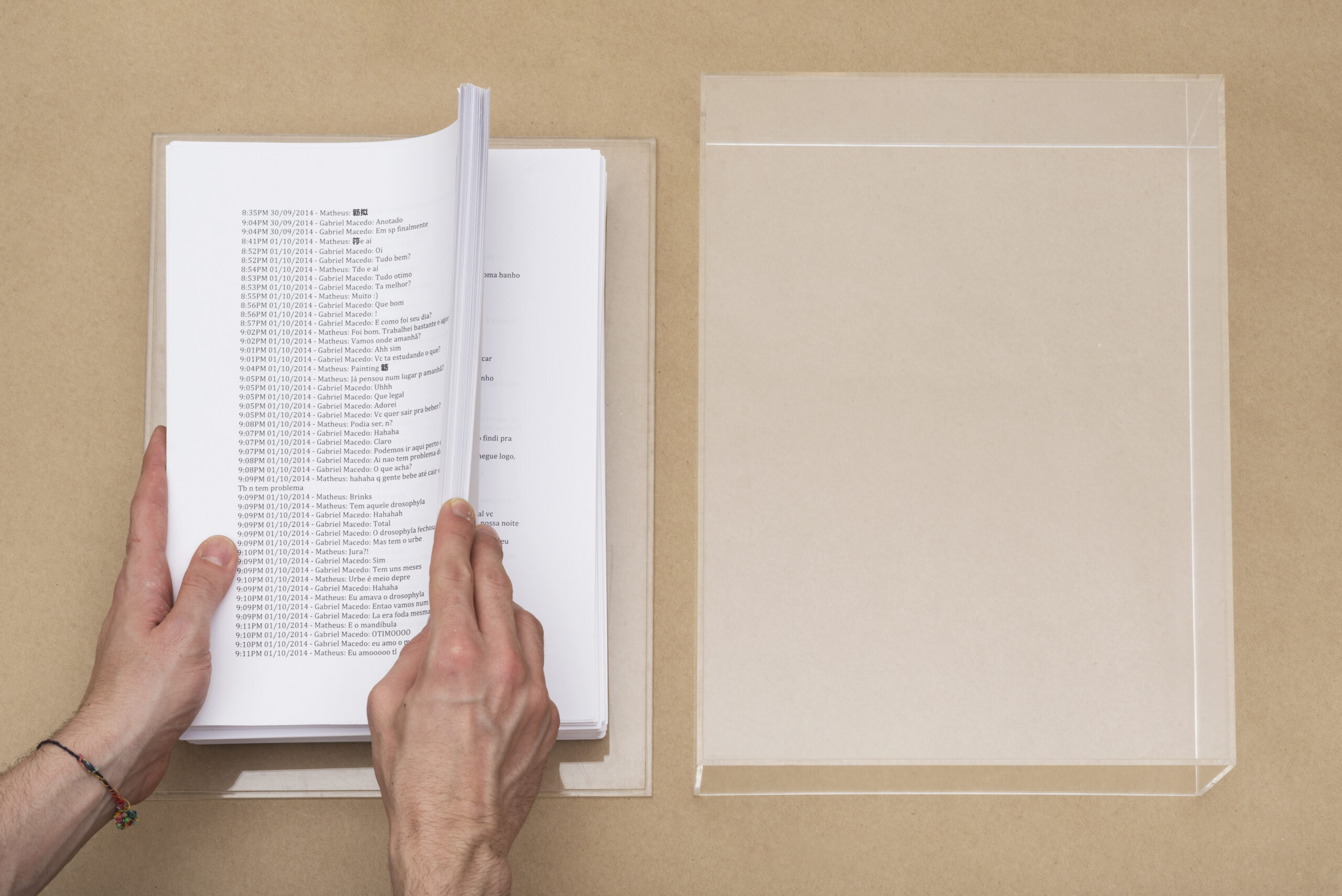
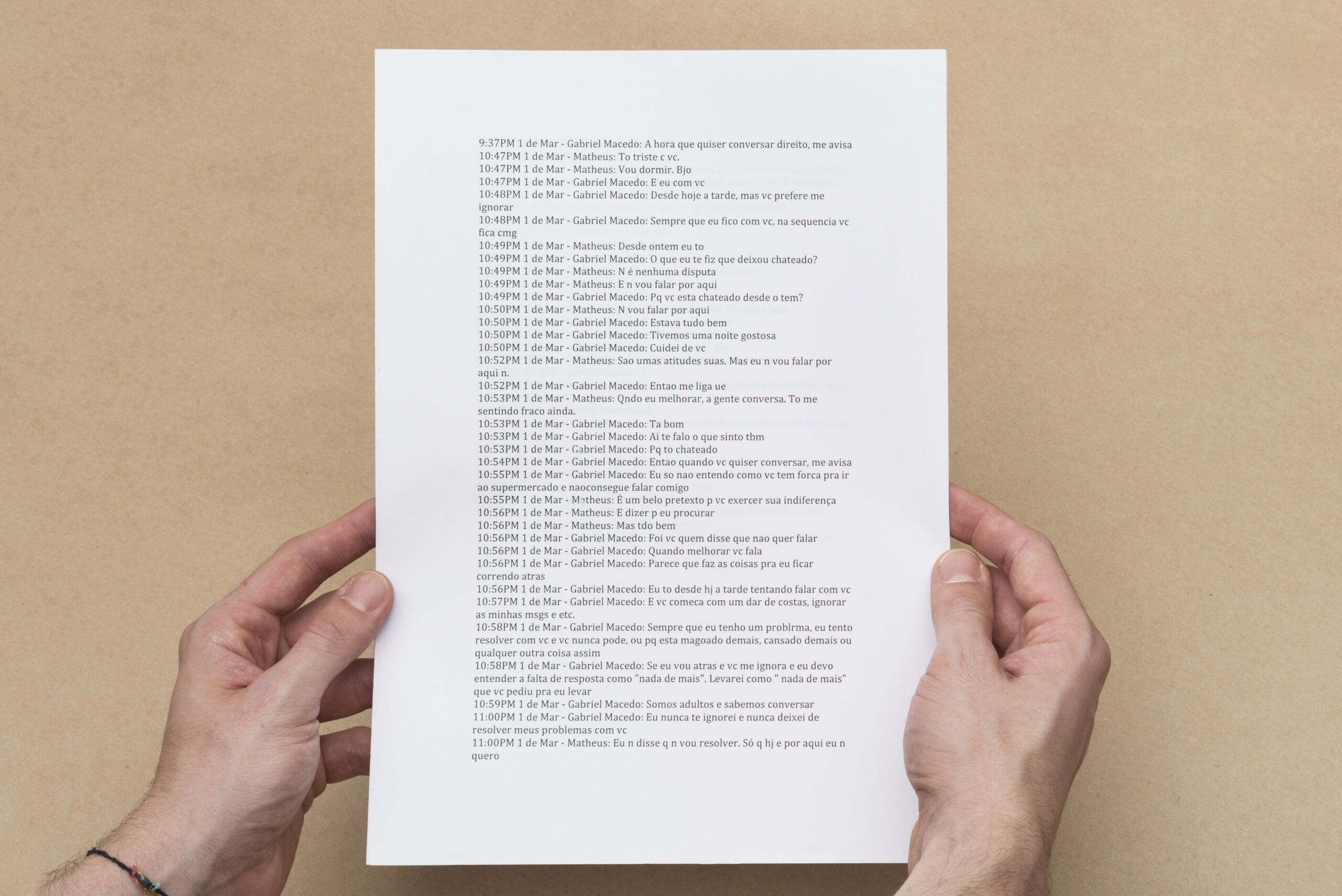
In parallel, the word permeates the corpus of works: letters appear or fade away while the titles of the works suggest and associate artistic and personal references, adding agendas such as affection, sexuality, tradition and nature. The importance of the word is further emphasized by an acrylic box in which almost 900 pages of whatsapp conversations between two lovers establish a formal link between the art object and the writing, opening up the narrative that is otherwise hidden. The pages of the work, simple impressions, can be handled by the viewer to reveal a moment of extreme intimacy.
The embroidery expresses the clash between Chiaratti’s caipira origins and life in a metropolis like São Paulo. The object itself in fact evokes Catholic paraphernalia and at the same time contains allusions to works by artists such as Rivane Neuenschwander and Leonilson, to the chaos of desire and its opposites.
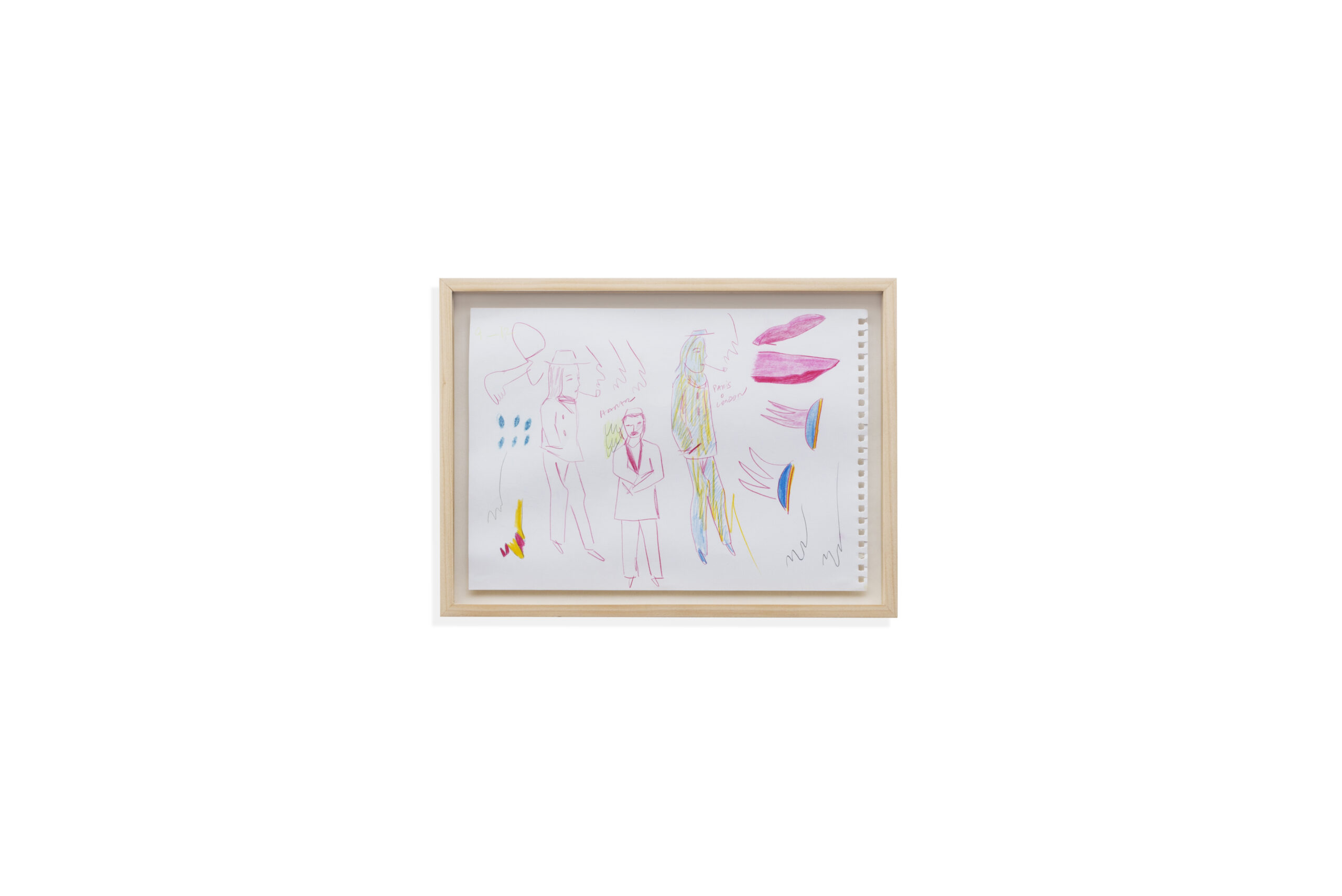
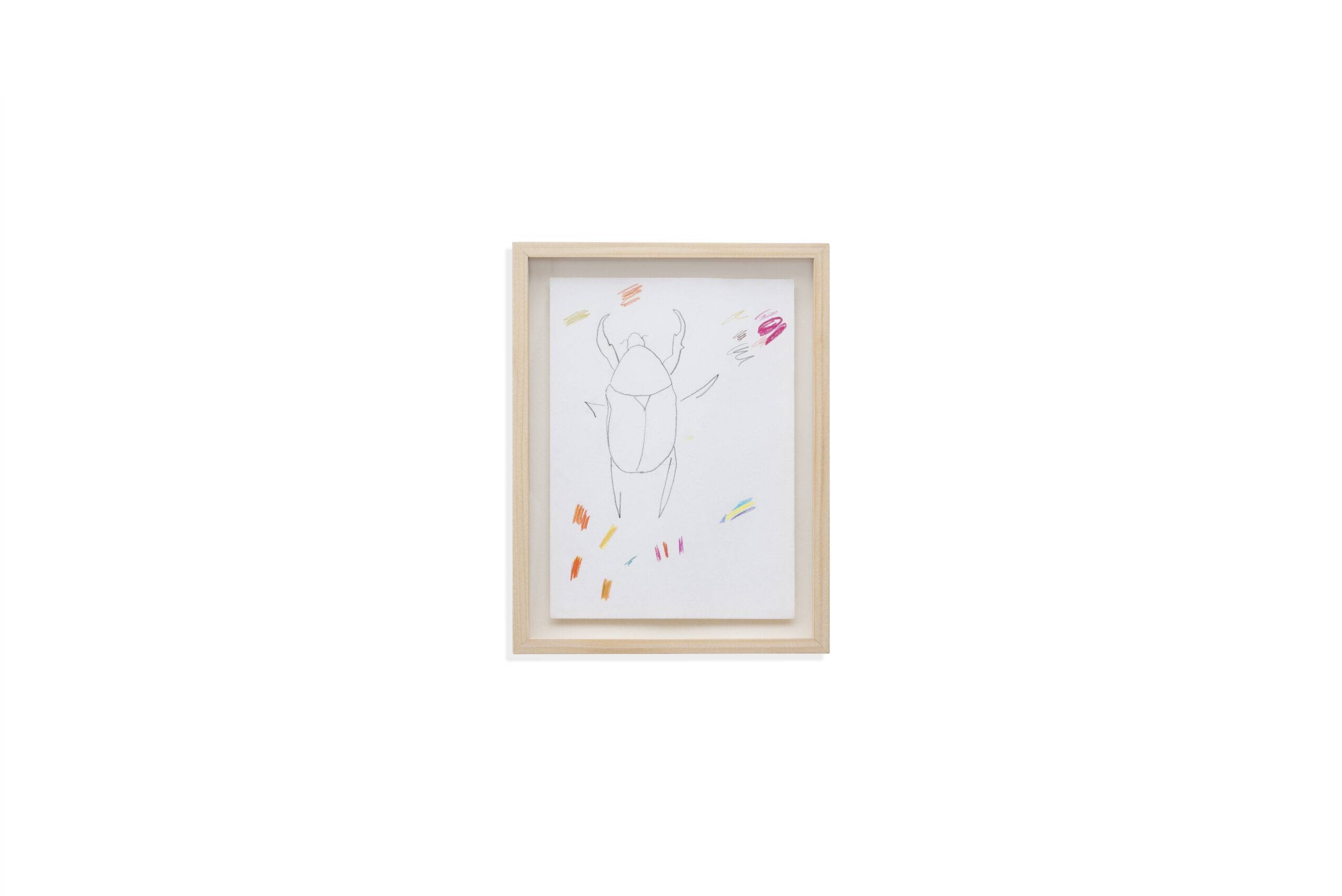
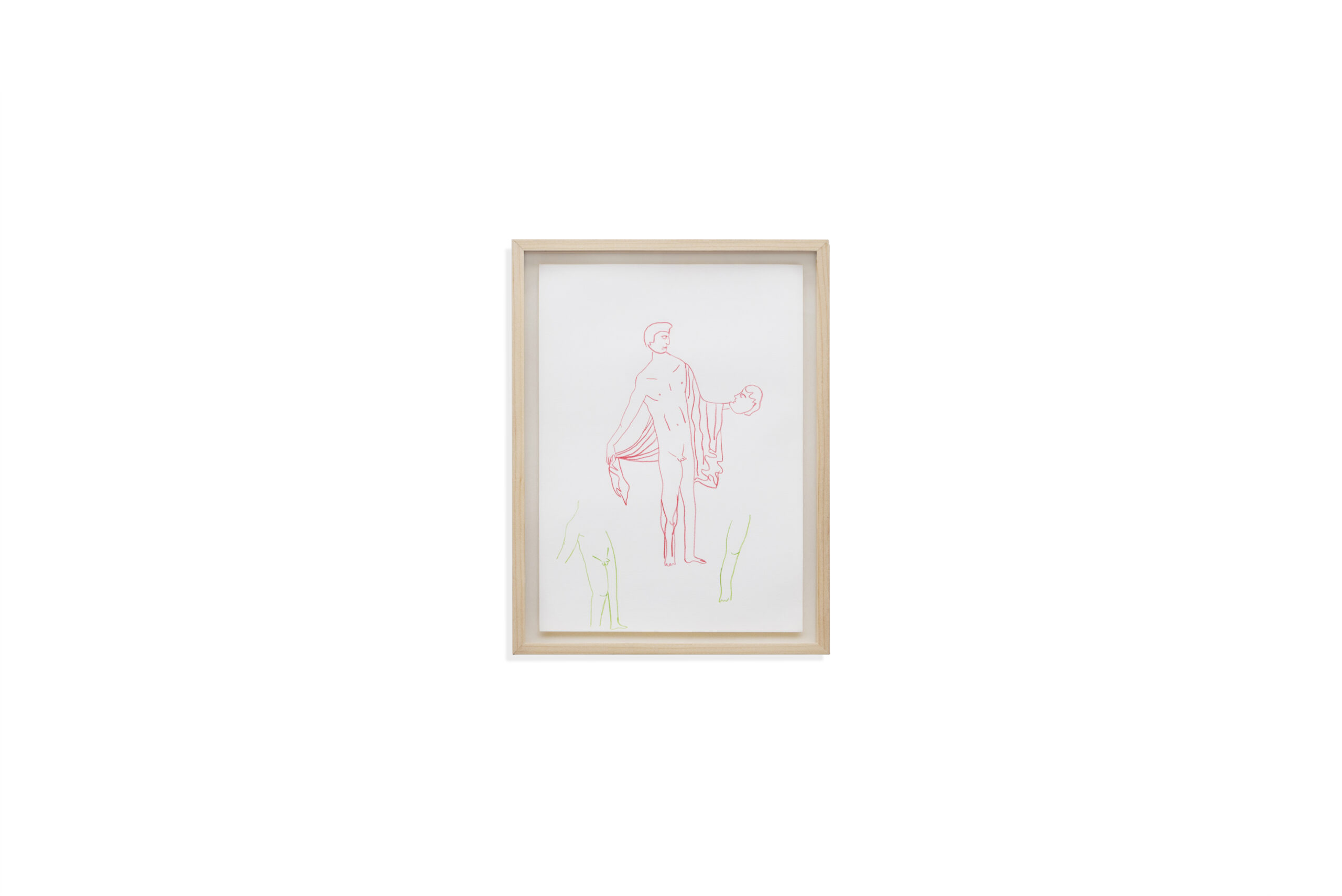
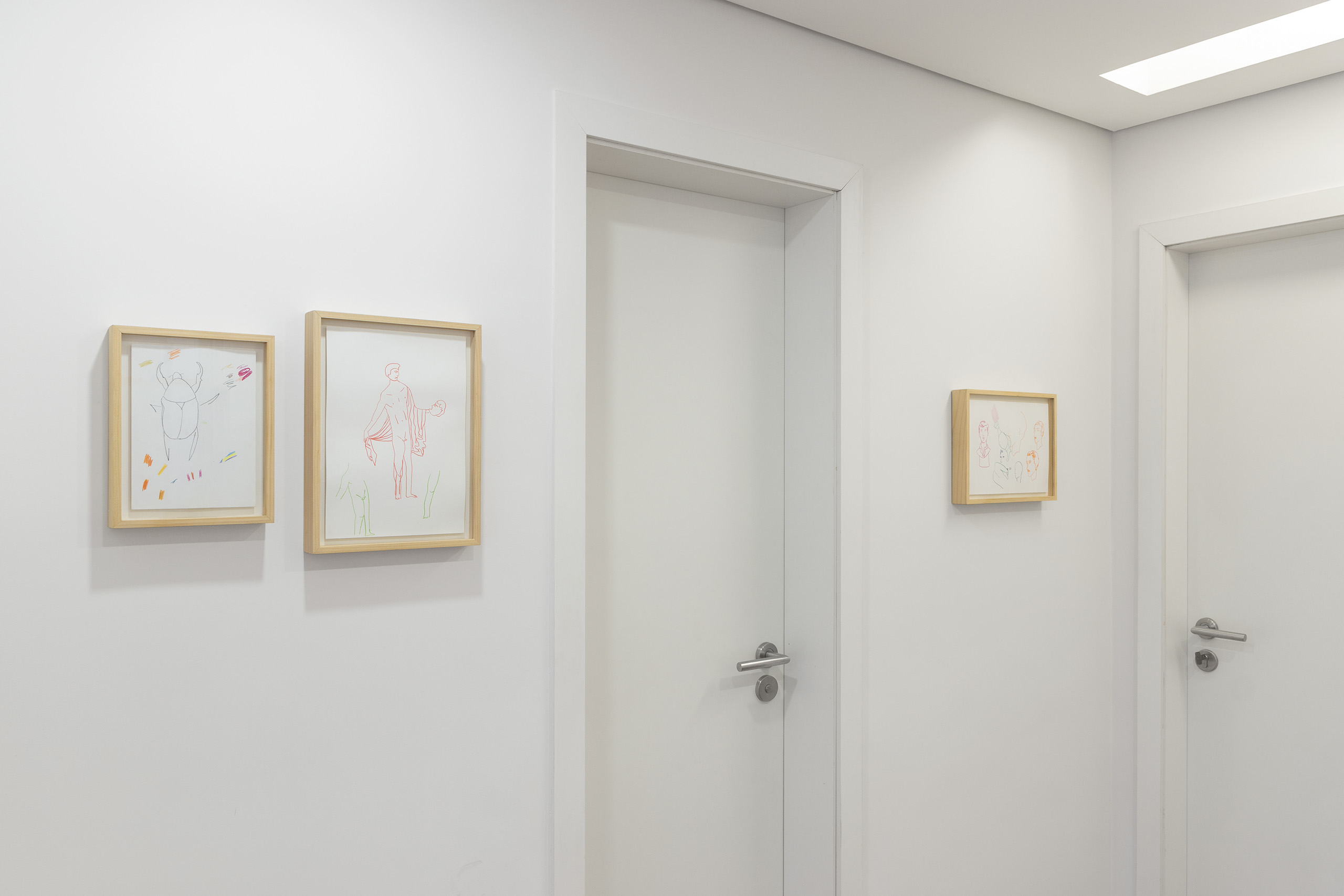
The drawings outline the elements developed in the paintings, where the images that make up Matheus’ pictorial vocabulary are mixed in a game of mirrors: baroque churches, landscapes of the interior of São Paulo, fragments of familiar bodies and faces or figures from literature, statuary left over from Italy, blue waters of desire or even environments evoking the impersonal coldness of furtive meeting places contrasted with the warm colors of an imaginary Africa.
In Matheus Chiaratti’s paintings, intimate memories are treated as secrets and are therefore carefully guarded. As in the artist’s oeuvre, the exhibition is constructed in the form of a diary and reveals in a tangle of shapes and symbols the ambiguity of feelings and situations from intricate and affective worlds. In this construction, image and language condense and open up, despite the plot formed, a crack where the unspeakable appears. Conversing with Freud’s dream or Lacan’s desire, Umbigo do Desejo reveals the artist’s fascination with the origins of drives, the primitive and the intimate through texture, color, patterns and voids; zones of invisibility or keys to the hidden narrative.
Julie Dumont