When lightning strikes the sand
Iagor Peres
curatorial text Ariana Nuala
May 27, 2023 - July 22, 2023
São Paulo
The forces that attract lightning when it falls from the sky to the earth are unpredictable and variable. When there is an excess in the energy field, the rays are directed out of the clouds, presenting their luminous body in the atmosphere and also causing explosions of heat when they come into contact with any matter.
In the case of sand, as its landing place, the lightning causes a suspension force in the different grains that were there, based on the intensity of its arrival. The particles then receive a transfer of energy from this flash, which reshapes their molecular structure, forming new arrangements. The transformative movement that takes place during the fall is invisible to the human body; the fusion between lightning and sand may give us goose bumps, but the process of interaction is completely fleeting to our eyes.
The complexity of an atmospheric phenomenon like lightning tells us how difficult it is to measure the precision of its dance. In addition to the need for electrical discharge, there is also a still unknown attraction regarding the exact location of the lightning strike, even if there are recurring characteristics of these places.
I like to think of the lightning meeting the sand as a riot of desire, as well as the practice of manipulating metals, an exercise that has been done by many people for millennia. The latent desire to do this gave rise to the act of welding: an experiment that takes place in various forms and seeks to solve the union between metals. This encounter with metals is seen by many as a process of survival on Earth, but it also evokes, perhaps, an unspoken and unknown desire.
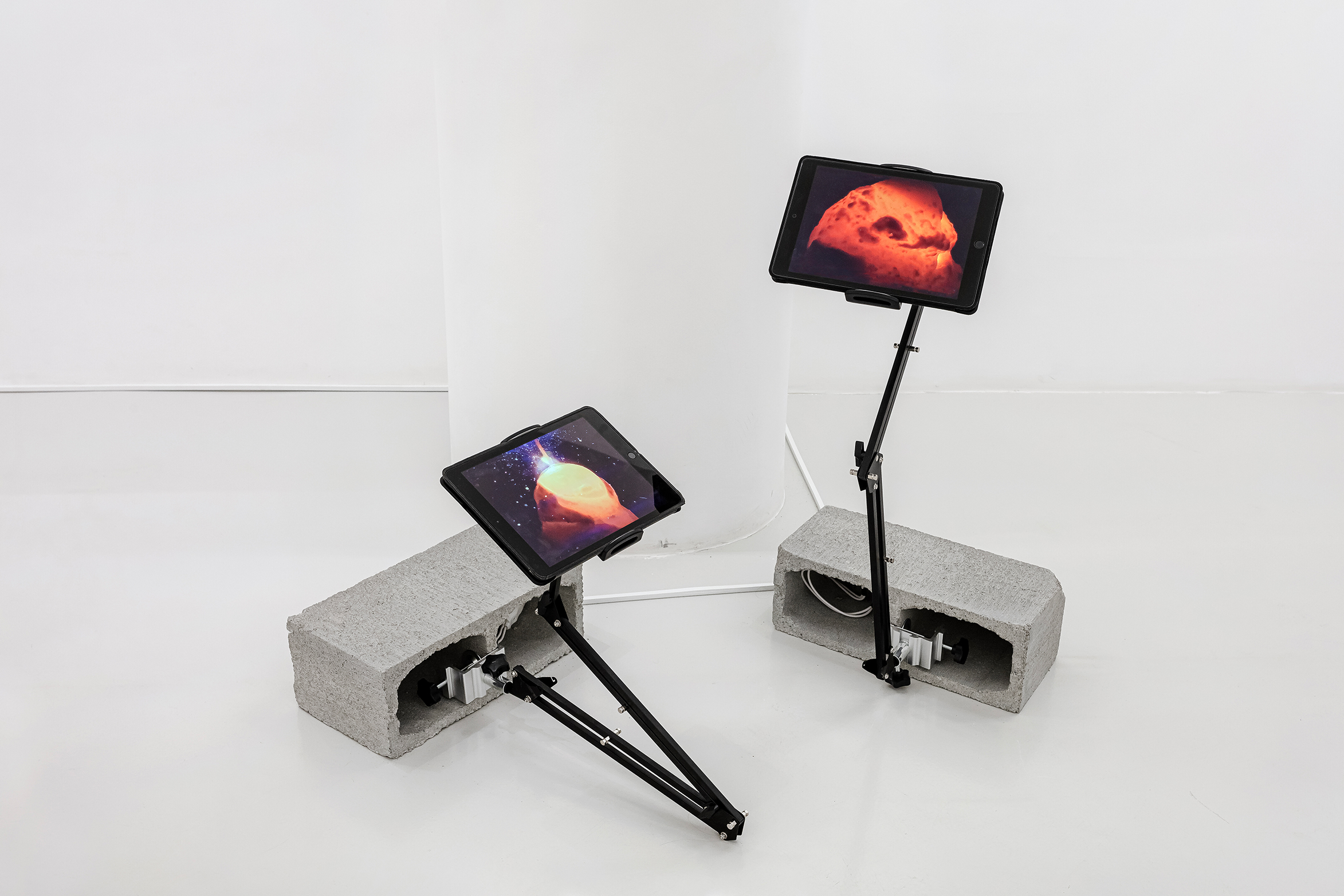
Forging, welding and casting are some of the ways in which metals are manipulated. Here I want to focus on welding and its melting process. Unlike casting, where the parts need to be melted, welding involves a connection between one element and another, which can be different types of metal.
From one point to the next, this process of making begins, which is often seen as something to be hidden, in other words, its presence is concealed in order to enhance the finish of the piece to be assembled and the technique of the person who made it. This refinement is increasingly appreciated by the industry and increasingly achieved by robotic hands.
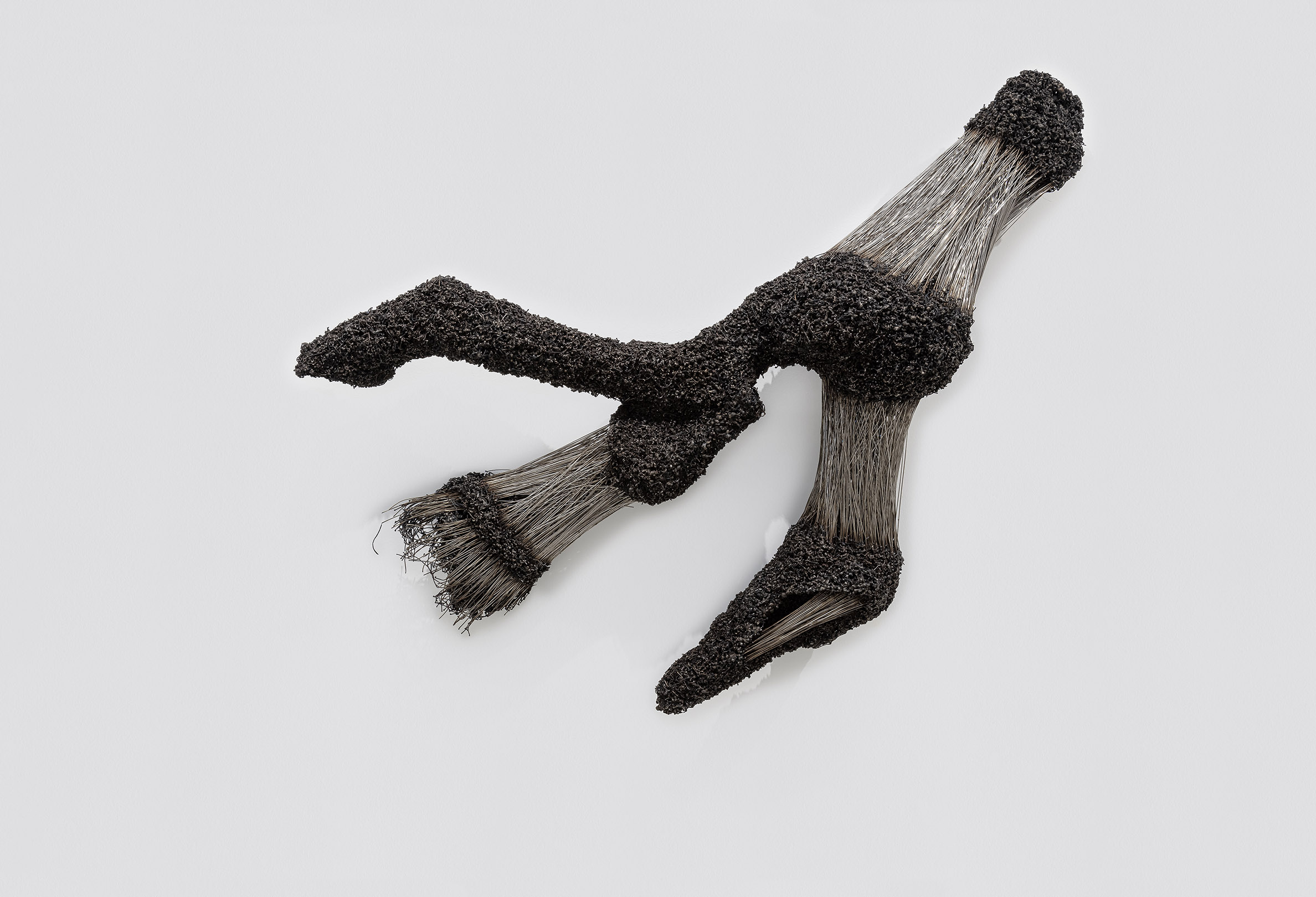
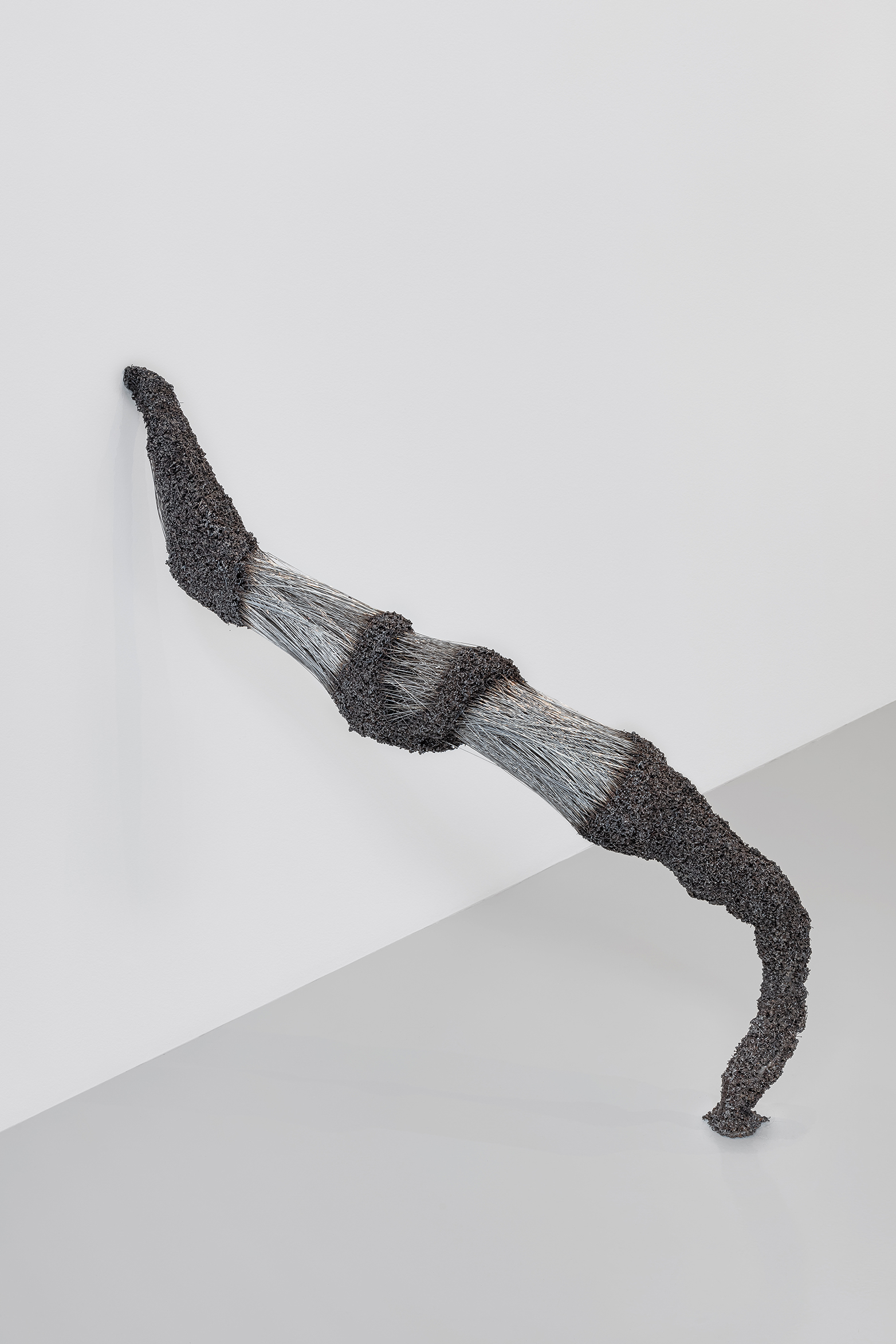
As such, Peres presents designs made from combinations of iron and other elements, such as carbon steel, one of the most common types of steel and widely used by metallurgical industries, and stainless steel, which combines iron, chrome, carbon and nickel.
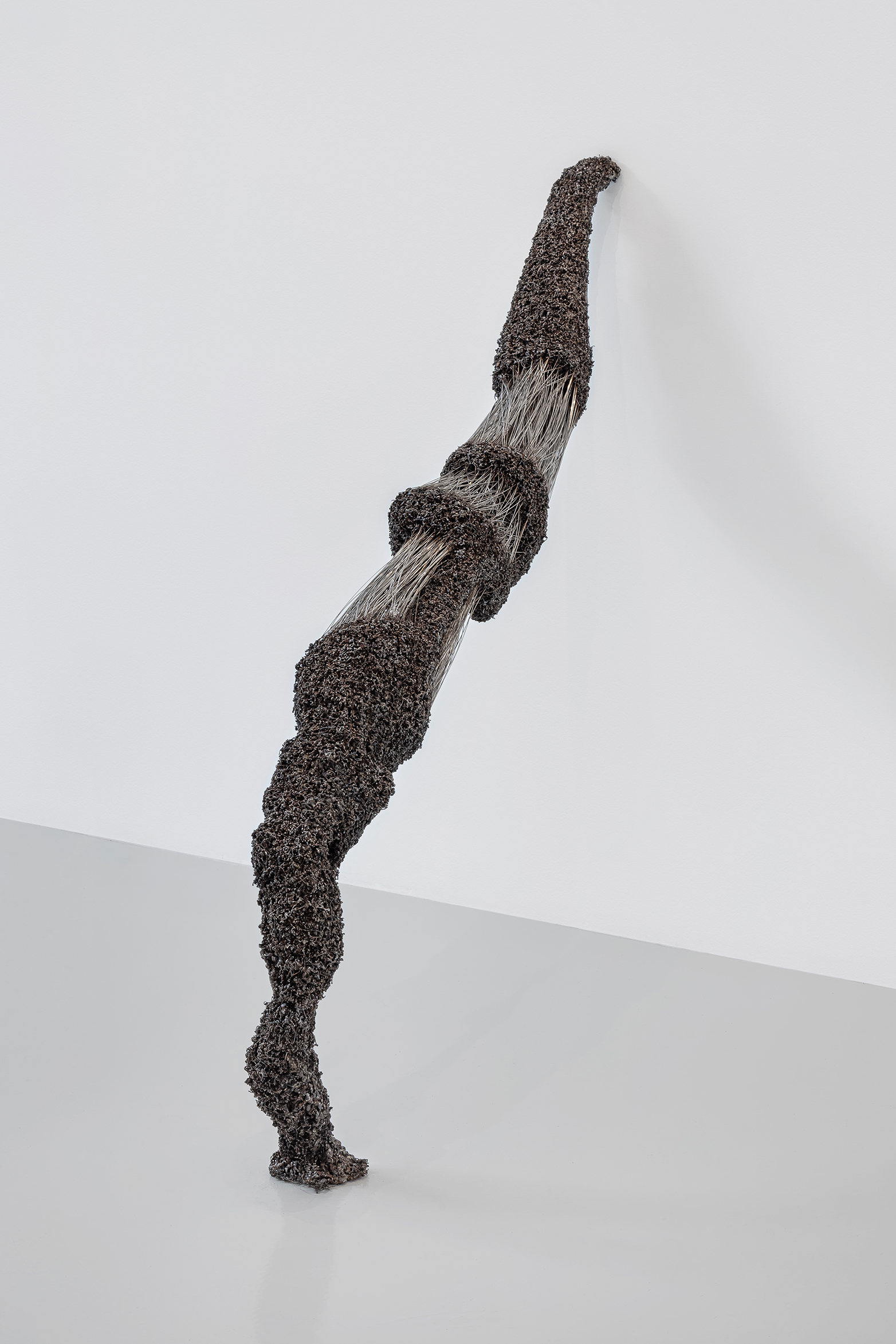
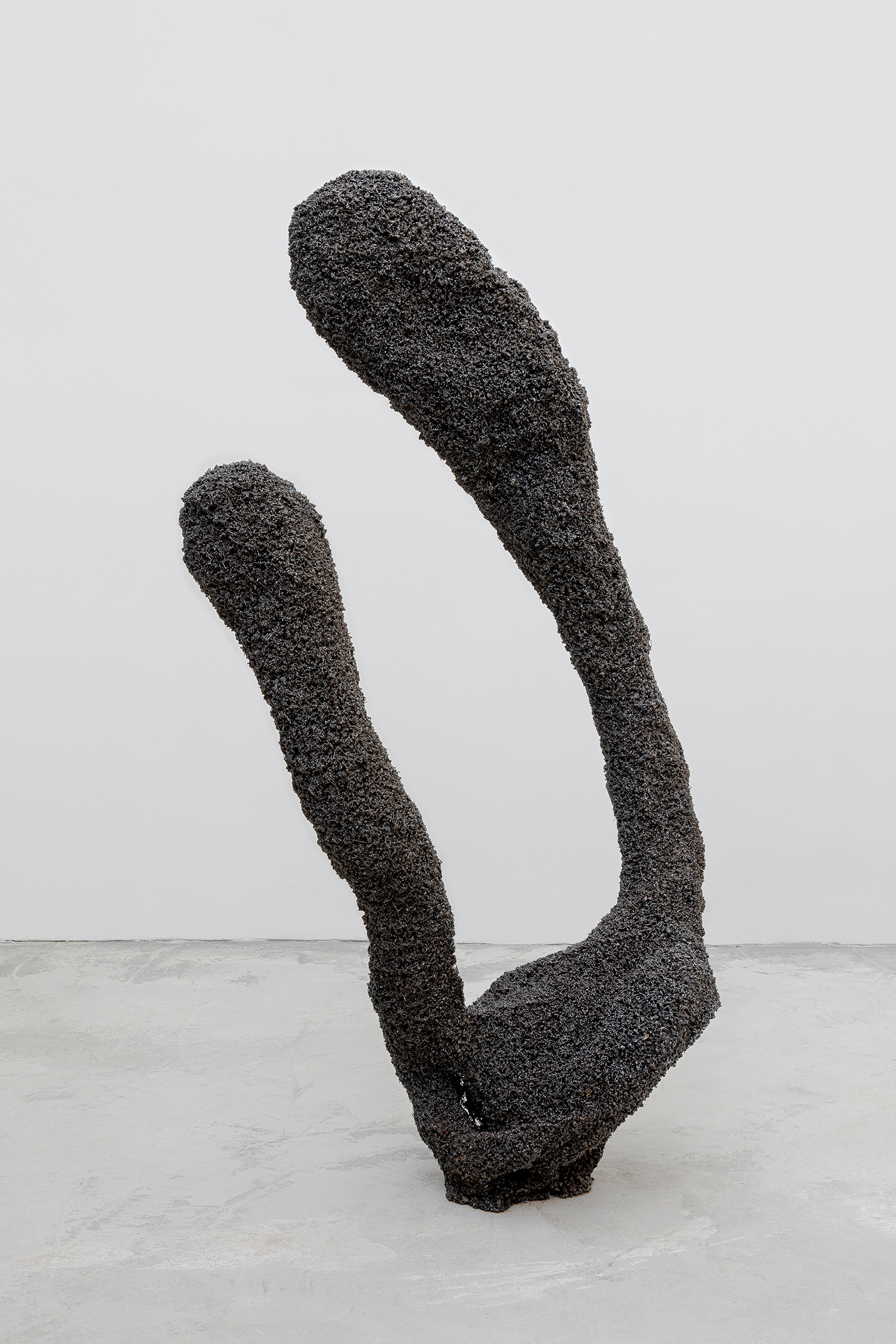
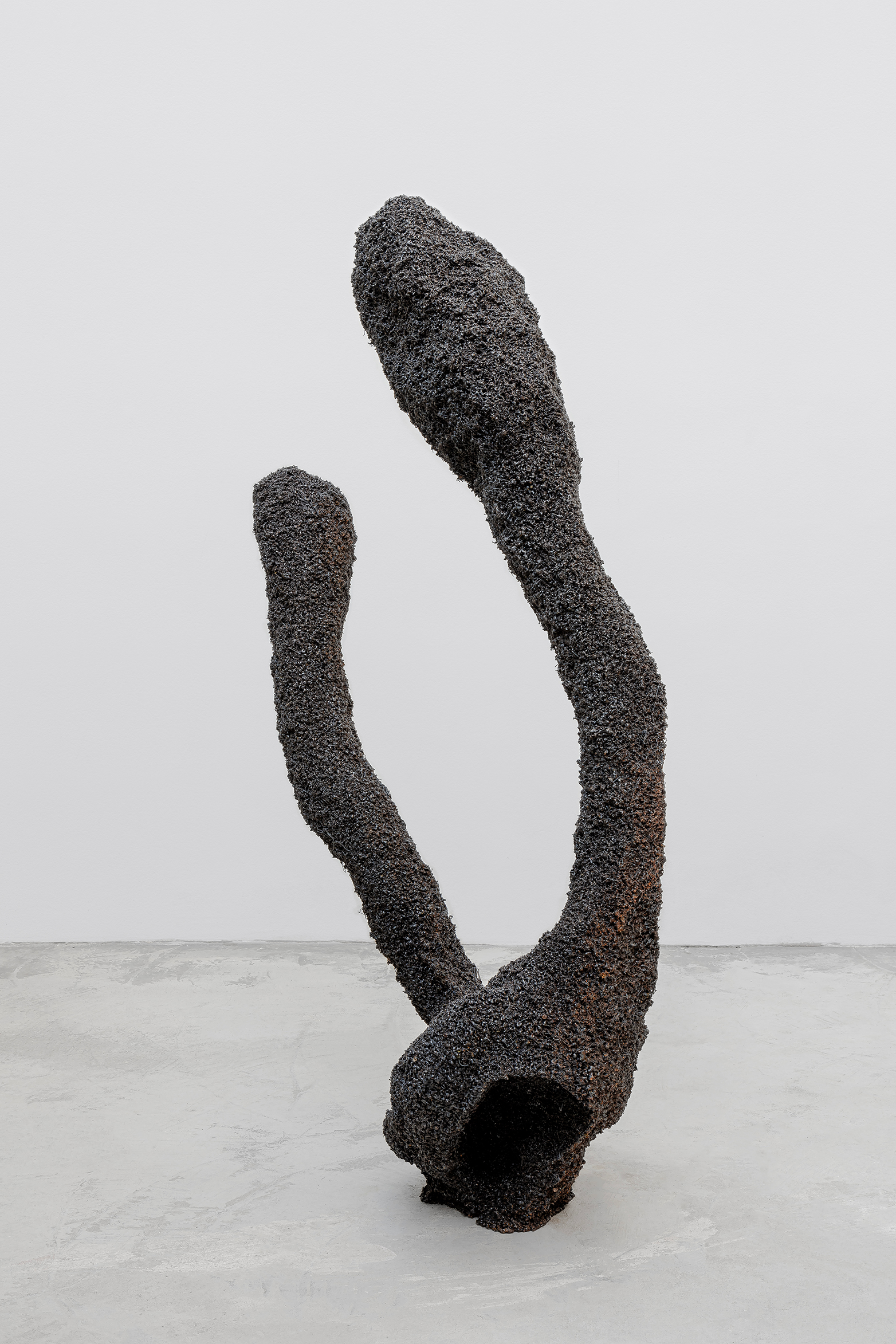
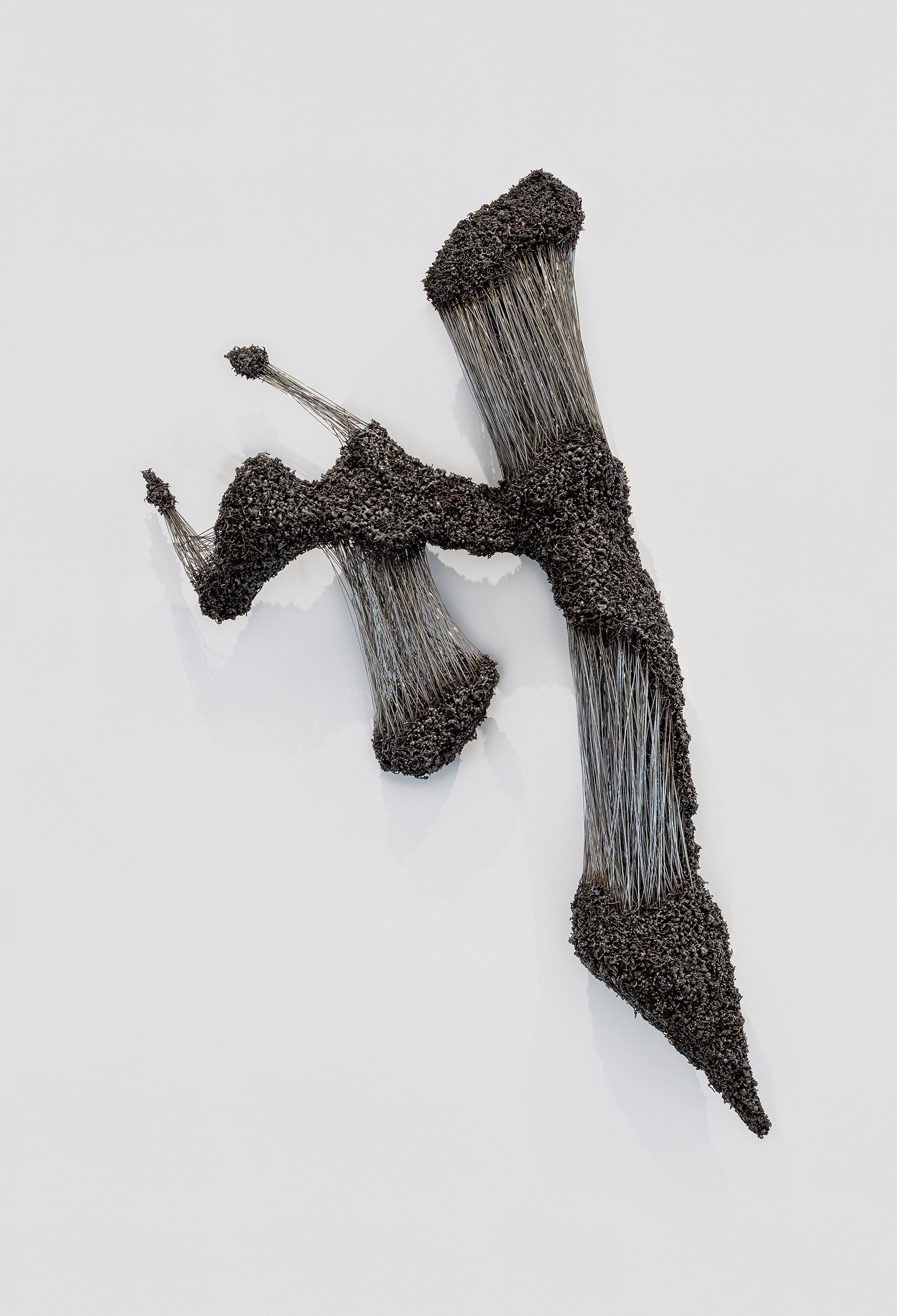
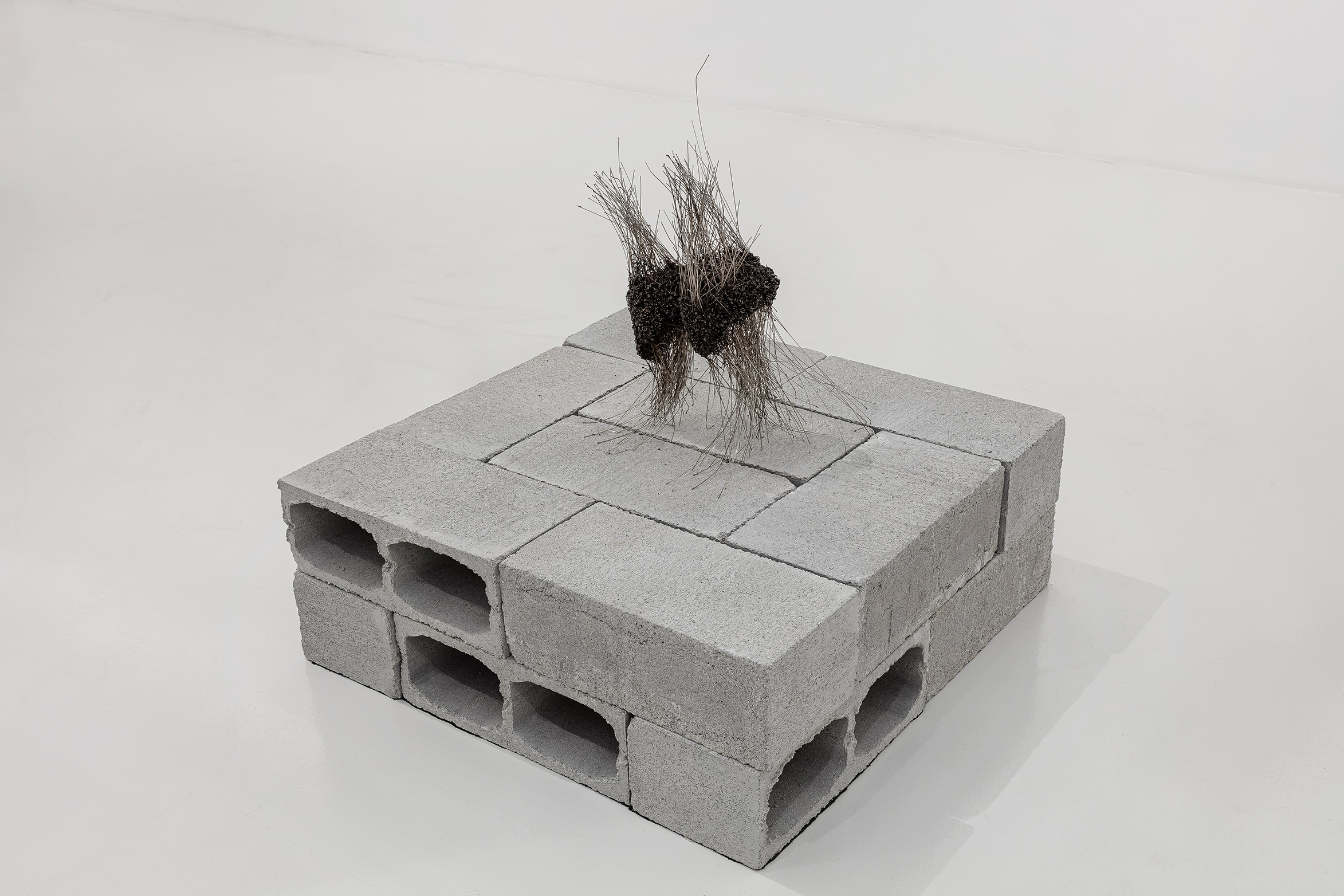
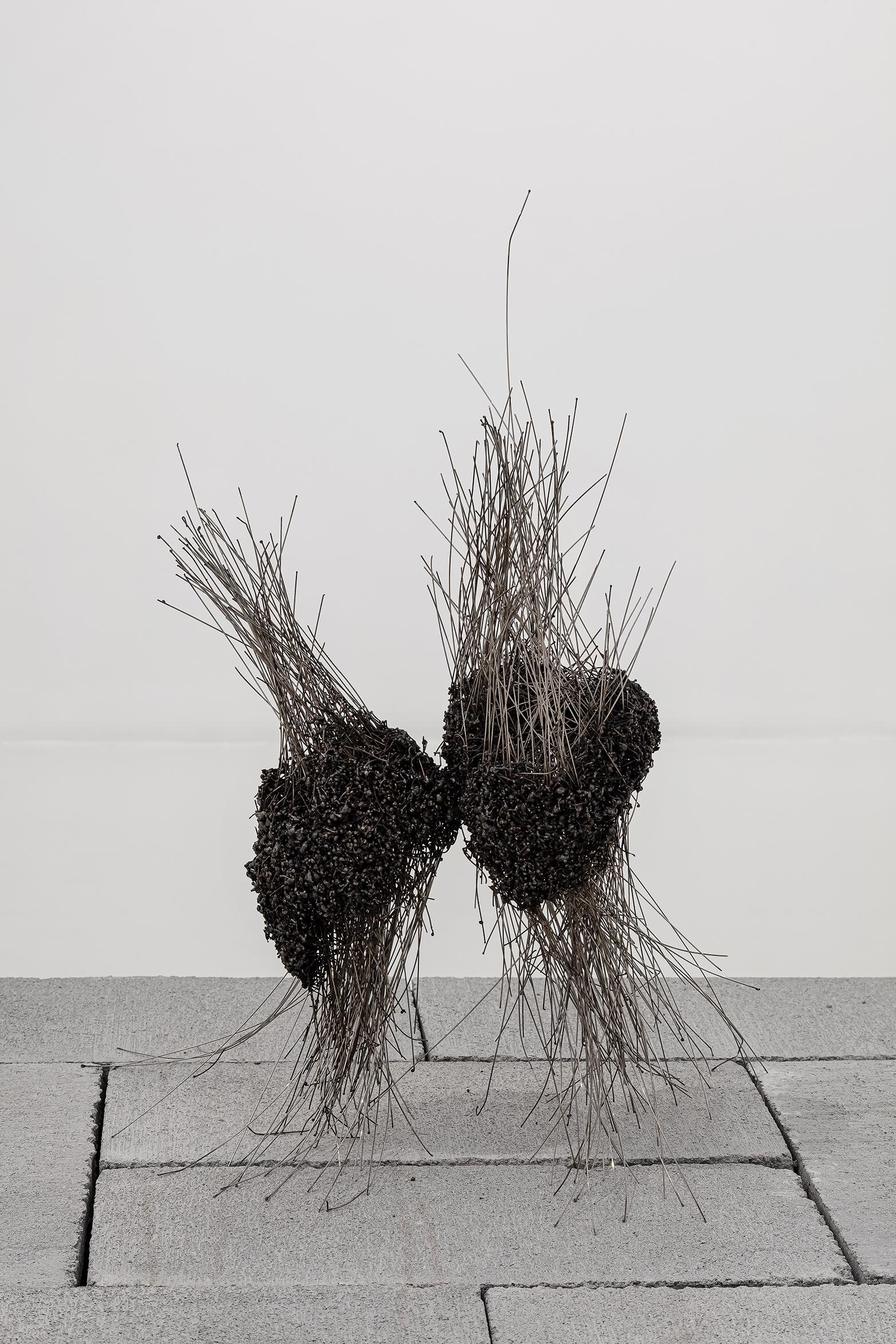
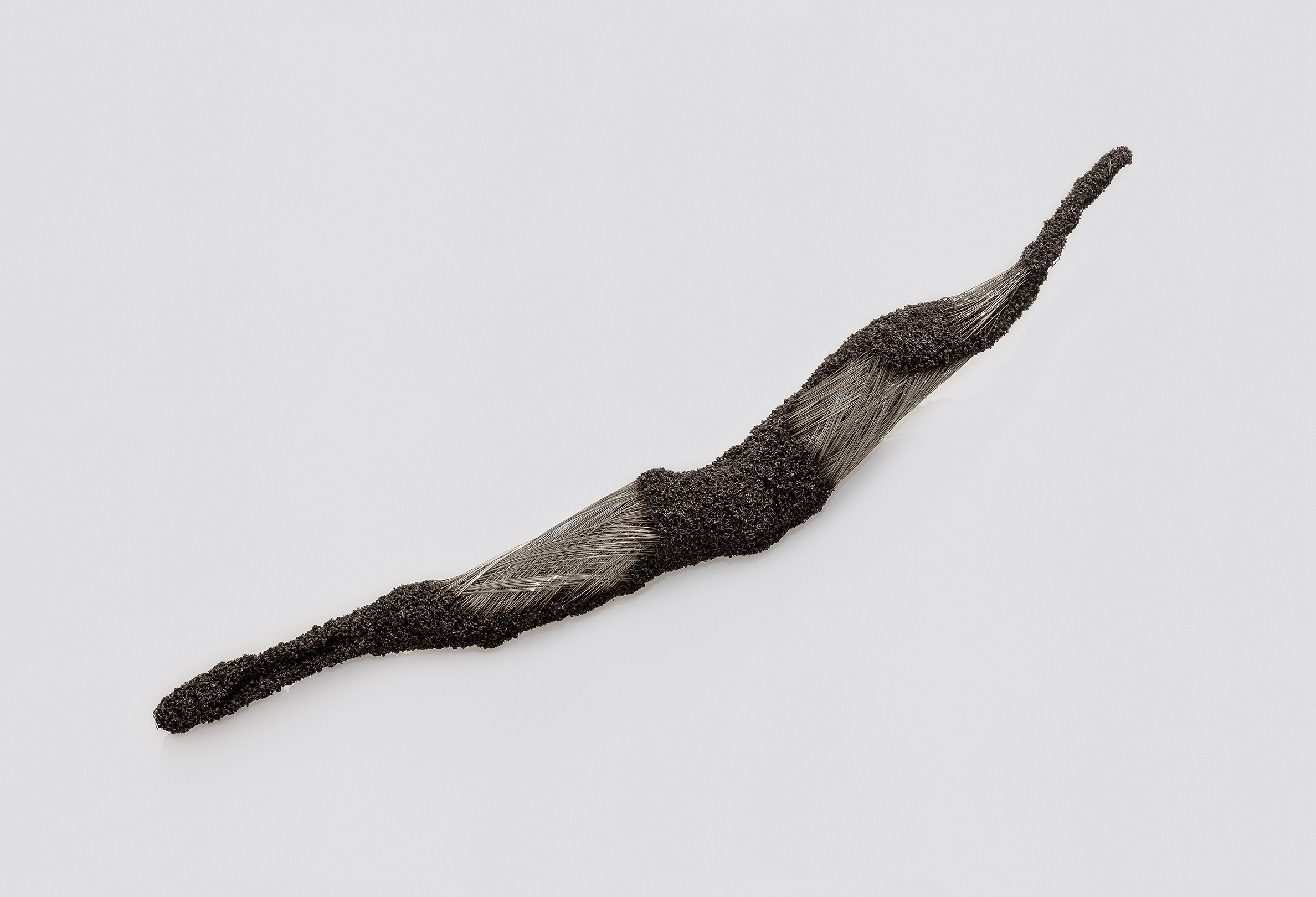
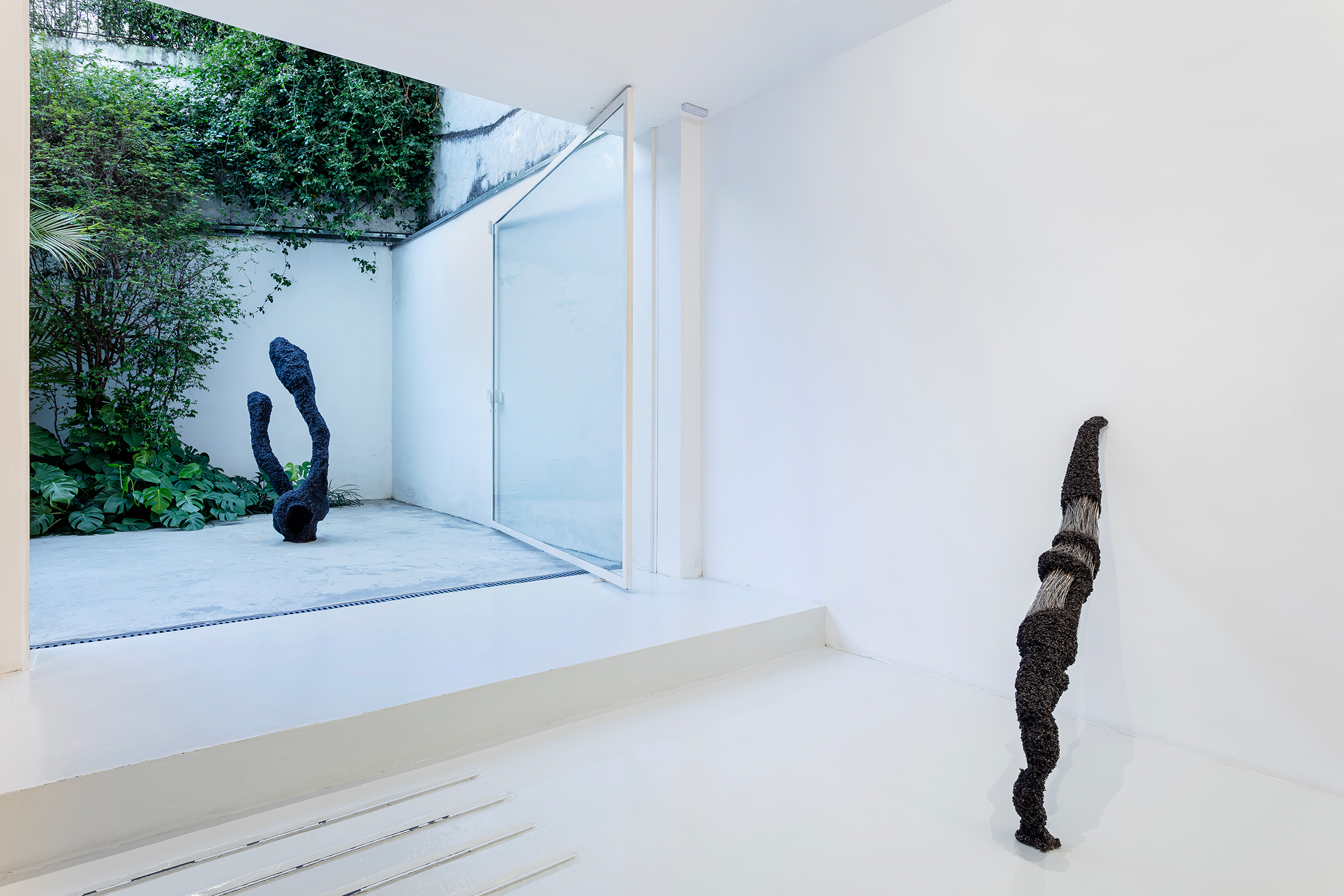
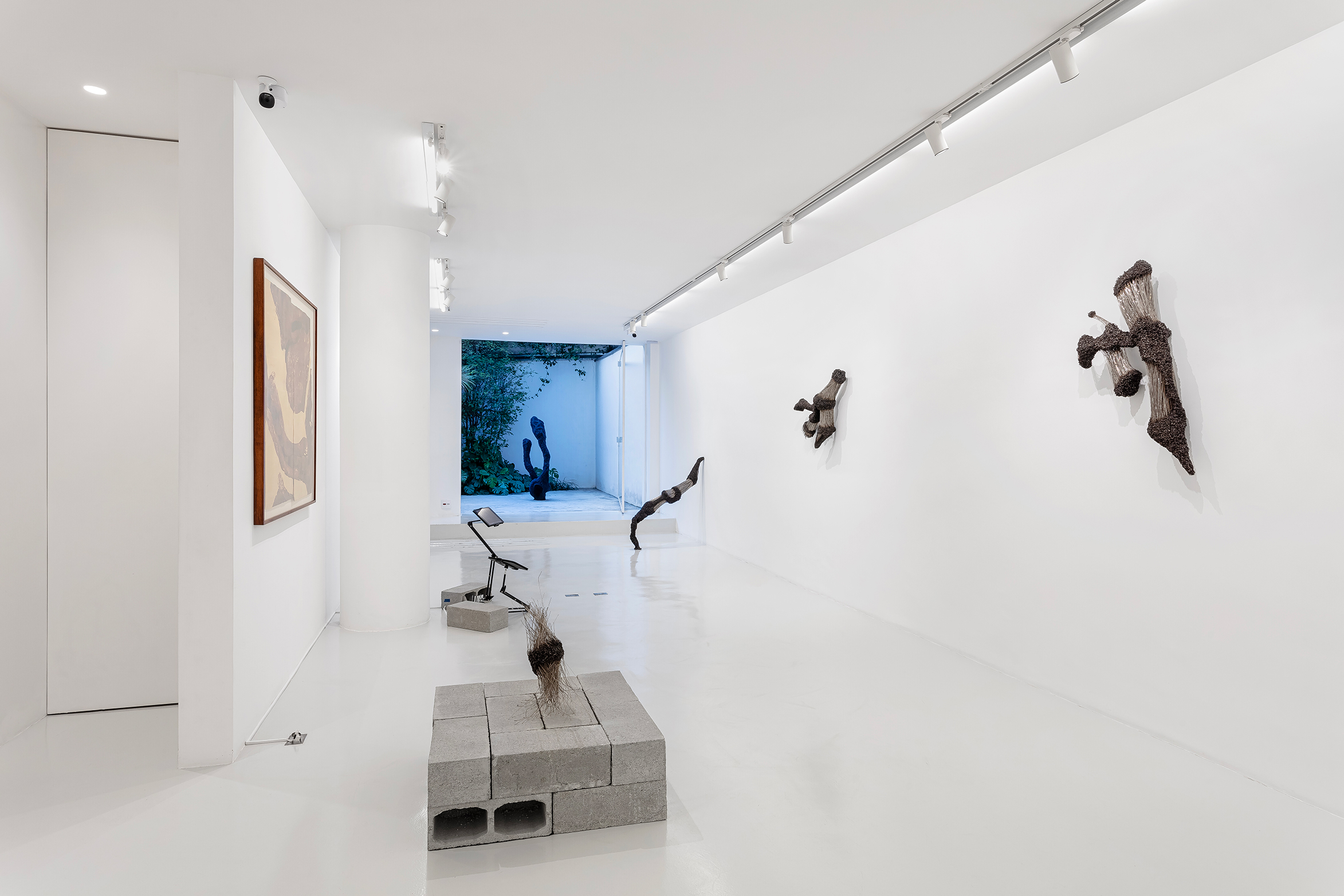
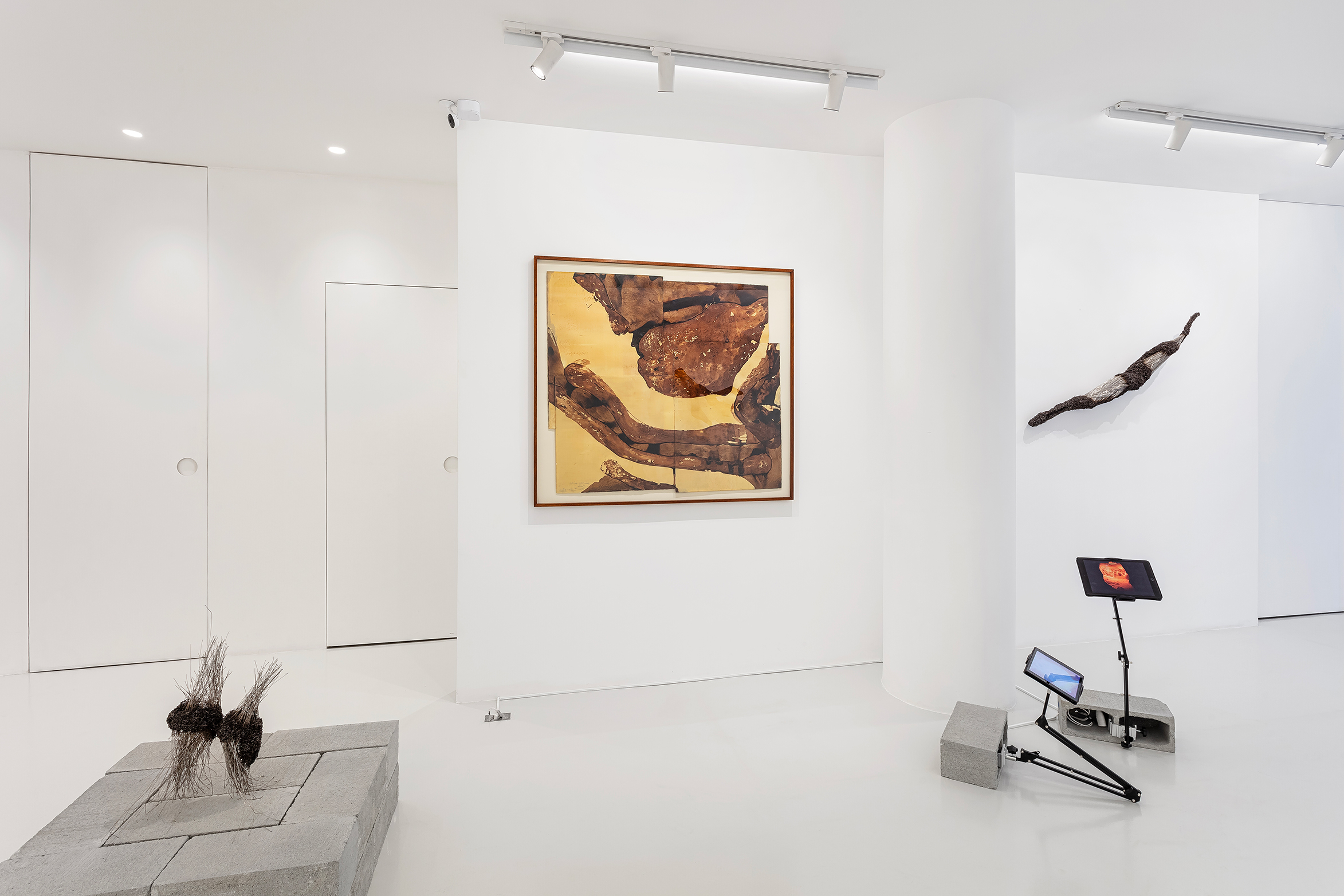
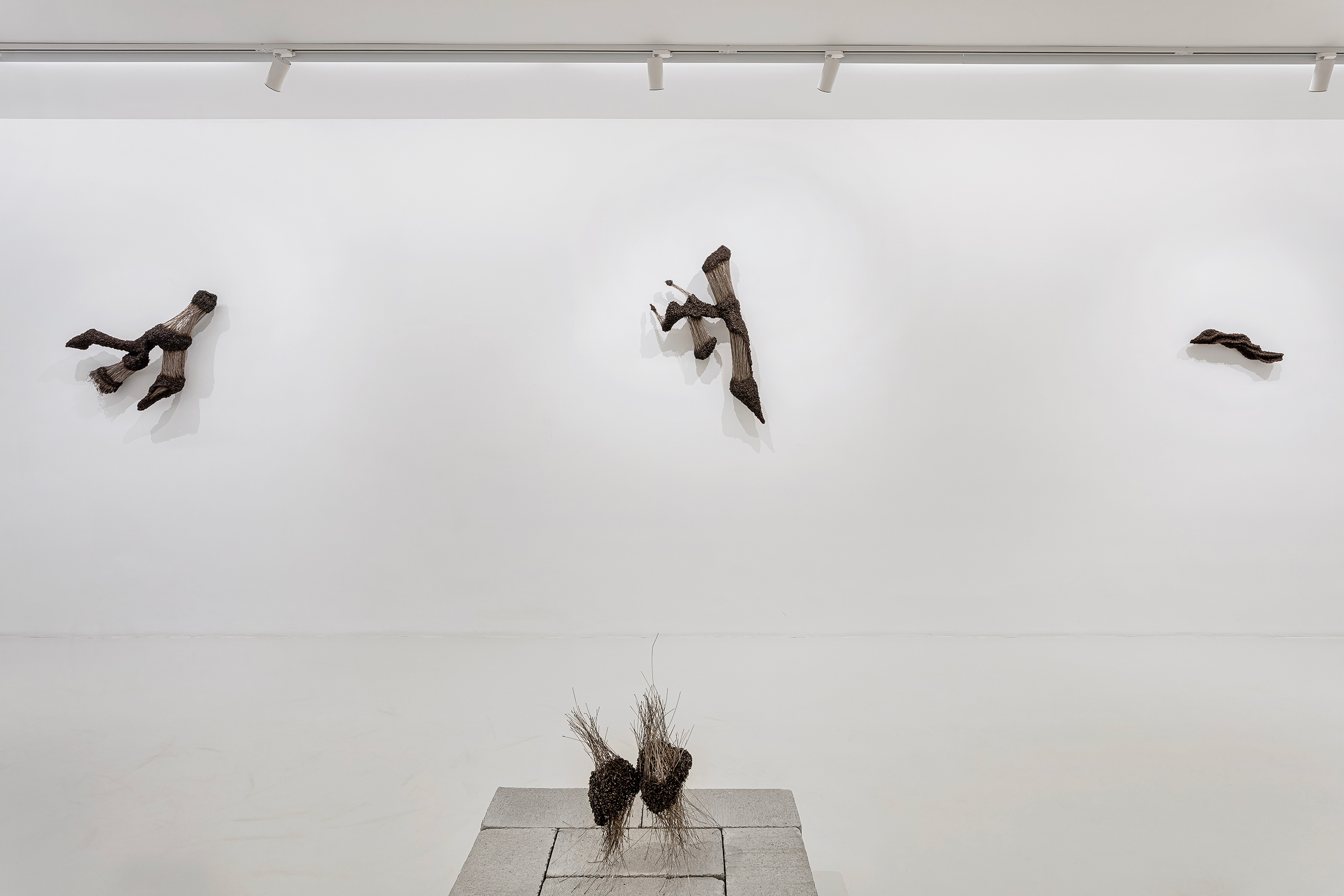
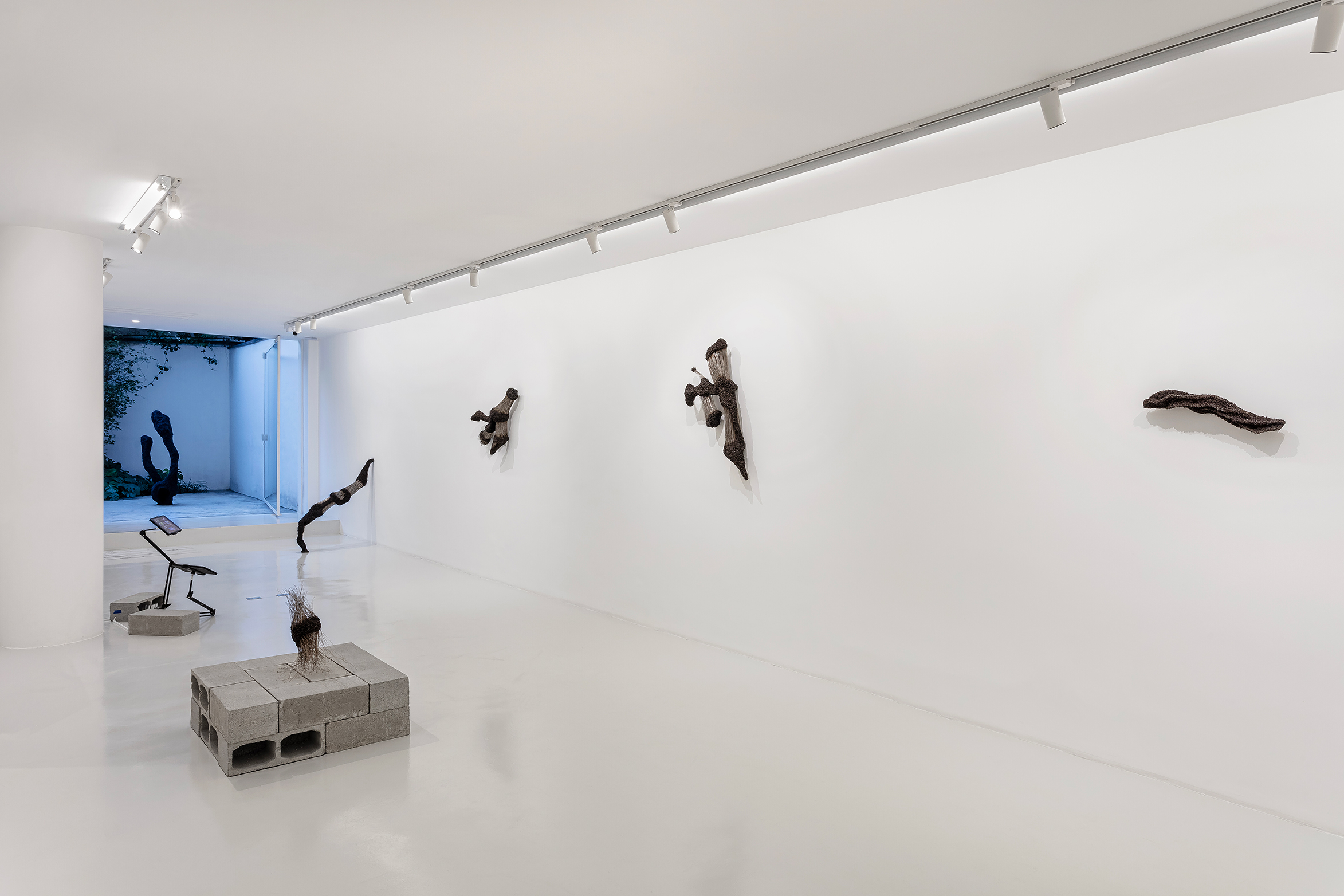
Peres calls the seven works drawings, including the six in the series Lampejos and the unique Linha de fogo, which challenges the other drawings in its size and apparent instability. These works, shared by Peres in the exhibition, are formed in a composition in displacement, like someone who discovers a line when traversing a piece of paper. The line that runs across the paper is created in the gesture of the person drawing it. In the same way, Peres walks through space, experimenting and discovering paths based on the clues offered by the materials.
So let’s go back to the image of lightning striking the sand. What relationships are created there? What is abandoned and what is transformed?
The sculptural presence then becomes a consequence, moving away from the idea of a final goal or result. This process is also marked by the possibility of continuity, since in this case the paper would have no edges. This proposal deepens his investigation into movement, but in movement. The artist insistently draws these events that will apparently remain fleeting on our retina.
The welder’s vision is often covered by flashes of lightning, which are far from being the magnitude of a bolt of lightning, but strong enough to be seen as a danger. For the welder, perhaps the biggest impediment is the glare caused by the intensity of the light, as well as the heat and debris released by welding. The dust and the high emission of flashes also translate into a retinal limit – from a certain point onwards, there is no longer any chance of following what is happening during the moment of fusion.
Our body is once again moved outwards.
Iagor Peres’ point of inquiry begins there: how can we learn from these relationships that are invisible to human beings? What exercises can we do to extrapolate our corporeality? Who is interested in extrapolating human corporeality? Weights, sizes, directions and flows appear as elements that can constantly be linked to movement.
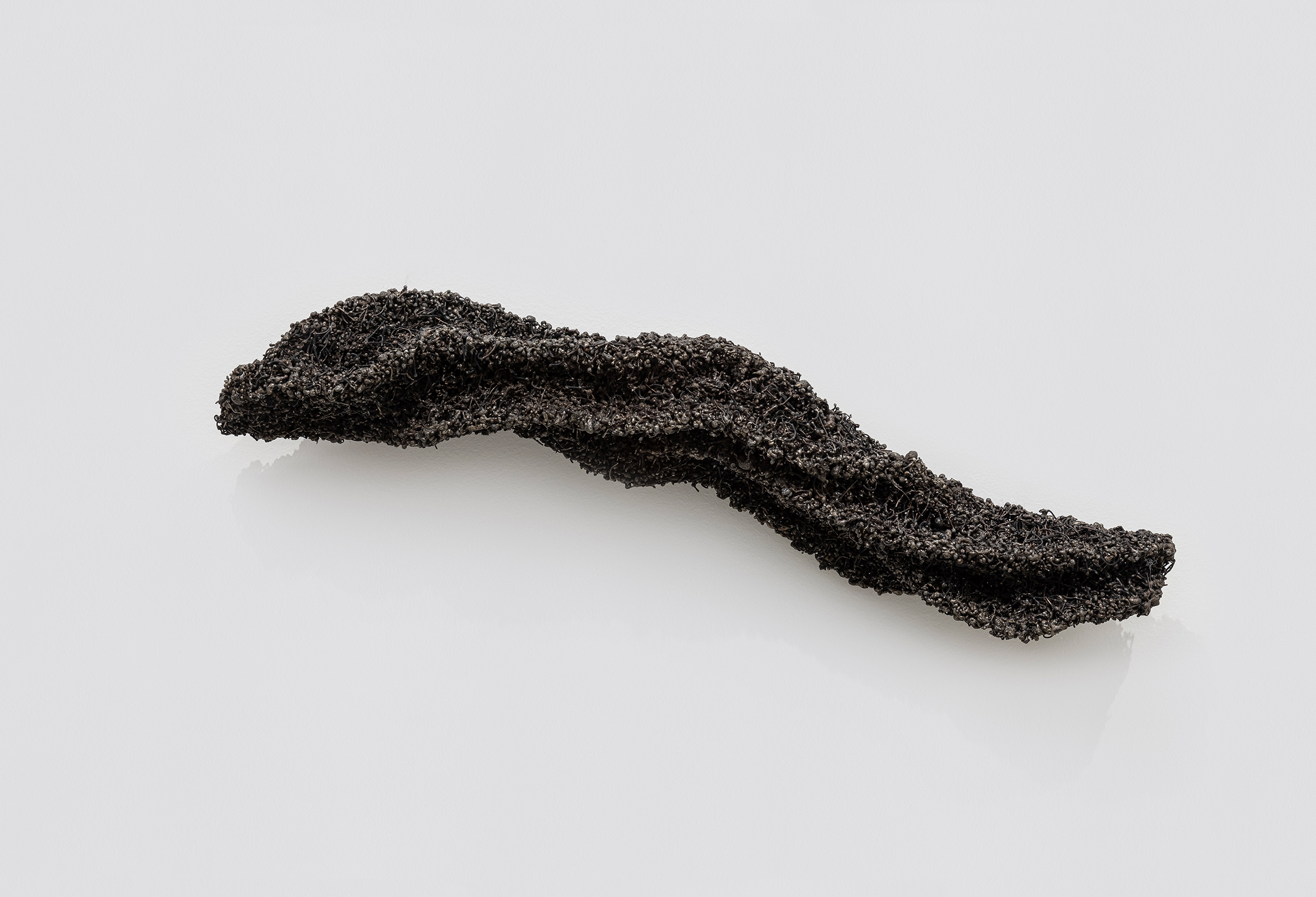
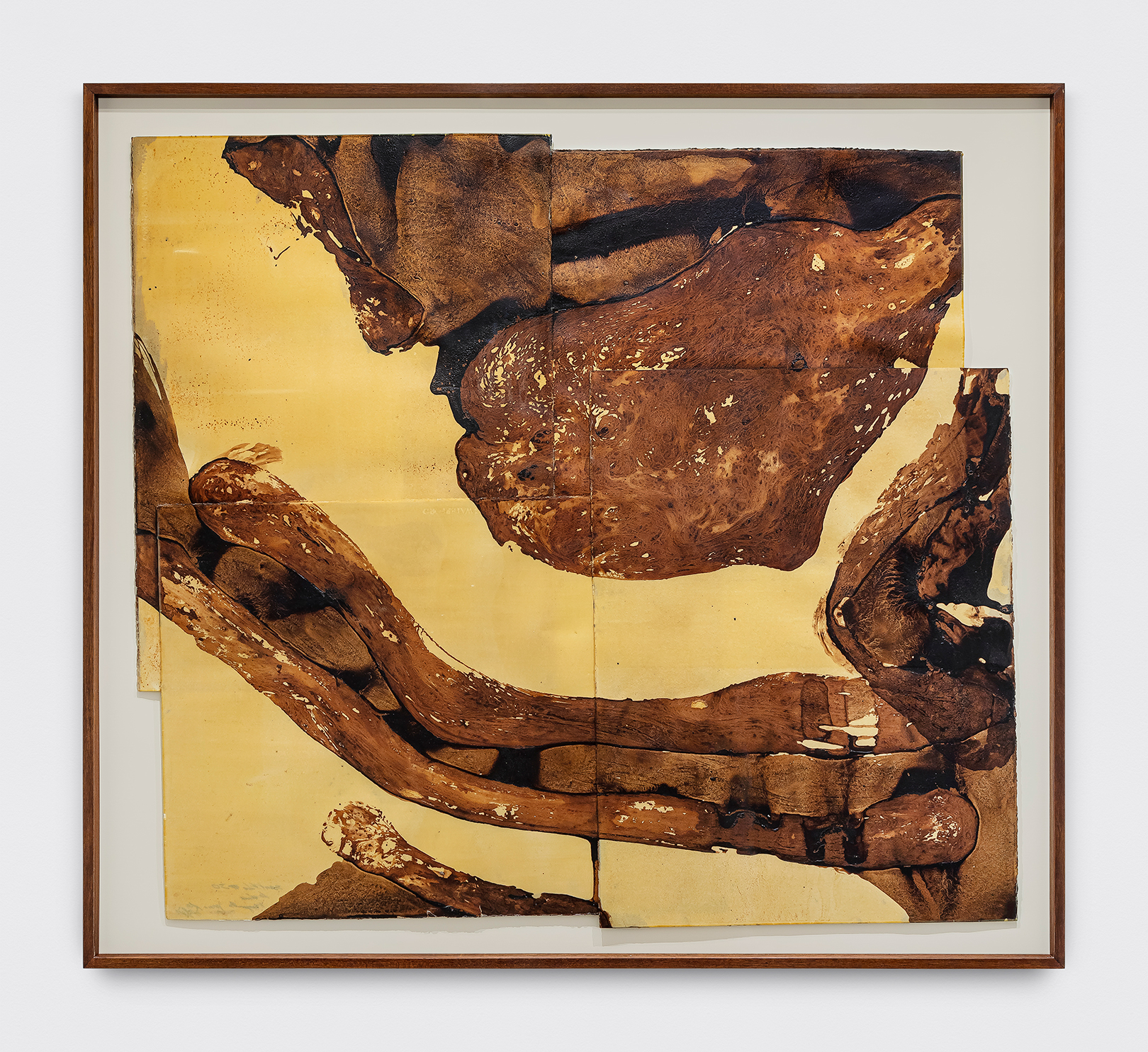
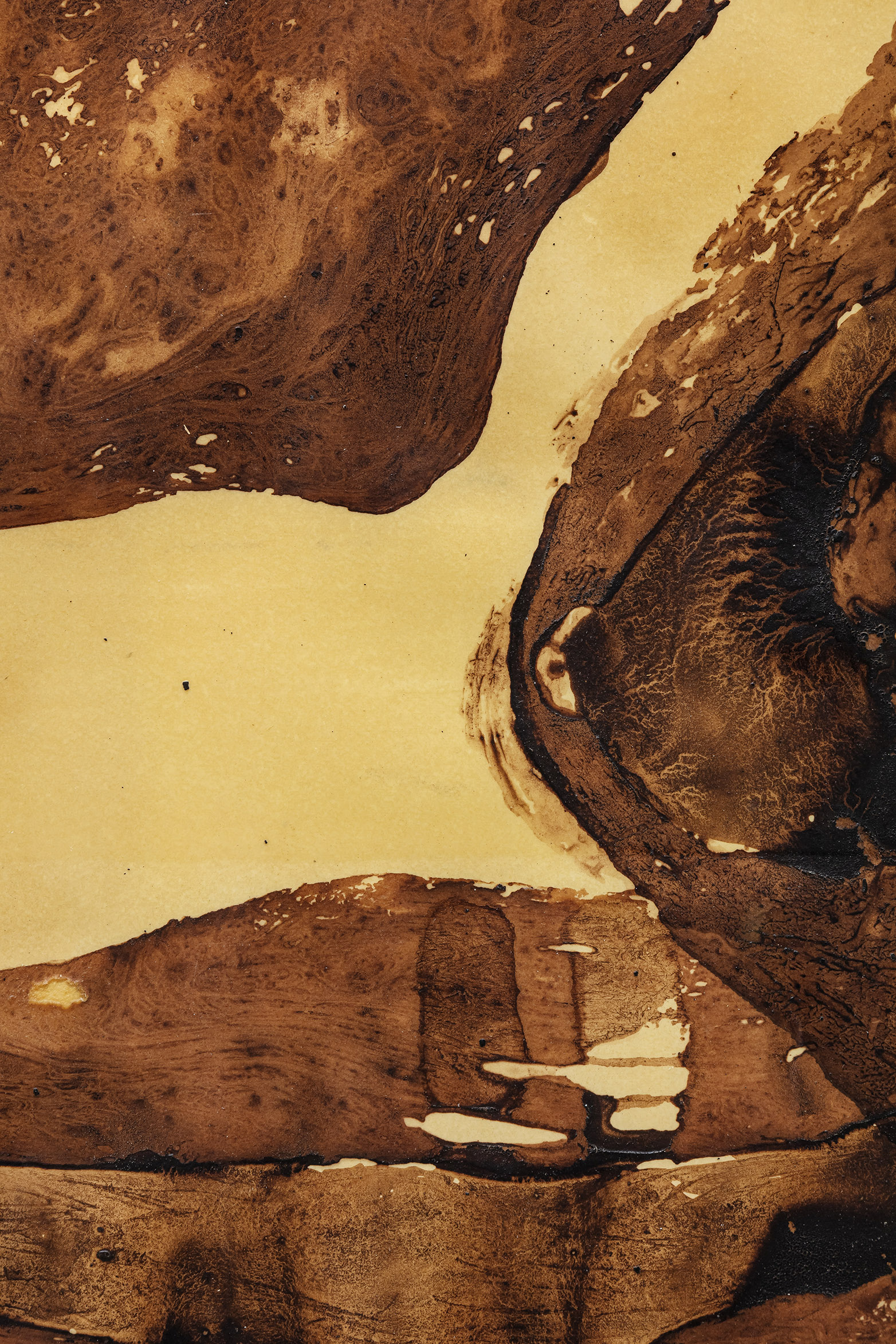
Thus, by observing the metals present in Linha de fogo and in the series lampejos, as well as in pelematerial (a materiality created by Peres from a mixture of organic and industrial elements, such as cocoa and glue, which are boiled, bathed, matured and annealed to form a corporeality that has its own movement and diffuse states), we revisit the questioning of the deterministic conditions that have been imposed on certain bodies.
The material skin is printed in the series of monotypes entitled The second absence of form, where its traces can be perceived without the presence of its body. Her sweat is etched into the paper, which is then passed through a layer of carnauba wax, activating it with another element that allows it to open up to the light, where we have the sensation of glimpsing inside. Peres continues to investigate the performances and channels of force that still operate against the dance of bodies.
I tried to imagine the possibility of being present when lightning struck the earth. So I thought of a scene near the sea, with dark sand, but that, when night fell, it would be possible to look out and see the shiny grains that also made up that mixture.
I could see, even in superficial layers, the differences between some grains, their sizes and textures, their formation from shells, scales and so many other things, but the scale of that immense smallness would be impossible for me.
In the same way, when the lightning struck the sand with its flashing force, it would knock me off axis, once again throwing my body off a calculable firmness, possibly leaving a bewildering sensation.
Ariana Nuala